01 / Scenario
STUDIO
P
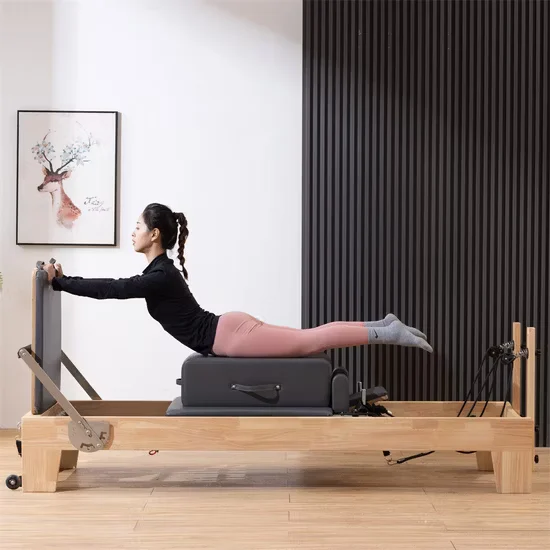
High-End Pilates Studios
Premium aesthetics meet quiet operation for boutique studio environments.

ISO
9001
CE
Certified
OEM
Available
10YR
Warranty
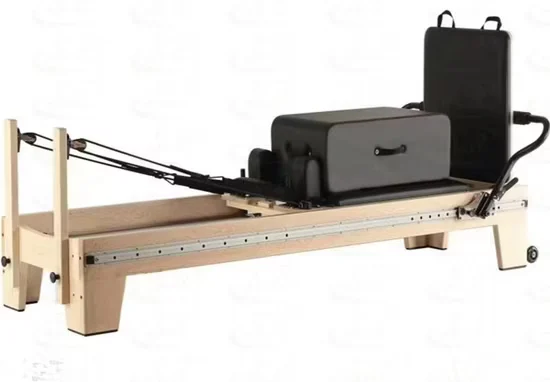
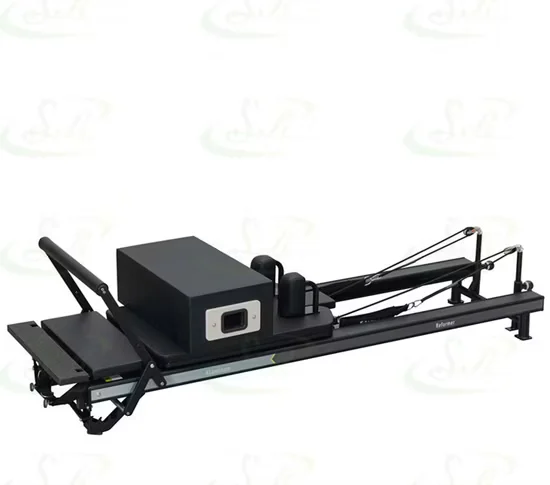
Commercial Wooden Pilates Reformer, Solid Wood Frame, 2460×730×680mm — engineered with reinforced joinery to resist warping under sustained spring tension cycles, paired with a complete accessory ecosystem including long box, jump board, and platform for full-spectrum studio programming. ISO 9001:2015, CE, and SGS certified for international compliance. Backed by 17 years of manufacturing heritage with 500+ commercial gyms equipped and direct factory support for custom configurations.
// Spec Highlights
• Direct from Manufacturer · No Middlemen · Worldwide Shipping
01
// Material
Imported Solid Wood
Premium hardwood frames sourced for density and visual warmth.
02
// Hardware
Medical-Grade Silent
Whisper-quiet pulleys and springs for clinical environments.
03
// Customization
Appearance OEM
Color, upholstery, and branding tailored to your studio.
04
// Service
Layout Design
Free venue planning for studios and rehab institutions.
Every component is selected for longevity, performance, and aesthetic harmony - from imported hardwood frames to silent medical-grade accessories.
// Features
Solid Wood Stability — Mortise-and-tenon joinery in the solid wood frame resists warping under repeated spring tension cycles, keeping carriage alignment consistent across years of studio use.
| Parameter | Value |
|---|---|
| Product Type | Pilates Reformer |
| Model NO. | SRY-02 |
| Frame Material | Solid Wood |
| Product Dimensions | 2460×730×680mm |
| Net Weight | 100kg |
| Accessories | Long Box, Jump Board, Platform |
| Color Options | Solid color finishes available |
| Upholstery | Studio-grade vinyl, standard or high-density options |
| Certification | ISO 9001:2015, CE, SGS |
| Warranty | 3 Years |
| Assembly State | Standard wood case packaging |
| Production Capacity | 80 Pieces/Month |
| Facility Type | Typical Use |
|---|---|
| Commercial Pilates studios | Group reformer classes and private sessions |
| Boutique fitness centers | Mixed-modality classes incorporating reformer sequences |
| Rehabilitation and physical therapy clinics | Post-injury recovery and movement re-education |
| Hotel and resort wellness facilities | Guest-accessible Pilates programming |
A solid wood commercial wooden pilates reformer lives or dies by how its joints are built, not just what species fills the bill of materials.
Studios that purchase reformers based on wood species alone often discover within months that dowel joints loosen under the cyclical pull of spring tension, causing the carriage to drift off-track. Mortise-and-tenon construction locks the frame into a single structural unit that maintains dimensional tolerance through thousands of compression-release cycles. When joints degrade, the carriage no longer travels parallel to the rails — and a misaligned carriage at full spring tension becomes a liability for both practitioner and studio operator. [NEED_CITE: structural joinery performance under cyclical loading in timber frames]
This reformer covers the full sagittal and transverse movement spectrum for classical and contemporary Pilates programming. Paired with a tower or cadillac unit, it forms the core equipment pair that most certification bodies require for comprehensive instructor training. In high-throughput studios running back-to-back group classes, the 2460×730mm footprint allows parallel rows with adequate lateral clearance for instructor circulation. The included long box, jump board, and platform eliminate the need for aftermarket add-ons, so the station is class-ready from day one. Suitable for practitioners across a wide range of body sizes thanks to the adjustable spring configuration and carriage travel.
A reformer in a commercial studio endures repetitive eccentric loading as springs decelerate the carriage at end-range — creating concentrated stress at the frame joints nearest the spring anchor points. In a six-class-per-day schedule, each station cycles through hundreds of tension-release events weekly. The solid wood frame absorbs and distributes this load through its continuous grain structure, but the joint method determines whether that distribution holds. Carriage wheels rolling on the rail generate friction wear that compounds if the wheel material is softer than the rail surface. Upholstery on the shoulder rest and foot bar faces compression from body weight and sweat exposure simultaneously. Coating or finish on the wood must tolerate both cleaning solvents and humidity fluctuations without cracking or clouding. [NEED_CITE: fatigue behavior of wood joints under repetitive mechanical loading]
Frame thickness and joinery type together define the deformation threshold — a thicker solid wood stock with mortise-and-tenon joints resists lateral twist far better than thinner stock assembled with dowels. Carriage wheel and rail material pairing determines tracking smoothness over time: harder wheel compounds on steel rails maintain geometry but transmit more vibration, while softer compounds absorb vibration but develop flat spots under sustained load. Spring gauge and progressive resistance calibration affect how consistent the movement feels from the first repetition to the fortieth — springs that lose tension calibration quickly force instructors to compensate verbally, undermining class quality. Upholstery density and vinyl grade set the replacement interval: high-density foam with commercial-grade vinyl maintains its shape and surface integrity through years of daily compression and chemical cleaning.
Reformers built with laminated plywood or thin veneer over particle board may pass visual inspection at purchase, but the internal layers separate under sustained spring tension — creating frame flex that throws carriage alignment off within the first year. Spot-glued joints that look clean on the showroom floor open under cyclical loading, leaving the studio operator to either pay for structural repair or replace the entire unit. Non-sealed bearings in the carriage wheels accumulate dust and hair, requiring frequent disassembly for cleaning that takes the station offline. Low-density upholstery compresses permanently within months, forcing reupholstering costs that exceed the initial savings. These failure modes are well-documented across commercial studio equipment audits. [NEED_CITE: comparative lifecycle costs of solid vs laminated wood fitness equipment]
The solid wood frame is sourced with mill documentation traceable to the lumber batch, so you can verify species and grade rather than relying on a supplier’s verbal claim. Joinery is executed with mortise-and-tenon methods that outperform dowel or biscuit joints under the cyclical spring loads specific to reformer use. Every unit undergoes carriage load testing and spring tension calibration before leaving the production floor — not sample-based inspection, but unit-by-unit verification. The 200μm industrial-grade finish protects the wood surface from humidity swings and cleaning chemicals common in studio environments. The 3-year warranty covers structural frame integrity, backed by a manufacturer with 17 years of equipment production and over 500 commercial facilities equipped. Studio layout CAD support is available to verify that this reformer’s footprint and required safety clearances fit your specific floor plan before you commit to a quantity.
Provide your studio floor dimensions and planned class capacity to receive a 2D-3D layout showing how many reformer stations fit with compliant safety spacing. Specify your daily class schedule and average occupancy so we can confirm the structural grade and upholstery density match your throughput. Share your preferred frame finish color and any logo placement requirements for a production-ready quotation. Indicate whether your practitioners fall within a specific size range so we can verify the spring configuration and carriage travel meet their needs.
Q: How can I verify that a reformer frame is solid wood rather than laminated or veneer?
A: Request a cross-section photo or mill certificate from the supplier showing the frame stock’s internal structure. Solid wood displays continuous grain through the entire thickness, while laminated frames show alternating layers. Inspect an exposed joint area — mortise-and-tenon construction typically indicates a manufacturer committed to solid stock, whereas dowel or staple joints often accompany cheaper composite materials.
Q: What does carriage weight rating tell me about commercial durability?
A: A higher carriage weight rating indicates that the wheel-and-rail system has been engineered to handle greater static and dynamic loads without deformation. In a commercial studio where practitioners of varying body weights cycle through the same station daily, adequate carriage rating prevents premature rail grooving and wheel flat-spotting, both of which degrade the smooth tracking essential for safe reformer practice.
Q: What should I expect for spring replacement cycles in a commercial setting?
A: Springs in daily commercial use gradually lose their calibrated tension, changing the resistance feel across repetitions. Studios running five or more classes per day per station typically plan for spring inspection every six months and replacement when tension deviation becomes noticeable to instructors. Ask the manufacturer whether replacement springs are available as individual units and whether they ship with calibration documentation.
Q: Are the included accessories compatible with other reformer models?
A: The long box, jump board, and platform included with this commercial wooden pilates reformer are designed specifically for the SRY-02 frame geometry and attachment points. Cross-compatibility with other models or brands is not guaranteed due to variations in rail height, carriage width, and mounting hardware. Confirm attachment specifications with the manufacturer before assuming interchangeability.
Q: How does ambient humidity affect a solid wood reformer in different climates?
A: Solid wood expands and contracts with humidity changes, which can affect carriage tracking if the frame shifts dimensionally. Studios in tropical or highly seasonal climates should maintain indoor humidity within a stable range and position reformers away from direct HVAC airflow. Periodic inspection of joint tightness and rail alignment helps catch environmental effects before they impact class quality.
Premium aesthetics meet quiet operation for boutique studio environments.
Medical-grade silence and precision for sports & postpartum recovery.
Furniture-grade craftsmanship for premium residential installations.
Compact premium setups for one-on-one and small-group training.
Aesthetic Pilates integration for hybrid wellness studio programming.
Multi-unit deployment with instructor-grade reliability for certification programs.
Tell us about your project. Our team will respond within 24 hours with pricing, customization options, and shipping details.
// Sales Director
William
+86 132 2531 1800
// Export Manager
Bella
+86 198 5412 8032
william@bickfit.com