01 / Scenario
STUDIO
P
High-End Pilates Studios
Premium aesthetics meet quiet operation for boutique studio environments.
ISO
9001
CE
Certified
OEM
Available
10YR
Warranty
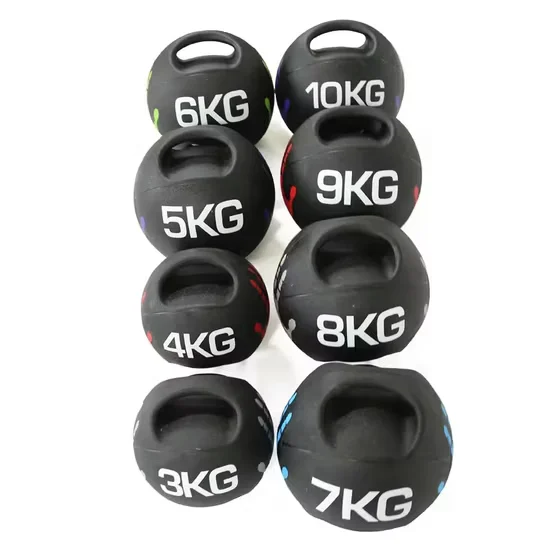
Durable Fitness Medicine Ball, Rubber Construction, 30×30×30 cm — engineered with high-density rubber compound for repeated slam impact without shell splitting or deformation, uniform weight distribution prevents off-center roll during rotational throws. Available in custom colors and logo placement for facility branding consistency. Every unit undergoes drop-test durability verification before shipment from our 15,000㎡ vertically integrated plant.
// Spec Highlights
• Direct from Manufacturer · No Middlemen · Worldwide Shipping
01
// Material
Imported Solid Wood
Premium hardwood frames sourced for density and visual warmth.
02
// Hardware
Medical-Grade Silent
Whisper-quiet pulleys and springs for clinical environments.
03
// Customization
Appearance OEM
Color, upholstery, and branding tailored to your studio.
04
// Service
Layout Design
Free venue planning for studios and rehab institutions.
Every component is selected for longevity, performance, and aesthetic harmony - from imported hardwood frames to silent medical-grade accessories.
// Features
Impact-Resistant Shell Engineering — Each commercial rubber medicine ball undergoes repeated drop testing to verify shell integrity before shipment.
| Parameter | Value |
|---|---|
| Product Type | Medicine Ball |
| Model NO. | WB-2000 |
| Material | Rubber |
| Application | Indoor |
| Specification | 30×30×30 cm |
| Color Options | Customized |
| Logo | Customized Logo Available |
| MOQ | 500 kg |
| Facility Type | Typical Use |
|---|---|
| Commercial gym functional training zones | Slam drills, rotational throws, partner toss exercises |
| CrossFit boxes and HIIT studios | High-repetition overhead slams, wall ball targets, ground-to-overhead movements |
| Hotel and resort fitness centers | General-purpose strength and conditioning equipment for diverse guest use |
| University strength and conditioning rooms | Team sport preparation, explosive power development |
Shell thickness and rubber compound density determine whether a medicine ball survives months of daily slam work or splits open within weeks.
Most fitness suppliers quote "commercial-grade rubber" without specifying durometer, wall thickness, or drop-test cycles. In high-traffic facilities where medicine balls see 50+ slams per session across multiple daily classes, thin-walled shells develop micro-fractures at impact points. These cracks propagate with each repetition until the outer layer peels away, exposing filler material and rendering the ball unusable [NEED_CITE: material fatigue behavior in elastomers under cyclic compression loading]. The commercial rubber medicine ball must maintain structural cohesion through thousands of high-force ground impacts without deformation, surface degradation, or filler leakage.
This commercial rubber medicine ball occupies the impact-training category within functional zones, complementing battle ropes, plyo boxes, and sled systems. The 30 cm diameter provides a consistent grip surface for rotational work, wall ball targets, and partner drills across multiple movement planes. Facilities running 8+ hours of daily group programming require equipment rated for continuous slam cycles without bounce inconsistency or shape distortion. The uniform spherical geometry ensures predictable roll behavior during ground-based exercises, while the rubber compound delivers controlled energy absorption on impact rather than erratic rebound.
Medicine balls in commercial settings experience three distinct stress modes: compressive impact on ground contact, shear forces during rotational throws, and surface abrasion from floor friction and hand contact. Each slam cycle generates transient deformation that tests the rubber’s elastic recovery limit. Over hundreds of daily repetitions, inadequate compound density leads to permanent flattening at impact poles, altering weight distribution and creating off-center roll [NEED_CITE: viscoelastic material response to repeated high-strain-rate compression]. The shell-to-filler interface must resist delamination under eccentric loading, while the outer surface must maintain grip texture despite exposure to sweat, chalk, and commercial disinfectants. Facilities without sealed bearing systems on adjacent equipment often see accelerated surface wear from airborne dust and rubber particulate accumulation.
The 30×30×30 cm dimension indicates a standard diameter suitable for both single-hand and two-hand grip patterns across diverse user anthropometry. Rubber material selection directly influences impact behavior: higher-density compounds resist deformation but transmit more force to user joints, while lower-density formulations absorb shock but risk bottoming out under heavy loads. The uniform spherical geometry requires consistent wall thickness around the entire circumference to prevent weight bias toward any pole. Surface texture depth affects grip security during sweaty conditions but also determines how quickly the exterior accumulates embedded debris from gym flooring. Custom color and logo integration must not compromise shell continuity — surface printing or in-mold labeling should not create stress concentration points that initiate cracking under repeated compression.
Facilities that prioritize initial purchase price over structural specification often encounter replacement cycles measured in months rather than years. Thin-shell construction leads to premature splitting at impact zones, requiring complete unit replacement rather than cost-effective refurbishment. Inconsistent filler density causes weight drift from labeled specifications, creating liability exposure when users program loads based on stated mass. Non-standard dimensions prevent compatibility with wall ball targets and storage racks designed for industry-standard diameters. Surface degradation from inadequate rubber compound formulation results in chalk accumulation, sticky residue, and accelerated wear that compromises both hygiene and performance consistency across the functional training area.
The WB-2000 series commercial rubber medicine ball is engineered for facilities requiring equipment that withstands daily high-volume use without frequent replacement. Custom color matching allows operators to maintain visual consistency across functional zones or align with brand identity throughout the training floor. Customized logo placement provides branding opportunities without compromising shell integrity, as marking processes are selected to avoid creating surface weaknesses. The 500 kg minimum order quantity supports full facility outfitting or multi-location standardization for chain operators. Each unit undergoes drop-test verification to confirm shell durability before shipment, ensuring consistent performance across the entire order.
Specify your facility’s functional zone dimensions and daily usage volume to determine appropriate commercial rubber medicine ball quantities and weight range distribution. Indicate target user population characteristics to confirm diameter and weight options suit diverse anthropometry. Provide branding requirements including color matching specifications and logo placement preferences to ensure custom options integrate seamlessly with your facility identity. Request 2D-3D layout planning support to optimize equipment placement, traffic flow, and safety clearances throughout high-intensity training areas.
Q: How do I distinguish commercial-grade medicine balls from light commercial or home-use options?
A: Commercial-grade medicine balls feature thicker rubber shells with higher compound density, uniform weight distribution verified through testing, and surfaces engineered to withstand repeated impact without deformation. Light commercial options typically use thinner walls and lower-density fillers that compress and split under high-volume slam work. Request drop-test documentation and material specifications to verify construction standards match your facility’s usage intensity.
Q: What rubber thickness and density are required for slam ball durability?
A: Slam ball durability depends on shell thickness sufficient to resist micro-fracture propagation under repeated high-force ground contact, combined with compound density that prevents permanent deformation while maintaining controlled energy absorption. The rubber must recover elastically after each impact cycle without bottoming out or developing flat spots at impact poles. Manufacturers should provide material durometer specifications and cyclic compression test data demonstrating performance under commercial usage patterns.
Q: What custom branding options are available for facility standardization?
A: Custom color matching allows alignment with facility branding or functional zone color coding throughout the training floor. Logo placement options include surface printing or in-mold integration that maintains shell structural integrity without creating stress concentration points. Minimum order quantities apply for custom specifications to support production efficiency. Provide Pantone references or physical samples for color approval before production begins.
Q: What maintenance indicators signal that a medicine ball requires replacement?
A: Replace commercial rubber medicine balls when visible micro-cracks appear on the shell surface, permanent deformation creates flat spots affecting roll behavior, filler material becomes exposed through shell breaches, or weight deviation exceeds acceptable tolerance from labeled specification. Surface degradation causing excessive chalk accumulation or sticky residue also indicates compound breakdown requiring unit replacement to maintain hygiene and performance standards across the functional training area.
Premium aesthetics meet quiet operation for boutique studio environments.
Medical-grade silence and precision for sports & postpartum recovery.
Furniture-grade craftsmanship for premium residential installations.
Compact premium setups for one-on-one and small-group training.
Aesthetic Pilates integration for hybrid wellness studio programming.
Multi-unit deployment with instructor-grade reliability for certification programs.
Tell us about your project. Our team will respond within 24 hours with pricing, customization options, and shipping details.
// Sales Director
William
+86 132 2531 1800
// Export Manager
Bella
+86 198 5412 8032
william@bickfit.com