01 / Scenario
STUDIO
P
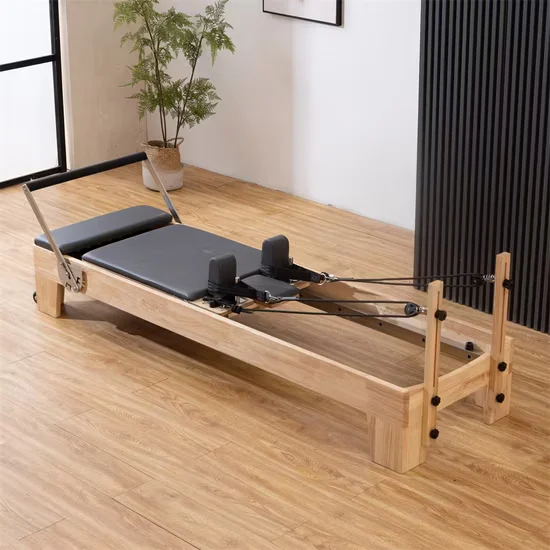
High-End Pilates Studios
Premium aesthetics meet quiet operation for boutique studio environments.

ISO
9001
CE
Certified
OEM
Available
10YR
Warranty
// Spec Highlights
• Direct from Manufacturer · No Middlemen · Worldwide Shipping
01
// Material
Imported Solid Wood
Premium hardwood frames sourced for density and visual warmth.
02
// Hardware
Medical-Grade Silent
Whisper-quiet pulleys and springs for clinical environments.
03
// Customization
Appearance OEM
Color, upholstery, and branding tailored to your studio.
04
// Service
Layout Design
Free venue planning for studios and rehab institutions.
Every component is selected for longevity, performance, and aesthetic harmony - from imported hardwood frames to silent medical-grade accessories.
// Features
Rigid Aluminum Build — Mill-certified alloy frame holds alignment under daily studio use without warping or rail drift.
| Parameter | Value |
|---|---|
| Product Type | Pilates Reformer |
| Frame Material | Aluminum |
| Frame Finish | Powder coated |
| Color Options | Solid color (white), custom available |
| Foldable Design | Yes, integrated hinge mechanism |
| Product Dimensions | 2350 × 720 × 270 mm |
| Net Weight | 90 kg |
| Included Accessories | Long box, jump board, platform |
| Carriage System | Sealed wheel on aluminum rail |
| Spring Resistance | Multi-tension commercial springs |
| Logo | Customized |
| Warranty | 3 Years |
| Certification | CE, ISO 9506 |
| Production Capacity | 80 Pieces/Month |
| Facility Type | Typical Use |
|---|---|
| Boutique Pilates studio | Daily group reformer classes with equipment storage between sessions |
| Commercial gym mind-body zone | Low-impact strength and mobility programming adjacent to cardio floor |
| Rehabilitation and physiotherapy center | Controlled resistance work for joint recovery and post-injury conditioning |
| Multi-purpose fitness facility | Fold-and-store operation for shared floors hosting varied class formats |
| Hotel and resort fitness center | Compact footprint reformer sessions for guest wellness programming |
A folding aluminum Pilates reformer lives or dies by how its hinge and rail assembly tolerates thousands of open-close cycles under real studio loads.
Many studio owners select reformers based on aesthetics and price, then confront carriage drift, rail gap widening, and hinge play within the first year of high-frequency class scheduling. The aluminum frame on this SRY-12A is engineered to resist that degradation path. The rail surface is machined to a flatness tolerance that keeps the carriage tracking true even when the unit is folded and redeployed multiple times per day. Where competitors use thin-wall aluminum or rely on adhesive rail bonding, this frame maintains a mechanical fastening approach that holds dimensional stability through seasonal temperature and humidity shifts common in commercial HVAC environments [NEED_CITE: aluminum alloy dimensional stability under thermal cycling in fitness environments].
The foldable hinge is the most abused joint on any collapsible reformer. When a studio assistant folds and unfolds the unit before and after every class, that hinge absorbs impact and shear forces that compound over months. A poorly engineered hinge develops lateral play, which transfers directly to the carriage rail and causes the uneven glide that instructors feel during footwork series. This commercial folding aluminum pilates reformer uses a reinforced hinge pin design that distributes the folding load across a wider bearing surface, reducing point stress at the joint.
This reformer fills the controlled-resistance slot in a commercial gym mind-body zone, complementing the free-stretch and mat-based work that typically occupies adjacent floor space. It serves hip-dominant and spinal-articulation movement patterns that are difficult to load safely with free weights or cable columns. In a studio layout, it pairs with a tower or wall unit for classes that progress from supine reformer work to standing cable exercises. The 2350 mm length accommodates users across a wide height range without requiring carriage stop adjustments between clients. For facilities running back-to-back classes, the foldable design allows the floor to be cleared for mat sessions, yoga, or functional movement without moving the equipment to a separate storage room.
Every fold-unfold cycle applies a bending moment at the hinge that tests the fastener retention and the surrounding aluminum cross-section. In a studio running four to six classes daily, that joint endures thousands of stress reversals per year, making fatigue resistance a practical concern rather than a theoretical one [NEED_CITE: fatigue behavior of aluminum alloy joints under repeated mechanical cycling]. The carriage wheels bear concentrated loads during jump board exercises, where impact forces spike well above static body weight. Sweat and cleaning chemicals create a corrosive film on the rail surface; if the wheel material is not matched correctly to the aluminum rail, the result is either accelerated rail wear or a grabby, inconsistent carriage feel. The platform and long box mounting points see repeated insertion and removal, and any looseness in those interfaces translates to rattle and instability during exercises that demand a quiet, stable base.
Aluminum as a frame material offers corrosion resistance and a favorable weight-to-rigidity ratio compared to mild steel, but the alloy grade and wall thickness determine whether that advantage holds up over years of commercial loading. A 90 kg net weight for a 2350 mm reformer indicates substantial material in the frame cross-section rather than a thin-shell construction that relies on internal bracing to achieve stiffness. The foldable design introduces a discontinuity in the frame that must be compensated by reinforced gusseting or thicker-wall tubing at the hinge zone; without this, the hinge becomes the weakest link in the entire structure. The accessory mounting interfaces — long box rails, jump board brackets, platform slots — must transfer load into the main frame without creating stress concentrations that initiate cracking. Sealed carriage wheels reduce maintenance intervals because they keep dust, chalk residue, and cleaning fluid out of the bearing race, which is critical in a studio environment where daily mopping and post-class wipe-downs introduce moisture to the rail system regularly.
A lighter reformer is easier to fold and move, but if that weight savings comes from thinner aluminum walls, the trade-off appears as rail deflection under heavier users and as hinge play that worsens with every class cycle. Studios that purchased budget reformers with thin-gauge frames often replace the entire carriage and rail assembly within eighteen months, a cost that erases the initial purchase savings entirely [NEED_CITE: lifecycle cost comparison of commercial fitness equipment frame thickness options]. Non-sealed carriage wheels in a humid studio environment require frequent bearing replacement and generate noise complaints from members during quiet concentration-focused sessions. When accessory mounting points are not reinforced, the jump board bracket is typically the first component to develop cracks, pulling the studio into an unplanned equipment downtime while waiting for a replacement part that may not be readily available from the original supplier.
The aluminum frame on this commercial folding aluminum pilates reformer comes with mill-certified material documentation, so you know the alloy grade and wall thickness before the unit arrives. The folding hinge and rail assembly are load-tested as a complete system, not just sample-checked, which means every unit shipped has been verified for carriage alignment and hinge integrity under operational conditions. The 200 μm powder coat finish on the aluminum surface resists the cleaning chemicals and sweat exposure that degrade thinner coatings in a studio environment over time. For multi-purpose floors where the reformer must be stored between sessions, the foldable design has been cycle-tested to confirm that repeated folding does not degrade the rail flatness or carriage tracking within the warranty period. The three-year warranty covers the frame, hinge mechanism, and structural components, providing a defined accountability window for commercial-grade use rather than an ambiguous residential-tier promise.
Provide your studio floor dimensions and class schedule density so we can confirm whether the foldable footprint aligns with your storage workflow and traffic patterns. Specify your average user weight range and the proportion of jump board work in your programming so we can verify the hinge and rail specification matches your impact loading profile. If you require custom frame color or logo placement, share the Pantone reference and artwork early to align with the production cycle.
Q: How do I evaluate whether a folding reformer is built for commercial studio use or light-duty home use?
A: Check the net weight relative to the frame length — a 90 kg build at 2350 mm indicates substantial aluminum in the cross-section. Request the hinge cycle test report and verify that the carriage rail is mechanically fastened rather than bonded. Commercial units should carry a multi-year warranty that explicitly covers the folding mechanism under daily use conditions.
Q: What are the structural trade-offs between aluminum, wood, and steel frames for a studio reformer?
A: Aluminum provides corrosion resistance and consistent dimensional stability without the seasonal swelling that affects wood frames in humid environments. Steel is heavier and requires coating maintenance to prevent rust. Wood offers aesthetic appeal but demands climate-controlled storage and periodic rail re-leveling. For a commercial folding unit, aluminum balances weight for handling with rigidity for daily class loading.
Q: What should I inspect in the folding mechanism before committing to a bulk order?
A: Cycle the fold and unfold action repeatedly and check for any lateral play at the hinge pin. Deploy the unit and run the carriage across the full rail length, listening for catching or uneven resistance at the fold joint. Ask for the hinge pin diameter and the aluminum wall thickness at the hinge zone to verify they match commercial-grade structural requirements.
Q: How do the jump board and platform accessories affect the frame loading on a folding reformer?
A: Jump board exercises introduce impact loads that transfer through the mounting bracket into the main frame, testing the hinge and rail alignment under dynamic conditions. The platform adds static load at the foot end. Both accessories require reinforced mounting points; if these are thin or poorly gusseted, cracks develop at the bracket-to-frame interface within months of regular class use.
Q: What maintenance schedule keeps the rails and carriage running smoothly in a daily-use studio?
A: Wipe rails with a neutral cleaner after every class to remove sweat residue. Inspect carriage wheels monthly for flat spots and bearing smoothness. Check hinge pin tightness and fastener torque on a monthly cycle. Replace springs according to the manufacturer’s tension degradation timeline, and keep a spare wheel set on hand to minimize downtime between scheduled maintenance windows.
Premium aesthetics meet quiet operation for boutique studio environments.
Medical-grade silence and precision for sports & postpartum recovery.
Furniture-grade craftsmanship for premium residential installations.
Compact premium setups for one-on-one and small-group training.
Aesthetic Pilates integration for hybrid wellness studio programming.
Multi-unit deployment with instructor-grade reliability for certification programs.
Tell us about your project. Our team will respond within 24 hours with pricing, customization options, and shipping details.
// Sales Director
William
+86 132 2531 1800
// Export Manager
Bella
+86 198 5412 8032
william@bickfit.com