01 / Scenario
STUDIO
P
High-End Pilates Studios
Premium aesthetics meet quiet operation for boutique studio environments.
ISO
9001
CE
Certified
OEM
Available
10YR
Warranty
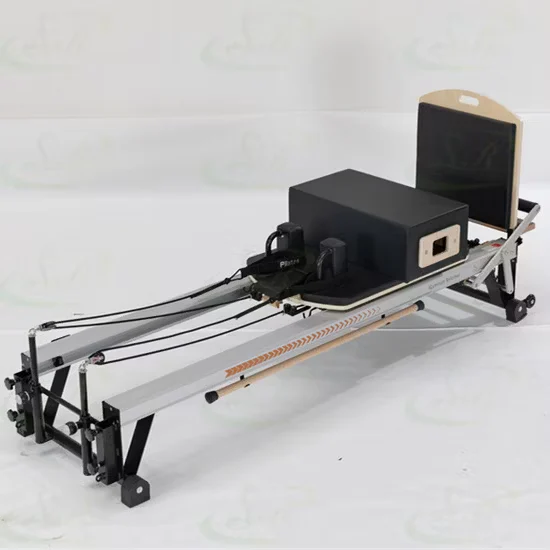
Pilates Reformer Machine, Aluminium Alloy Frame, 2570×730×1100mm, 110kgs — German imported spring system delivers consistent tension across full carriage travel, paired with long box, jump board, and platform accessories for multi-discipline studio programming. Customizable logo and color options support brand integration. Every unit undergoes load testing at our 15,000㎡ vertically integrated facility before shipment.
// Spec Highlights
• Direct from Manufacturer · No Middlemen · Worldwide Shipping
01
// Material
Imported Solid Wood
Premium hardwood frames sourced for density and visual warmth.
02
// Hardware
Medical-Grade Silent
Whisper-quiet pulleys and springs for clinical environments.
03
// Customization
Appearance OEM
Color, upholstery, and branding tailored to your studio.
04
// Service
Layout Design
Free venue planning for studios and rehab institutions.
Every component is selected for longevity, performance, and aesthetic harmony - from imported hardwood frames to silent medical-grade accessories.
// Features
Mill-Certified Aluminium — Every extrusion batch for this reformer frame is traceable to the mill certificate, eliminating the guesswork in alloy grade verification.
| Parameter | Value |
|---|---|
| Product Type | Pilates Reformer Machine |
| Frame Material | Aluminium Alloy |
| Spring System | German Imported Springs |
| Accessory Configuration | Long Box, Jump Board, or Platform |
| Product Dimensions | 2570×730×1100mm |
| Net Weight | 110kgs |
| Color Options | Black or customized upon request |
| Logo Application | Customized logo available |
| Certification | CE |
| Warranty | 3 Years |
| Facility Type | Typical Use |
|---|---|
| Commercial Pilates studio | Full-day class rotation with repeated carriage loading cycles |
| Rehabilitation and physical therapy center | Controlled resistance progression for post-injury recovery protocols |
| Hotel and resort fitness facility | Multi-user daily turnover with minimal maintenance intervals |
| Private training facility | One-on-one instruction requiring precise spring tension adjustments |
Verified German spring sourcing eliminates the tension drift that plagues reformers with undocumented spring supply chains.
Most studios discover spring degradation only after clients report uneven resistance mid-session. The carriage drifts slightly off-center, the return stroke feels sluggish, and instructors compensate by adjusting cues rather than addressing mechanical decay. When spring origin is listed vaguely as "imported" without mill documentation, there is no baseline tension curve to measure degradation against [NEED_CITE: spring fatigue testing standards for cyclic loading in fitness equipment]. A commercial Pilates reformer machine with German imported springs provides a traceable tension profile — each spring’s resistance curve is documented across its full compression range, so maintenance teams can identify deviation before it affects session quality.
This reformer addresses the full sagittal plane through supine, prone, and seated carriage work, targeting core stabilizers, hip flexors, and lower limb musculature across the complete travel range. In a studio layout, it pairs with Cadillac and Wunda Chair stations to cover frontal and transverse plane work that the reformer alone cannot address. The 2570mm footprint accommodates users across a broad height range while fitting into standard studio bay configurations with adequate clearance for instructor circulation. The commercial Pilates reformer machine with German imported springs suits facilities running consecutive group classes where rapid accessory swaps between Long Box and Jump Board configurations are routine.
Every reformer session generates hundreds of carriage travel cycles, each introducing lateral shear forces at the wheel-to-rail contact point. Jump Board work multiplies impact loading significantly — the carriage decelerates abruptly at rail endpoints, transmitting shock through the wheel bearings and into the aluminium extrusion. Over months of commercial scheduling, these micro-impacts accumulate at stress concentration points near mounting brackets and accessory attachment holes. The rail surface itself faces abrasion from particulate matter carried in by foot traffic, which embeds in the wheel tread and scores the running surface [NEED_CITE: bearing wear classification under cyclic dynamic loading]. Coating integrity on exposed aluminium surfaces must also withstand daily cleaning agents and perspiration residue without pitting or oxidation.
The aluminium alloy frame delivers a favorable weight-to-stiffness ratio that keeps the reformer stable during aggressive Jump Board sequences without requiring the mass of a steel frame. Spring tension consistency across the full carriage stroke depends on the alloy composition and heat treatment of the spring wire — German-manufactured springs maintain their rated resistance within tight tolerances throughout extended compression cycles. The 110kg net weight anchors the unit against lateral drift during standing exercises on the platform, while still allowing repositioning for studio layout changes. Accessory mounting points for the Long Box, Jump Board, and Platform must tolerate repeated attachment and removal without thread stripping or bracket deformation, which depends on insert quality and fastener specification.
Frames built from unverified aluminium grades can develop flex under sustained heavy-user loading, introducing carriage wobble that no amount of wheel adjustment corrects. Springs without origin certification lose tension asymmetrically — one side of the carriage pulls harder than the other, forcing instructors to modify exercises around equipment limitations rather than client needs. Non-sealed carriage wheels accumulate chalk dust and skin particulates, developing play that manifests as lateral rattle within months of commercial operation. When accessory mounting hardware uses generic fasteners rather than specified inserts, the Long Box and Jump Board develop looseness at attachment points, eventually requiring helicoil repair or bracket replacement [NEED_CITE: fastener fatigue failure in repeatedly assembled fitness equipment joints].
The aluminium alloy was selected with mill-certified batch traceability, so frame stiffness is verifiable rather than assumed. Spring tension curves are documented from the German manufacturer, providing a maintenance baseline absent in reformers with unverified spring sourcing. Every unit undergoes load testing before shipment, confirming carriage stability under maximum user weight through the full travel range. The 200μm powder coating protects contact surfaces from cleaning chemical degradation and perspiration corrosion across years of studio use. The three-year structural warranty reflects confidence in frame and rail longevity under commercial scheduling. Floor planning support ensures adequate clearance between reformer bays for instructor access and safe client mounting, eliminating the dead space that poor layout creates.
Share your studio floor dimensions and target reformer count to receive a 2D-3D layout that accounts for instructor circulation paths and client mounting clearance. Specify expected daily class volume and average user profile so the structural grade and spring configuration match your operational reality. Confirm customization requirements including frame color, logo placement, and accessory package selection before production scheduling.
Q: How do I verify the German spring origin versus domestic alternatives?
A: Each spring set ships with manufacturer documentation including batch number, alloy specification, and tension test data across the full compression range. Domestic springs typically lack this traceability. Request the spring certificate during procurement and compare the documented tension curve against actual carriage resistance measurements upon delivery to confirm consistency.
Q: What are the practical differences between aluminium alloy and steel frames for reformers?
A: Aluminium offers a superior weight-to-stiffness ratio, keeping the unit stable during dynamic exercises while remaining repositionable for layout changes. Steel frames resist deformation differently but add significant mass. For commercial studios requiring occasional reconfiguration, aluminium provides adequate rigidity with greater handling flexibility across the expected user weight range.
Q: What maintenance intervals should I plan for carriage rails and wheels in high-traffic studios?
A: Inspect wheel bearings and rail surfaces quarterly in facilities running eight or more hours daily. Particulate accumulation from foot traffic accelerates wear at the wheel-to-rail contact point. Replace wheels showing lateral play or visible flat-spotting. Clean rails with recommended agents to prevent surface scoring that degrades carriage smoothness over time.
Q: Are the Long Box and Jump Board mounting points rated for daily swap cycles?
A: The accessory attachment hardware is specified for repeated installation and removal without thread degradation under normal commercial use. Monthly torque verification of mounting fasteners is recommended. If your studio swaps accessories multiple times daily, communicate this during procurement so the appropriate insert specification can be confirmed for your operational intensity.
Premium aesthetics meet quiet operation for boutique studio environments.
Medical-grade silence and precision for sports & postpartum recovery.
Furniture-grade craftsmanship for premium residential installations.
Compact premium setups for one-on-one and small-group training.
Aesthetic Pilates integration for hybrid wellness studio programming.
Multi-unit deployment with instructor-grade reliability for certification programs.
Tell us about your project. Our team will respond within 24 hours with pricing, customization options, and shipping details.
// Sales Director
William
+86 132 2531 1800
// Export Manager
Bella
+86 198 5412 8032
william@bickfit.com