01 / Scenario
STUDIO
P
High-End Pilates Studios
Premium aesthetics meet quiet operation for boutique studio environments.
ISO
9001
CE
Certified
OEM
Available
10YR
Warranty
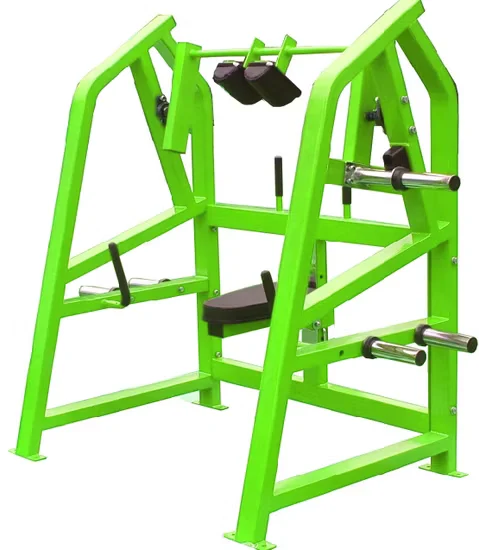
OS-H5021 4-Way Neck Machine, Plate Loaded, 130kg Net Weight — engineered for high-frequency commercial neck training with a 900×1400mm footprint. The 130kg frame mass ensures structural rigidity under multi-directional loading, while plate-loaded design eliminates cable wear common in selectorized units. Every unit undergoes individual load testing before shipment, backed by a 10-year frame warranty.
// Spec Highlights
• Direct from Manufacturer · No Middlemen · Worldwide Shipping
01
// Material
Imported Solid Wood
Premium hardwood frames sourced for density and visual warmth.
02
// Hardware
Medical-Grade Silent
Whisper-quiet pulleys and springs for clinical environments.
03
// Customization
Appearance OEM
Color, upholstery, and branding tailored to your studio.
04
// Service
Layout Design
Free venue planning for studios and rehab institutions.
Every component is selected for longevity, performance, and aesthetic harmony - from imported hardwood frames to silent medical-grade accessories.
// Features
Robotic continuous MIG welding — every structural joint on this plate loaded neck trainer features full-penetration welds with no spot-weld shortcuts that could fracture under repeated eccentric loading.
| Parameter | Value |
|---|---|
| Designation | OS-H5021 |
| Product Type | 4-Way Neck Machine |
| Loading Type | Plate Loaded |
| Product Dimensions | 900×1400×1600mm |
| Footprint | 900×1400mm |
| Net Weight | 130kg |
| Certification | ISO 9001, CE |
| Assembly State | Unfolded |
| Facility Type | Typical Use |
|---|---|
| Commercial gym strength floor | Dedicated neck training station for bodybuilding and strength athletes |
| University strength and conditioning room | Multi-directional neck development for contact-sport athletes |
| Rehabilitation and performance center | Controlled cervical loading for post-injury progressive resistance |
| Professional gym and club | High-frequency neck isolation for competitive physique athletes |
| Community fitness center | Supplementary neck conditioning for general fitness members |
Continuous weld seams eliminate the fatigue failure point that spot welds create under repetitive four-directional neck loading.
Neck training equipment sits in a deceptive zone — the loads feel moderate because the body segment is small, yet the moment arms generated by four-directional plate loading create torsional stress on pivot joints that spot welds simply cannot survive long-term. I have seen batch recalls traced back to a single decision: substituting continuous robotic MIG welding with spot welding at the swing arm hinge to save seconds per unit. The welds pass visual inspection on day one, then develop micro-cracks after thousands of cycles in a commercial gym environment. A commercial 4-way neck machine must treat every pivot joint as a structural critical point, not a cosmetic assembly node. [NEED_CITE: weld classification and fatigue performance in structural steel joints under cyclic torsional loading]
This plate loaded unit addresses all four primary cervical movement planes — flexion, extension, lateral flexion, and rotation — within a single compact footprint. It pairs logically with manual resistance tools and cervical harnesses already present in a commercial gym’s functional zone, while offering the progressive overload capacity that bodyweight or band-based alternatives cannot deliver. The 900×1400mm footprint allows placement adjacent to plate storage without obstructing traffic flow. The commercial 4-way neck machine accommodates a wide range of user statures through its seat and pad adjustment geometry, making it viable for mixed-gender, mixed-level facilities.
Neck training generates a unique loading profile: relatively low absolute weight but high repetition density, with frequent direction changes that subject pivot bearings and frame joints to multi-axis cyclic stress. The 130kg net weight of this unit reflects substantial steel mass in the base frame, providing the inertial stability needed to prevent frame lift during rapid eccentric-to-concentric transitions. Swing arm bearings face contamination risk from chalk dust, sweat drip, and cleaning chemicals — sealed industrial bearings resist particulate ingress far better than open bushings over thousands of daily cycles. Upholstery contact pads endure direct sweat exposure and repeated sanitization, demanding high-density foam that resists compression set and vinyl that withstands chemical cleaners without cracking. [NEED_CITE: bearing seal effectiveness in contaminated commercial fitness environments]
Frame steel gauge and tube cross-section define the deformation threshold under off-center plate loading — when a user loads plates asymmetrically or shifts position mid-set, the frame must resist torsional deflection that would alter the movement arc and create uneven resistance. Robotic MIG welding with continuous penetration produces weld lines whose fatigue life matches the base metal, whereas spot welds create stress concentration points that initiate cracks well below the material’s yield capacity. Sealed industrial bearings at pivot points maintain rotational precision by excluding sweat, chalk, and cleaning residue — open bushings develop play within months in high-traffic settings, introducing wobble that compromises movement quality and accelerates wear. The 200μm powder coating applied after sandblast pretreatment provides a scratch-resistant barrier that protects the underlying steel from corrosion caused by sweat drip and aggressive gym cleaning protocols.
Thin-wall tubing may look adequate when new, but under repeated eccentric plate loading it deflects progressively, altering the resistance curve and eventually requiring full frame replacement rather than simple repair. Spot-welded joints that fail mid-use create immediate liability exposure — a detached swing arm under load poses direct injury risk to the user’s cervical spine. Non-sealed bearings that develop play require frequent replacement, generating ongoing maintenance costs and equipment downtime that compound over a facility’s operational life. Low-density upholstery that compresses permanently within weeks forces premature replacement cycles, while inadequate powder coating allows corrosion to establish at contact points, spreading beneath the surface and compromising structural integrity long before it becomes visually obvious. [NEED_CITE: total cost of ownership analysis for commercial strength equipment structural failures]
Every OS-H5021 unit rolls off a production line where 11-gauge frame steel is traceable to the mill coil certificate, ensuring material consistency across every weld and load test. Robotic MIG welding delivers continuous penetration on every structural joint — there are no spot-weld shortcuts anywhere in the load path. Each unit undergoes individual load testing before shipment, not batch sampling, verifying that the specific machine you receive meets its structural specifications. The 200μm industrial powder coating applied after sandblast pretreatment provides long-term scratch and corrosion resistance appropriate for high-touch commercial environments. A 10-year frame warranty backs the structural investment. For facility planning, 2D-3D CAD layout support ensures this commercial 4-way neck machine integrates into your strength floor with proper clearance from adjacent stations and safe traffic flow paths. OEM private label options allow brand customization for distribution partners.
Provide your strength area dimensions and existing equipment list to receive a 2D-3D layout plan showing optimal placement for this plate loaded neck trainer with proper spacing and traffic flow. Specify your anticipated daily user volume so we can confirm the structural grade matches your usage intensity. Indicate your target user demographic range to verify seat and pad adjustment geometry accommodates your membership profile. Custom color, logo, and upholstery options are available for branded facility rollouts or distribution partnerships.
Q: How do I verify that a neck training machine meets commercial-grade structural standards?
A: Request the mill certificate for frame steel to confirm gauge and grade, ask for weld method documentation specifying continuous MIG rather than spot welding, and require individual load test records rather than batch sampling certificates. A commercial 4-way neck machine should demonstrate traceable material specs, full-penetration welds at all pivot joints, and per-unit structural verification before shipment.
Q: What is the relationship between frame tube specifications and load capacity in neck training equipment?
A: Frame tube gauge and cross-section dimensions directly determine the deformation threshold under eccentric plate loading. Heavier-gauge steel with larger cross-sections resist torsional deflection when users load plates asymmetrically or shift position during sets, maintaining consistent resistance arcs and preventing progressive frame fatigue that thin-wall tubing experiences under identical commercial usage patterns.
Q: How does plate loaded loading compare to selectorized loading for neck training applications?
A: Plate loaded designs offer unlimited progressive overload increments and simpler maintenance with no cable or stack guide mechanisms to service. For neck training specifically, plate loading allows precise micro-loading that selectorized stacks cannot match, while eliminating the weight stack guide rods that can bind under the off-center loading patterns common in four-directional cervical movement equipment.
Q: What safety clearances are required around a four-directional neck machine?
A: The 900×1400mm footprint requires minimum 600mm clearance on all sides for safe plate loading access and user movement. Adjacent equipment must not obstruct the swing arm rotation arc in any of the four training directions. Facility layout planning should account for users approaching from multiple angles during direction changes between sets.
Q: What maintenance do sealed bearings require in high-traffic commercial environments?
A: Sealed industrial bearings require minimal routine maintenance beyond monthly visual and rotational smoothness checks. Unlike open bushings that need frequent lubrication and still accumulate contaminants, sealed bearings exclude sweat, chalk dust, and cleaning chemicals throughout their service life. Replace bearings only when detectable play or grinding develops, typically extending service intervals significantly compared to unsealed alternatives.
Premium aesthetics meet quiet operation for boutique studio environments.
Medical-grade silence and precision for sports & postpartum recovery.
Furniture-grade craftsmanship for premium residential installations.
Compact premium setups for one-on-one and small-group training.
Aesthetic Pilates integration for hybrid wellness studio programming.
Multi-unit deployment with instructor-grade reliability for certification programs.
Tell us about your project. Our team will respond within 24 hours with pricing, customization options, and shipping details.
// Sales Director
William
+86 132 2531 1800
// Export Manager
Bella
+86 198 5412 8032
william@bickfit.com