01 / Scenario
STUDIO
P
High-End Pilates Studios
Premium aesthetics meet quiet operation for boutique studio environments.
ISO
9001
CE
Certified
OEM
Available
10YR
Warranty
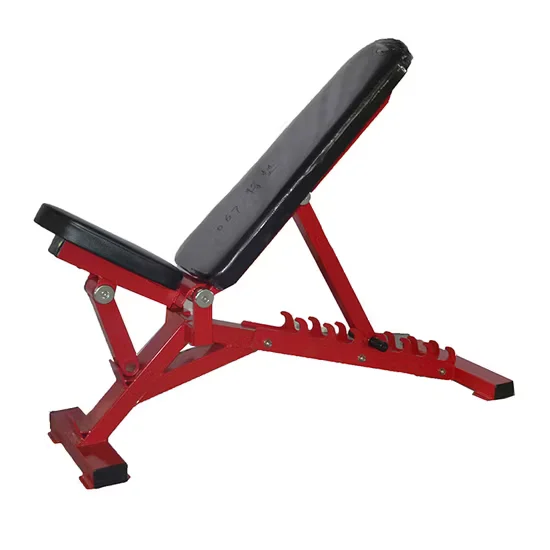
OS-H5067 Adjustable Bench, Incline / Flat / Decline Positions, 1673×706×1390mm — engineered with a steel frame and reinforced adjustment mechanism for stable locking across all angles under heavy commercial use. High-density foam cushion with wear-resistant upholstery ensures long-term durability in high-traffic environments. Every unit undergoes full load testing before shipment to guarantee structural integrity for professional gym settings.
// Spec Highlights
• Direct from Manufacturer · No Middlemen · Worldwide Shipping
01
// Material
Imported Solid Wood
Premium hardwood frames sourced for density and visual warmth.
02
// Hardware
Medical-Grade Silent
Whisper-quiet pulleys and springs for clinical environments.
03
// Customization
Appearance OEM
Color, upholstery, and branding tailored to your studio.
04
// Service
Layout Design
Free venue planning for studios and rehab institutions.
Every component is selected for longevity, performance, and aesthetic harmony - from imported hardwood frames to silent medical-grade accessories.
// Features
Every Frame Load-Tested — each adjustable bench undergoes full-capacity validation on the line before crating, not just a sample from the batch.
| Parameter | Value |
|---|---|
| Designation | OS-H5067 |
| Product Type | Adjustable Bench |
| Product Dimensions | 1673 × 706 × 1390 mm |
| Net Weight | 38 kg |
| Frame Material | Steel |
| Adjustment Positions | Incline / Flat / Decline |
| Exercise Part | Chest |
| Main Frame Color | Available per customer specification |
| Cushion Color | Available per customer specification |
| OEM / ODM | Acceptable |
| Transport Package | Plywood Box |
| Certification | ISO 9001, CE |
| Facility Type | Typical Use |
|---|---|
| Commercial gym strength floor | Primary dumbbell pressing station paired with adjustable racks |
| Hotel fitness center | Multi-angle training for diverse guest fitness levels |
| University strength and conditioning room | High-frequency bench work for athletic programs |
| Professional sports club | Incline and decline pressing within periodized strength cycles |
| Community fitness center | Durable shared-use bench accommodating varied body types |
The locking mechanism gives out long before the steel yields.
When a commercial adjustable bench sees hundreds of adjustments per week, the pin or latch that holds the backrest angle starts to develop play. That play translates into wobble during heavy incline presses, and eventually the user feels the bench shift mid-set. We have pulled benches off gym floors where the frame tubes were still perfectly straight, but the adjustment detents were so worn the backrest would slip under load. The OS-H5067 is built so the locking interface is the last thing to wear, not the first. [NEED_CITE: EN 957 structural requirements for stationary training equipment]
The OS-H5067 covers the full incline-to-decline range for dumbbell and barbell pressing movements, targeting the pectorals, anterior deltoids, and triceps across multiple angles. On a commercial strength floor, it typically sits between a dumbbell rack and a power rack, or flanks a Smith machine station. It suits high-traffic facilities where a single bench must serve users from lightweight rehabilitation work to heavy overload sets. The 1673 mm length accommodates taller users while keeping the footprint tight enough for dense equipment layouts. A commercial adjustable bench incline flat decline configuration like this one eliminates the need for three separate fixed-angle benches.
Every time a user drops a loaded barbell onto the uprights or sets a heavy dumbbell down on the seat edge, the bench absorbs an impact spike that concentrates at the hinge point where the backrest meets the base. In a busy gym, that hinge cycles through hundreds of position changes per week, each one introducing micro-movement at the lock interface. The welded joint at the base of the backrest support sees both static load from the user’s weight and eccentric shock from dropped weights. Upholstery compression at the contact points adds another wear path, as low-density foam collapses and shifts load onto the frame rails. Powder coating at the hinge and pin contact zones must resist abrasion from repeated metal-on-metal adjustment cycles. [NEED_CITE: weld classification and fatigue performance in structural steel]
The 38 kg net weight of the OS-H5067 signals a frame mass that resists tipping during aggressive decline presses and heavy dumbbell flyes. A lighter bench shifts when a user reaches for a dumbbell off-center, creating a safety hazard on a crowded strength floor. The steel frame specification, combined with the 1673 mm overall length, provides a base-to-height ratio that keeps the center of gravity low across all three adjustment positions. Continuous MIG welding at the hinge base and foot contacts distributes stress along the full seam rather than concentrating it at isolated tack points, which is where fatigue cracks initiate. The multi-position adjustment mechanism is designed so that the locking pin engages fully into each detent, eliminating the half-engaged state that causes backrest slip under load. Upholstery options are available in standard or high-density configurations, allowing facility operators to match foam density to their expected daily user volume.
A bench built with thin-wall tubing will feel solid on day one but begins to flex noticeably once the daily load cycle accumulates. Point-welded joints at the adjustment bracket eventually crack under repeated off-center loading, leaving the backrest loose and unsafe. Low-density cushion foam compresses within months of commercial use, exposing the steel frame beneath the vinyl and forcing an upholstery replacement that takes the bench offline. Thin powder coating at the pin contact points chips away to bare metal, inviting corrosion that accelerates in humid gym environments. Non-standard hardware in the adjustment mechanism means replacement pins and bushings are unavailable, turning a minor wear part into a full bench retirement. [NEED_CITE: commercial fitness equipment upholstery lifespan under high-frequency use]
The frame steel on the OS-H5067 is sourced from mill-certified Q235 and Q345 coil, so the material grade is traceable from the raw stock to the finished bench. Robotic MIG welding produces continuous seam lines at the hinge base and foot joints, eliminating the cold-joint and spot-weld failures that plague high-cycle equipment. Every unit is load-tested before it leaves the line, meaning the bench you receive has already been pushed to capacity under controlled conditions. The 200μm industrial powder coating resists chipping at the adjustment contact zones where metal-on-metal cycling is most aggressive. A 10-year frame warranty backs the structural integrity of the bench across its commercial service life. For facility planners, the 1673 × 706 mm footprint comes with recommended clearance dimensions so that adjacent racks and dumbbell stations maintain safe operating gaps. OEM customization covers frame color, cushion color, and branded elements to match facility identity.
Share your strength floor square footage and current equipment schedule to receive a 2D or 3D layout showing the OS-H5067 positioned with correct safety clearances around each station. Specify your expected daily user volume so we can recommend the appropriate upholstery density and frame finish for your traffic level. Provide the body-type range of your user population to confirm the incline and decline positions accommodate your members comfortably. Outline any custom color, logo, or cushion material requirements so the bench integrates with your facility branding from day one.
Q: How do I distinguish a commercial-grade adjustable bench from a light-commercial one?
A: Inspect the frame tube wall thickness and the adjustment locking mechanism. Commercial benches use heavier-gauge steel with full-engagement pin locks, while light-commercial units often rely on thinner tubing and friction-based latches that develop play quickly under daily use. Request mill certificates and load-test documentation as proof.
Q: What causes the backrest adjustment mechanism to loosen over time?
A: Repeated position changes wear the contact surfaces between the locking pin and the detent plate. Off-center loading during heavy presses accelerates this wear. Preventive maintenance includes monthly inspection of pin engagement depth and periodic lubrication of the sliding surfaces to reduce metal-on-metal abrasion.
Q: How often does commercial bench upholstery need replacement?
A: Upholstery lifespan depends on foam density and daily user volume. Low-density foam compresses and splits within months in high-traffic gyms, while high-density options maintain their shape significantly longer. Specifying the correct foam density at purchase reduces downtime and replacement costs over the bench service life.
Q: How should adjustable benches be paired with fixed benches on a strength floor?
A: Adjustable benches serve users who need multiple press angles, while fixed flat benches handle high-volume flat-press work without adjustment wear. A typical layout allocates adjustable units near dumbbell racks and fixed benches near barbell stations, balancing versatility against mechanical simplicity based on traffic patterns.
Q: What safety clearance should surround each adjustable bench in a commercial layout?
A: Allow enough space on both sides for a user to handle dumbbells without contacting adjacent equipment, plus rear clearance for the decline position where the bench extends backward. Exact dimensions depend on the bench footprint and the type of neighboring stations, and should be confirmed through a scaled floor plan.
Premium aesthetics meet quiet operation for boutique studio environments.
Medical-grade silence and precision for sports & postpartum recovery.
Furniture-grade craftsmanship for premium residential installations.
Compact premium setups for one-on-one and small-group training.
Aesthetic Pilates integration for hybrid wellness studio programming.
Multi-unit deployment with instructor-grade reliability for certification programs.
Tell us about your project. Our team will respond within 24 hours with pricing, customization options, and shipping details.
// Sales Director
William
+86 132 2531 1800
// Export Manager
Bella
+86 198 5412 8032
william@bickfit.com