01 / Scenario
STUDIO
P
High-End Pilates Studios
Premium aesthetics meet quiet operation for boutique studio environments.

ISO
9001
CE
Certified
OEM
Available
10YR
Warranty
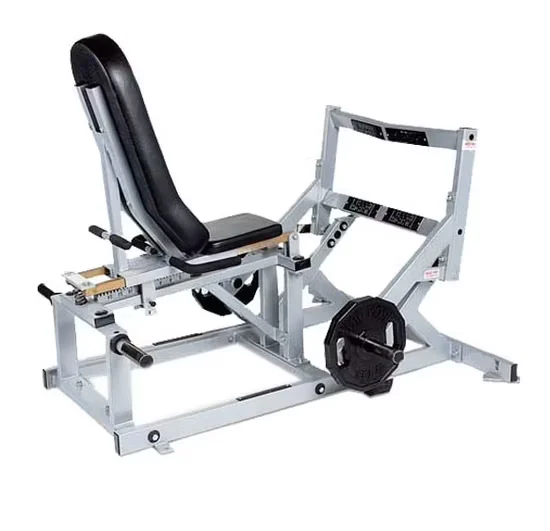
Plate Loaded Leg Extension Machine, 1433×1477×1470mm, 126kg Net Weight — iso-lateral movement pattern enables independent quad isolation with plate loading system. Engineered for commercial gym environments with CE and ISO9001 certification, supporting high-traffic daily use. Every unit undergoes load testing before shipment with 10-year frame warranty and floor planning support available.
// Spec Highlights
• Direct from Manufacturer · No Middlemen · Worldwide Shipping
01
// Material
Imported Solid Wood
Premium hardwood frames sourced for density and visual warmth.
02
// Hardware
Medical-Grade Silent
Whisper-quiet pulleys and springs for clinical environments.
03
// Customization
Appearance OEM
Color, upholstery, and branding tailored to your studio.
04
// Service
Layout Design
Free venue planning for studios and rehab institutions.
Every component is selected for longevity, performance, and aesthetic harmony - from imported hardwood frames to silent medical-grade accessories.
// Features
Steel Traceability — every tube in this plate loaded leg extension traces back to a certified Q235/Q345 coil with verifiable 11-gauge wall thickness.
| Parameter | Value |
|---|---|
| Product Type | Plate Loaded Leg Extension Machine |
| Frame Steel Gauge | 11-gauge |
| Frame Tube Size | 3×3 inch |
| Steel Grade | Q235 / Q345 industrial steel, mill-certified |
| Welding Type | Robotic MIG, continuous weld |
| Loading Type | Plate loaded |
| Bearing Type | Sealed industrial bearings |
| Upholstery | Standard or high-density options available |
| Powder Coating | 200μm scratch-resistant, sandblast pre-treated |
| Product Dimensions | 1433×1477×1470 mm |
| Footprint | 1433×1477 mm |
| Net Weight | 126 kg |
| Color Options | Main frame and cushion according to customer requirements |
| Certification | ISO 9001, CE |
| Facility Type | Typical Use |
|---|---|
| Commercial gym strength floor | Isolation quad training in high-traffic plate loaded zones |
| University strength and conditioning room | Team-based leg day programming with rapid athlete turnover |
| Hotel and resort fitness center | Durable quad isolation for guests of varying strength levels |
| Rehabilitation and performance center | Controlled knee extension under supervised loading |
| Crossfit box functional zone | Supplemental hypertrophy work in accessory stations |
Continuous MIG welds at the pivot arm eliminate the crack propagation path that spot welds leave open.
I have seen leg extensions come back from commercial floors with visible fractures right where the swing arm connects to the main frame. The root cause is almost always spot-welded joints that passed visual inspection but left cold joints underneath. On a plate loaded leg extension, that pivot point absorbs hundreds of eccentric loading cycles per day as athletes drop the weight back to the start position. A robotic MIG process lays a continuous bead along the entire joint, removing the intermittent gaps where fatigue cracks originate [NEED_CITE: weld classification and fatigue performance in structural steel].
This commercial plate loaded leg extension machine targets knee extension in the sagittal plane, isolating the quadriceps through a fixed arc with iso-lateral movement allowing each leg to work independently. It complements compound lower-body stations like hack squats and leg presses by providing focused quad activation without spinal loading. The iso-lateral design accommodates athletes with unilateral imbalances, making it suitable for facilities serving both general population members and competitive lifters.
The pivot arm on a leg extension experiences cyclical impact loading each time a user reverses direction at the bottom of the movement. Over months of commercial use, this concentrates stress at the weld line connecting the arm to the upright frame. Sealed bearings at the pivot point prevent sweat and dust infiltration that accelerates wear in unsealed bushings, maintaining consistent swing resistance [NEED_CITE: EN 957 structural requirements for stationary training equipment]. The powder coating at plate-loading horns endures repeated contact with steel plates, requiring sufficient thickness to prevent chipping down to bare metal.
The 11-gauge steel frame with 3×3 inch tube cross-section establishes the deformation threshold when athletes load multiple plates per horn. Thinner tubing would introduce visible flex during maximal contractions, compromising movement stability. Robotic MIG welding ensures consistent penetration depth at the pivot joint, directly influencing fatigue life at the highest-stress connection point. Sealed industrial bearings at the pivot axis resist the sweat and chalk dust prevalent in commercial environments, preserving smooth operation where open bushings develop play. The 200μm powder coating applied over sandblast pre-treatment provides adhesion strength sufficient to withstand daily plate contact and cleaning chemical exposure without flaking.
Thinner frame tubes on leg extensions flex noticeably under heavy plate loads, creating a sensation of instability that discourages users from progressive overload. Spot-welded pivot joints may appear solid initially but develop micro-cracks that propagate under repeated eccentric loading, eventually requiring frame replacement. Unsealed bushings at the pivot axis accumulate particulate contamination, developing play that manifests as knocking sounds and inconsistent resistance within the first year. Insufficient powder coating thickness at the loading horns chips away under daily plate contact, exposing bare steel to humidity and accelerating corrosion [NEED_CITE: powder coating adhesion and thickness standards for fitness equipment]. Low-density upholstery compresses permanently under repeated use, requiring reupholstering far earlier than high-density alternatives.
The 11-gauge Q235/Q345 frame steel arrives with mill certification traceable to the producing coil, so the gauge claim is verifiable rather than marketing language. Robotic MIG welding produces continuous weld lines at the pivot joint, eliminating the spot-weld gaps that become failure points under commercial loading cycles. Every unit undergoes load testing before shipment rather than relying on sample-based inspection. The 200μm industrial powder coating over sandblast pre-treatment maintains appearance integrity at high-contact zones like the plate horns. A 10-year frame warranty backs the structural claims. The 1433×1477 mm footprint allows facility planners to calculate safe clearance zones for loading and unloading plates on both sides. OEM customization options cover frame color and upholstery selection to match facility branding.
Provide your strength zone floor area and current equipment list to receive a 2D-3D layout that positions this leg extension with proper plate-loading clearances. Specify your estimated daily user volume so the structural grade matches your traffic pattern. Confirm the body size range of your target members to verify the adjustment mechanism covers their needs. State any color, logo, or upholstery customization requirements for integrated branding.
Q: How do I verify that a leg extension is truly commercial-grade rather than light-commercial?
A: Request mill-certified documentation showing the exact steel gauge and grade used in the frame. Commercial-grade units use 11-gauge or thicker steel with traceable coil origins, while light-commercial frames often use thinner tubing with vague specifications. Inspect the welding method at pivot joints, as continuous MIG welds outperform spot welds under repeated heavy loading cycles.
Q: What frame specifications are necessary for safe operation under heavy plate loading?
A: The frame must use 11-gauge or thicker steel with tube dimensions of at least 3×3 inches to resist flex under maximum loads. The welding method at the pivot joint should be continuous MIG rather than spot welding to prevent fatigue crack propagation. Sealed bearings at the pivot axis prevent contamination buildup that leads to play development.
Q: How does iso-lateral movement benefit quad training compared to bilateral designs?
A: Iso-lateral movement allows each leg to work independently along its own arc, preventing the stronger leg from compensating for the weaker one during knee extension. This addresses unilateral strength imbalances common in athletes and general population members. It also enables single-leg rehabilitation work without requiring a separate dedicated machine.
Q: What maintenance do the pivot bearings and adjustment mechanisms require?
A: Sealed industrial bearings at the pivot point require periodic visual inspection to confirm seal integrity and wipe-down to remove accumulated dust and chalk. Adjustment mechanism hardware should be checked for loosening at scheduled maintenance intervals. Keeping the pivot area clean prevents particulate contamination that accelerates wear in any bearing system.
Premium aesthetics meet quiet operation for boutique studio environments.
Medical-grade silence and precision for sports & postpartum recovery.
Furniture-grade craftsmanship for premium residential installations.
Compact premium setups for one-on-one and small-group training.
Aesthetic Pilates integration for hybrid wellness studio programming.
Multi-unit deployment with instructor-grade reliability for certification programs.
Tell us about your project. Our team will respond within 24 hours with pricing, customization options, and shipping details.
// Sales Director
William
+86 132 2531 1800
// Export Manager
Bella
+86 198 5412 8032
william@bickfit.com