01 / Scenario
STUDIO
P
High-End Pilates Studios
Premium aesthetics meet quiet operation for boutique studio environments.
ISO
9001
CE
Certified
OEM
Available
10YR
Warranty
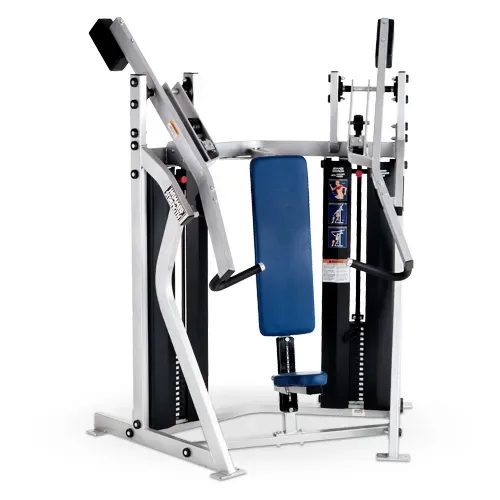
Define Strength MTS-8005 Iso-Lateral Shoulder Press, Dual 100 kg Pin-Select Stacks, 338 kg Frame Mass — engineered with sealed bearing pivot points and converging press path for consistent resistance under heavy overhead loading. 3×3 inch frame steel with continuous robotic MIG welds eliminates flex at stress junctions during high-traffic commercial use. Every unit undergoes individual load testing before shipment to verify structural integrity.
// Spec Highlights
• Direct from Manufacturer · No Middlemen · Worldwide Shipping
01
// Material
Imported Solid Wood
Premium hardwood frames sourced for density and visual warmth.
02
// Hardware
Medical-Grade Silent
Whisper-quiet pulleys and springs for clinical environments.
03
// Customization
Appearance OEM
Color, upholstery, and branding tailored to your studio.
04
// Service
Layout Design
Free venue planning for studios and rehab institutions.
Every component is selected for longevity, performance, and aesthetic harmony - from imported hardwood frames to silent medical-grade accessories.
// Features
Mill-Certified Frame — 11-gauge steel with traceable coil origin ensures structural integrity under sustained dual-stack overhead loading on the MTS-8005.
| Parameter | Value |
|---|---|
| Designation | MTS-8005 |
| Product Type | Iso-Lateral Shoulder Press Machine |
| Frame Steel Gauge | 11-gauge, 3×3 inch tube |
| Steel Grade | Q235 / Q345 mill-certified |
| Welding Type | Robotic MIG continuous weld |
| Weight Stack | 100 kg × 2 stacks |
| Loading Type | Pin select |
| Bearing Type | Sealed industrial bearings |
| Pulley System | Aircraft-cable pulley |
| Upholstery | Standard or high-density options |
| Powder Coating | 200μm scratch-resistant, sandblast pre-treatment |
| Product Dimensions | 114 cm × 158 cm × 137 cm |
| Net Weight | 338 kg |
| Machine Grade | Commercial Use |
| Certification | CE, ISO 9001:2015, SGS |
| Warranty | 10-year frame |
| Facility Type | Typical Use |
|---|---|
| Commercial gym strength floor | Primary overhead pressing station for general membership |
| Hotel and resort fitness center | Heavy-use selectorized option for diverse guest demographics |
| University athletic department | Iso-lateral shoulder development in strength and conditioning programs |
| Strength-focused training facility | High-frequency pressing station for intermediate to advanced lifters |
Frame rigidity determines whether the pressing path stays true or drifts off-axis during heavy sets.
Many commercial gym floors end up with shoulder press machines that claim "commercial grade" construction but provide no verifiable steel gauge or mill certification. Under repeated dual 100 kg stack loading, undersized frames develop micro-flex at the weld junctions. The converging press path — which is supposed to track the natural arc of the shoulder joint — begins to wander. Users feel it as an unexplained sticking point or asymmetric resistance. Over months, spot-welded joints at the main upright and base gussets crack silently beneath the powder coat until the failure becomes visible [NEED_CITE: weld classification and fatigue performance in structural steel]. By that point, the commercial iso-lateral shoulder press machine has already compromised movement integrity for hundreds of users.
The MTS-8005 covers the vertical pressing plane, targeting the anterior and medial deltoids with secondary triceps involvement through a converging iso-lateral path. In a commercial strength floor, it complements plate-loaded overhead stations by offering quick pin-select adjustment for high-turnover environments. The dual independent stacks allow unilateral loading, which suits facilities serving users across a wide strength spectrum — from hotel guests new to resistance training to university athletes pressing near full stack. The commercial iso-lateral shoulder press machine fits high-density layouts where plate handling would bottleneck traffic flow.
Every overhead press cycle imposes dynamic eccentric loading on the upright welds and base connections when the user returns the handles under resistance. At high traffic volumes — multiple users per hour across operating days — fatigue cycles accumulate at the junction where the main upright meets the base frame [NEED_CITE: EN 957 structural requirements for stationary training equipment]. Sealed bearings at the pivot points must resist dust and perspiration ingress that gradually degrades unsealed alternatives. The weight stack guide rods face off-center loading whenever a single stack is engaged independently, demanding adequate rod diameter and bushing clearance. Powder coating at the handle contact zones and weight stack shroud edges endures constant friction and chemical exposure from cleaning agents applied between users.
The 11-gauge frame steel in a 3×3 inch tube cross-section establishes the deformation threshold well above what dual 100 kg stacks generate during peak concentric force. Robotic MIG continuous welding eliminates the cold-start weak points inherent in manual spot-weld sequences — each structural junction maintains a consistent penetration profile along the entire seam length. Sealed industrial bearings at the pivot axis prevent the axial play that develops in unsealed bushings once gym-floor dust and perspiration penetrate the race. The aircraft-cable pulley system pairs cable diameter with sheave groove profiles to prevent the internal strand fatigue that causes premature fraying. The 200μm powder coating, applied after sandblast surface preparation, provides film thickness that resists chipping at the high-contact zones where handles, shrouds, and guide brackets interface during daily operation.
Thinner frame sections deflect visibly when users press near full stack, and that flex translates into lateral play at the handle grip that feels unstable. Spot-welded joints at the upright-to-base junction may pass initial visual inspection but develop hairline fractures under hundreds of daily eccentric return cycles. Non-sealed bearings accumulate particulate contamination within months, producing grinding noise and eventual play that requires replacement — pulling the machine offline and generating maintenance labor costs repeatedly. Low-density upholstery foam compresses permanently under commercial-frequency seating, splitting at the stitch lines and requiring full pad replacement far earlier than expected [NEED_CITE: commercial upholstery density standards for gym equipment]. Insufficient powder coating thickness chips at the weight stack shroud contact edges, exposing bare steel to humidity and perspiration corrosion within the first year.
The 11-gauge Q235/Q345 steel used in this frame is mill-certified and traceable to the coil origin — not specified vaguely as commercial grade. Robotic MIG welding produces continuous seam lines at every structural junction, with no spot-weld gaps where fatigue cracks originate. Every MTS-8005 unit undergoes load testing before shipment as part of a three-stage QC protocol, not just sample-based batch inspection. The 200μm scratch-resistant powder coating over sandblast preparation maintains coating integrity at handle contact points and shroud edges through sustained commercial use. The 10-year frame warranty reflects the structural margin engineered into the machine. For facility layout, the 114 cm × 158 cm footprint and safe clearance spacing can be integrated into 2D-3D CAD floor planning alongside adjacent stations to avoid unsafe traffic gaps. OEM private label options allow brand-matched color and logo specification for chain operators.
Provide your strength floor square footage and current equipment list to receive a 2D-3D layout incorporating the MTS-8005 with proper clearance between adjacent stations. Specify expected daily user volume so the structural grade and stack capacity align with your traffic demands. Indicate the user demographic strength range to confirm that dual 100 kg pin-select stacks cover the loading requirements without gap zones. Communicate any brand-matching requirements for frame color, logo placement, or upholstery material to support consistent visual identity across your facility.
Q: How does frame weight correlate with stability during heavy overhead pressing?
A: The 338 kg net mass of the MTS-8005 provides structural inertia that counterbalances the dynamic forces generated when users press dual 100 kg stacks overhead. A lighter frame would require greater reliance on floor anchoring and still transmit vibration to adjacent stations. Machine mass, combined with the 11-gauge 3×3 inch tube geometry, keeps the base planted during explosive concentric phases without lateral drift or uplift at the rear supports.
Q: What distinguishes commercial-grade from light-commercial selectorized machines?
A: Commercial-grade construction specifies verifiable frame steel gauge with mill certification, continuous robotic MIG welding at structural junctions, sealed bearings rated for continuous daily use, and industrial powder coating applied at thickness levels that withstand high-traffic contact wear. Light-commercial machines typically use thinner gauge tubing, manual or spot-welded joints, unsealed bushings, and thinner cosmetic coatings that degrade within months of gym-floor operation.
Q: How do iso-lateral movement patterns reduce shoulder joint stress compared to fixed-bar presses?
A: Iso-lateral design allows each arm to move independently along its own converging arc, matching the natural path of the glenohumeral joint. Fixed-bar machines force both arms into a single rigid plane, which can create shear stress when the user’s bilateral shoulder mechanics differ. The independent stack loading also prevents the stronger side from compensating, ensuring balanced muscular development across both pressing limbs.
Q: What maintenance intervals apply to weight stack guide rods and selector pins in high-traffic use?
A: Guide rods should be inspected for surface scoring and bushing play every quarter in high-traffic commercial settings, with bushing replacement scheduled when lateral movement exceeds tolerance. Selector pins require checking for detent spring tension and smooth engagement with the stack plates. Keeping rods clean of dust accumulation and applying manufacturer-specified lubricant at recommended intervals prevents binding under off-center loading conditions.
Q: How should shoulder press stations be spaced in commercial gym floor planning for safe clearance?
A: Allow sufficient lateral clearance on both sides for users to enter and exit the seat without contacting adjacent equipment or foot traffic paths. The rear clearance must accommodate the full stack travel and any maintenance access panels. Front clearance should permit users to approach and mount the seat freely. Providing your floor plan dimensions enables precise CAD layout with these spacing requirements integrated across the entire strength zone.
Premium aesthetics meet quiet operation for boutique studio environments.
Medical-grade silence and precision for sports & postpartum recovery.
Furniture-grade craftsmanship for premium residential installations.
Compact premium setups for one-on-one and small-group training.
Aesthetic Pilates integration for hybrid wellness studio programming.
Multi-unit deployment with instructor-grade reliability for certification programs.
Tell us about your project. Our team will respond within 24 hours with pricing, customization options, and shipping details.
// Sales Director
William
+86 132 2531 1800
// Export Manager
Bella
+86 198 5412 8032
william@bickfit.com