
01 / Scenario
STUDIO
P
High-End Pilates Studios
Premium aesthetics meet quiet operation for boutique studio environments.
ISO
9001
CE
Certified
OEM
Available
10YR
Warranty
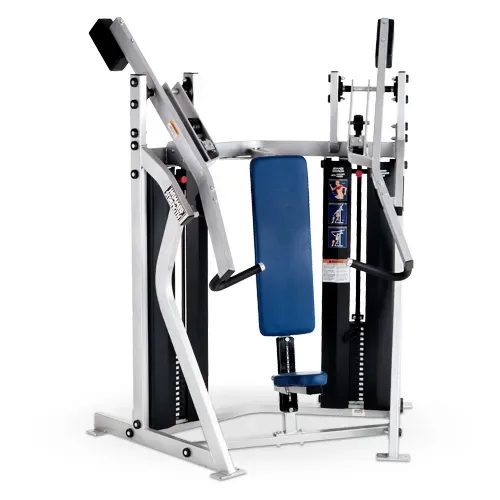
MTS-8007 Selectorized ISO-Lateral High Row Machine, Dual 80kg Weight Stacks, 119×183×196cm Footprint — built with 3×3 inch frame steel and sealed industrial bearings to eliminate play under high-traffic loading, while the iso-lateral converging path ensures balanced bilateral back engagement across all user sizes. Every unit undergoes full load testing before shipment, backed by a 10-year frame warranty and free floor planning support.
// Spec Highlights
• Direct from Manufacturer · No Middlemen · Worldwide Shipping
01
// Material
Imported Solid Wood
Premium hardwood frames sourced for density and visual warmth.
02
// Hardware
Medical-Grade Silent
Whisper-quiet pulleys and springs for clinical environments.
03
// Customization
Appearance OEM
Color, upholstery, and branding tailored to your studio.
04
// Service
Layout Design
Free venue planning for studios and rehab institutions.
Every component is selected for longevity, performance, and aesthetic harmony - from imported hardwood frames to silent medical-grade accessories.
// Features
11-Gauge Traceable Steel — Every MTS-8007 frame tube is sourced from Q235/Q345 mill-certified coils, ensuring structural integrity under continuous commercial loading.
| Parameter | Value |
|---|---|
| Designation | MTS-8007 |
| Product Type | Selectorized ISO-Lateral High Row Machine |
| Frame Steel | 11-gauge, 3×3 inch tube |
| Steel Grade | Q235 / Q345 industrial steel, mill-certified |
| Welding Type | Robotic MIG continuous weld |
| Weight Stack | 80 kg × 2 stacks |
| Loading Type | Pin select |
| Bearing Type | Sealed industrial bearings |
| Pulley System | Aircraft-cable pulley system |
| Upholstery | Available in standard or high-density options |
| Powder Coating | 200μm scratch-resistant industrial finish |
| Product Dimensions | 119 cm × 183 cm × 196 cm |
| Net Weight | 354 kg |
| Machine Grade | Commercial use |
| Certification | CE, ISO 9001, RoHS, SGS |
| Warranty | 10-year frame |
| Facility Type | Typical Use |
|---|---|
| Commercial gym strength floor | High-frequency back training station for diverse membership base |
| Hotel and resort fitness center | Compact footprint selectorized station for multi-shift guest use |
| University strength and conditioning room | Dual 80 kg stacks supporting progressive overload for athletic programs |
| Rehabilitation and performance center | Iso-lateral movement for balanced unilateral loading during return-to-training phases |
Robotic MIG continuous welds eliminate the fatigue-crack initiation points that spot welds create at every joint intersection.
When gym owners evaluate a commercial selectorized iso-lateral high row machine, most spec sheets mention "heavy-duty frame" without disclosing whether welds are continuous or intermittent. I have seen spot-welded high row frames develop visible hairline cracks along the upright-to-base junction within eight months of high-traffic use. The failure is never sudden — it starts as a faint rattle during concentric loading, then progresses to lateral frame sway under peak load. [NEED_CITE: weld classification and fatigue performance in structural steel]
Continuous MIG welds distribute stress along the entire joint length rather than concentrating it at discrete points. On the MTS-8007, every frame junction receives uninterrupted weld passes, which is the difference between a frame that survives a decade of daily commercial abuse and one that requires structural rework during its second year.
The iso-lateral high row targets the latissimus dorsi, rhomboids, and posterior deltoids through a converging pulling arc that accommodates shoulder width variation across users. In a strength zone layout, this selectorized iso-lateral high row machine complements plate-loaded rowing stations by offering faster weight transitions for circuit-style programming. Facilities running high daily throughput benefit from the pin-select system — members spend seconds adjusting load rather than loading and unloading plates. The independent arm movement also serves members with unilateral strength imbalances, making it a practical fit for gyms serving a wide range of training experience levels.
The MTS-8007 endures predominantly tensile and eccentric loading cycles as users pull heavy stacks through the full range of motion. During peak hours, a single station may see repeated loading cycles with minimal rest intervals, accelerating fatigue accumulation at weld junctions and bearing housings. [NEED_CITE: EN 957 structural requirements for stationary training equipment] The sealed bearings at each pulley axis resist particulate ingress from chalk dust and perspiration, which is the primary wear mechanism in high-traffic pulling stations. The aircraft-cable system distributes load across multiple strand contact points, reducing localized fraying. Upholstery contact zones on the chest pad and seat endure sustained compressive force during every set, demanding density ratings that prevent permanent deformation over thousands of loading sessions. The 200μm powder coating on grip contact areas must tolerate sweat acidity and commercial cleaning agents without degrading to bare steel.
The 11-gauge 3×3 inch frame tube establishes a deformation threshold that meaningfully exceeds thinner-walled alternatives under equivalent loading — this is a function of moment of inertia, not marketing language. Robotic MIG continuous welding produces consistent penetration depth across every joint, whereas manual spot welding introduces operator-dependent variability in weld quality. Sealed industrial bearings maintain rotational tolerance far longer than unsealed bushings in environments where chalk residue and humidity are constant. The dual 80 kg weight stacks ride on precision guide rods with controlled clearance, preventing the binding that occurs when off-center loading deflects undersized rods. The 200μm powder coating applied over sandblasted substrate ensures mechanical adhesion that thin cosmetic coatings cannot match, particularly at high-wear contact points where pads and cables interface with the frame.
A thin-walled frame on a high row machine may pass initial visual inspection but begins to deflect under repeated heavy loading, altering the movement path and introducing lateral play that users feel immediately. Spot welds at frame junctions concentrate stress into small contact areas, and once a micro-crack initiates, it propagates with every loading cycle until the joint requires emergency repair or replacement. [NEED_CITE: fatigue crack propagation in welded steel structures] Non-sealed bearings in pulling stations absorb chalk dust and moisture, developing rotational play that translates into cable misalignment and uneven weight stack travel. Low-density upholstery compresses permanently within months of commercial use, forcing facility operators into a recurring cycle of pad replacement. Insufficient powder coating thickness at contact zones chips away to expose bare steel, accelerating corrosion in humid gym environments and shortening the equipment service life.
The 11-gauge Q235/Q345 mill-certified steel frame provides documented structural traceability from coil to finished unit, removing guesswork from procurement audits. Robotic MIG continuous welding across every junction ensures consistent fatigue resistance regardless of production batch. Each MTS-8007 undergoes individual load testing before shipment, not sample-based inspection — the unit that arrives at your facility has been verified under load. The 200μm industrial powder coating protects high-contact zones from sweat and cleaning chemical degradation over years of use. The 10-year frame warranty reflects confidence in the underlying structural engineering. For facility layout, the 119 × 183 cm footprint with documented safety clearances integrates into 2D-3D CAD floor plans, ensuring proper spacing between adjacent stations and compliant user circulation paths.
Provide your strength zone floor area and current equipment schedule to receive a 2D-3D layout integrating the MTS-8007 with compliant safety spacing and traffic flow. Specify your average daily user volume to confirm that the commercial-grade structural rating matches your throughput demands. Share the primary user demographic and body type range to verify that the chest pad and seat geometry accommodate your membership. Confirm any customization requirements including frame color, logo placement, or upholstery density preference for brand-aligned specification.
Q: How can a buyer verify that a selectorized machine truly meets commercial-grade standards?
A: Request mill-certified steel documentation showing tube gauge and grade, inspect whether welds are continuous or intermittent, confirm that sealed bearings are specified rather than unsealed bushings, and require individual unit load test certificates rather than sample-based reports. These four data points separate verifiable commercial construction from marketing claims.
Q: What is the relationship between frame tube wall thickness and load capacity?
A: Thicker gauge steel increases the moment of inertia in the frame tube, which directly raises the threshold at which the tube begins to deflect under load. A 3×3 inch 11-gauge tube resists bending and torsional forces meaningfully better than thinner alternatives, maintaining structural alignment under repeated heavy loading cycles common in commercial environments.
Q: How do sealed bearings compare to bushings in long-term maintenance cost?
A: Sealed bearings prevent chalk dust, moisture, and particulate matter from entering the rolling element interface, maintaining smooth rotation over a significantly longer service interval. Bushings in the same environment absorb contaminants and develop rotational play, requiring more frequent inspection, lubrication, and eventual replacement to prevent cable misalignment and uneven stack travel.
Q: How should spacing between selectorized stations be planned in a commercial layout?
A: Each station requires documented clearance on all sides for safe user entry, exit, and movement during exercise execution. Floor planning must account for the full range of motion envelope, not just the static footprint. Providing a CAD-based layout ensures that spacing meets both safety standards and efficient traffic flow during peak usage periods.
Premium aesthetics meet quiet operation for boutique studio environments.
Medical-grade silence and precision for sports & postpartum recovery.
Furniture-grade craftsmanship for premium residential installations.
Compact premium setups for one-on-one and small-group training.
Aesthetic Pilates integration for hybrid wellness studio programming.
Multi-unit deployment with instructor-grade reliability for certification programs.
Tell us about your project. Our team will respond within 24 hours with pricing, customization options, and shipping details.
// Sales Director
William
+86 132 2531 1800
// Export Manager
Bella
+86 198 5412 8032
william@bickfit.com


