01 / Scenario
STUDIO
P
High-End Pilates Studios
Premium aesthetics meet quiet operation for boutique studio environments.

ISO
9001
CE
Certified
OEM
Available
10YR
Warranty
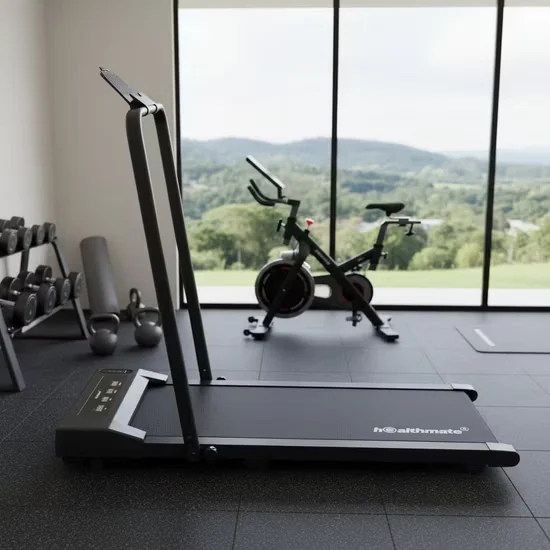
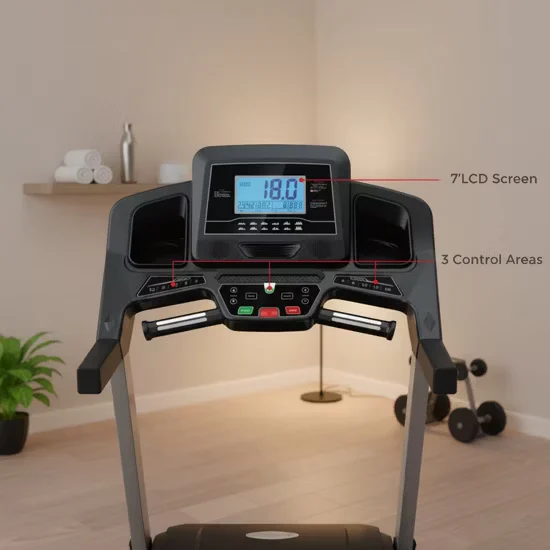
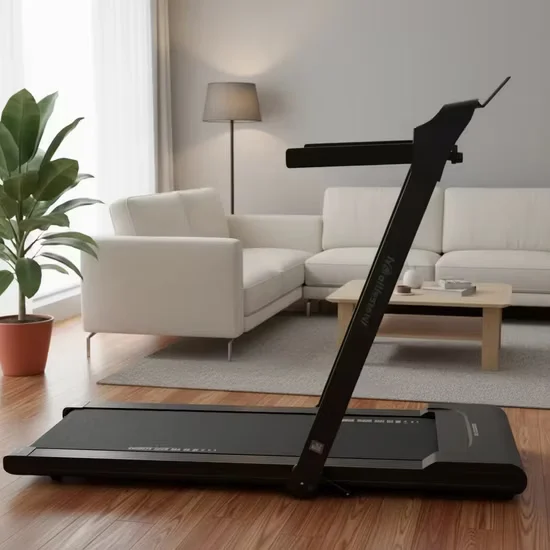
Foldable Household Treadmill, 1.5HP DC Motor, 1200×420mm Running Surface — engineered with a reinforced folding hinge joint designed to resist play after repeated cycles, paired with a 1.5HP DC motor (2.0HP peak) delivering consistent 1–12 km/h belt speed across a 1200×420mm deck sized for walking and light jogging. Integrated transport wheels enable compact relocation in apartment and small-space environments. - 12 preset programs with LCD tracking speed, distance, time, calories, and pulse - CE and RoHS certified for residential electrical safety standards. Every unit undergoes load testing at the folding joint and motor thermal verification before shipment.
// Spec Highlights
• Direct from Manufacturer · No Middlemen · Worldwide Shipping
01
// Material
Imported Solid Wood
Premium hardwood frames sourced for density and visual warmth.
02
// Hardware
Medical-Grade Silent
Whisper-quiet pulleys and springs for clinical environments.
03
// Customization
Appearance OEM
Color, upholstery, and branding tailored to your studio.
04
// Service
Layout Design
Free venue planning for studios and rehab institutions.
Every component is selected for longevity, performance, and aesthetic harmony - from imported hardwood frames to silent medical-grade accessories.
// Features
Folding Joint Rigidity Over Thin-Gauge Compromise — The hinge mechanism on this foldable household treadmill with transport wheels uses reinforced pin geometry to resist wobble after repeated fold cycles, addressing the structural failure point where most compact treadmills develop play within months of apartment use.
| Parameter | Value |
|---|---|
| Product Type | Household Folding Treadmill |
| Model | MT23B |
| Motor Power | 1.5 HP DC (Peak 2.0 HP) |
| Speed Range | 1–12 km/h |
| Running Surface | 1200 × 420 mm |
| Folded | Yes, with integrated transport wheels |
| LCD Display | Speed / Distance / Time / Calories / Pulse |
| Preset Programs | 12 |
| Net Weight | 37 kg |
| Product Dimensions (Unfolded) | 1490 × 720 × 1100 mm |
| Certification | CE, RoHS |
| Production Capacity | 3000 units/month |
| Facility Type | Typical Use |
|---|---|
| Apartment home gym | Daily walking and light jogging in limited floor space |
| Residential fitness room | Compact cardio paired with light strength equipment |
| Condo workout area | Foldable storage between sessions to reclaim living space |
| Small-space personal studio | Self-powered daily cardio for individual training routines |
The hinge is where compact treadmills compromise structural integrity — repeated fold-unfold cycles expose weak pin geometry and thin-gauge steel that develops lateral play within months.
Most foldable household treadmill with transport wheels on the market use minimal wall thickness at the folding joint to reduce weight and shipping cost. The result is predictable: the pin loosens, the frame wobbles at speed, and the running surface shifts under footstrike. This is not a comfort issue — it is a structural degradation path that accelerates wear on the belt, motor mount, and deck cushioning layer. In a high-frequency residential environment, the folding mechanism becomes the first point of failure long before the motor or electronics show any sign of fatigue [NEED_CITE: fatigue performance of pinned joints in cyclic folding mechanisms].
This foldable household treadmill with transport wheels occupies a single-plane linear motion niche — sustained walking and light jogging at speeds up to 12 km/h across a 1200 × 420 mm deck. In a residential strength and cardio setup, it pairs with adjustable dumbbells, resistance bands, or a compact multi-station to create a balanced training zone without demanding dedicated floor area. The 1200 mm deck length accommodates average stride length for walking and moderate jogging, while the 420 mm width provides lateral margin for natural foot placement variation. The folded footprint allows the unit to be rolled into a corner or against a wall, making it viable for apartments where a fixed-frame treadmill would permanently consume usable space.
The folding joint on a foldable household treadmill with transport wheels experiences a unique stress profile: static load during running, impact load from footstrike, and cyclic shear from the fold-unfold action itself. Each cycle introduces micro-movement at the pin interface. If the pin diameter is undersized or the receiving bushing is unhardened, this movement compounds — the hole elongates, the fit loosens, and lateral stability degrades. The 1.5 HP DC motor with 2.0 HP peak must also maintain belt speed consistency under varying user weight, which places continuous thermal demand on the motor windings and drive board. Deck cushioning between the belt and the rigid frame absorbs impact energy, but if the cushioning layer compresses permanently, the shock transfers directly to the user’s joints and the frame’s mounting points [NEED_CITE: vibration damping requirements for motorized treadmill deck systems].
The 1.5 HP DC continuous rating with 2.0 HP peak defines the motor’s thermal envelope — continuous rating determines how long the motor sustains a given speed and user load before thermal protection intervenes, while peak rating reflects short-duration capacity during incline changes or heavier footstrike. The 1200 × 420 mm running surface maps directly to stride mechanics: 1200 mm covers the full stride cycle for walking and light jogging for users up to approximately 175 cm in height, while 420 mm width provides a safety margin beyond the minimum required for natural foot placement variability. The 12 preset programs adjust speed and incline profiles automatically, which places variable demand on the motor and control board — a well-designed drive system modulates current delivery smoothly rather than stepping abruptly between targets. The LCD console tracks speed, distance, time, calories, and pulse, providing real-time feedback without requiring external device pairing. Transport wheel load capacity must exceed the 42 kg gross weight with margin for dynamic force during movement over thresholds or carpet edges.
A foldable household treadmill with transport wheels that uses thin-wall tubing at the hinge point will develop visible wobble within months of daily use. The cost to replace the unit far exceeds the initial savings from choosing a lower-gauge frame. Non-sealed bearings at the front roller allow dust and moisture ingress, accelerating wear and creating belt tracking issues that lead to premature belt replacement. Low-density deck cushioning compresses permanently, transferring impact to both the user’s joints and the frame structure. Thin powder coating chips at contact points during folding, exposing bare steel to汗液 and ambient moisture — corrosion follows quickly in a home environment where the treadmill may be stored near a bathroom or kitchen. When the folding pin wears beyond tolerance, replacement parts are rarely available from the original supplier, rendering the entire unit non-functional.
The foldable household treadmill with transport wheels is manufactured within a vertically integrated facility where every structural decision is traceable — from steel sourcing through welding, finishing, and final load verification. The 1.5 HP DC motor undergoes thermal cycling validation before assembly to confirm continuous duty performance. Each unit is tested for folding joint stability under load, simulating repeated cycle use before the hinge is approved for shipment. The 1200 × 420 mm deck is mounted on a shock-absorbing cushioning system designed for daily residential impact. Transport wheels are rated for the full gross weight plus dynamic margin, ensuring reliable relocation across residential floor types. BICKFIT provides 2D-3D layout planning support for clients configuring multi-equipment home gym spaces, ensuring this treadmill integrates with correct clearance for safe folding operation and user access. OEM packaging and branding options are available for distributors building a residential cardio line.
Provide your available floor area and target equipment list to receive a 2D-3D spatial layout showing how this foldable household treadmill with transport wheels integrates with adjacent stations. Specify expected daily usage frequency so the structural grade and motor duty cycle can be matched to your operational profile. Indicate any custom requirements for console language, frame color, or branding placement to confirm feasibility and lead time.
Q: How does the folding mechanism maintain stability compared to a fixed-frame treadmill?
A: The folding joint on this unit uses a reinforced pin-and-bushing interface sized to resist lateral play under running load. While a fixed frame inherently avoids the hinge point, a properly engineered folding mechanism — with adequate pin diameter and hardened bushing contact surfaces — maintains rigidity through thousands of fold cycles. The key differentiator is whether the manufacturer tests the joint under dynamic load or only verifies static folded position.
Q: What does the 1.5 HP DC motor rating mean for actual running performance?
A: The 1.5 HP continuous rating defines the thermal envelope the motor sustains indefinitely at a given speed and user load. The 2.0 HP peak covers short-duration demand during speed transitions or heavier footstrike. For walking and light jogging at speeds up to 12 km/h, the continuous rating is sufficient for most users up to moderate body weight. Sustained running at higher speeds or with heavier users would require a higher continuous duty motor to avoid thermal intervention.
Q: Is the 1200 × 420 mm running surface adequate for jogging?
A: The 1200 mm deck length accommodates the full stride cycle for walking and light jogging for users of average height. The 420 mm width provides lateral margin beyond the minimum needed for natural foot placement. For taller users with longer stride length, or for sustained running at higher speeds where stride elongates, a longer deck would provide additional safety margin. This surface is optimized for apartment-scale daily cardio rather than high-intensity running training.
Q: How should the treadmill be maintained in a residential environment?
A: Wipe the frame and handrails after each use to prevent汗液 residue from degrading the powder coating. Clean the belt surface with a damp cloth — avoid solvents. Inspect the folding joint quarterly for pin play. Ensure transport wheels roll freely and axle fasteners remain secure. Keep the motor compartment ventilated and free of dust accumulation. These steps preserve structural integrity and electrical component life in a home setting.
Premium aesthetics meet quiet operation for boutique studio environments.
Medical-grade silence and precision for sports & postpartum recovery.
Furniture-grade craftsmanship for premium residential installations.
Compact premium setups for one-on-one and small-group training.
Aesthetic Pilates integration for hybrid wellness studio programming.
Multi-unit deployment with instructor-grade reliability for certification programs.
Tell us about your project. Our team will respond within 24 hours with pricing, customization options, and shipping details.
// Sales Director
William
+86 132 2531 1800
// Export Manager
Bella
+86 198 5412 8032
william@bickfit.com