01 / Scenario
STUDIO
P
High-End Pilates Studios
Premium aesthetics meet quiet operation for boutique studio environments.

ISO
9001
CE
Certified
OEM
Available
10YR
Warranty
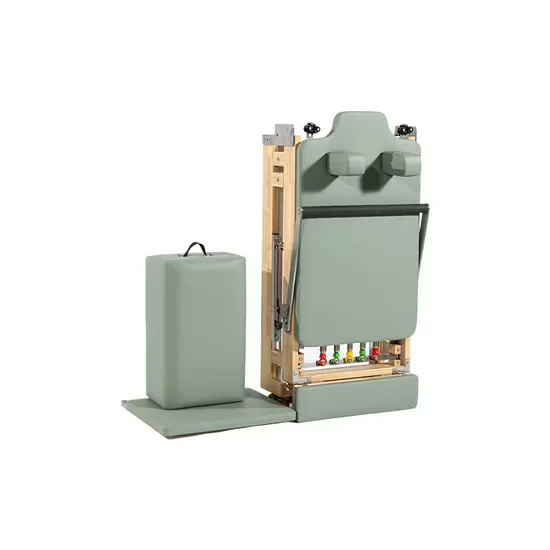
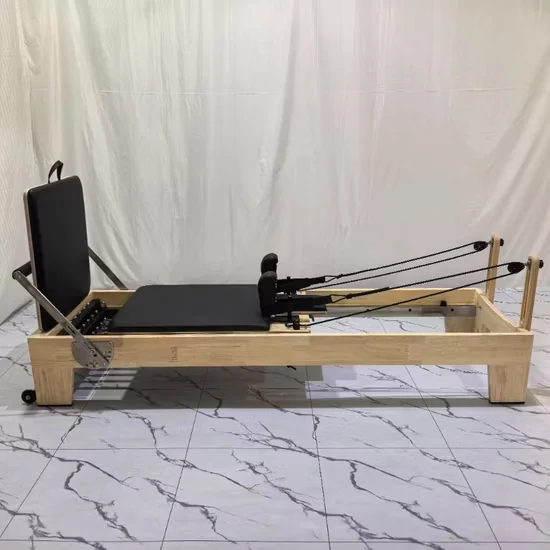
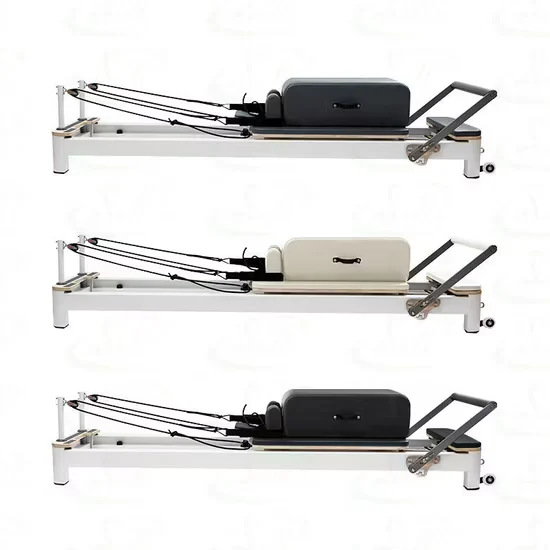
Folding Pilates Reformer Bed, Solid Oak Wood Frame, 2400×600mm Carriage — engineered with oak wood selected for density and grain stability to resist warping under studio humidity, featuring precision rail-wheel interface for zero-play glide and integrated mounting points for long box, jump board, and platform accessories. Foldable hinge mechanism maintains structural rigidity in deployed position while optimizing floor space during storage transitions.
Direct from 15,000㎡ vertically integrated manufacturer in Shandong with 17 years of Pilates equipment heritage — every unit undergoes three-stage inspection including carriage glide testing and folding mechanism load verification before shipment.
// Spec Highlights
• Direct from Manufacturer · No Middlemen · Worldwide Shipping
01
// Material
Imported Solid Wood
Premium hardwood frames sourced for density and visual warmth.
02
// Hardware
Medical-Grade Silent
Whisper-quiet pulleys and springs for clinical environments.
03
// Customization
Appearance OEM
Color, upholstery, and branding tailored to your studio.
04
// Service
Layout Design
Free venue planning for studios and rehab institutions.
Every component is selected for longevity, performance, and aesthetic harmony - from imported hardwood frames to silent medical-grade accessories.
// Features
Zero-Play Rail Glide — Oak frame with reinforced carriage interface and sealed wheel bearings prevents wobble under repeated spring tension cycles.
| Parameter | Value |
|---|---|
| Product Type | Pilates Reformer |
| Product Dimensions | 2400 × 600 × 350 mm |
| Net Weight | 100 kg |
| Frame Material | Oak Wood |
| Carriage Interface | Reinforced rail track with sealed wheel bearings |
| Folding Mechanism | Heavy-duty hinge with latch engagement system |
| Included Accessories | Long Box / Jump Board / Platform |
| Finish Options | Solid color, custom logo available |
| Transport Package | Standard wood case |
| Warranty | 3 Years |
| Facility Type | Typical Use |
|---|---|
| Boutique Pilates Studio | Daily group reformer classes with high carriage turnover |
| Home Pilates Studio | Compact foldable storage between private sessions |
| Rehabilitation and Physical Therapy Center | Low-impact resistance work with stable carriage tracking |
| Hotel and Resort Fitness Suite | Space-saving storage when the wellness room serves multiple functions |
Species disclosure, joint engineering, and moisture content specs separate a commercial oak wood pilates reformer bed from a decorative liability.
I have watched carriage rails bind on studio reformers where the frame was labeled "solid wood" but the cross-members were particle board with veneer wrap. Three months of spring tension cycles and the fold hinges loosened because nobody gusseted the joint. You end up bracing units on site with steel plates — the exact opposite of what a studio owner wants to hear after paying premium pricing. When a buyer specifies oak without requiring moisture content documentation or joint type verification, they are accepting a frame that may warp under the humidity swings typical of a room full of breathing bodies [NEED_CITE: wood dimensional stability and moisture equilibrium in interior fitness environments].
The reformer covers linear resistance across sagittal and transverse planes, targeting core stabilizers, hip flexors, and posterior chain musculature through spring-loaded carriage travel. In a boutique studio layout, commercial oak wood pilates reformer beds are typically arrayed in rows with lateral clearance for instructor access, complementing cadillac towers and chair units that handle vertical loading patterns. The 2400 mm bed length accommodates users across a broad height range, and the foldable footprint allows high-density storage when the room transitions to mat-based classes.
Every reformer session imposes cyclical tension on the carriage rail interface as springs load and release across dozens of repetitions per class. The fold hinge bears concentrated stress each time the unit transitions between deployed and stored positions — a mechanism that accumulates fatigue cycles far faster than a static frame would [NEED_CITE: fatigue classification for cyclically loaded wood-to-metal joints]. Sweat and cleaning solutions degrade exposed wood grain over time, making finish penetration depth a factor in long-term surface integrity. The latch engagement mechanism must maintain positive lock under dynamic carriage movement, not just static display weight.
Oak density and tight grain structure resist warping under the humidity fluctuations inherent to group exercise rooms, where moisture levels swing between empty-studio baselines and full-class peaks. The rail straightness tolerance determines whether the carriage glides cleanly or develops lateral play — a tolerance that depends on both the milling precision of the track and the bearing type in the carriage wheels. Sealed bearings outperform bushings in environments where chalk dust, skin cells, and cleaning residue infiltrate moving parts. The accessory mounting points for the long box, jump board, and platform must align with the carriage center of gravity; misalignment introduces off-center loading that accelerates rail wear on one side.
Frames built from unspecified hardwood with dowel joints instead of mortise-and-tenon or metal-reinforced connections develop carriage wobble within the first year of studio-grade use. Non-sealed bushings in the carriage wheels accumulate debris and require frequent lubrication, translating to maintenance labor that studio operators rarely budget for. Thin surface finishes chip at contact points where accessories mount and dismount, exposing bare wood to moisture absorption and localized swelling. When fold hinge hardware is rated below the dynamic load of a moving carriage plus user weight, the latch disengages during transitions — a failure mode that carries real liability in a commercial environment [NEED_CITE: structural load rating requirements for folding fitness equipment mechanisms].
Oak wood sourcing with traceable moisture content documentation ensures the frame arrives at equilibrium with your studio environment, not the factory floor. The reinforced rail-to-frame interface prevents the carriage track from separating under repeated spring loading — the most common failure point on reformers that treat wood as decorative rather than structural. Every unit undergoes load testing before shipment, confirming the folding mechanism and latch hold under operational weight. The 200μm powder coating on all metal hardware resists corrosion from sweat and cleaning agents. A 3-year warranty covers frame integrity, and OEM customization lets you match the finish and logo to your studio identity without compromising the underlying engineering.
Provide your studio floor dimensions and class capacity targets to receive a layout plan that accounts for deployed and folded storage footprints. Specify your daily class volume so the hinge and rail specifications align with your actual fatigue cycle count. Confirm user height range and any accessory preferences to verify long box, jump board, and platform compatibility with your programming model. Indicate finish color and logo requirements for brand consistency across your equipment floor.
Q: How do I verify that the frame is genuinely solid oak and not veneer over composite?
A: Request the lumber species certificate and moisture content reading at time of shipment. Solid oak has consistent grain visible on all cut faces, including joint interiors and mounting point recesses. Veneer-over-composite shows a uniform core layer when you inspect the hinge cutout or any unfinished edge. A reputable manufacturer provides these documents without hesitation.
Q: Does the folding mechanism compromise frame rigidity during use?
A: A properly engineered fold hinge with positive latch engagement maintains full structural rigidity when deployed. The critical factor is the hinge load rating relative to dynamic carriage movement plus user weight — not just static load. Inspect the latch mechanism for metal-to-metal engagement rather than friction-fit designs that loosen over repeated fold cycles.
Q: Are the long box, jump board, and platform included or purchased separately?
A: This reformer ships with the long box, jump board, and platform as standard accessories. Verify that each accessory mounting point aligns with the carriage rail centerline to prevent off-center binding during use. Accessories should seat flush without requiring force or shim adjustments during installation.
Q: What maintenance does the carriage rail and wheel system require?
A: Sealed bearings require no lubrication — wiping the rail track and wheel surface weekly with a dry cloth is sufficient. Bushing-type wheels need periodic lubrication and show lateral play sooner under daily studio use. Inspect rail straightness quarterly by running the carriage unloaded end-to-end; any binding or catching indicates misalignment that needs adjustment.
Premium aesthetics meet quiet operation for boutique studio environments.
Medical-grade silence and precision for sports & postpartum recovery.
Furniture-grade craftsmanship for premium residential installations.
Compact premium setups for one-on-one and small-group training.
Aesthetic Pilates integration for hybrid wellness studio programming.
Multi-unit deployment with instructor-grade reliability for certification programs.
Tell us about your project. Our team will respond within 24 hours with pricing, customization options, and shipping details.
// Sales Director
William
+86 132 2531 1800
// Export Manager
Bella
+86 198 5412 8032
william@bickfit.com