01 / Scenario
STUDIO
P
High-End Pilates Studios
Premium aesthetics meet quiet operation for boutique studio environments.
ISO
9001
CE
Certified
OEM
Available
10YR
Warranty
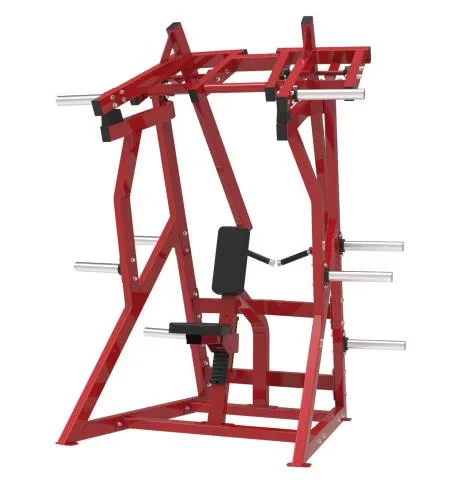
Plate Loaded Wide Chest Machine, 1343×1981×1761 mm, 141 kg Net Weight — built with industrial steel frame and continuous MIG welding for structural integrity under heavy plate loads. Iso-lateral movement pattern targets chest and arms with sealed bearing pivots for smooth operation in high-traffic environments. Every unit undergoes load testing before shipment, backed by a 10-year frame warranty and factory-direct floor planning support.
// Spec Highlights
• Direct from Manufacturer · No Middlemen · Worldwide Shipping
01
// Material
Imported Solid Wood
Premium hardwood frames sourced for density and visual warmth.
02
// Hardware
Medical-Grade Silent
Whisper-quiet pulleys and springs for clinical environments.
03
// Customization
Appearance OEM
Color, upholstery, and branding tailored to your studio.
04
// Service
Layout Design
Free venue planning for studios and rehab institutions.
Every component is selected for longevity, performance, and aesthetic harmony - from imported hardwood frames to silent medical-grade accessories.
// Features
Mill-Certified Steel — Every tube in this plate loaded wide chest machine traces back to the coil, eliminating guesswork on frame gauge and material origin.
| Parameter | Value |
|---|---|
| Product Type | Plate Loaded Chest Press Machine |
| Loading Type | Plate loaded |
| Exercise Part | Chest / Arm |
| Frame Material | Steel, 11-gauge, 3×3 inch tube |
| Steel Grade | Q235 / Q345 mill-certified |
| Welding Type | Robotic MIG continuous weld |
| Powder Coating | 200μm scratch-resistant, sandblast pre-treatment |
| Upholstery | Available in standard or high-density options |
| Bearing Type | Sealed industrial bearings |
| Product Dimensions | 1343×1981×1761 mm |
| Net Weight | 141 kg |
| Certification | ISO 9001, CE |
| Warranty | 10-year frame |
| Production Capacity | 500 PCS/Month |
| Customization | Available |
| Facility Type | Typical Use |
|---|---|
| Commercial gym strength floor | Primary horizontal pressing station for general membership |
| Hotel and resort fitness center | Durable chest training option in unsupervised environments |
| University strength and conditioning room | Heavy-load pressing for athletic development programs |
| Rehabilitation and performance center | Controlled iso-lateral pressing for return-to-play protocols |
| Crossfit box functional zone | Accessory strength work in mixed-modal training areas |
Continuous MIG welds eliminate the joint failure points that plague light-commercial frames.
I have seen iso-lateral chest arms twist out of alignment within months when manufacturers use spot welds to save cycle time. The pivot section of a plate loaded wide chest machine takes cyclic shear every rep, and a discontinuous weld bead is where fatigue cracks initiate first [NEED_CITE: weld classification and fatigue performance in structural steel]. Once the arm shifts even slightly off-axis, the movement path drifts and members report a floating sensation at the handles. That complaint traces back to the weld line, not the steel itself.
This plate loaded wide chest machine targets the pectoralis major through a converging horizontal press path, engaging anterior deltoids and triceps as secondary movers. On a strength floor, it pairs naturally with an incline press and a pec-deck to cover the full pressing spectrum. The wide grip orientation suits high-traffic facilities where members of varying experience levels need a forgiving movement pattern. Iso-lateral arm independence accommodates users with unilateral strength imbalances without forcing compensation.
Each loaded repetition transfers eccentric force through the pivot bearing into the main upright, creating stress concentrations where the arm meets the frame. In an eight-hour-per-day commercial environment, that junction endures thousands of fatigue cycles weekly [NEED_CITE: EN 957 structural requirements for stationary training equipment]. Sealed bearings resist sweat and chalk infiltration that degrades unsealed bushings over time. The powder coating at grip contact areas faces abrasion from knurled handles and sweat exposure, making the 200μm thickness and sandblast pre-treatment relevant to long-term surface integrity.
The 11-gauge, 3×3 inch frame tube determines how much deflection occurs when plates are loaded unevenly or when a user pushes explosively off the chest. Q235 and Q345 steel grades carry mill certification, meaning the material origin is documented rather than claimed as generic commercial grade. Robotic MIG welding produces a continuous bead along each joint, which distributes stress across a longer path compared to discrete spot welds. Sealed industrial bearings at the pivot maintain rotational smoothness despite dust and chalk accumulation typical in strength zones.
Thin-wall tubing bends incrementally under heavy plate loads, shifting the pressing arc away from the intended biomechanical path. Spot welds that pass visual inspection can develop micro-cracks within the first year of high-frequency use, creating liability exposure for facility operators. Unsealed pivot bearings develop play as chalk dust and moisture penetrate the raceway, requiring replacement on a schedule that disrupts floor availability. Low-density upholstery compresses under daily use, and when replacement pads are unavailable from the original supplier, the entire seat assembly becomes a maintenance problem [NEED_CITE: commercial upholstery durability standards for gym equipment].
The 11-gauge frame with traceable coil certification addresses the problem of vague steel specifications that leave buyers unable to verify structural claims. Robotic MIG welding on every joint means the pivot-to-upright connection has no discontinuous weak points where fatigue cracks originate. Each unit undergoes load testing before shipment rather than relying on sample-based QC, so the frame you receive has been verified under stress. The 200μm industrial powder coating over sandblast pre-treatment resists chipping at plate-loading horns and grip contact zones. A 10-year frame warranty reflects confidence in the structural design rather than covering only decorative components. Floor planning CAD support ensures this machine is positioned with correct safety clearances relative to adjacent stations, preventing unusable gaps on the strength floor. OEM color and logo customization allows brand consistency across a multi-unit rollout.
Provide your strength floor dimensions and current equipment list to receive a 2D or 3D placement plan that accounts for safe clearance around this machine. Specify expected daily user volume so the structural grade aligns with your traffic pattern. Indicate your target member demographic to confirm the grip width and seat position suit the expected body size range. Detail any custom color, logo, or upholstery preferences for brand alignment across the installation.
Q: How do I verify that the frame steel is genuinely commercial grade?
A: Request mill-certified documentation that traces each tube batch back to the steel coil. True commercial-grade equipment provides verifiable gauge and grade specifications rather than vague marketing terms. Without coil traceability, there is no way to confirm the steel matches what the sales sheet claims, especially under warranty disputes.
Q: What does continuous MIG welding mean for long-term frame integrity?
A: Continuous MIG welds produce an unbroken bead along each joint, distributing stress evenly across the connection. Spot welds concentrate force at discrete points, which become fatigue failure origins under repeated heavy loading. The difference becomes visible within the first year in high-traffic environments where the pivot junction sees thousands of cycles weekly.
Q: Should I choose plate loaded or selectorized for a high-traffic gym?
A: Plate loaded machines have fewer moving parts and no weight stack guide rods to bind under off-center loads, reducing maintenance demands. Selectorized units offer faster weight changes for circuit-style training but require more frequent cable and pulley inspection. High-traffic strength floors often benefit from plate loaded equipment at core pressing stations.
Q: How does equipment spacing affect safety on the strength floor?
A: Insufficient clearance between stations creates collision risk during plate loading and unloading. Each machine needs space calculated from its actual footprint plus user movement envelope, not just the frame dimensions. Proper floor planning with CAD layouts prevents unusable gaps and ensures safe passage around loaded equipment.
Q: What determines upholstery lifespan in a commercial setting?
A: High-density foam and commercial-grade vinyl resist compression and splitting under daily use far longer than standard materials. Replacement part availability from the manufacturer matters equally, because unavailable pads force full seat replacement. Confirm density specifications and spare part lead times before committing to a bulk order.
Premium aesthetics meet quiet operation for boutique studio environments.
Medical-grade silence and precision for sports & postpartum recovery.
Furniture-grade craftsmanship for premium residential installations.
Compact premium setups for one-on-one and small-group training.
Aesthetic Pilates integration for hybrid wellness studio programming.
Multi-unit deployment with instructor-grade reliability for certification programs.
Tell us about your project. Our team will respond within 24 hours with pricing, customization options, and shipping details.
// Sales Director
William
+86 132 2531 1800
// Export Manager
Bella
+86 198 5412 8032
william@bickfit.com