01 / Scenario
STUDIO
P
High-End Pilates Studios
Premium aesthetics meet quiet operation for boutique studio environments.

ISO
9001
CE
Certified
OEM
Available
10YR
Warranty
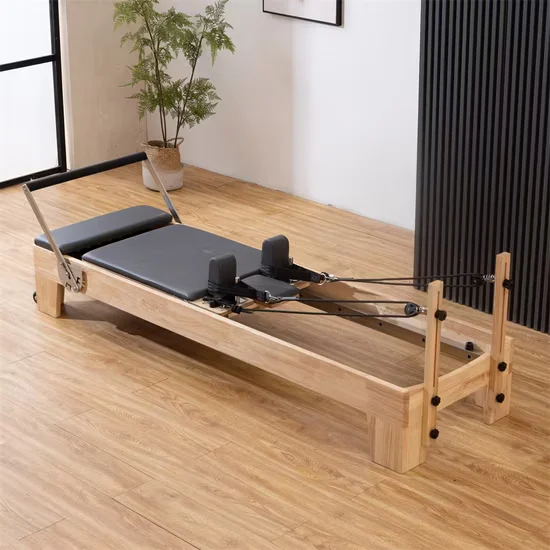
Portable Wooden Pilates Reformer Machine, Solid Oak Frame, 2460×730×680mm — built with dense oak grain structure to resist warping under continuous spring tension, paired with a full accessory set including long box, jump board, and platform for comprehensive studio programming. Each unit ships with a 3-year warranty and logo customization available. 100% load-tested before dispatch with sealed carriage bearings for humidity-resistant studio operation.
// Spec Highlights
• Direct from Manufacturer · No Middlemen · Worldwide Shipping
01
// Material
Imported Solid Wood
Premium hardwood frames sourced for density and visual warmth.
02
// Hardware
Medical-Grade Silent
Whisper-quiet pulleys and springs for clinical environments.
03
// Customization
Appearance OEM
Color, upholstery, and branding tailored to your studio.
04
// Service
Layout Design
Free venue planning for studios and rehab institutions.
Every component is selected for longevity, performance, and aesthetic harmony - from imported hardwood frames to silent medical-grade accessories.
// Features
Solid Oak Carriage Stability — Every frame section is machined from kiln-dried solid oak, not laminated plywood, keeping the rail alignment true across seasonal humidity swings.
| Parameter | Value |
|---|---|
| Product Type | Pilates Reformer Machine |
| Frame Material | Solid Oak Wood |
| Color | White |
| Product Dimensions | 2460×730×680mm |
| Net Weight | 100kgs |
| Included Accessories | Long Box / Jump Board / Platform |
| Customization | Available (Logo customizable) |
| Warranty | 3 Years |
| Target User | Adult, Unisex |
| Facility Type | Typical Use |
|---|---|
| Boutique Pilates Studio | Daily multi-class reformer programming with full accessory rotation |
| Rehabilitation Center | Controlled resistance movements for post-injury mobility recovery |
| Hotel Wellness Facility | Premium aesthetic fitness offering for guest training sessions |
| Home Pilates Training | Dedicated residential space for comprehensive reformer practice |
| Boutique Fitness Studio | Hybrid group classes combining reformer and functional movement |
Solid oak resists the warping that destroys rail tracking on cheaper wooden reformers.
Many studio operators have experienced the same problem: a reformer that tracked smoothly on day one starts binding and rattling within a season. The cause is almost always the frame material itself. Laminated plywood and low-grade hardwood absorb moisture unevenly, twisting the rail channels just enough to throw the carriage off its path. In a high-traffic studio running back-to-back classes, this misalignment accelerates wheel wear and forces maintenance shutdowns [NEED_CITE: dimensional stability standards for solid wood in fitness equipment frames]. An oak wood Pilates reformer machine built from properly kiln-dried stock avoids this failure mode because the grain density and cellular structure of oak resist the moisture-driven movement that compromises weaker timber species.
A commercial wooden pilates reformer machine occupies the center of any dedicated Pilates programming floor. It covers the full range of supine, prone, seated, and standing movement patterns, engaging the deep stabilizer chain, hip complex, and shoulder girdle through spring-loaded resistance. In a studio configuration, it pairs with mat zones and small apparatus such as stability chairs and barrels to create complete class flows. The 2460×730mm footprint allows reasonable spacing for instructor circulation between units in a group class layout, accommodating users across a wide range of body proportions thanks to the adjustable carriage and accessory mounting points.
Every reformer session subjects the frame to hundreds of loading cycles — not just the steady pull of spring tension, but the sharp impact forces transmitted through the jump board during plyometric sequences. These dynamic loads concentrate at the rail endpoints and accessory mounting brackets. Over months of daily commercial use, the carriage wheels and rail interface accumulate wear that directly affects movement smoothness. Sweat and cleaning solutions constantly attack the finish and any exposed metal hardware, while humidity fluctuations stress the wood-to-metal junctions at bearing housings [NEED_CITE: fatigue loading patterns in spring-resistance exercise equipment]. The oak frame’s density handles these cycling stresses better than softer timber alternatives, but the hardware attachment points remain the critical inspection zone.
The frame material choice — solid oak versus plywood or MDF core with veneer — determines whether the rail channels stay parallel after the first seasonal humidity change. Kiln-dried oak maintains dimensional stability that composite boards simply cannot match in a climate-controlled but variable studio environment. The accessory ecosystem (long box, jump board, platform) requires reinforced mounting points; these connection brackets must distribute dynamic jump board impacts across a broad section of the frame rather than concentrating force into a single bolt channel. Carriage wheel bearing type directly dictates maintenance intervals — sealed bearings keep studio dust and cleaning moisture out, extending service life substantially compared to open bushings. The spring configuration and attachment hardware define how resistance progresses through the carriage stroke, and replaceable spring anchors mean the unit stays operational long after the original springs lose tension.
A reformer built on a plywood core may look identical in showroom lighting, but the rail channels begin to drift as the laminate layers absorb and release moisture at different rates. Once the carriage develops lateral play, the wheels wear unevenly and replacement becomes a recurring expense. Non-sealed bearings seize in humid studio environments, forcing operators to pull the carriage for servicing between classes — a revenue loss that compounds quickly. Accessories mounted with undersized brackets loosen under repeated jump board impact, and when those brackets are proprietary or non-standard, sourcing replacements delays the repair. A thin finish that chips at contact points exposes raw wood to sweat absorption and staining, degrading the premium appearance that justified the investment.
The oak frame is sourced as solid stock, not veneer-wrapped composite, giving studio operators a unit that holds its geometry through seasonal changes. Carriage rail machining targets tight tolerances so the wheel-to-rail interface stays smooth under continuous spring tension. Each accessory mounting point is reinforced to handle the dynamic loads that plyometric jump board work generates, rather than relying on cosmetic-grade hardware. The three-year warranty covers the structural integrity of the frame and rail system, reflecting confidence in the material selection and build method. Logo customization is available for studios that brand their equipment to match their interior identity, and the transport packaging in a standard wood case protects the unit during delivery to the facility.
Provide your studio floor dimensions and planned unit count to receive a layout recommendation that accounts for safe spacing between reformers. Specify your expected daily class volume so the structural configuration matches your traffic demands. Confirm whether logo placement or custom color finishing is required to align with your studio branding standards.
Q: How can I tell if a reformer frame is solid oak rather than plywood with veneer?
A: Inspect any cross-section or end-grain area on the frame. Solid oak shows continuous grain lines running through the full thickness, while plywood reveals alternating laminate layers beneath a thin surface veneer. The weight difference is also noticeable — a solid oak frame at this dimension carries significantly more mass than a composite-core equivalent, and the edge detailing around hardware mounting points will show consistent grain rather than a laminated seam.
Q: What causes the carriage to stick or develop rough spots on the rail?
A: Carriage sticking typically results from dust and debris accumulating inside the rail channel, combined with moisture exposure that degrades open-type bearings over time. Sealed bearings resist this contamination far better in studio environments where humidity and cleaning sprays are constant. Regular rail cleaning and bearing inspection prevent the lateral play that leads to uneven wheel wear and rough tracking during sessions.
Q: When should reformer springs be replaced, and how does resistance change over time?
A: Springs gradually lose their calibrated tension after repeated extension cycles, delivering less resistance than when new. Studio operators running multiple daily classes should evaluate spring performance every several months by comparing the resistance feel against a fresh reference spring. Swapping springs before they fully fail ensures clients receive consistent loading throughout their sessions and extends the overall service life of the anchor hardware.
Q: Are jump boards and long boxes interchangeable between different reformer brands?
A: Accessory compatibility depends on the carriage width, mounting bracket spacing, and attachment hardware type — these dimensions are not standardized across manufacturers. Before purchasing accessories from a different source, verify the exact mounting point positions and bracket geometry against your reformer’s specifications to avoid fitment issues that compromise safety during dynamic exercises.
Q: How much space should be left between reformers in a group class studio?
A: Adequate spacing allows instructors to walk between units, observe client form, and make adjustments safely during class. A practical minimum includes enough clearance on each side for an instructor to pass and enough room at the head end for exercises that extend beyond the frame length. Exact spacing depends on the studio’s class format and whether participants perform standing work beside the reformer.
Premium aesthetics meet quiet operation for boutique studio environments.
Medical-grade silence and precision for sports & postpartum recovery.
Furniture-grade craftsmanship for premium residential installations.
Compact premium setups for one-on-one and small-group training.
Aesthetic Pilates integration for hybrid wellness studio programming.
Multi-unit deployment with instructor-grade reliability for certification programs.
Tell us about your project. Our team will respond within 24 hours with pricing, customization options, and shipping details.
// Sales Director
William
+86 132 2531 1800
// Export Manager
Bella
+86 198 5412 8032
william@bickfit.com