
01 / Scenario
STUDIO
P
High-End Pilates Studios
Premium aesthetics meet quiet operation for boutique studio environments.
ISO
9001
CE
Certified
OEM
Available
10YR
Warranty
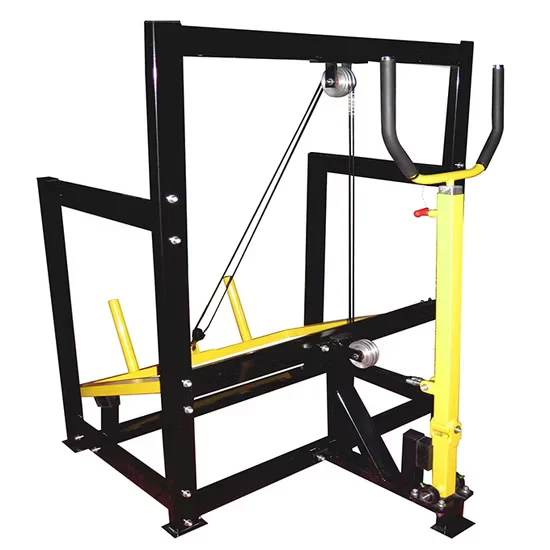
PRO Tackler Machine, 139kg Net Weight, 1643×1356×1841mm Footprint — engineered for high-traffic commercial leg training with steel-frame construction and robotic MIG continuous welding to eliminate spot-weld fatigue points. Frame color and cushion upholstery fully customizable to match facility branding, with OEM/ODM private label support available. Every unit undergoes individual load testing before shipment, backed by a 10-year frame warranty and mill-certified steel traceability.
// Spec Highlights
• Direct from Manufacturer · No Middlemen · Worldwide Shipping
01
// Material
Imported Solid Wood
Premium hardwood frames sourced for density and visual warmth.
02
// Hardware
Medical-Grade Silent
Whisper-quiet pulleys and springs for clinical environments.
03
// Customization
Appearance OEM
Color, upholstery, and branding tailored to your studio.
04
// Service
Layout Design
Free venue planning for studios and rehab institutions.
Every component is selected for longevity, performance, and aesthetic harmony - from imported hardwood frames to silent medical-grade accessories.
// Features
Structural Frame Integrity — The PRO Tackler Machine is built on an 11-gauge steel chassis with full robotic MIG continuous welding, eliminating spot-weld failure points under repeated heavy loading.
| Parameter | Value |
|---|---|
| Product Type | Integrated Gym Trainer |
| Frame Steel | 11-gauge, Q235/Q345 industrial steel |
| Welding Type | Robotic MIG continuous weld |
| Product Dimensions | 1643 × 1356 × 1841 mm |
| Net Weight | 139 kg |
| Loading Type | Manual, plate loaded |
| Powder Coating | 200 μm scratch-resistant, sandblast pre-treatment |
| Upholstery | Standard or high-density options, color customizable |
| Main Frame Color | According to customer requirements |
| Cushion Color | According to customer requirements |
| Exercise Part | Leg |
| Folded | Unfolded |
| Certification | ISO 9001:2015, CE |
| OEM/ODM | Acceptable |
| Warranty | 10-year frame |
| Facility Type | Typical Use |
|---|---|
| Commercial gym strength floor | High-traffic leg training station in dedicated plate-loaded zones |
| Hotel and resort fitness center | Branded leg trainer matching facility aesthetics with durable construction |
| University strength and conditioning room | Heavy-duty leg work for athletic programs across diverse user body types |
| Community fitness center | Unisex leg training equipment built for multi-user daily access |
| Professional fitness club | Integrated leg trainer positioned alongside complementary strength stations |
A continuous MIG weld distributes stress across the entire joint, while a spot weld concentrates force at isolated points that crack under cyclic loading.
When facility operators spec a commercial integrated gym trainer leg machine, most focus on tube gauge and overlook the welding schedule. A 3×3 inch frame tube with spot welds may pass visual inspection on day one, but under repeated eccentric leg loads, those isolated weld points become fatigue nuclei. We have seen facilities replace entire stations within months because the welding method could not handle the cyclic stress of a high-traffic strength floor [NEED_CITE: weld classification and fatigue performance in structural steel]. The PRO Tackler Machine addresses this through robotic MIG continuous welding along every joint line, meaning the weld bead runs the full length of each connection rather than stopping and starting. This is the difference between a frame that loosens over its first year and one that holds structural alignment through thousands of training sessions.
The PRO Tackler Machine targets the lower-body pushing movement pattern, engaging quadriceps, glutes, and hip stabilizers through a fixed guided path. On a commercial strength floor, it sits naturally between free-weight squat stations and isolation machines, giving users a heavy-load leg option without the balance demands of a barbell. In facilities running high member throughput, this commercial integrated gym trainer leg machine handles users across a wide body-type range thanks to its stable 1643 × 1356 mm footprint and manual plate-loaded resistance, which avoids the weight-stack limitations of selectorized alternatives. It pairs well with hamstring curl stations and calf raise units to complete a comprehensive lower-body training zone.
Leg training generates some of the highest force outputs on any gym floor, and the stress on this equipment is both static and dynamic. During heavy eccentric phases, the frame experiences off-axis loads that test every welded joint and connection point. With a 139 kg net weight and 11-gauge steel construction, the chassis resists displacement under loaded use, but the real durability question is what happens after tens of thousands of repetitions [NEED_CITE: EN 957 structural requirements for stationary training equipment]. Sealed bearings at pivot points prevent sweat and chalk dust from creating internal abrasion. The 200 μm powder coating, applied over sandblast pre-treatment, holds up against repeated contact from shoes, plates, and cleaning chemicals. Upholstery in high-density options resists compression set far longer than standard-density pads, which is where most commercial pads fail first.
Wall thickness and tube cross-section together determine how much a frame deflects under load. The 11-gauge specification places this frame steel at a thickness that meaningfully resists bending when users load heavy plates and drive through the movement. Q235 and Q345 industrial steel grades provide the base material properties, but gauge is what translates those properties into real-world stiffness. The robotic MIG welding ensures that the full cross-section of each tube is bonded at the joint, rather than only surface-tacked. Sandblast pre-treatment before powder coating removes mill scale and creates mechanical adhesion, which is why the 200 μm finish stays bonded at high-contact areas where thin coatings typically chip and expose bare steel to oxidation.
A thinner tube might hold up during a product demo, but under months of loaded leg presses and tackles, wall-deflection accumulates and the frame begins to shift. Spot welds that pass initial QC can fracture without visible warning, creating liability exposure for the facility operator. Non-sealed bearings at pivot points develop play as chalk dust and sweat penetrate the race, leading to wobble and uneven movement paths that users notice immediately [NEED_CITE: bearing seal performance in high-contamination fitness environments]. Low-density upholstery compresses permanently within the first year of commercial use, forcing pad replacements that cost more in labor downtime than upgrading to high-density material upfront would have. Thin powder coating chips at plate-loading contact points, starting surface rust that spreads beneath the finish and compromises appearance across the equipment fleet.
The 11-gauge frame steel on the PRO Tackler Machine is sourced with mill certification traceable to the coil, so operators can verify material origin. Robotic MIG continuous welding is applied at every structural joint, not just visible ones, because fatigue failures start at the connections nobody inspects. Every unit undergoes load testing before shipment rather than relying on sample-based batch QC, catching defects before they reach the gym floor. The 200 μm industrial powder coating over sandblast pre-treatment is specified to survive years of plate contact and chemical cleaning. The 10-year frame warranty reflects the structural confidence behind these choices. For facility planning, the 1643 × 1356 mm footprint allows layout engineers to calculate safe clearance zones around the unit, and full OEM customization means frame color, cushion color, and branding can align with the facility identity.
Share your strength floor dimensions and current equipment list to receive a 2D or 3D layout that positions this commercial integrated gym trainer leg machine with proper clearance zones. Specify expected daily user volume so we can confirm the structural grade matches your traffic level. Provide target user demographics to verify the fixed geometry accommodates your member body-type range. Detail any custom color, logo, or upholstery requirements to align the unit with your facility brand standards.
Q: How can I verify that a leg trainer actually meets commercial-grade structural standards?
A: Request the supplier’s steel mill certificate showing grade and gauge, welding process documentation confirming continuous welds rather than spot welds, and individual load test records for the specific unit. Visual inspection alone cannot reveal internal weld quality or material specifications. A genuine commercial-grade machine will have these documents available as standard deliverables with every shipment.
Q: How does frame weight and tube gauge affect stability during heavy leg training?
A: A heavier frame with thicker-gauge steel resists displacement and vibration when users apply maximum force through the movement. The 139 kg net weight and 11-gauge construction on this unit keep the chassis planted during loaded repetitions without requiring floor anchoring in most commercial installations. Thinner frames shift under load, degrading movement consistency and user confidence.
Q: What OEM customization options are available for color and branding?
A: Frame color, cushion color, and upholstery density are all configurable to match your facility brand identity. Logo placement and private-label documentation are available for qualifying orders. Minimum order quantities for custom color runs depend on the powder coating batch size. Submit your brand color codes and artwork early in the ordering process to confirm match accuracy before production.
Q: What is the expected upholstery lifespan in a commercial gym, and how is replacement handled?
A: High-density upholstery options significantly outlast standard-density pads under daily multi-user conditions. Cushion covers are replaceable as separate components, so facilities can swap worn pads without taking the entire machine out of service. We supply replacement pads and hardware as spare parts. Specify high-density material at the time of order to maximize the interval between replacements.
Q: How should floor spacing be planned around this machine for safe operation?
A: The 1643 × 1356 mm footprint is the minimum machine envelope, but safe layout requires additional clearance on all sides for plate loading, user entry and exit, and emergency access. We provide 2D and 3D CAD files that include recommended safety zones around each unit. Share your floor plan and we will generate a layout showing proper spacing between this station and adjacent equipment.
Premium aesthetics meet quiet operation for boutique studio environments.
Medical-grade silence and precision for sports & postpartum recovery.
Furniture-grade craftsmanship for premium residential installations.
Compact premium setups for one-on-one and small-group training.
Aesthetic Pilates integration for hybrid wellness studio programming.
Multi-unit deployment with instructor-grade reliability for certification programs.
Tell us about your project. Our team will respond within 24 hours with pricing, customization options, and shipping details.
// Sales Director
William
+86 132 2531 1800
// Export Manager
Bella
+86 198 5412 8032
william@bickfit.com


