01 / Scenario
STUDIO
P
High-End Pilates Studios
Premium aesthetics meet quiet operation for boutique studio environments.
ISO
9001
CE
Certified
OEM
Available
10YR
Warranty
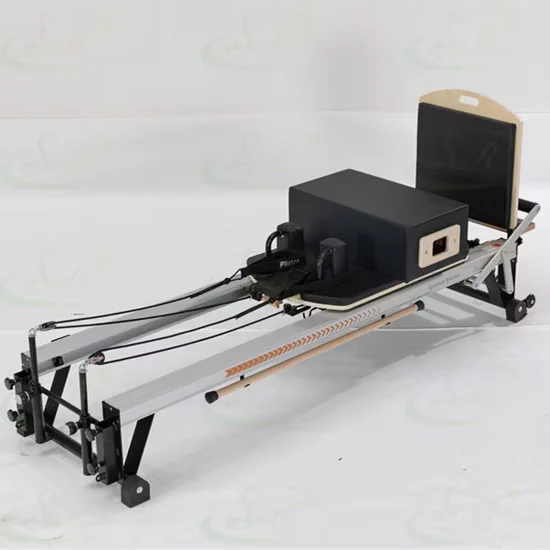
White Aluminum Pilates Reformer, 2570×730mm Frame, 110kg Net Weight — aluminum extrusion construction eliminates rust risk in humid studio environments while maintaining carriage rail rigidity under repeated spring tension cycling. Includes long box, jump board, and platform for full-spectrum reformer programming without additional equipment. Backed by 3-year frame warranty with mill-certified aluminum alloy traceable to extrusion batch.
// Spec Highlights
• Direct from Manufacturer · No Middlemen · Worldwide Shipping
01
// Material
Imported Solid Wood
Premium hardwood frames sourced for density and visual warmth.
02
// Hardware
Medical-Grade Silent
Whisper-quiet pulleys and springs for clinical environments.
03
// Customization
Appearance OEM
Color, upholstery, and branding tailored to your studio.
04
// Service
Layout Design
Free venue planning for studios and rehab institutions.
Every component is selected for longevity, performance, and aesthetic harmony - from imported hardwood frames to silent medical-grade accessories.
// Features
Mill-Traceable Aluminum Alloy — Every extrusion batch in this commercial aluminum Pilates reformer is documented back to the originating mill, so you know exactly what is supporting your carriage rails.
| Parameter | Value |
|---|---|
| Product Type | Pilates Reformer |
| Frame Material | Aluminum |
| Color | White (Black also available) |
| Product Dimensions | 2570×730×1100mm |
| Net Weight | 110kgs |
| Accessories | Long Box / Jump Board / Platform |
| Logo | Customized |
| Target User | Adult, Unisex |
| Warranty | 3 Years |
| Facility Type | Typical Use |
|---|---|
| Boutique Pilates studio | Daily group reformer classes with high-frequency carriage cycling |
| Home Pilates studio | Private sessions with full accessory programming on a single unit |
| Rehabilitation and physiotherapy center | Low-impact controlled movement protocols with adjustable spring tension |
| Hotel wellness center fitness room | Guest-access equipment requiring corrosion resistance in humid environments |
An aluminum frame does not rust, period — and that changes the maintenance equation for any studio running back-to-back classes in a humid environment.
Most reformers marketed as studio grade use thin-wall steel frames finished with cosmetic paint layers. In a room where humidity climbs with every group class and sweat drips onto carriage rails, those steel frames begin showing oxidation at weld joints and rail mounting points within the first year. The corrosion undermines rail straightness and introduces friction where smooth carriage travel is non-negotiable. A commercial aluminum Pilates reformer sidesteps this failure mode entirely because the base material is inherently corrosion-resistant, not just coated against it [NEED_CITE: corrosion behavior of aluminum alloys in high-humidity indoor environments].
This unit covers the full spectrum of reformer-based movement — supine footwork, seated arm work, long box pulling straps, and jump board plyometric sequences — without requiring supplementary equipment. In a studio configured with six to twelve reformers in parallel rows, the 2570mm length and 730mm width leave adequate aisle clearance for instructor circulation between stations. The accessory package of long box, jump board, and platform means programming variety comes from quick-change attachments rather than additional floor pieces, keeping the studio footprint disciplined.
Every reformer class cycles the carriage through hundreds of loaded repetitions — footwork sequences alone can push several hundred spring-tension cycles per session. The aluminum extrusion rails absorb this repetitive load at the carriage wheel contact line, and over months of studio scheduling, any material deflection or rail bowing shows up as uneven carriage travel and audible wheel chatter. The fatigue pattern concentrates at the rail-to-frame mounting points, where spring tension pulls laterally against the rail anchors during heavy footwork and jump board landings [NEED_CITE: fatigue performance of aluminum extrusions under cyclic loading]. Upholstery on the carriage and shoulder rests also faces accelerated wear from daily contact with varied body weights and clothing friction, making material specification critical for long-term studio presentation.
The aluminum frame material choice directly governs two variables: corrosion behavior and rigidity under load. Aluminum extrusion profiles allow tighter dimensional tolerances on rail geometry compared to welded steel tube assemblies, which supports consistent carriage alignment across the full travel range. The 110kg net weight indicates substantial material volume in the frame — lighter reformers often sacrifice rail wall thickness to reduce shipping mass, and that compromises deflection resistance when heavier users perform loaded jump board work. The three-year warranty on this commercial aluminum Pilates reformer reflects confidence in the frame and rail system holding up under commercial scheduling, and the customized logo option means studio branding can be applied without aftermarket modifications that might compromise structural surfaces. The accessory mounting points for the long box, jump board, and platform are integrated into the frame design rather than bolted on as afterthoughts, so changeover between class formats stays fast and secure.
Thin-wall aluminum or steel framing saves material cost upfront but introduces rail deflection under loaded carriage travel, and once a rail bows even fractionally, the carriage develops lateral play that worsens with every session. Non-sealed bearings in carriage wheels accumulate dust and chalk residue from studio use, leading to grinding wear that scores the rail surface and forces premature wheel and rail replacement. Low-density foam in carriage and shoulder rest upholstery compresses within months of daily use, exposing the rigid base underneath and generating client complaints about comfort. Springs that lack calibrated tension ratings drift in resistance over time, meaning the same spring position delivers different loads from one machine to the next across a studio fleet [NEED_CITE: spring tension retention and elastic fatigue in fitness equipment].
The aluminum frame construction is verified by mill certification traceable to the extrusion batch, so there is documentation behind the material claim rather than an unverified supplier label. Every unit undergoes load testing before shipment to confirm carriage travel, rail alignment, and spring tension calibration under actual working conditions. The 200μm industrial powder coating — applied to any steel accessory components and hardware — provides scratch and sweat resistance that outlasts standard spray finishes in high-contact studio environments. BICKFIT supports studio buildouts with 2D and 3D floor planning CAD layouts specific to reformer spacing, ensuring safe aisle widths and instructor sight lines across the room. The three-year frame warranty and OEM customization capability mean this commercial aluminum Pilates reformer can be specified as a long-term studio asset with brand consistency across locations.
Provide your studio floor dimensions and target reformer count to receive a 2D-3D layout plan with spacing recommendations. Specify your expected daily class volume so the structural grade and spring configuration can be matched to actual usage intensity. Indicate any color, logo, or upholstery customization requirements for brand alignment across your studio locations.
Q: How does an aluminum frame compare to steel for a commercial reformer?
A: Aluminum eliminates corrosion risk entirely, which matters in studios where humidity builds during back-to-back group classes. Steel frames rely on paint or coating to resist moisture, and once that coating chips at contact points, oxidation starts undermining structural joints. Aluminum also allows tighter extrusion tolerances on rail geometry, supporting consistent carriage travel. The trade-off is that aluminum is lighter, so frame design must account for rigidity through profile geometry rather than mass alone.
Q: What should I check when evaluating carriage smoothness and rail durability?
A: Run the carriage through its full travel range under load and listen for lateral chatter or grinding, which signals bearing or rail alignment issues. Inspect the wheel material — sealed bearings resist dust and chalk contamination far better than open bushings in a studio environment. Check the rail surface for machining consistency, as uneven extrusion surfaces accelerate wheel wear. Rail straightness tolerance should be documented in the load test report supplied with the unit.
Q: What spring resistance options are typically available for different user levels?
A: Reformer springs are generally configured in sets with varying tension ratings, allowing instructors to combine springs for progressive resistance. Beginner rehabilitation sessions use lighter spring combinations for controlled low-impact movement, while advanced studio classes stack heavier springs for footwork and pulling strap intensity. Each spring should carry a documented tension calibration so that the same position delivers consistent load across every reformer in your studio fleet.
Q: How do the long box, jump board, and platform attach to the frame?
A: These accessories mount to integrated attachment points built into the aluminum frame rather than relying on universal clamp-on adapters. Quick-change mechanisms allow instructors to swap between accessories during class transitions without tools. The platform extends the carriage working surface for standing and kneeling exercises, the long box enables seated and prone pulling strap sequences, and the jump board locks into the foot end for plyometric programming.
Q: What does the warranty actually cover on a commercial reformer?
A: The three-year warranty on this unit covers the aluminum frame against structural defects and deformation under normal commercial use. Springs, upholstery, and carriage wheels are typically classified as wear components and carry separate shorter coverage periods. Verify that replacement parts — especially carriage wheels, springs, and upholstery pads — are available as individual SKUs so you can service a single unit without pulling an entire reformer from your studio schedule.
Premium aesthetics meet quiet operation for boutique studio environments.
Medical-grade silence and precision for sports & postpartum recovery.
Furniture-grade craftsmanship for premium residential installations.
Compact premium setups for one-on-one and small-group training.
Aesthetic Pilates integration for hybrid wellness studio programming.
Multi-unit deployment with instructor-grade reliability for certification programs.
Tell us about your project. Our team will respond within 24 hours with pricing, customization options, and shipping details.
// Sales Director
William
+86 132 2531 1800
// Export Manager
Bella
+86 198 5412 8032
william@bickfit.com