01 / Scenario
STUDIO
P
High-End Pilates Studios
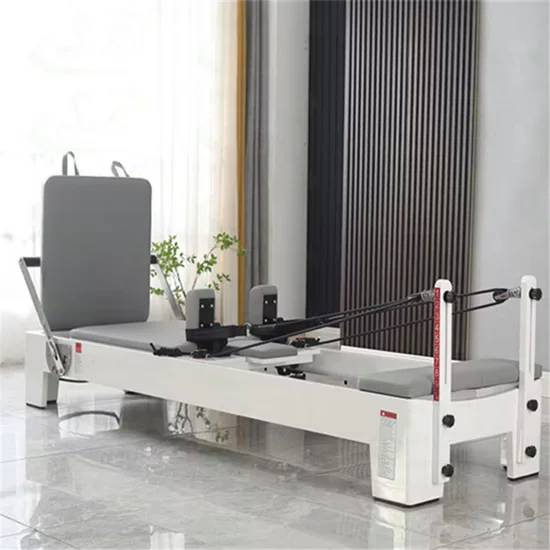
Premium aesthetics meet quiet operation for boutique studio environments.

ISO
9001
CE
Certified
OEM
Available
10YR
Warranty
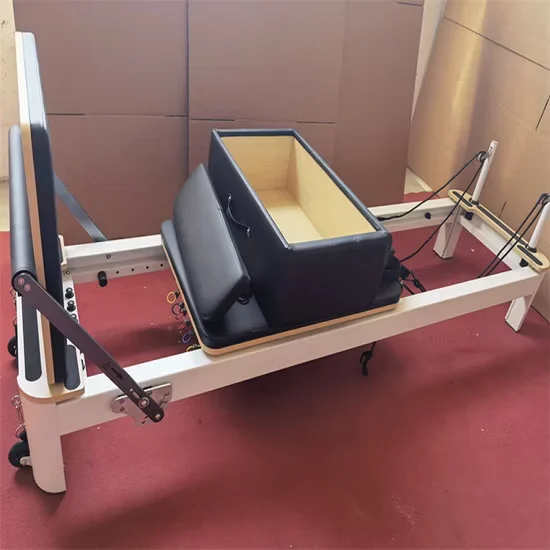
Solid Maple Wood Pilates Reformer, Foldable Design, 2400×600×350mm — engineered with solid maple frame for vibration damping and rail stability under daily studio use. Includes long box, jump board, and platform with embedded hardware inserts for secure mounting. Ships with 3-year warranty and full logo or color customization from a 17-year manufacturer with 32-point inspection and 100% load testing on every unit.
// Spec Highlights
• Direct from Manufacturer · No Middlemen · Worldwide Shipping
01
// Material
Imported Solid Wood
Premium hardwood frames sourced for density and visual warmth.
02
// Hardware
Medical-Grade Silent
Whisper-quiet pulleys and springs for clinical environments.
03
// Customization
Appearance OEM
Color, upholstery, and branding tailored to your studio.
04
// Service
Layout Design
Free venue planning for studios and rehab institutions.
Every component is selected for longevity, performance, and aesthetic harmony - from imported hardwood frames to silent medical-grade accessories.
// Features
Structural Load Verification — Every foldable solid maple wood Pilates reformer undergoes full-cycle carriage loading and hinge stress testing before leaving the production floor.
| Parameter | Value |
|---|---|
| Product Type | Pilates Reformer |
| Frame Material | Solid Maple Wood |
| Product Dimensions | 2400×600×350mm |
| Net Weight | 100kgs |
| Foldable Mechanism | Yes, reinforced hinge joint |
| Included Accessories | Long Box / Jump Board / Platform |
| Finish | Solid Color, sealed surface |
| Customization Available | Logo / Color options |
| Warranty | 3 Years |
| Age Group | Adult |
| Gender | Unisex |
| Facility Type | Typical Use |
|---|---|
| Commercial Pilates Studio | Daily group reformer classes with continuous carriage cycling |
| Boutique Fitness Studio | High-frequency small-group sessions demanding consistent glide performance |
| Rehabilitation & Physiotherapy Center | Controlled movement therapy with precise resistance modulation |
| Hotel & Resort Wellness Facility | Guest-access reformer sessions requiring low-maintenance durability |
| Home Gym | Space-conscious setup benefiting from foldable storage configuration |
Solid maple delivers grain-continuous load paths that laminated alternatives simply cannot replicate under repeated carriage travel.
Most wood reformers in commercial circulation rely on plywood cores or veneer-wrapped composite beams. These materials tolerate light use but begin delaminating when exposed to the humidity cycling inherent in studio environments — morning classes generate moisture, evening air conditioning dries the air, and the repeated swelling and contraction breaks adhesive bonds over time [NEED_CITE: wood adhesive degradation under humidity cycling in fitness environments]. A commercial solid wood pilates reformer built from verified solid maple maintains dimensional stability because the grain runs continuously through the rail bed, distributing carriage loads along natural fiber directions rather than across glued layer boundaries. I have seen plywood rail beds develop visible wobble within the first year of high-traffic use, while properly sealed solid maple holds its flatness across seasons.
The reformer addresses the primary movement plane for supine, prone, and seated resistance work — covering core stabilization, lower limb extension patterns, and upper body pulling sequences. In a studio layout, it pairs with Cadillac units for vertical loading and Wunda chairs for upright balance challenges. This commercial solid wood pilates reformer fits high-density group class floors where space efficiency matters, and the foldable design allows studios to reconfigure the room between sessions. The carriage bed accommodates users across a broad anthropometric range, supporting both rehabilitation clients and athletic populations.
The hinge mechanism on a foldable reformer endures two distinct stress profiles: static load when deployed with a user on the carriage, and dynamic shear when the frame is collapsed and reopened. Each folding cycle concentrates force at the pin-bushing interface and the reinforcement plate fasteners. Under commercial use — where a unit might be folded and redeployed multiple times daily — these connection points accumulate fatigue that surface-mounted brackets cannot sustain [NEED_CITE: mechanical fastener fatigue in folding structural assemblies]. The wheel-and-rail interface faces parallel wear: UHMW polyethylene wheels track more quietly but compress over time, while steel-core alternatives resist deformation but transmit vibration into the maple rail surface. Sweat exposure at the carriage contact zone accelerates finish breakdown if the wood sealant is insufficient.
Solid maple density directly governs how the rail bed resists indentation from repeated carriage wheel contact — harder species hold dimensional tolerance longer under concentrated point loads. The fold mechanism demands attention to pin diameter and bushing fit: undersized pins develop rotational play that translates into carriage wobble, which users feel immediately as inconsistent glide resistance. Wheel material selection balances acoustic performance against longevity; softer compounds dampen noise but require replacement cycles, while harder materials preserve shape at the cost of vibration transmission into the frame. Accessory mounting points — where the jump board and platform attach — must use embedded metal inserts rather than wood-threaded screws alone, because dynamic loading from plyometric work pulls surface fasteners loose within weeks of commercial use. The sealed surface finish prevents moisture ingress that would otherwise cause grain raising and rail roughness.
Thin-wall tube substitutes or mixed-species laminated beams reduce upfront procurement cost but introduce measurable failure modes within the first year of commercial deployment. Plywood cores separate at layer boundaries, creating rail surfaces that no longer run true. Surface-mounted accessory brackets strip their screw holes under jump board impact loading, leaving studios with equipment that cannot safely accept its own attachments [NEED_CITE: dynamic fastener withdrawal in wood composites under impact loading]. Non-sealed finishes absorb ambient humidity and raise grain along the rail, generating carriage drag that users interpret as equipment malfunction. These failures do not appear in showroom demonstrations — they emerge only after hundreds of folding cycles and thousands of carriage passes.
Solid maple sourcing requires mill documentation confirming species identity and grain orientation — substituting birch or beech alters density and wear characteristics without visible warning. The fold joint undergoes load-rated cycling to verify that hinge integrity holds under full user weight through repeated deployment, not just static assembly. Each unit receives carriage glide verification across the full travel range, confirming that wheel-to-rail pairing maintains smooth operation under sustained daily use. The 200μm industrial powder coating standard applied to steel frames translates here to sealed wood finish protocols that prevent moisture cycling damage. Full 2D-3D studio layout CAD support ensures this reformer is positioned with correct safety clearance for jump board extension and platform deployment. OEM customization covers logo integration and color specification without compromising structural integrity.
Provide studio floor dimensions and existing equipment inventory to receive a 2D-3D layout showing safe operating clearances for this reformer configuration. Specify anticipated daily session volume to confirm structural grade alignment with your traffic profile. Define target user population — rehabilitation clients, group fitness participants, or athletic performance users — to verify carriage travel range and accessory compatibility. State customization requirements including color preference and logo placement to confirm finish options.
Q: How do I verify that a wood reformer is solid maple rather than plywood or veneer-core?
A: Request mill documentation specifying species, and inspect exposed end-grain surfaces where laminated layers become visible in plywood or veneer-core construction. Solid maple shows continuous grain running through the full cross-section without adhesive lines between layers. Weight comparison also reveals density differences — solid maple units are noticeably heavier than composite alternatives of identical dimensions.
Q: What determines whether carriage glide remains smooth after months of commercial use?
A: Both wheel material and rail surface finish contribute, but rail flatness governed by wood stability is the primary factor. Solid maple resists humidity-induced warping better than engineered wood, keeping the rail true. Wheel hardness affects wear rate — softer compounds need periodic replacement but protect the wood surface from indentation damage.
Q: Does a foldable reformer compromise frame rigidity compared to fixed-frame designs?
A: A properly engineered fold mechanism with reinforced hinge plates and correctly sized pin-bushing interfaces maintains rigidity comparable to fixed frames during use. The trade-off is maintenance: folding joints require periodic inspection for play development. Units using undersized hardware or surface-mounted brackets will develop wobble under commercial folding cycles.
Q: Which reformer configurations support jump board, platform, and long box simultaneously?
A: Units with embedded metal inserts at all accessory mounting points can accept the full accessory set without fastener compromise. Verify that the platform attachment does not interfere with fold mechanism operation, and confirm that the jump board mounting position allows full carriage travel without contact obstruction.
Premium aesthetics meet quiet operation for boutique studio environments.
Medical-grade silence and precision for sports & postpartum recovery.
Furniture-grade craftsmanship for premium residential installations.
Compact premium setups for one-on-one and small-group training.
Aesthetic Pilates integration for hybrid wellness studio programming.
Multi-unit deployment with instructor-grade reliability for certification programs.
Tell us about your project. Our team will respond within 24 hours with pricing, customization options, and shipping details.
// Sales Director
William
+86 132 2531 1800
// Export Manager
Bella
+86 198 5412 8032
william@bickfit.com