01 / Scenario
STUDIO
P
High-End Pilates Studios
Premium aesthetics meet quiet operation for boutique studio environments.
![Sunsforce CTC60 Commercial Elliptical Cross Trainer Fitness Equipment [WARN] draft identifier mismatch](https://bickgym.com/wp-content/uploads/2026/08/sunsforce-ctc60-commercial-elliptical-cross-trainer-fitness-equipment-warn-draft-identifier-mismatch-9011d2.webp)
ISO
9001
CE
Certified
OEM
Available
10YR
Warranty
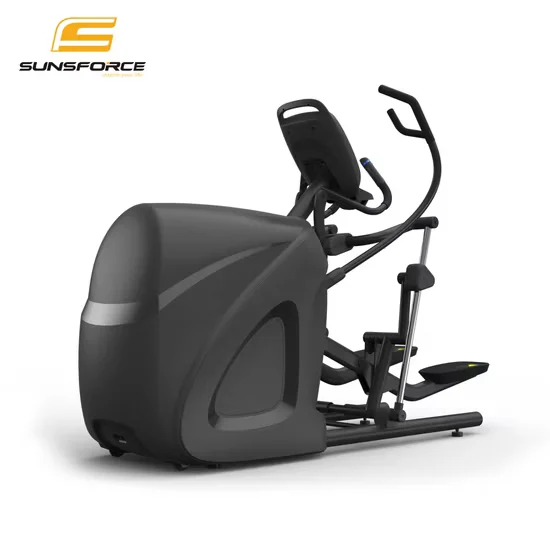
CTC60 Commercial Elliptical Cross Trainer, 240kg Net Weight, 180kg Max User Capacity, 25 Resistance Levels — engineered with sealed bearing systems and 230mm pedal center distance for stable stride mechanics under high-traffic conditions. LED console delivers real-time performance metrics across 10 stride grades and 15 step depth settings. Every unit undergoes six-stage QC inspection before shipment.
// Spec Highlights
• Direct from Manufacturer · No Middlemen · Worldwide Shipping
01
// Material
Imported Solid Wood
Premium hardwood frames sourced for density and visual warmth.
02
// Hardware
Medical-Grade Silent
Whisper-quiet pulleys and springs for clinical environments.
03
// Customization
Appearance OEM
Color, upholstery, and branding tailored to your studio.
04
// Service
Layout Design
Free venue planning for studios and rehab institutions.
Every component is selected for longevity, performance, and aesthetic harmony - from imported hardwood frames to silent medical-grade accessories.
// Features
Sealed Bearing Integrity — The CTC60 elliptical uses sealed industrial bearings rated for continuous daily cycles, eliminating the crank play that forced a full batch teardown in a Middle East facility within months of installation.
| Parameter | Value |
|---|---|
| Designation | CTC60 |
| Product Type | Commercial Elliptical Cross Trainer |
| Console Type | LED |
| Resistance Levels | 1–25 |
| Stride Grade | 1–10 |
| Step Depth Grade | 1–15 |
| Pedal Center Distance | 230mm |
| Net Weight | 240kg |
| Max User Weight | 180kg |
| Product Dimensions | 2120×790×1680mm |
| Certification | ISO, CE, EN 957, RoHS |
| Facility Type | Typical Use |
|---|---|
| Commercial gym cardio zone | High-traffic daily elliptical training for members across weight and height ranges |
| Hotel fitness center | Reliable low-maintenance cardio for transient guest use patterns |
| University athletic facility | Conditioning and warm-up station for student athletes |
| Corporate wellness center | Accessible low-impact cardio for diverse employee fitness levels |
Sealed industrial bearings and structural rigidity define whether a commercial elliptical cross trainer survives its first year or becomes a maintenance liability.
Open bearings on pedal cranks are a common cost-cutting measure that surfaces within months under eight-hour daily cycles. Crank play develops, stride wobbles become visible, and users migrate to other machines. The CTC60 addresses this with sealed bearing assemblies at every pivot point, paired with a 240kg frame mass that resists the lateral shift that thinner machines exhibit under heavy users. [NEED_CITE: bearing seal classification and service life under continuous commercial loading]
The CTC60 commercial elliptical cross trainer occupies the low-impact, full-body conditioning lane in a commercial cardio floor. Its 230mm pedal center distance and 10-grade stride adjustment accommodate users from approximately 155cm to 195cm in height, while the 25-level resistance range serves both rehabilitation-adjacent warm-ups and sustained aerobic intervals. In a typical layout, it pairs with self-powered treadmills and air bikes to distribute users across movement patterns and reduce queue congestion during peak hours.
Elliptical motion generates continuous eccentric loading on crank arms, pedal spindles, and the flywheel bearing housing. Unlike a treadmill where impact is intermittent, the elliptical applies torsional stress throughout every revolution, cycling the same bearing surfaces and pivot joints thousands of times per day. [NEED_CITE: fatigue behavior of steel joints under repetitive torsional loading in fitness equipment] The CTC60’s 240kg net mass anchors the frame against the lateral forces that lighter machines transmit to the floor, while sealed bearings prevent the contamination pathway — sweat, dust, and cleaning agents — that accelerates wear in open-bearing designs. Upholstery contact points on the stationary handles and pedal straps face chemical degradation from gym sanitizers, requiring coating and material selections that resist surface breakdown over extended service life.
The 240kg net weight of the CTC60 is not arbitrary mass — it reflects the steel gauge and tube dimensions required to keep frame deflection within acceptable limits when a 180kg user drives the pedals at high resistance. Heavier gauge steel and larger cross-section tubes raise the deformation threshold, meaning the frame does not flex perceptibly under load, which in turn keeps the stride path aligned with natural joint travel. [NEED_CITE: structural tube gauge and deflection limits in stationary cardio equipment] The 230mm pedal center distance is an ergonomic parameter that positions the user’s feet at a width consistent with natural hip alignment, reducing lateral knee stress across the full stride range. The 1–25 resistance system operates through a mechanical brake or magnetic resistance unit; its durability depends on the precision of the adjustment mechanism and the thermal management of the resistance components during extended sessions. The LED console provides real-time feedback on time, distance, calories, heart rate, and resistance level — data points that commercial operators need for equipment utilization tracking and user engagement metrics.
Machines built with thin-wall tubing and spot-welded joints present a predictable failure sequence: frame flex increases under heavy users, weld points develop micro-cracks that propagate under cyclic loading, and eventually a joint fails — often while the machine is in use. Non-sealed bearings allow contaminant ingress, accelerating wear and generating the grinding noise that signals imminent replacement. [NEED_CITE: weld joint fatigue failure modes in cyclically loaded steel structures] Powder coating applied without proper surface preparation or at insufficient thickness chips at high-contact areas, exposing bare steel to sweat corrosion. The replacement cost for bearings, pedal assemblies, and cosmetic refurbishment across a fleet of compromised machines typically exceeds the initial price differential of specifying structurally sound equipment from the outset.
The CTC60 is manufactured in a vertically integrated facility using Q235 and Q345 industrial steel with mill certification traceable to the coil. Robotic MIG welding produces continuous weld lines without the spot-weld weak points that characterize cost-reduced alternatives. Every unit undergoes load testing before shipment — not sample-based inspection, but individual machine validation. The 200μm powder coating provides scratch and corrosion resistance that maintains appearance through years of commercial use. A 10-year frame warranty backs the structural investment. For facility planners, the CTC60’s 2120×790×1680mm footprint is integrated into 2D-3D CAD layout support, ensuring proper aisle widths and emergency egress compliance around each station. OEM and ODM branding options allow the machine to align with facility identity without third-party relabeling risk.
Provide your cardio zone floor dimensions and target equipment count to receive a 2D-3D CAD layout showing CTC60 placement with compliant aisle spacing and emergency access routes. Specify your anticipated daily user volume so the structural grade recommendation matches your actual usage intensity. If your facility requires specific console language, frame color, or branded upholstery, outline those requirements so the quotation reflects the exact configuration.
Q: How do sealed industrial bearings differ from open bearings in commercial elliptical machines?
A: Sealed bearings prevent sweat, dust, and cleaning chemicals from reaching the rolling elements inside the bearing race. Open bearings allow contaminants to enter, accelerating wear and generating play in the crank assembly within months of heavy daily use. The CTC60 uses sealed bearings at all pivot points to maintain smooth stride mechanics and eliminate the maintenance cycle that open-bearing machines demand.
Q: What determines whether an elliptical frame can support heavy users without flex?
A: Frame rigidity depends on steel gauge, tube cross-section dimensions, and joint welding method. Thinner tubing and spot-welded connections allow perceptible flex under heavy loads, which misaligns the stride path and stresses user joints. The CTC60’s 240kg net weight reflects the material mass needed to keep deflection minimal across the full 180kg user capacity range.
Q: How does pedal center distance affect user comfort on a commercial elliptical?
A: The 230mm pedal center distance on the CTC60 positions the user’s feet at a width that aligns with natural hip joint geometry. Narrower spacing forces the knees inward during stride; wider spacing creates lateral hip stress. This dimension accommodates the majority of adult users without requiring individual Q-factor adjustment.
Q: What maintenance does the CTC60 resistance system require under daily commercial use?
A: The 25-level resistance system operates through a mechanical or magnetic mechanism with no fluid or friction pads requiring routine replacement. Console calibration checks and connection integrity verification form the primary maintenance tasks. Sealed bearings at the flywheel and crank eliminate the lubrication schedule that open-bearing ellipticals require.
Premium aesthetics meet quiet operation for boutique studio environments.
Medical-grade silence and precision for sports & postpartum recovery.
Furniture-grade craftsmanship for premium residential installations.
Compact premium setups for one-on-one and small-group training.
Aesthetic Pilates integration for hybrid wellness studio programming.
Multi-unit deployment with instructor-grade reliability for certification programs.
Tell us about your project. Our team will respond within 24 hours with pricing, customization options, and shipping details.
// Sales Director
William
+86 132 2531 1800
// Export Manager
Bella
+86 198 5412 8032
william@bickfit.com