01 / Scenario
STUDIO
P
High-End Pilates Studios
Premium aesthetics meet quiet operation for boutique studio environments.
ISO
9001
CE
Certified
OEM
Available
10YR
Warranty
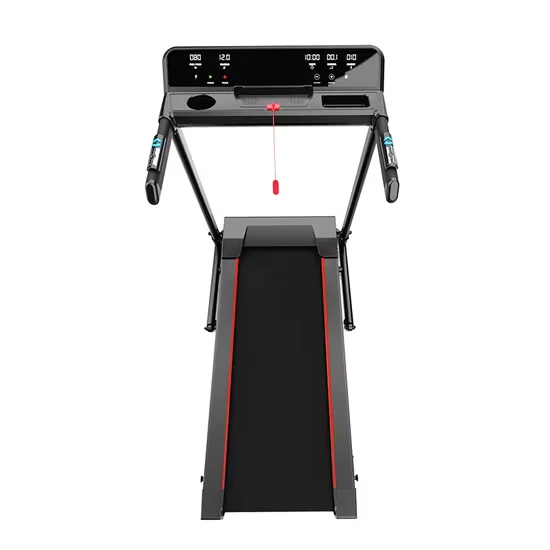
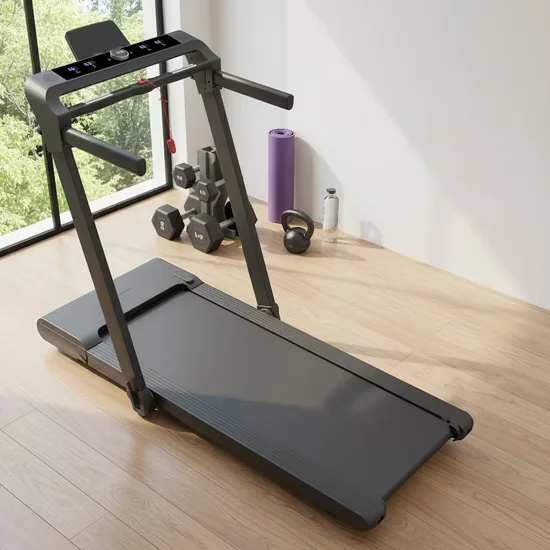
Electric Home Folding Treadmill, 1.5HP Motor, 1200×450mm Running Surface — engineered for space-efficient residential cardio with a foldable frame mechanism and 16 preset programs. The 1.5HP motor delivers consistent belt speeds up to 16 km/h, while the 1200×450mm deck provides adequate stride length for adult users. Every unit undergoes load testing before shipment to verify frame rigidity and folding joint durability for daily home use.
// Spec Highlights
• Direct from Manufacturer · No Middlemen · Worldwide Shipping
01
// Material
Imported Solid Wood
Premium hardwood frames sourced for density and visual warmth.
02
// Hardware
Medical-Grade Silent
Whisper-quiet pulleys and springs for clinical environments.
03
// Customization
Appearance OEM
Color, upholstery, and branding tailored to your studio.
04
// Service
Layout Design
Free venue planning for studios and rehab institutions.
Every component is selected for longevity, performance, and aesthetic harmony - from imported hardwood frames to silent medical-grade accessories.
// Features
Foldable Frame Rigidity — The folding hinge joints on this electric home folding treadmill are reinforced with continuous weld lines rather than spot welds, maintaining structural alignment through repeated fold-unfold cycles.
| Parameter | Value |
|---|---|
| Product Type | Electric Folding Treadmill |
| Motor Power | 1.5HP |
| Speed Range | 1–16 km/h |
| Runway Size | 1200 × 450 mm |
| Programs | 16 |
| Display | LCD (Speed / Distance / Time / Calories) |
| Unfolded Dimensions | 1500 × 740 × 1150 mm |
| Folded Dimensions | 1810 × 740 × 220 mm |
| Net Weight | 42.0 kg |
| Material | ABS |
| Color Options | Multicolor |
| Certification | CE, RoHS |
| OEM/ODM Custom | Available |
| Facility Type | Typical Use |
|---|---|
| Residential home gym | Daily cardio in limited-floor-space apartments and houses |
| Boutique studio reception area | Light warm-up station for members awaiting sessions |
| Hotel guest fitness room | Compact storable unit for multi-guest rotation |
| Corporate wellness room | Employee break-time cardio in confined office layouts |
An electric home folding treadmill lives or dies by two things: the running surface it supports and the hinge mechanism that lets it disappear into a corner.
Too many folding units on the market advertise "commercial-grade" construction while using gauge-thin tubing at the fold joint — the exact stress concentration point that sees the highest cyclic loading every time the deck is raised or lowered. Within months of daily use, those joints develop lateral play, the frame rattles at higher speeds, and the belt tracking drifts off-center. The running deck itself often receives a thin wear layer that grinds through under sustained footstrike, exposing the substrate and creating an uneven surface that accelerates belt wear further. For operators placing this electric home folding treadmill in high-turnover environments, these failures are not cosmetic — they are liability events. [NEED_CITE: structural fatigue at hinge joints in foldable fitness equipment]
This electric home folding treadmill occupies the space between dedicated commercial treadmills and entry-level residential units. The 1200 × 450 mm running surface provides sufficient stride length for users up to moderate height while keeping the overall footprint manageable. In a facility cardio zone, it pairs with air bikes and rowers to create a multi-modal conditioning circuit without consuming the floor area a full-size commercial treadmill demands. The 1.5HP motor sustains steady-state running at moderate speeds, making it appropriate for users seeking consistent daily cardio rather than high-intensity sprint intervals. The folded profile at just 220 mm in height allows storage against walls or under elevated platforms, a critical consideration for residential and boutique studio environments where every square meter carries cost.
Every fold-unfold cycle loads the hinge pins, joint brackets, and locking mechanisms with a combination of static weight and dynamic shock as the deck swings through its arc. Over hundreds of cycles, non-sealed pivot points accumulate dust and moisture, accelerating wear at the bearing surfaces. The electric home folding treadmill’s hinge design must resist both the vertical shear of the deck’s own weight and the lateral forces generated when a user runs slightly off-center — an eccentric load pattern that spot-welded joints handle poorly compared to continuous weld seams. Motor vibration during operation adds a secondary fatigue vector, particularly at the mount points where the drive unit attaches to the frame. Belt tension fluctuation under varying user weights further stresses the roller bearings at both ends of the deck. [NEED_CITE: bearing degradation patterns in high-cycle folding mechanisms]
The 1.5HP motor rating directly determines whether the belt maintains consistent speed under load or slows perceptibly when a heavier user steps on. Undersized motors in this category compensate by running at higher duty cycles, generating excess heat that degrades the motor windings and the surrounding ABS housing over time. The 1200 × 450 mm runway dimension reflects a deliberate balance: long enough to accommodate a natural running stride for most adult users without forcing a shortened gait, yet narrow enough to keep the overall frame width within apartment-friendly proportions. The 16 programmed workout profiles vary speed and incline patterns — though in this class of machine, incline adjustment is typically manual or absent, so the programs primarily modulate motor speed in pre-set intervals. The LCD console tracks speed, distance, time, and calories, providing the basic feedback loop users expect without adding electronic complexity that increases failure points. The ABS material used in the console housing and side rails offers impact resistance and UV stability, though it lacks the structural rigidity of steel tubing for primary load-bearing elements.
When manufacturers reduce frame tube thickness to hit a price point, the folding treadmill gains grams on a spec sheet but loses rigidity under real-world loading. A deck that flexes under footstrike creates an unstable running platform that forces the user’s stabilizer muscles to compensate — and accelerates wear at every joint in the frame. Spot-welded hinge connections that pass visual inspection in the factory develop micro-cracks under repeated folding, eventually failing catastrophically rather than gradually. Non-sealed bearings at the front and rear rollers allow sweat, dust, and cleaning chemicals to penetrate the race surfaces, generating noise and play within the first year of daily use. Thin powder coating on exposed frame surfaces chips at contact points during folding, leaving bare steel vulnerable to corrosion from ambient humidity and floor cleaning agents. When proprietary fasteners and non-standard hardware are used throughout the assembly, replacement parts become unavailable once the original manufacturer discontinues the model — turning a repairable machine into disposable equipment. [NEED_CITE: fastener standardization and long-term serviceability in fitness equipment]
The electric home folding treadmill is engineered for environments where floor space is the primary constraint but structural reliability cannot be sacrificed. The folding mechanism is designed with reinforced hinge brackets and continuous weld seams at all stress concentration points, ensuring the joint maintains alignment through thousands of fold cycles. Every unit undergoes load testing before shipment, verifying that the frame, deck, and motor mount perform under sustained use rather than passing only a static sample check. The CE and RoHS certifications confirm compliance with European safety and environmental standards, a baseline requirement for institutional procurement. OEM and ODM customization is available for facilities requiring specific colorways, branded console overlays, or modified packaging for direct-to-resident delivery programs. When specifying this electric home folding treadmill for a multi-unit deployment, 2D-3D floor planning support ensures each unit’s unfolded footprint and safe clearance zone integrates properly with the surrounding cardio layout.
Provide the total cardio zone floor area and the desired number of units to receive a 2D-3D layout plan showing each electric home folding treadmill’s position, unfolded footprint, and safe clearance envelope. Specify the expected daily user volume so the structural grade and motor duty cycle can be matched to actual usage intensity. Indicate the target user height and weight range to confirm the 1200 × 450 mm running surface and 42 kg frame weight are appropriate for the intended demographic. For multi-unit deployments requiring consistent branding, outline the custom color, logo placement, and console overlay requirements for an OEM configuration quote.
Q: What motor power is appropriate for daily home use versus light commercial applications?
A: The 1.5HP motor in this electric home folding treadmill is rated for sustained daily use by individual household members at moderate running speeds. For light commercial environments such as hotel fitness rooms or boutique studio reception areas where multiple users rotate through daily, this power level supports steady-state cardio but is not designed for continuous high-speed or high-incline operation. Facilities expecting more than six to eight hours of cumulative daily runtime should evaluate higher-duty commercial treadmill platforms.
Q: How does the running surface dimension affect workout safety and comfort?
A: The 1200 × 450 mm running deck provides adequate stride length for most adult users up to approximately 180 cm in height without forcing a shortened or unnatural gait pattern. The 450 mm width offers sufficient lateral margin for natural arm swing and minor foot placement variation during running. Users significantly taller than 180 cm may find the deck length constraining at higher speeds, where stride extension increases. For facilities serving a broad demographic, verifying that the deck dimension accommodates the intended user height range is essential before procurement.
Q: What maintenance is required for the folding mechanism to prevent joint wear?
A: The folding hinge joints should be visually inspected every 200 fold cycles for signs of lateral play, audible clicking, or visible wear at the pivot pin surfaces. Keep the hinge areas free of dust and debris that can accelerate bearing surface degradation. If the locking mechanism begins to feel loose or fails to hold the deck firmly in the unfolded position, the pivot pins and bushings should be evaluated for replacement. Regular lubrication of the hinge contact surfaces with a light machine oil extends service life and maintains smooth fold-unfold operation.
Q: How should the treadmill be positioned in a small residential space?
A: Place the electric home folding treadmill on a level surface with at least 500 mm of clear space behind the rear edge for safe mounting and 300 mm on each side. When folded, the 220 mm height profile allows storage against a wall or under an elevated platform. Ensure the location provides access to a standard electrical outlet without requiring an extension cord, and avoid positioning near direct sunlight or moisture sources that could degrade the ABS housing and console components over time.
Premium aesthetics meet quiet operation for boutique studio environments.
Medical-grade silence and precision for sports & postpartum recovery.
Furniture-grade craftsmanship for premium residential installations.
Compact premium setups for one-on-one and small-group training.
Aesthetic Pilates integration for hybrid wellness studio programming.
Multi-unit deployment with instructor-grade reliability for certification programs.
Tell us about your project. Our team will respond within 24 hours with pricing, customization options, and shipping details.
// Sales Director
William
+86 132 2531 1800
// Export Manager
Bella
+86 198 5412 8032
william@bickfit.com