Chinese vs American Gym Equipment: 5-Year TCO Wholesale Supplier
FOB price is a trap. Buyers who compare Chinese and American gym equipment on sticker price alone will miss the real cost drivers hiding in maintenance cycles, parts logistics, and downtime penalties.
The real answer to whether Chinese equipment saves money over five years is yes — but only when the buyer calculates total cost of ownership across equipment acquisition, ocean freight, spare parts availability, unplanned downtime, and residual value, not just the proforma invoice.
I still remember walking through a gym floor in Austin, Texas, where the owner pointed at three treadmills sitting idle in the corner. He had bought a batch of budget machines from a trading company two years earlier. The drive boards failed one after another, and replacement parts had to be air-shipped from overseas in small parcels. By the time the third motor burned out, the air freight bills alone had eaten the entire margin he originally saved on the purchase price. That gym was not an outlier; it is a textbook example of what happens when a buyer treats FOB as the finish line instead of the starting gun.
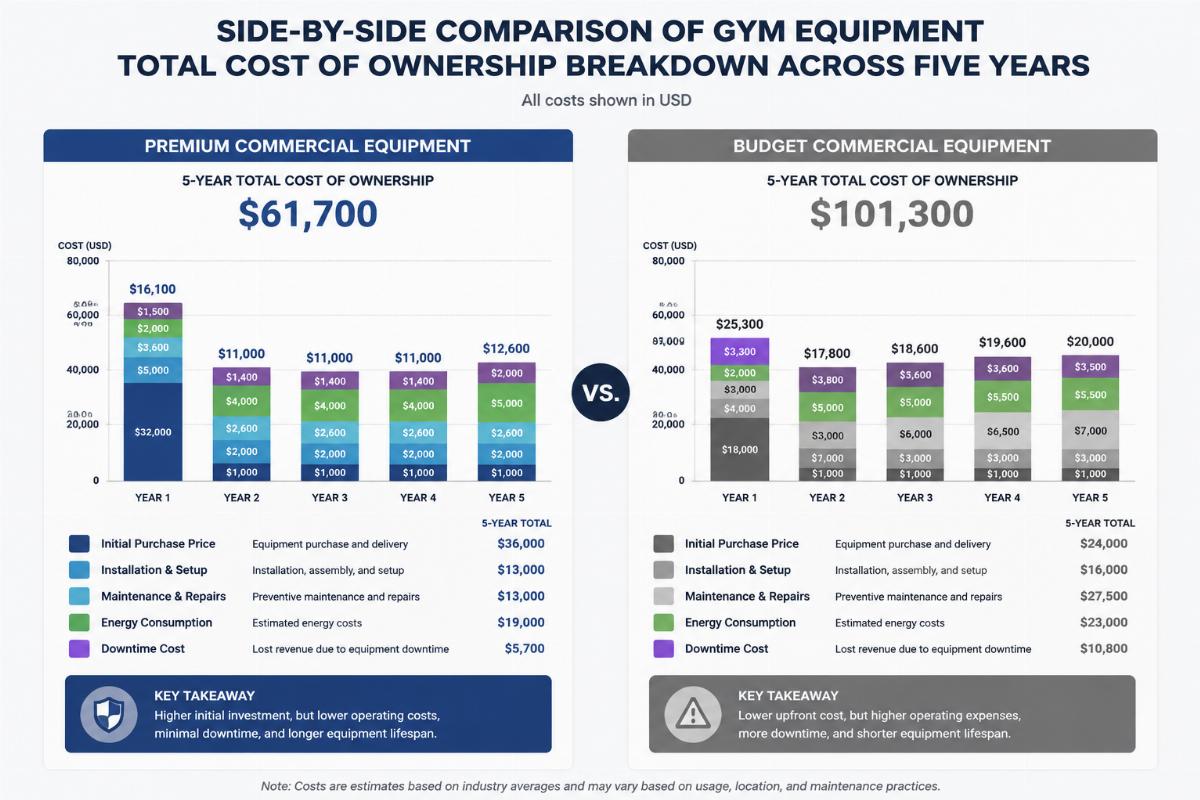
Let me walk you through the math the way I now lay it out for every buyer who sits across from me.
What Does 5-Year TCO Actually Include for Gym Equipment?
Total cost of ownership for commercial fitness equipment is a five-layer stack, and procurement price is only the bottom layer.
Most gym owners and hotel developers I talk to at trade shows open the conversation with "what is your FOB price." By the time we finish a cup of coffee, they realize that the invoice is maybe a third of what they will actually spend before the machines are scrapped. The full framework breaks down as follows:
| TCO Layer | What It Covers | Typical Weight |
|---|---|---|
| Equipment Acquisition | Unit price, tooling, branding, packaging | Baseline |
| Ocean Freight & Import | Sea shipping, customs, inland delivery, installation | Moderate |
| Five-Year Spare Parts | Belts, decks, drive boards, motors, cables, pulleys | Substantial |
| Unplanned Downtime | Lost member sessions, complaint handling, revenue leakage | Often dominant |
| Residual Value | Trade-in, resale, or scrap value at end of life | Minor offset |
The spare parts and downtime layers are where the Chinese vs American gym equipment 5-year TCO comparison gets interesting. A well-known American brand may quote a premium unit price, but the buyer often assumes that premium buys them predictable maintenance. In practice, what they are paying for is a proprietary parts ecosystem where the manufacturer controls pricing, availability, and authorization. A mid-range Chinese commercial treadmill, by contrast, frequently uses standardized motors and drive boards sourced from widely available industrial suppliers. When a drive board fails, the replacement can often be sourced locally or shipped in a standard parcel rather than a proprietary crate.
Industry analysis on fitness equipment lifecycle costing confirms that maintenance and downtime routinely account for the majority of long-term ownership expense in high-traffic commercial environments [NEED_CITE: commercial gym equipment maintenance cost distribution over equipment lifetime].

Chinese vs American Equipment: Where Does the Price Gap Come From?
The price gap is structural, not a reflection of corner-cutting.
When a buyer sees a Chinese commercial strength machine quoted at roughly half the price of a comparable American-branded unit, the instinctive reaction is suspicion. After spending years sourcing from Shandong manufacturing clusters and auditing production floors, I can tell you the gap comes from three verifiable factors.
First, vertical integration. The major commercial fitness equipment manufacturers in Shandong Province operate their own steel fabrication, powder coating, welding, and assembly lines under one roof. Raw steel tube, plate, and cable are purchased in volumes that would make most American distributors blink. There is no layer of regional warehousing or independent coating subcontractor adding markup between the raw material and the finished frame.
Second, labor cost structure. This is not a secret, but it is often overstated. Direct labor in Shandong fitness equipment plants is a smaller share of total unit cost than most buyers assume, because the product categories — plate-loaded machines, cable crossovers, Smith machines, power racks — are heavily steel-fabrication-driven rather than assembly-driven. The cost advantage is real, but it is not as dramatic as the headline wage gap would suggest.
Third, brand premium and distribution markup. American commercial fitness brands carry decades of reputation, dealer networks, and marketing spend. Their pricing reflects that ecosystem, not just the bill of materials.
| Comparison Dimension | Chinese Manufacturer (Commercial Grade) | American Branded Equipment |
|---|---|---|
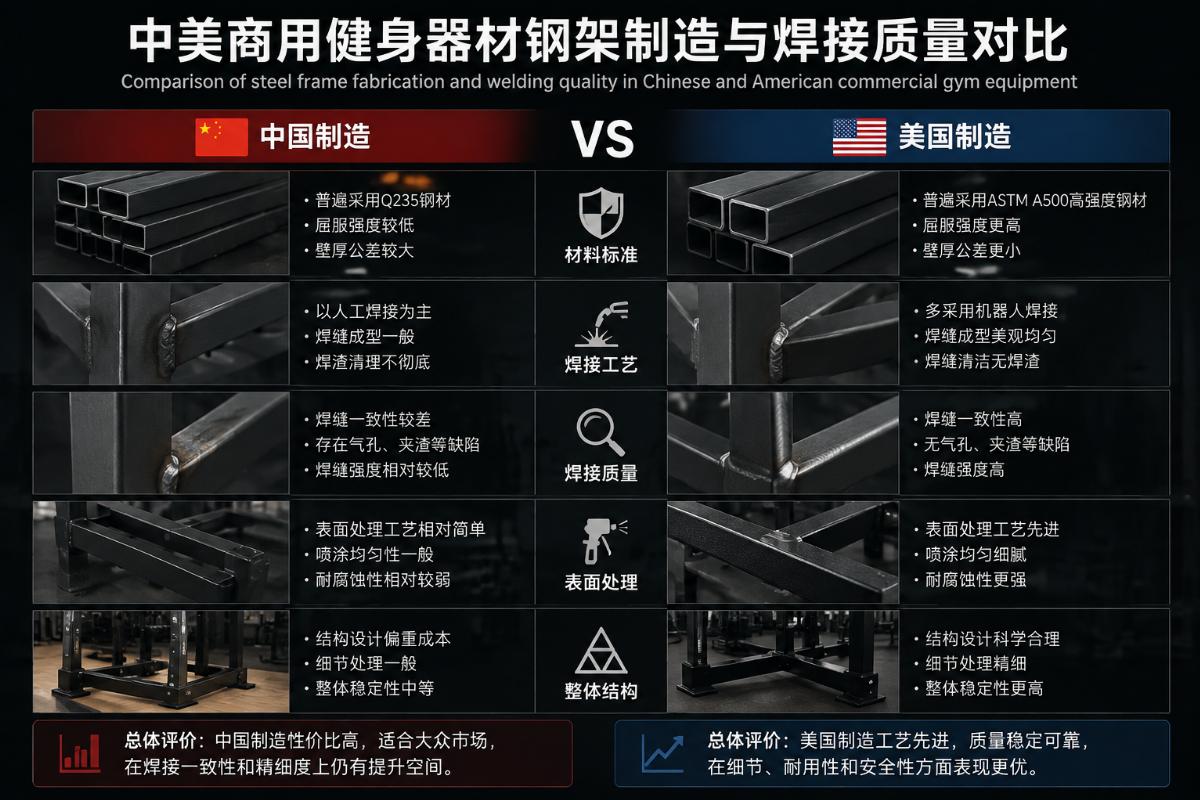
| Frame Steel Grade | Commercial-grade heavy-duty tube, verified by mill cert | Comparable grade, often identical sourcing region |
| Motor & Drive Source | Standardized industrial suppliers, multi-source | Proprietary or single-source, brand-labeled |
| Welding Process | Robotic or certified manual, ISO-aligned | Robotic, ISO-aligned |
| Certification | CE, EN standards for EU market | UL, CSA for North America |
| Warranty Structure | Written terms, parts supply commitment | Written terms, dealer-authorized service network |
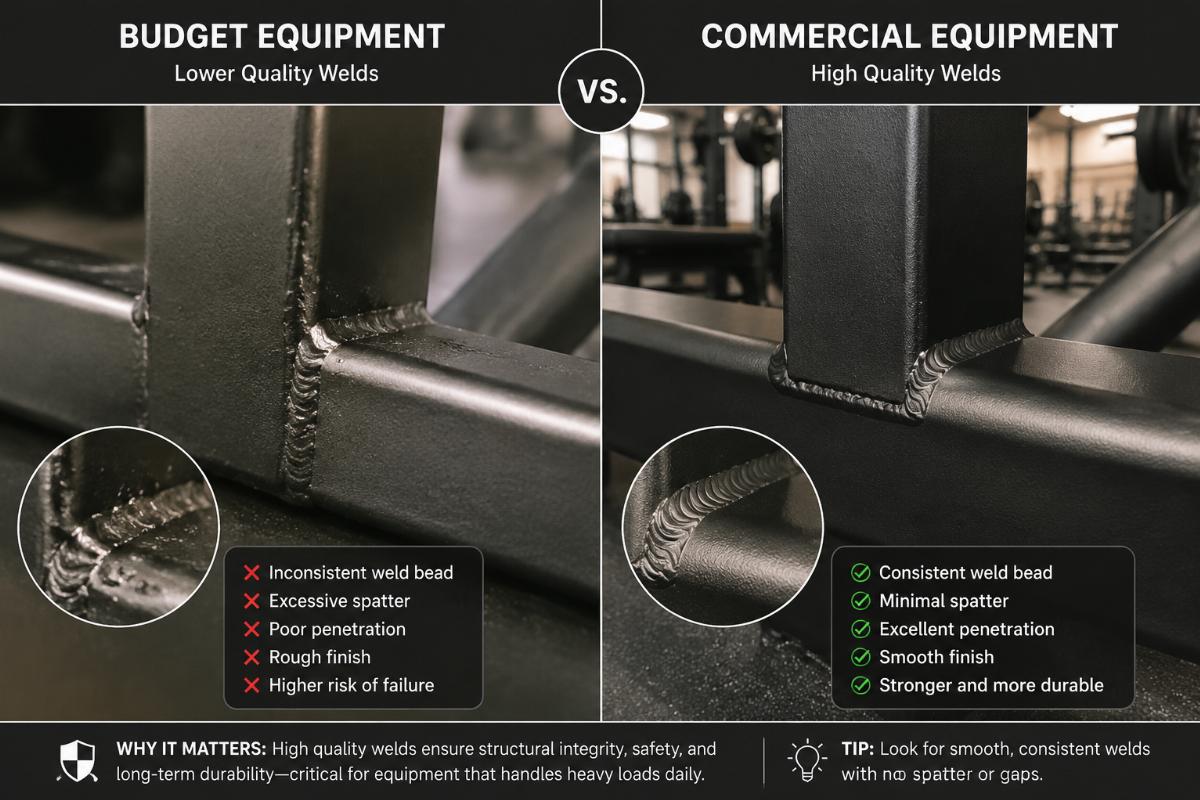
The critical point for any buyer running a Chinese vs American gym equipment 5-year TCO calculation is that the steel and welding quality from top-tier Shandong manufacturers is genuinely comparable to American commercial grade. The divergence appears in the electronics and the parts ecosystem.
Maintenance & Downtime: The Hidden Cost Most Buyers Ignore
Downtime is the line item that turns a "cheap" purchase into an expensive lesson.
A commercial gym with a hundred active members running through peak hours cannot afford to have a treadmill or a cable crossover out of service for weeks. Every day a machine sits broken is a day of member complaints, truncated workouts, and — in hotel and apartment settings — negative reviews that directly affect occupancy and renewal rates.
Here is where the Chinese vs American gym equipment 5-year TCO story splits sharply.
American brands typically operate a dealer-authorized service model. When a drive board or a console fails, the gym contacts the local dealer, who orders the part through the brand’s parts system. The part is proprietary, priced at brand markup, and shipped on the brand’s timeline. In my experience, lead times for out-of-stock proprietary parts can stretch into weeks, and the invoice for a single drive board replacement — part plus labor — can run into the high hundreds of dollars. Over five years and a fleet of a dozen cardio units, those invoices accumulate into a significant line item.
Chinese commercial equipment from established Shandong manufacturers takes a different path. The motors, drive boards, and consoles are typically sourced from industrial suppliers whose components are used across multiple fitness brands and even across other industrial equipment categories. When a part fails, the gym’s maintenance technician can often identify a cross-reference, source a replacement from a local industrial supplier, or receive a shipment from the manufacturer’s spare parts warehouse within a reasonable window. The manufacturer’s commitment to supplying spare parts for an agreed period — typically documented in the purchase agreement — is what makes this model work.
| Maintenance Factor | Chinese Commercial Equipment | American Branded Equipment |
|---|---|---|
| Parts Sourcing | Multi-source industrial components | Proprietary, brand-controlled |
| Parts Pricing | Market-rate industrial pricing | Brand markup, dealer channel |
| Lead Time (In-Stock) | Shipped from manufacturer warehouse | Dealer network dependent |
| Lead Time (Out-of-Stock) | Standard industrial lead time | Extended, brand production queue |
| Technician Familiarity | Standard industrial electronics knowledge | Brand-specific training often required |
A hotel developer I worked with in the Middle East outfitted a new resort fitness center and specifically asked me to model the five-year downtime cost. When we ran the numbers, the difference in parts availability and pricing between a proprietary American system and a standardized Chinese commercial setup shifted the TCO conclusion noticeably in favor of the Chinese option — even after adding the ocean freight layer that the American buyer would not face.

How to Verify Quality When Sourcing from China?
Trust, but verify with paperwork — not with promises.
Every buyer who has been burned by a bad overseas purchase learned the same lesson: the factory visit photo album means nothing, the WhatsApp voice note means nothing, and the "we have CE" claim means nothing until you see the actual certificate number and the test report behind it.
When I help a buyer evaluate a Chinese commercial fitness equipment manufacturer, I walk them through a verification sequence that turns subjective impressions into auditable facts.
First, request the CE certificate and the corresponding EN test report for each product category. For cardio equipment, the relevant standard is EN 957-1 and EN 957-6; for strength equipment, EN 957-1 and EN 957-9. The certificate should name the actual manufacturing entity, not a trading company. If the manufacturer cannot produce the test report on request, that is a red flag regardless of how impressive the showroom looks.
Second, ask for a detailed spare parts list with part numbers, expected service life under defined usage conditions, and pricing. A manufacturer that can hand over a structured parts catalog with lifecycle estimates is a manufacturer that has thought about the product beyond the day it ships. A manufacturer that responds with "just call us when something breaks" has not.
Third, request a written warranty document that specifies what is covered, for how long, and what the spare parts supply commitment looks like. The warranty should distinguish between frame, mechanical components, and electronics, because their failure profiles are completely different.
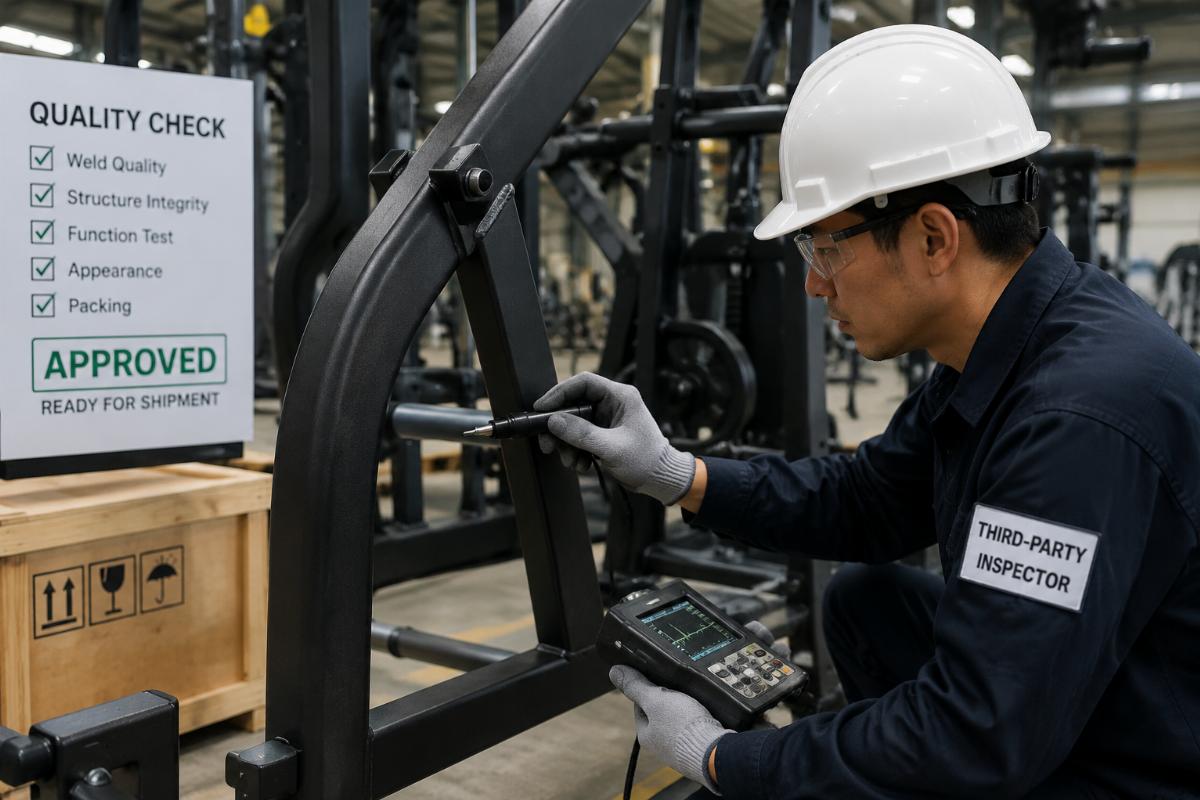
Fourth, if the order volume justifies it, arrange a third-party pre-shipment inspection. The cost is minor relative to the container value, and it catches welding defects, paint adhesion issues, and assembly errors before they are loaded.
| Verification Item | What to Request | What It Proves |
|---|---|---|
| CE Certificate | Certificate + EN test report naming manufacturer | Regulatory compliance, real testing |
| Spare Parts Catalog | Part numbers, lifecycle, pricing | After-sales planning maturity |
| Warranty Document | Coverage scope, duration, parts commitment | Long-term accountability |
| Pre-Shipment Inspection | Third-party report | Build quality at time of shipment |
A distributor in Southeast Asia once told me he switched suppliers after a single container of poorly welded power racks arrived with hairline cracks at the gusset joints. He now requires weld penetration photos on every critical joint before loading. That is the kind of verification discipline that separates buyers who succeed with Chinese manufacturing from buyers who get burned.
Is Chinese Equipment Right for Your Gym’s Usage Level?
Match the equipment grade to the actual usage intensity — not to the marketing brochure.
Not every gym puts the same hours on its machines. A boutique studio running three classes a day with controlled member access operates a fundamentally different usage profile than a twenty-four-hour commercial gym with hundreds of daily walk-ins, or a hotel fitness center where guest usage is unpredictable and unsupervised.
For light-to-moderate usage environments — boutique studios, corporate wellness centers, apartment fitness rooms with limited peak traffic — a well-built Chinese commercial-grade machine will comfortably meet the demand. The frame, the cable system, the pulley stack, the upholstery: all of these are built to commercial specifications by the major Shandong manufacturers, and they will hold up under defined usage conditions without issue.
For high-intensity, high-traffic commercial environments — large chain gyms, university recreation centers, military fitness facilities — the buyer needs to look more carefully at the motor specification on cardio equipment, the bearing and guide rod quality on strength equipment, and the upholstery foam density and stitching standard. These are the components that differentiate a machine that lasts five years from one that needs major refurbishment in three.
The good news for buyers running a Chinese vs American gym equipment 5-year TCO comparison is that the top-tier Shandong manufacturers have invested heavily in exactly these high-wear components over the past several years. Commercial-grade AC motors with appropriate duty cycles, precision-ground guide rods, and high-density upholstery are standard offerings, not custom upgrades. The buyer’s job is to specify them clearly in the purchase agreement and verify them on the production floor or through the pre-shipment inspection.
A gym chain owner in Latin America who had previously outfitted two locations with American-branded equipment decided to test Chinese commercial equipment for a third location. He specified industrial-grade motors, requested a full spare parts list upfront, and negotiated a written five-year parts supply commitment. Three years in, his maintenance cost per machine is a fraction of what he paid at the first two locations, and his member satisfaction scores are comparable.
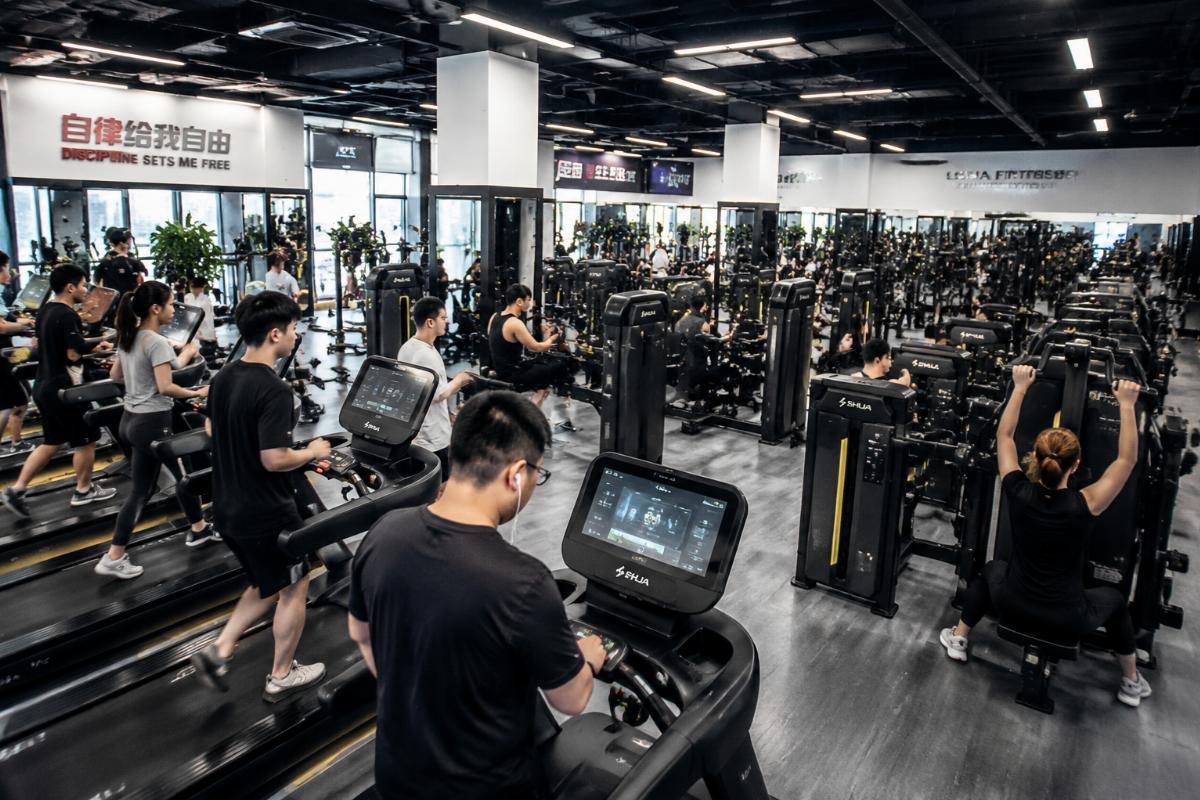
Conclusion
The five-year total cost of ownership for commercial gym equipment is decided long before the first machine is plugged in. Buyers who evaluate Chinese and American equipment on total cost — including freight, parts, downtime, and residual value — consistently find that Chinese commercial-grade equipment from established manufacturers delivers a meaningful cost advantage, provided the buyer verifies certification, locks in a spare parts commitment, and matches the equipment specification to actual usage intensity.