Commercial Elliptical Bonded Warehouse Austria | Bick OEM Wholesale Supplier
Austrian bonded warehouses are not merely storage facilities; they function as secondary customs checkpoints with rigorous document verification protocols.
Importing commercial ellipticals into the EU via an Austrian bonded warehouse requires strict alignment between CE certification documentation and physical product models. Even minor discrepancies in model codes or missing technical annexes can trigger significant clearance delays, halting distribution to multiple European markets. Successful transit depends on pre-shipment verification of exact model numbers, noise test reports for hospitality-grade equipment, and precise inventory labeling for mixed SKU containers.
Navigating these logistics complexities demands more than standard freight forwarding knowledge. It requires a deep understanding of how local authorities interpret EU machinery directives within the specific operational context of Central European logistics hubs.
What Are the Key Requirements for Austrian Bonded Warehouses?
Strict CE documentation matching physical product models is mandatory for entry and storage.
Many importers assume that a CE certificate is a generic pass for all similar equipment from a manufacturer. This is a critical misconception. Austrian customs and bonded warehouse operators verify that the model code on the physical unit matches the certificate exactly, character for character. [NEED_CITE: EU Customs Code provisions on intellectual property and conformity assessment]
When a Middle East buyer attempted to re-export a batch of commercial ellipticals to Europe through an Austrian hub, the shipment was held because the CE certificate listed a model ending in "Pro," while the actual units were labeled "Pro-X." The two-letter difference was deemed a potential non-conformity. The resolution required a formal declaration letter from the certified body and took several weeks, delaying the client’s gym opening schedule. This incident highlights that bonded warehouses act as a filter for compliance, not just a holding area.
The requirement extends beyond the main certificate. Technical files must include specific annexes relevant to the equipment type. For commercial ellipticals, this often means detailed risk assessments and user manual translations in the destination countries’ languages. Warehouse operators may request proof that these documents exist before releasing goods for further transit. [NEED_CITE: Machinery Directive 2006/42/EC documentation requirements]
Failure to align these documents results in goods being stuck in limbo, incurring storage fees without the ability to move them. The key is to treat the bonded warehouse entry as a mini-customs clearance event, ensuring every piece of paperwork is pristine before the container arrives.
How to Avoid Clearance Delays for Commercial Ellipticals?
Pre-verify model numbers and technical annexes with warehouse operators before shipment.
Delays often stem from assumptions about what constitutes sufficient documentation. To avoid these pitfalls, importers must engage in a triple-check process involving the manufacturer, the freight forwarder, and the bonded warehouse operator. This proactive approach identifies discrepancies early, allowing for corrections while the goods are still at the origin factory.
A common issue arises with hotel projects requiring silent-operation ellipticals. In one case, a Vienna-based hotel project faced a hold because the initial CE file lacked a specific noise test report. While the general CE certificate covered safety, the local authority requested evidence of compliance with noise regulations for residential-adjacent commercial zones. The absence of this specific technical annex caused a bottleneck. [NEED_CITE: Austrian environmental noise regulations for commercial premises]
To prevent such issues, buyers should request a full document package review prior to loading. This includes verifying that the model numbers on the shipping marks match the invoice, packing list, and CE certificate. Additionally, ensure that any specific technical reports, such as noise levels or electromagnetic compatibility tests, are included in the digital file sent to the warehouse operator in advance.
Bick Fitness implements this by cross-referencing CE files with model lists and warehouse requirements before shipment. This practice ensures that commercial ellipticals move seamlessly through the bonded zone, avoiding the costly delays that plague less prepared shipments. The goal is to make the physical arrival of the goods a mere formality, as all compliance checks have been completed digitally beforehand.
By treating documentation as a critical component of the product itself, importers can significantly reduce the risk of unexpected holds. This level of diligence is particularly important for high-value commercial fitness equipment where time-to-market is crucial for ROI.
What Are the Cost Implications of Bonded Storage?
Balance storage fees against the flexibility for multi-country distribution.
Using a bonded warehouse involves direct costs such as handling fees, storage rent, and administrative charges for customs processing. However, these costs must be weighed against the benefits of deferred duty payments and the ability to distribute goods to multiple EU countries from a single hub. [NEED_CITE: EU Customs Warehousing procedures and duty suspension rules]
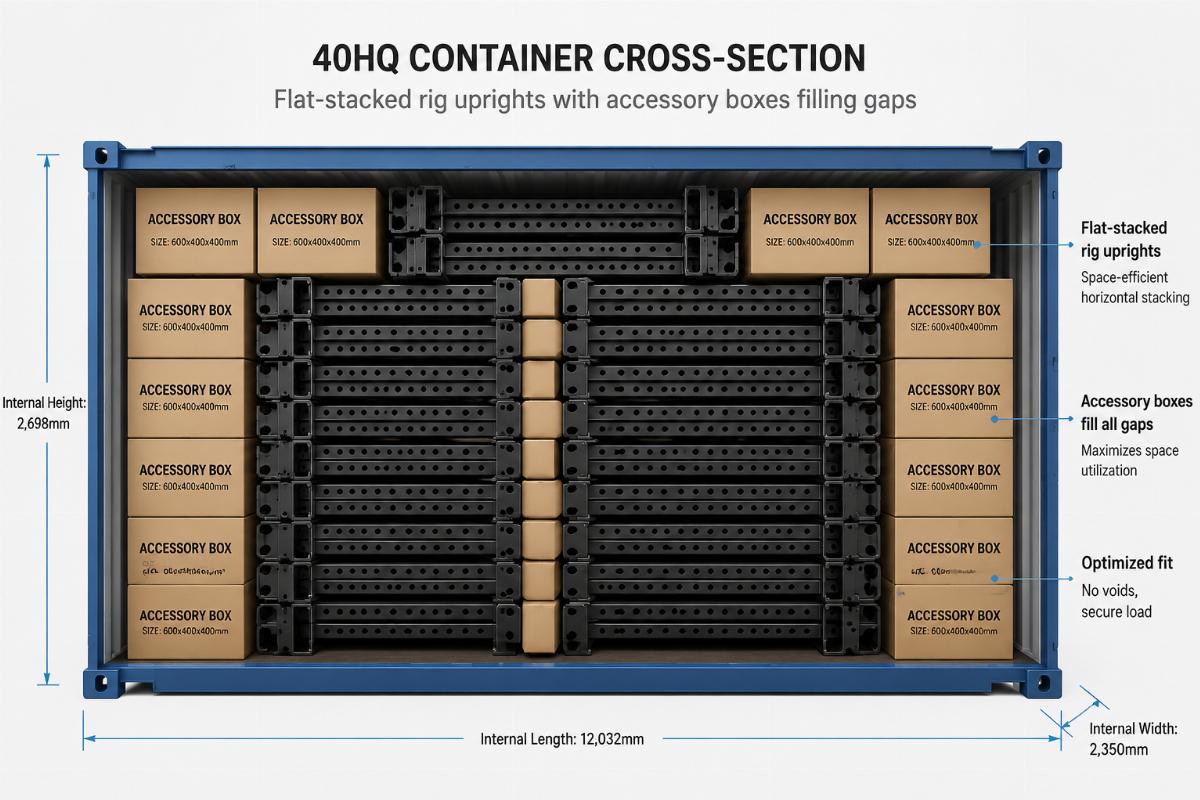
For regional distributors consolidating containers, the cost structure can become complex if inventory management is inefficient. In one instance, a distributor mixed various SKUs of cardio and strength equipment in a single container without a clear pre-shipment labeling protocol. Upon arrival at the bonded zone, the lack of distinct tagging made it difficult to identify specific items for partial releases. This led to extended handling times and higher labor costs as warehouse staff manually verified each unit.
The financial impact of such inefficiencies can quickly outweigh the savings from bulk shipping. Therefore, it is essential to implement a robust labeling system that aligns with the warehouse’s inventory management software. Each pallet or crate should have clear, scannable labels that correspond to the digital inventory record. This reduces handling time and minimizes the risk of errors during picking and packing for onward shipment.
Moreover, storing goods in a bonded warehouse allows importers to manage cash flow by deferring VAT and duty payments until the goods are released for consumption in a specific country. This flexibility can be a significant advantage for businesses managing multiple projects across different jurisdictions. However, prolonged storage can erode these benefits if turnover is slow. Careful planning of inventory levels and distribution schedules is necessary to optimize the cost-benefit ratio.
Understanding these cost dynamics helps importers make informed decisions about whether a bonded warehouse strategy is suitable for their specific business model. For high-volume distributors with steady demand, the flexibility often justifies the additional operational complexity.
How to Handle Documentation Discrepancies?
Use official declaration letters and engage certified bodies quickly.
Despite best efforts, discrepancies can still occur. When they do, speed and accuracy in resolution are paramount. The first step is to identify the exact nature of the mismatch. Is it a typo in the model number? A missing signature? Or a fundamental difference in the product specification?
Once identified, contact the notified body that issued the CE certificate immediately. They can issue a formal declaration letter clarifying the discrepancy or confirming that the variation is minor and does not affect compliance. This letter must be authoritative and clearly reference the original certificate number and the specific issue. [NEED_CITE: Role of Notified Bodies in correcting technical documentation errors]
In the case of the model number mismatch mentioned earlier, the solution involved a declaration from the certified body stating that "Model Pro" and "Model Pro-X" were technically identical in terms of safety and performance, and the difference was purely marketing-related. This document, combined with a revised invoice, satisfied the customs authorities and allowed the release of the goods.
It is also crucial to maintain open communication with the bonded warehouse operator. Provide them with regular updates on the status of the resolution and share any new documents as soon as they are available. Transparency helps build trust and can sometimes expedite the internal review process within the warehouse.
Having a contingency plan for documentation errors is part of professional import management. By establishing relationships with reliable certification bodies and maintaining clear communication channels, importers can mitigate the impact of these inevitable hiccups.
Conclusion
Successful import of commercial ellipticals via Austrian bonded warehouses hinges on meticulous document accuracy.
Aligning CE certificates with physical models and preparing specific technical annexes prevents costly delays. Proactive verification and clear labeling transform potential logistical bottlenecks into streamlined distribution advantages.