Commercial Hex Dumbbell Set for Powerlifting Gyms | Installation & Maintenance Guide
Thicker rubber does not mean longer lifespan — compound formula and vulcanization process determine impact resistance under daily heavy-drop conditions.
Commercial hex dumbbell sets in powerlifting gyms require proper installation on shock-absorbing flooring, routine inspection of rubber integrity and hex flat-side wear, and environment-specific maintenance against chalk and sweat corrosion to prevent premature structural failure. Rack placement, zone separation, and scheduled recoating cycles are the real lifespan drivers — not initial weight or rubber thickness alone.

Let me walk through the field logic behind this. I’ve spent years visiting gym installations across Europe and North America, watching how hex dumbbells behave in real commercial environments. At a trade show in Cologne, a German chain operator showed me photos of rubber heads cracking and peeling within months — the entire powerlifting zone was covered in black rubber residue. The root cause was not the weight of the dumbbells, but the recycled rubber compound used in production, which simply could not survive repeated floor impacts. My mentor from the early days always said: a dumbbell looks simple, but rubber formula, hex angle precision, and center-of-gravity balance — get any one wrong and the client’s complaints pile up fast. When sourcing a hex dumbbell set powerlifting operators rely on, the conversation always comes back to one question: can it survive a commercial gym’s daily abuse? [NEED_CITE: rubber degradation mechanisms under repetitive impact loading per material testing standards]
This guide breaks down installation, failure analysis, inspection routines, and replacement timing — all drawn from field experience across multiple continents.
How Should Hex Dumbbells Be Installed in a Powerlifting Zone?
Correct rack placement, floor mat specifications, and zone separation are the first line of defense against coating damage and structural failure.
Powerlifting zones are fundamentally different from general fitness areas. Dumbbells are dropped from waist or chest height repeatedly, often onto hard surfaces. Without proper installation planning, even premium-grade rubber coatings will degrade prematurely. [NEED_CITE: impact force distribution on rubber-coated free weights per gym flooring standards]
The installation process follows a clear sequence:
-
Floor mat selection and thickness specification. Use high-density rubber mats rated for heavy impact — typically a minimum thickness suitable for commercial free-weight zones. The mat must absorb shock without excessive compression that causes dumbbells to bounce unpredictably. [NEED_CITE: gym flooring impact absorption requirements for free-weight areas per ISO facility standards]
-
Rack positioning and load distribution. Hex dumbbell racks should be placed away from high-traffic walkways and positioned so that dumbbells are lifted and returned vertically, not dragged across the rack rails. Rack tiers must match the weight range — heavier dumbbells on lower tiers to maintain center-of-gravity stability.
-
Zone separation from other equipment. Powerlifting zones should be physically separated from cardio areas and general fitness zones. This prevents cross-contamination from chalk dust and reduces the risk of dumbbells being dropped on non-impact-rated flooring.
-
Clearance and safety spacing. Ensure adequate spacing between rack and walls or mirrors. A common field mistake is placing racks too close to reflective surfaces — a dropped dumbbell can shatter mirrors and create safety hazards.
A Middle East commercial gym operator once reported hex flat-side wear causing rolling instability within a short period. Investigation revealed the rack was installed on uneven flooring, causing dumbbells to rest at slight angles. Over time, this uneven resting position accelerated wear on specific hex flats, leading to asymmetric degradation. The fix was straightforward — leveling the floor and reinstalling the rack with proper shimming — but it highlighted how installation details directly affect long-term durability.

What Causes Rubber Heads to Crack and Peel Prematurely?
Material compound quality and drop-height frequency are the primary failure drivers — not weight alone or rubber thickness.
The most common misconception in the industry is that thicker rubber automatically means better durability. In reality, the rubber formula — specifically whether virgin compound or recycled material is used — and the vulcanization process determine how well the coating withstands repeated impact. [NEED_CITE: rubber compound composition effects on impact resistance and aging per material science literature]
Virgin rubber compounds, properly vulcanized, maintain elasticity and resist cracking even under heavy daily use. Recycled rubber, while cost-effective, lacks the molecular consistency to survive repeated high-impact drops. The degradation timeline is stark: virgin compound dumbbells in powerlifting zones can last multiple years without significant cracking, while recycled compound versions may show surface deterioration within a fraction of that time.
The failure mechanism typically follows this pattern:
- Micro-crack initiation. Repeated impact creates microscopic fractures in the rubber surface, particularly at the junction between the rubber head and the chrome handle.
- Crack propagation. With continued use, these micro-cracks expand, especially in high-drop zones where dumbbells are consistently dropped from height.
- Surface peeling. Once cracks reach a critical depth, the rubber begins to peel away from the handle core, exposing the metal underneath.
A European fitness chain once received a full container of hex dumbbells that showed widespread rubber head cracking within months of installation in their powerlifting zones. The same dumbbell model, placed in general fitness areas where drops were less frequent and less forceful, showed no significant degradation over the same period. The difference was not the dumbbell weight — it was the impact frequency and height.
This is where the OEM hex dumbbell supplier’s control over rubber compound selection becomes critical. A reliable manufacturer offers different hardness grades — measured on the Shore A scale — allowing gym operators to select coatings appropriate for their specific use environment. Powerlifting zones demand higher Shore A ratings for impact resistance, while general fitness areas can use standard compounds. [NEED_CITE: Shore A hardness selection guidelines for rubber-coated fitness equipment based on usage intensity]

How to Inspect and Maintain Hex Dumbbells for Maximum Lifespan?
A structured monthly and quarterly inspection routine covering handle coating, hex flat surfaces, and rubber integrity is essential for extending service life in commercial environments.
Many gym operators treat dumbbells as maintenance-free equipment. In reality, commercial powerlifting gyms expose dumbbells to magnesium chalk, sweat, humidity, and repeated mechanical impact — all of which require periodic inspection and care. [NEED_CITE: maintenance frequency recommendations for commercial free-weight equipment per facility management guidelines]
The inspection and maintenance process follows a systematic approach:
-
Monthly visual inspection of rubber heads. Check for surface cracking, particularly around the handle-rubber junction. Look for discoloration or softening, which indicates compound degradation. Any dumbbell showing visible cracks should be flagged for replacement or recoating.
-
Monthly hex flat-surface inspection. Place each dumbbell on a flat surface and observe whether it rests evenly on all hex flats. Asymmetric wear causes rolling instability, which is a safety hazard. Measure angle tolerance deviation if possible — excessive deviation indicates the need for replacement.
-
Quarterly handle coating inspection. Chrome or urethane handle coatings degrade from exposure to sweat and chalk. Check for peeling, corrosion spots, or roughness. Handle re-chroming or urethane recoating can extend service life significantly if done before corrosion reaches the steel core.
-
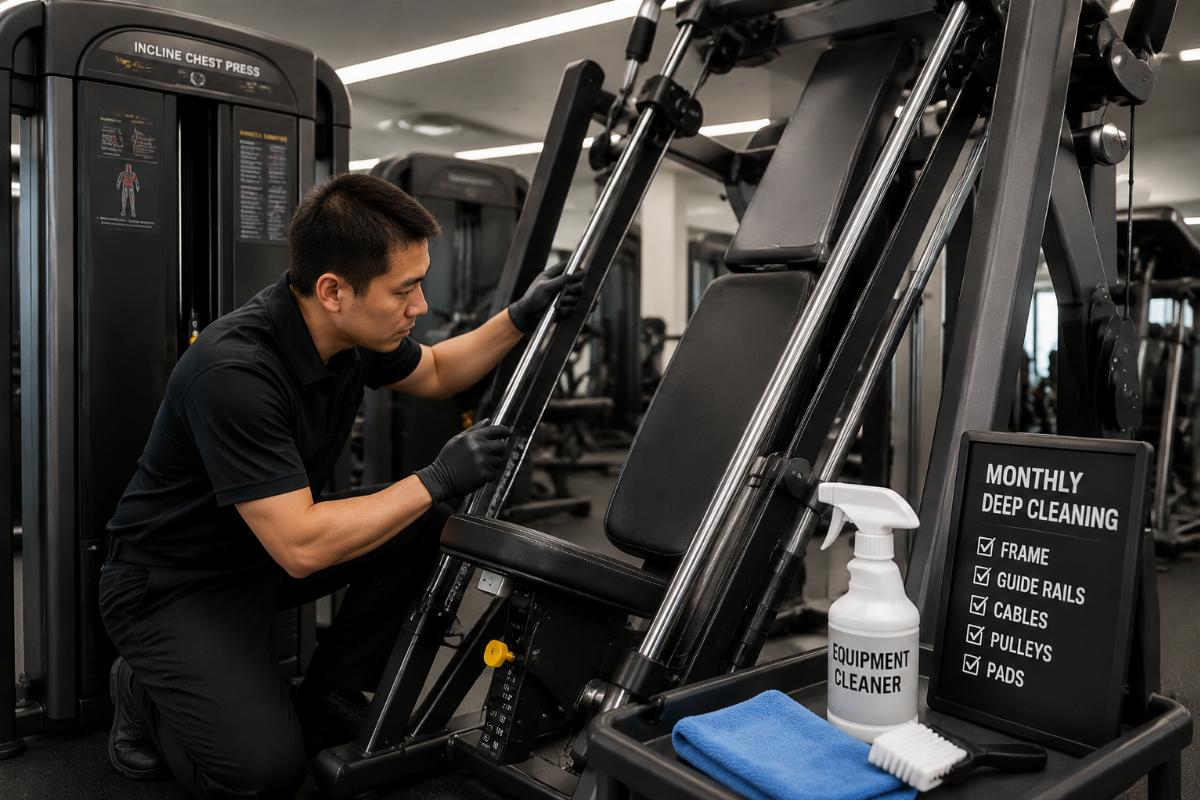
Quarterly cleaning and chalk removal. Accumulated chalk and sweat residue accelerates coating degradation. Use appropriate cleaning agents that do not damage rubber or metal surfaces. Ensure dumbbells are completely dry before returning to racks.
-
Semi-annual rack and flooring check. Inspect rack rails for wear that could scratch dumbbell handles. Verify flooring mat condition — compressed or torn mats no longer provide adequate shock absorption.
A Southeast Asian commercial gym implemented a strict quarterly inspection routine and found that handle recoating at the first signs of corrosion extended dumbbell service life substantially. The cost of periodic recoating was a fraction of full replacement, and the gym avoided the downtime associated with sourcing and receiving new inventory.

When Should You Replace vs. Recoat Commercial Dumbbells?
The decision between spot replacement, full batch recoating, and new procurement depends on failure rate thresholds and cost-benefit analysis specific to your gym’s usage patterns.
Not all damaged dumbbells need full replacement. The key is identifying the failure stage and matching it to the most cost-effective solution.
The decision framework follows these principles:
-
Spot replacement. Individual dumbbells with severe rubber cracking or handle corrosion should be replaced immediately to maintain matched weight sets and ensure user safety. This is appropriate when failure is isolated to specific units.
-
Full batch recoating. When a significant portion of the dumbbell set shows handle coating degradation but rubber heads remain intact, batch recoating is more economical than individual replacement. This requires working with an OEM hex dumbbell supplier capable of handling re-coating services or providing replacement handles.
-
New procurement. When rubber head degradation is widespread across the set — indicating compound failure rather than isolated damage — full replacement is the only viable option. Continuing to use dumbbells with compromised rubber heads creates safety risks and damages flooring.
The failure rate threshold for triggering batch-level action varies by gym. High-volume powerlifting facilities may see significant degradation within a shorter timeframe, while lower-traffic general fitness areas extend service life considerably. Tracking failure rates over time helps establish replacement cycles aligned with actual usage patterns.
A North American fitness equipment distributor reported that gym operators who tracked failure rates and planned proactive recoating cycles reduced long-term equipment costs noticeably compared to reactive replacement after visible failure. The key was establishing a relationship with an OEM hex dumbbell supplier who could provide consistent compound matching for recoating work.

Conclusion
Commercial hex dumbbell longevity depends on installation quality, compound selection, and disciplined maintenance — not initial weight or rubber thickness alone.
Powerlifting gym operators must treat dumbbell installation as a system: proper flooring, rack positioning, and zone separation form the foundation. Rubber compound quality — virgin versus recycled — determines impact resistance under daily drop conditions. Structured inspection routines catch degradation early, enabling cost-effective recoating before full replacement becomes necessary. Working with an OEM hex dumbbell supplier who controls compound formulation and offers recoating support extends service life and reduces total cost of ownership across the equipment lifecycle.