Fan Bike Container Consolidation: Wholesale OEM Supplier for Bulk Gym Orders from China Factory
LCL is not the safer option for mixed fitness shipments; it often introduces higher damage risks and complex customs hurdles compared to a strategically planned FCL consolidation.
Consolidating fan bikes with heavy strength equipment in a single 40-foot container optimizes freight costs but demands precise HS code alignment and volumetric planning to prevent customs holds and demurrage charges. The key lies in treating the loading plan as a technical document, not just a logistical afterthought.
I still remember the silence on the phone line when a client in Santiago realized their cargo was stuck. It wasn’t a mechanical failure or a quality dispute. It was a single digit mismatch in the Harmonized System code on the commercial invoice versus the actual physical cargo description. The container held a mix of light cardio units and heavy steel frames. Because the documentation didn’t reflect the mixed nature of the load accurately, customs officials flagged it for inspection. The resulting detention fees climbed rapidly, eventually exceeding a significant portion of the cargo’s value. That incident shifted my focus from merely watching production lines to scrutinizing every character on the bill of lading and packing list. In the world of container consolidation fitness equipment, the difference between a smooth clearance and a financial loss often comes down to paperwork precision and loading logic.
Understanding why buyers choose to mix SKUs requires looking beyond simple freight rates. The goal is to maximize cube utilization while minimizing the risk profile. When you combine lightweight, high-volume items like fan bikes with dense, heavy strength machines, you create a balanced load that utilizes both weight capacity and volume. However, this efficiency brings regulatory complexity that many overlook until the ship arrives at the destination port.
Why Consolidate Fan Bikes with Other SKUs?
The primary driver for mixing inventory is cost efficiency, but the hidden benefit is inventory synchronization. For gym chains and hotel projects, receiving all equipment in one shipment simplifies installation timelines. Waiting for separate LCL shipments for accessories or cardio units can delay project completion by weeks. By using container consolidation fitness equipment strategies, buyers ensure that treadmills, racks, and bikes arrive simultaneously.
However, the assumption that LCL is safer for small mixes is a common misconception. LCL shipments involve multiple handoffs and deconsolidation at hub ports, increasing the risk of damage to delicate components like fan bike consoles or flywheels. A dedicated FCL, even if not fully packed to the brim, offers greater control over handling. The challenge becomes how to fill the remaining space without compromising safety or compliance.
A Middle East hotel project recently demonstrated this balance. The order included silent fan bikes, rubber flooring rolls, and dumbbell sets. Initially, the volume utilization was projected at around sixty percent. By redesigning the packing strategy—placing flat-packed flooring beneath palletized dumbbells and stacking boxed bikes in the voids above—the team pushed utilization to over eighty-five percent. This approach reduced the per-unit freight cost significantly while keeping all items under one bill of lading.
The risk here is not just physical damage but regulatory scrutiny. Customs authorities view mixed containers with more suspicion than homogeneous loads. They look for discrepancies between the declared value, weight, and description. If the packing list suggests a uniform load of "gym equipment" but the physical inspection reveals distinct categories with different duty rates, delays are inevitable. Therefore, the decision to consolidate must be paired with rigorous documentation preparation.
The Hidden Risk: HS Code Mismatches in Mixed Containers
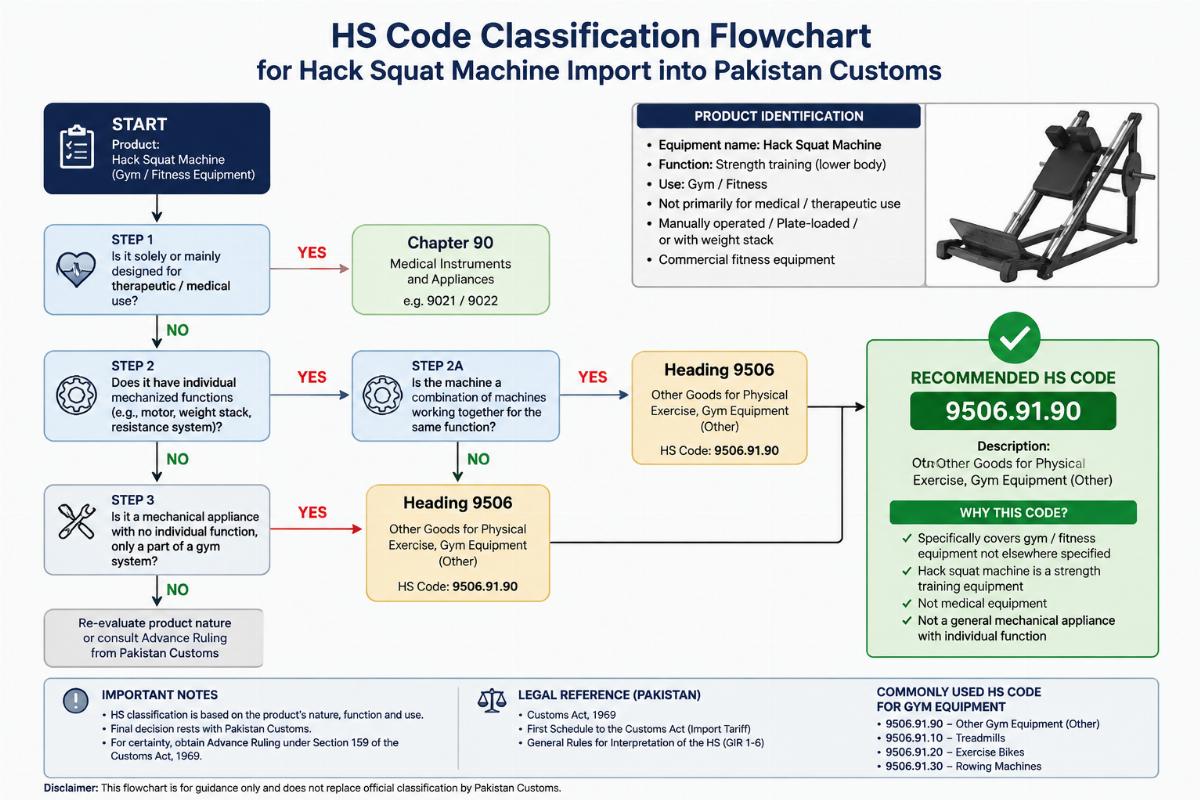
Many buyers assume that "fitness equipment" falls under a single HS code. This is a critical error. Non-motorized fan bikes, motorized treadmills, and steel strength frames often carry different classification codes depending on the importing country’s interpretation of the World Customs Organization nomenclature [NEED_CITE: WCO HS Nomenclature guidelines for exercise apparatus].
In a recent case involving a European distributor, a small batch of OEM orders was combined into one 40HQ container. The invoice listed a generic code for all items. Upon arrival, customs officials separated the motorized units from the non-motorized ones. The mismatch triggered a manual review, causing a delay that stretched into weeks. The cost of storage and administrative penalties far outweighed the savings from consolidation.
To avoid this, each SKU must be verified against the specific HS code requirements of the destination country. For example, spin bikes may have a different code than air-resistance fan bikes due to differences in mechanical complexity. The documentation must reflect these distinctions clearly. A vague description like "fitness parts" is a red flag for customs brokers. Instead, use precise terms such as "non-motorized stationary exercise bike" or "steel power rack frame."
The solution involves a pre-shipment verification process. Before the container is sealed, the supplier should provide a draft packing list and invoice for buyer approval. This allows the buyer’s customs broker to review the codes and flag any potential issues. This step, which takes only a day or two, can prevent months of headache. In the context of container consolidation fitness equipment, accurate classification is not optional; it is the foundation of a successful import transaction.
Practical Loading Strategy: Maximizing Container Cube Without Damage
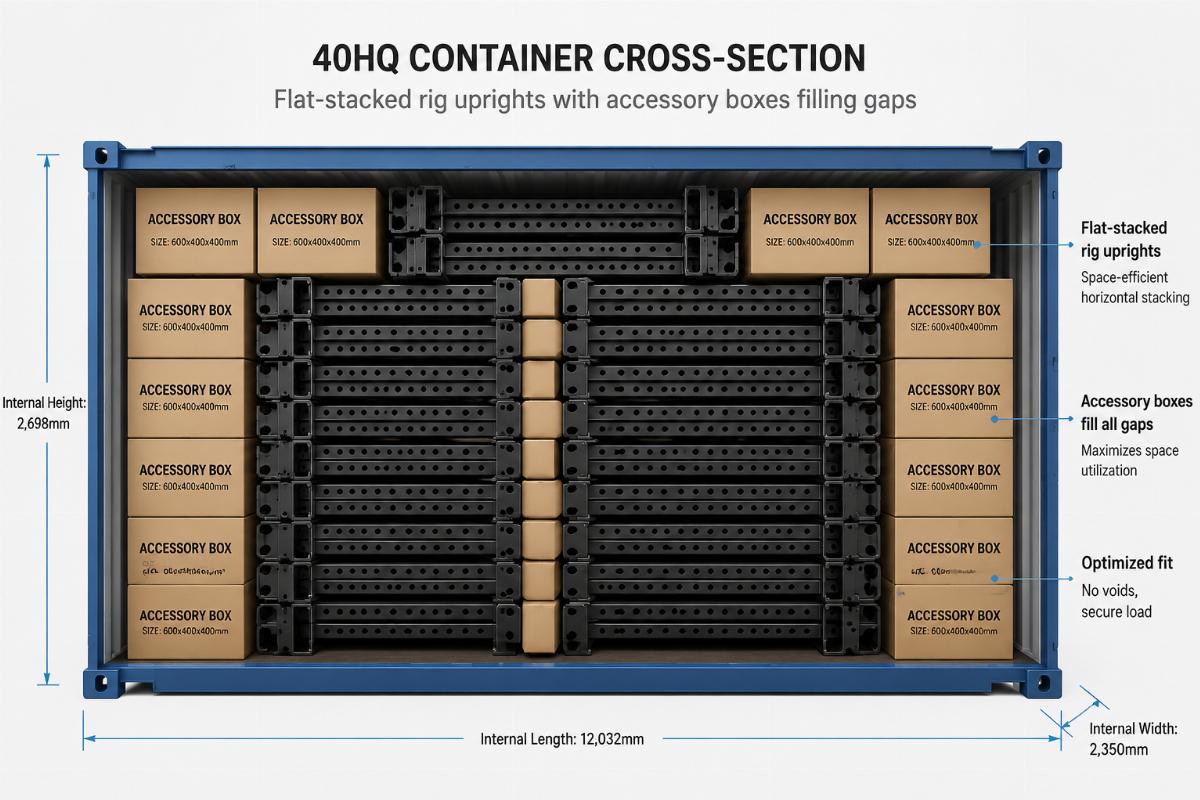
Physical loading is where theory meets reality. Fan bikes are bulky but relatively light, while strength machines are dense and heavy. Improper stacking can lead to crushed boxes or shifted loads during ocean transit. The principle is simple: heavy items at the bottom, light items on top, and voids filled with secure dunnage.
Start by placing the heaviest strength machines, such as Smith machines or cable crossovers, on the container floor. These items form a stable base. Next, stack palletized free weights or plate-loaded machines adjacent to them. Ensure that the weight is distributed evenly across the floor to avoid stress points on the container structure.
Once the heavy base is established, begin stacking the fan bikes. Since these are usually shipped in cartons, they can be placed on top of the heavier items if the packaging is rated for stacking. Use the irregular shapes of the bike boxes to fill gaps between the rectangular strength machine crates. This tetris-like approach maximizes space usage but requires careful planning.
One common mistake is overloading the top layers without proper securing. If the fan bike boxes are not strapped or blocked, they can shift during rough seas, damaging the consoles or frames below. Use air bags or wooden braces to lock the load in place. The goal is to create a monolithic block that moves as one unit. This method not only protects the goods but also ensures that the container’s weight distribution remains within safe limits for crane handling at ports.
For buyers engaging in container consolidation fitness equipment, requesting a detailed loading diagram from the manufacturer is essential. This visual guide helps the receiving team understand how to unload safely and verifies that the supplier has considered structural integrity. It also serves as evidence in case of insurance claims, showing that industry-standard practices were followed.
Documentation Checklist: Pre-Shipment Verification Steps
The final barrier to smooth clearance is documentation. Even with perfect loading and correct HS codes, a typo in the consignee’s name or a missing notify party detail can halt the release of cargo. The "3-Document Match" rule is a simple yet effective method to ensure accuracy.
First, verify the Bill of Lading. Check the consignee and notify party details against the import license. Ensure that the description of goods matches the commercial invoice exactly. Second, review the Commercial Invoice. Confirm that the HS codes align with the buyer’s local regulations. Check that the value declaration is consistent with the purchase order. Third, examine the Packing List. Ensure that the number of packages, gross weight, and net weight match the physical load.
A Chilean client once faced a three-week delay because the notify party’s tax ID was missing from the bill of lading. The carrier could not release the cargo without this information, and amending the document at sea took time. This simple oversight resulted in demurrage charges that ate into the project’s budget. Such errors are preventable with a systematic review process.
Before shipment, request drafts of all documents. Compare them line by line. Pay special attention to the description of goods. If the container holds mixed SKUs, the description should reflect this, such as "Mixed Fitness Equipment including Fan Bikes and Strength Machines." Avoid generic terms that might trigger additional inspections. In the realm of container consolidation fitness equipment, attention to detail in paperwork is as critical as the quality of the welds on the machines themselves.
Conclusion
Successful consolidation requires balancing cost savings with regulatory compliance and physical safety. By treating the loading plan as a technical specification and verifying documentation with precision, buyers can avoid the hidden costs of delays and damages. The integration of fan bikes with heavy strength equipment offers significant logistical advantages, but only when executed with a clear understanding of customs requirements and stowage principles. Through careful planning and rigorous checks, container consolidation fitness equipment becomes a reliable strategy for scaling gym operations efficiently.