Freight Insurance for Monkey Bar Rig to Jebel Ali Wholesale Supplier
CIF does not mean the seller covers everything — and that misunderstanding costs importers more than cargo damage ever will.
Freight insurance for fitness equipment shipments to Jebel Ali is not a flat-rate add-on. It depends on cargo classification — whether you are moving heavy plate-loaded strength machines or sensitive cardio electronics — the Incoterms chosen, and current risk surcharges driven by regional geopolitical volatility. Buyers must verify coverage scope before signing contracts, because the gap between what they think they are covered for and what the policy actually pays out is where losses pile up.
I still remember a container of commercial Smith machines and bumper plates we shipped a few years back. The clearing agent at destination mixed up the HS code — classified our strength equipment under medical rehabilitation gear. The container sat at the port for over three weeks. Free time expired, and daily demurrage started climbing. The gym owner had a grand opening date locked in, and every passing day was burning cash. That situation could have been partially offset if the right insurance clauses and documentation had been in place from the start. Since then, I have paid close attention to how freight insurance for fitness equipment to Jebel Ali actually works on the ground — not just what the policy wording says, but where claims succeed and where they get rejected at the port.
Let me walk you through what matters when you are importing commercial gym gear into the UAE.
What Does Freight Insurance Actually Cover for Gym Equipment Shipments to Jebel Ali?
Coverage is split by equipment type, and the risk profile for a functional training rig is fundamentally different from that of a commercial treadmill.
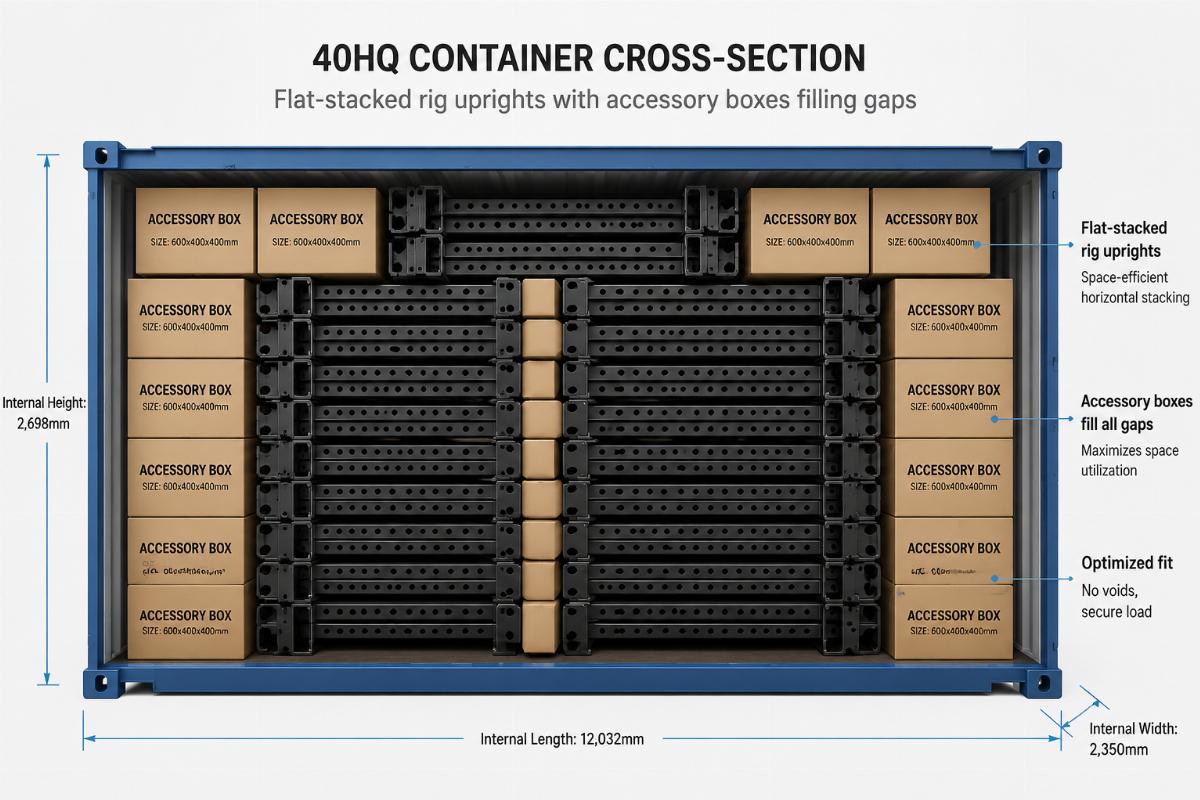
Heavy strength equipment — monkey bar rigs, power racks, plate-loaded machines — faces risks primarily during loading, lashing, and unloading. These are dense, high-weight items. A single 40-foot container of plate-loaded equipment can weigh close to the maximum payload limit. The cargo shifts during ocean transit if lashing is inadequate, and the frames can deform under their own weight if the container floor is not properly distributed. Insurance policies covering these goods need to address physical deformation and structural damage, not just total loss.
Cardio equipment — treadmills, ellipticals, spin bikes — carries a different risk set. These units contain electronic consoles, display panels, and sensitive motor assemblies. Moisture ingress during a long sea voyage through humid Gulf waters can corrode circuit boards before the container even reaches Jebel Ali. The insurance clause you need here must cover water damage and electronic malfunction, which standard hull clauses often exclude.
The Institute Cargo Clauses system breaks coverage into three tiers [NEED_CITE: ICC A/B/C coverage scope comparison per London underwriting market standards]. ICC (A) is the broadest — often called "All Risk" — and covers physical loss or damage from any external cause unless specifically excluded. ICC (B) covers named perils including fire, vessel stranding, collision, and earthquake, but excludes certain water damage scenarios. ICC (C) is the narrowest, covering only major casualties like fire, sinking, or derailment. For commercial fitness equipment valued at mid-to-high ranges, ICC (C) leaves significant gaps, especially for the handling damage that occurs most frequently.
A distributor in the Gulf once received a shipment of cable crossover machines. Two units had bent frames. The insurance adjuster determined the damage occurred during stuffing at the origin port — the forklift operator had dropped one unit slightly, and the impact traveled through the stacked machines. Because the policy was written under ICC (C), handling damage during loading was excluded. The claim was denied. The importer absorbed a five-figure loss on equipment that was unsellable to a gym client expecting pristine condition.
CIF vs. FOB: Who Pays for Insurance and What Is the Trap?
Under CIF, the seller is only obligated to procure minimum coverage — typically ICC (C) — and buyers importing high-value commercial gym equipment should always negotiate for ICC (A) or equivalent All-Risk terms.
This is where most importers get caught. The Incoterms 2020 rules specify that under CIF, the seller must obtain cargo insurance covering at least ICC (C) or similar minimum clauses [NEED_CITE: Incoterms 2020 CIF insurance obligation per ICC official publication]. The seller pays the premium, arranges the policy, and hands the certificate to the buyer. On paper, it looks like the buyer is fully protected. In practice, ICC (C) will not cover the majority of claims that actually arise for fitness equipment — handling dents, moisture damage, frame warping from improper lashing, and partial water ingress.
Under FOB, the buyer controls the freight forwarding and insurance arrangement directly. This means the buyer can specify ICC (A) coverage, add war risk and strike clauses as needed, and ensure the policy wording matches the actual cargo profile. The trade-off is that FOB requires the buyer to have a reliable forwarding agent who understands the origin port procedures and can coordinate with the seller on loading supervision.
I have seen buyers insist on CIF because it feels simpler — one price, everything included. Then they arrive at Jebel Ali, find damage, file a claim, and learn the policy only covered total loss scenarios. The equipment was damaged but not destroyed, so the claim fell outside the policy terms. The seller had fulfilled their contractual obligation. The buyer had no recourse.
For freight insurance for fitness equipment to Jebel Ali, the practical recommendation is straightforward: if you are importing commercial-grade equipment — Smith machines, functional trainers, full gym packages — do not rely on the seller’s minimum CIF coverage. Negotiate for ICC (A) or arrange your own policy under FOB terms. The premium difference is modest relative to the equipment value, but the coverage gap it closes is substantial.
Why Do Claims Get Rejected at Jebel Ali? Document and HS Code Pitfalls
The top reasons for claim rejection at Jebel Ali are not cargo damage — they are misclassified HS codes, missing packing declarations, and incomplete documentation that makes it impossible for the adjuster to verify the insured goods match the shipped goods.
Dubai Customs has specific documentation requirements for imports entering through Jebel Ali [NEED_CITE: Dubai Customs import documentation requirements for Jebel Ali port clearance]. The commercial invoice, packing list, certificate of origin, and bill of lading must all align precisely. When the HS code on the insurance declaration does not match the HS code on the customs entry, the adjuster cannot confirm the damaged goods are the same goods covered under the policy. Claims get flagged, investigations extend, and payouts stall — or get denied outright.
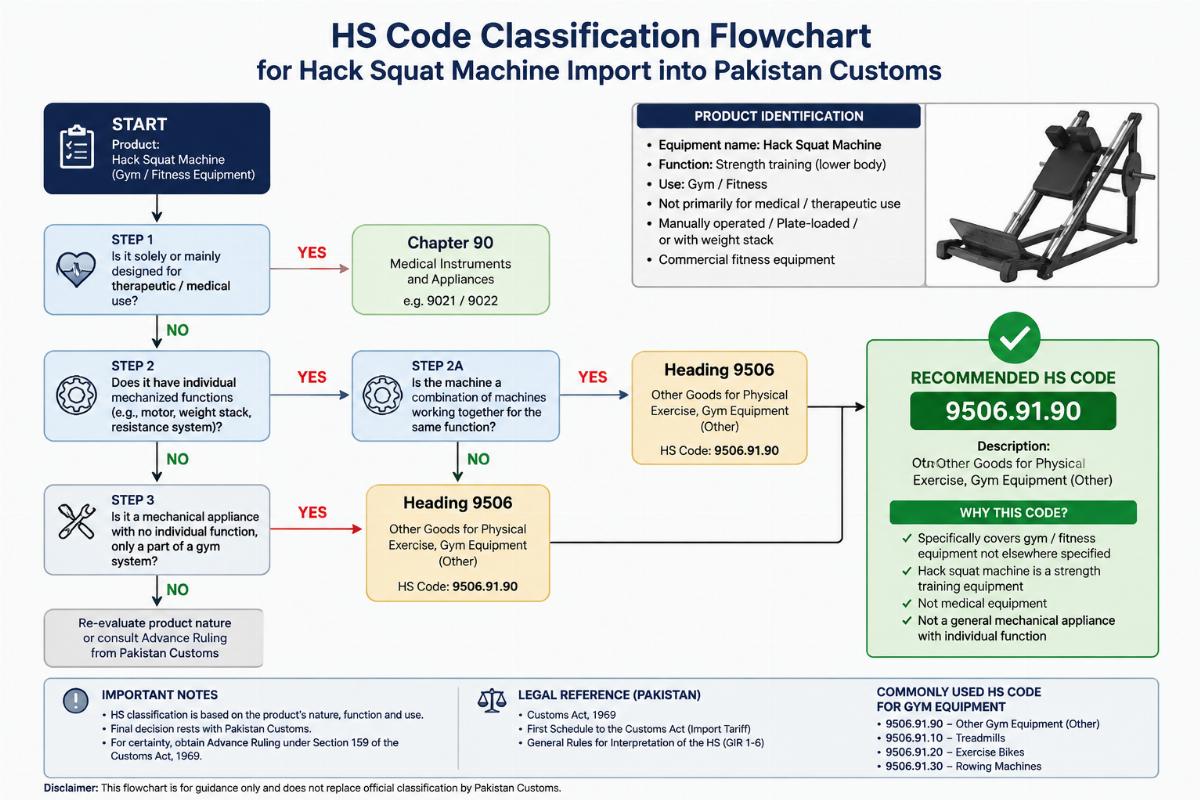
Fitness equipment sits in a tricky classification zone. Commercial strength machines, functional training rigs, and free weights generally fall under sports equipment HS headings. However, certain items — particularly those with electronic consoles, heart rate monitors, or integrated displays — can be argued into electronics or even medical equipment categories depending on how the documentation is worded. If the insurance policy declares the cargo under one heading and customs processes it under another, the discrepancy becomes a claim rejection trigger.
Wooden packaging adds another layer. UAE customs and insurance adjusters require evidence that wooden crates and pallets have been fumigated and bear ISPM-15 stamps [NEED_CITE: ISPM-15 wood packaging material international standard for phytosanitary treatment]. If the packing declaration is missing or the fumigation certificate is not attached, the adjuster may argue that improper packaging contributed to the damage — shifting liability away from the insurer and onto the shipper.
A Middle East gym chain once filed a claim for water-damaged treadmills. The investigation revealed that the commercial invoice listed the goods under a general "machinery" HS code rather than the specific fitness equipment code. The insurance policy had been issued based on that invoice. Customs processed the shipment under the correct fitness equipment code. The mismatch meant the adjuster could not verify the insured cargo matched the declared cargo. The claim was denied on documentary grounds, not on the merits of the damage itself.
For freight insurance for fitness equipment to Jebel Ali, the lesson is that documentation accuracy matters as much as coverage breadth. Pre-verify your HS codes with a local clearing agent before the policy is issued. Ensure the packing list includes fumigation certificates for any wooden materials. Keep the commercial invoice, bill of lading, and insurance certificate in perfect alignment.
How Do Geopolitical Surcharges Affect Your Insurance Cost in 2026?
War risk premiums and emergency conflict surcharges have multiplied base insurance rates significantly, and buyers must budget for these additions as a standard line item rather than an unexpected cost.
The geopolitical situation in the broader Middle East region has directly impacted shipping costs through the Persian Gulf and approaches to the Strait of Hormuz. Lloyd’s of London and the International Group of P&I Clubs have periodically adjusted war risk listings for Gulf waters, and when an area is classified as high-risk, insurers add war risk premiums on top of standard hull and cargo rates [NEED_CITE: Lloyd’s Joint War Committee listed areas and war risk premium impact on Gulf shipping].
For fitness equipment importers, this means the freight insurance for fitness equipment to Jebel Ali is no longer a simple percentage of cargo value. The base cargo insurance rate is one component. On top of that, war risk surcharges, strike and labor disturbance clauses, and emergency conflict附加费 (additional charges) can multiply the total premium. In periods of heightened tension, these surcharges have been known to increase the total insurance cost by several multiples of the base rate.
Some shipping lines have also introduced emergency conflict surcharges separate from the insurance premium — these are freight surcharges applied to the ocean freight rate itself, not to the insurance policy. Buyers need to distinguish between the two: insurance premiums protect the cargo value, while freight surcharges increase the shipping cost. Both affect the total landed cost, but they are accounted for differently.
A wholesale buyer in the UAE was preparing to import a full container of functional training gear — battle ropes, plyo boxes, medicine balls, and a monkey bar rig. The base cargo insurance quote was reasonable. But when the war risk surcharge was added due to the current Gulf risk classification, the total insurance cost rose noticeably. The buyer had not budgeted for this and nearly delayed the shipment. By understanding the surcharge structure in advance and locking in the rate before the policy was bound, the buyer was able to proceed without absorbing an unexpected cost spike.
The key takeaway is that geopolitical surcharges are not optional or negotiable — they are market-driven and apply to all cargo moving through affected waters. The only control the buyer has is timing: binding the insurance policy early, before any further escalation, can lock in the current surcharge rate rather than facing a higher rate if the situation worsens.
Checklist: What to Verify Before You Sign a CIF Contract for Fitness Equipment
A five-point pre-shipment verification prevents the majority of post-arrival disputes, and each point takes minutes to confirm but saves weeks of claim processing if something goes wrong.
Before you finalize any CIF contract for commercial fitness equipment bound for Jebel Ali, run through these verification steps:
First, confirm the insurance clause level. The contract should explicitly state ICC (A) or equivalent All-Risk coverage, not just "insurance included." If the seller offers ICC (C), request a written upgrade to ICC (A) and confirm who bears the premium difference.
Second, verify the HS code alignment. The HS code on the commercial invoice, the insurance policy declaration, and the customs entry must be identical. Pre-confirm the correct fitness equipment HS code with your Jebel Ali clearing agent before the policy is issued.
Third, confirm wooden packaging compliance. Any wooden crates, pallets, or dunnage must be ISPM-15 compliant with visible stamps and accompanying fumigation certificates. The packing list should reference these certificates explicitly.
Fourth, check the sum insured. The policy should cover the full commercial invoice value plus freight and an additional percentage for profit margin and landing costs — typically the CIF value plus a margin. Under-insuring means partial loss claims will be settled on a pro-rata basis, leaving you to absorb a portion of the loss.
Fifth, confirm the claims procedure and documentation requirements. Know exactly what documents the insurer requires for a claim — survey report, commercial invoice, packing list, bill of lading, correspondence with the carrier — and ensure you can obtain all of them at the destination. Some insurers require a survey within a specific timeframe after discharge; missing that window can void the claim.
As a Shandong-based fitness equipment manufacturer, we have structured our export documentation process around these verification points. For commercial gym packages — whether a full cardio and strength setup for a hotel fitness center or a container load of plate-loaded machines for a distributor — we provide complete packing lists with HS code pre-classification, ISPM-15 fumigation certificates for all wooden packaging, and commercial invoices formatted to align with UAE customs requirements. When buyers request CIF terms, we clarify the coverage level upfront and recommend ICC (A) for commercial equipment shipments. This is not about adding cost — it is about ensuring that if anything goes wrong during transit, the documentation is in place to support a clean claim at Jebel Ali.
Conclusion
Freight insurance for fitness equipment to Jebel Ali is only as effective as the documentation behind it and the coverage terms negotiated upfront.
Understanding the difference between ICC clause levels, verifying HS code alignment before policy issuance, and budgeting for geopolitical surcharges are not administrative details — they are the difference between a protected investment and an uncovered loss. Commercial gym equipment is heavy, valuable, and sensitive to handling. The insurance structure must match the cargo profile, not just the contract term.