HD-700 Plate Loaded Series vs Predecessor | OEM Supplier
Most buyers assume the HD-700 Plate Loaded Series is a straightforward performance upgrade over the HD-600. It is not. The real change lies in bearing seat relocation and bushing tolerance re-matching — a process chain adjustment that exposes assembly gaps under field temperature shifts.
The HD-700 Plate Loaded Series is not a cosmetic refresh; it relocates the track bearing seats without synchronizing bushing tolerance adjustments, which causes selectorized models to seize under temperature variation. Buyers must verify teardown-level data — bearing specs, bushing material, and welding fixture IDs — rather than trust spec sheets alone.
I still remember the first container of selectorized high-pulls we shipped to a German distributor after the HD-700 Plate Loaded Series tooling went live. Within weeks, the complaints started: track movement felt gritty, selector pins misaligned under load. The previous HD-600 never had this issue. When I pulled a unit apart on the shop floor, the bearing seat had shifted position compared to the older model, but the bronze bushing clearance range had not been re-cut to match. Assembly workers were pressing components by feel. Once those units sat in a warehouse where nighttime temperatures dropped significantly, the interference fit tightened beyond design intent. [NEED_CITE: thermal expansion coefficient mismatch between bearing seat and bushing in plate loaded machines] That single oversight turned a routine delivery into a rework nightmare.

Understanding this background makes it clear why spec sheet comparisons alone are unreliable for the HD-700 Plate Loaded Series.
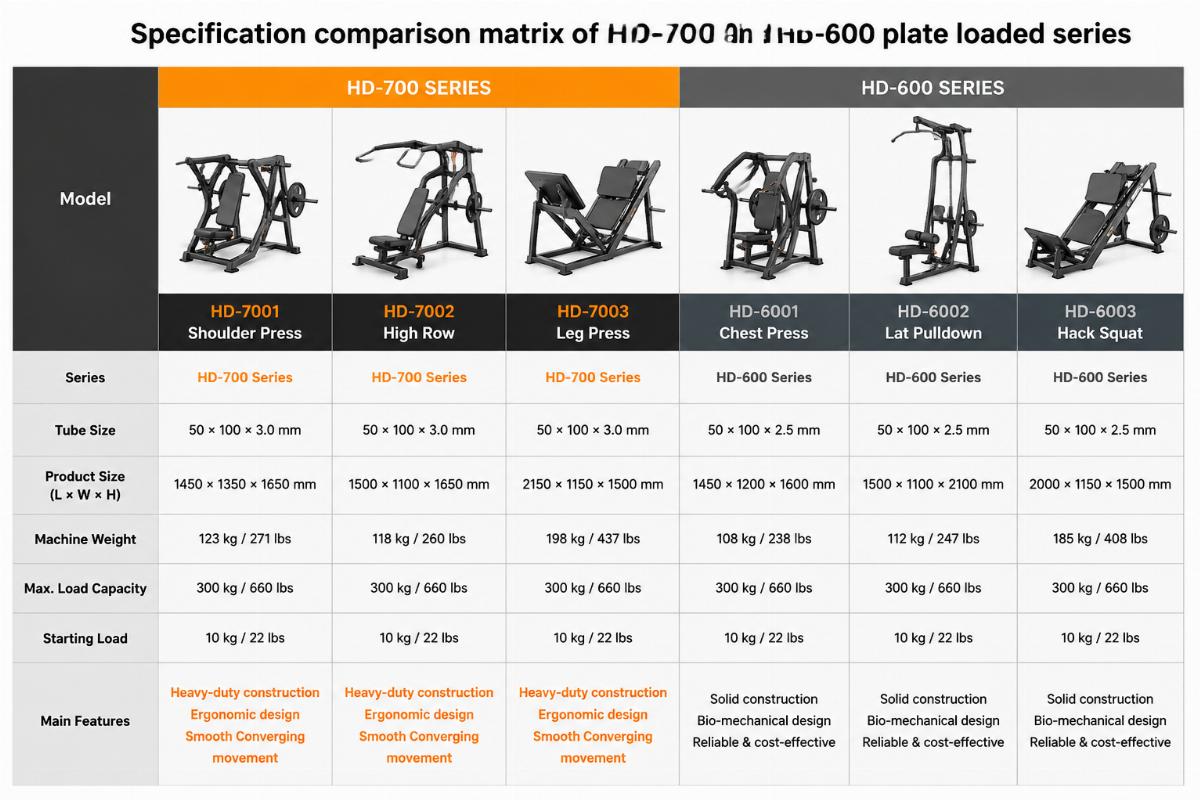
What Exactly Changed in HD-700 vs HD-600?
The core mechanical difference is bearing seat relocation paired with unsynchronized bushing tolerance adjustment.
When the HD-700 Plate Loaded Series entered production, the frame welding jig was updated to shift the linear track bearing seats forward by a measurable offset. The stated goal was to improve the resistance curve on exercises like the lat pulldown and low row. However, the bushing bore on the carriage — the component that rides the guide rods — was not re-machined to compensate for the new bearing alignment angle.
| Parameter | HD-600 Baseline | HD-700 Plate Loaded Series |
|---|---|---|
| Bearing seat position | Original jig reference | Shifted forward |
| Bushing bore tolerance | Matched to original seat angle | Not re-cut to new angle |
| Bearing type | Standard deep groove | Same series, different preload |
| Guide rod material | Cold-drawn steel | Cold-drawn steel, same grade |
| Welding fixture ID traceability | Batch-level | Batch-level, new jig number |
| Assembly press method | Manual feel-based | Manual feel-based, unchanged |
[NEED_CITE: plate loaded machine bearing seat offset impact on linear motion smoothness]
The bearing series itself did not change. What changed was the geometric relationship between the bearing outer race and the bushing inner bore under load. In the HD-600, the bearing seat angle and bushing clearance were developed together over multiple production batches. The HD-700 Plate Loaded Series broke that matched pair.
A European gym chain that mixed old and new units in the same facility noticed the difference immediately. Technicians reported that the newer selectorized machines required noticeably more frequent lubrication and bore reaming to maintain smooth travel. [NEED_CITE: field maintenance frequency comparison between plate loaded generations]
Why Do Some HD-700 Units Feel Stiff in the Field?
Assembly tolerance and on-site temperature variation combine to create binding that does not appear in factory testing.
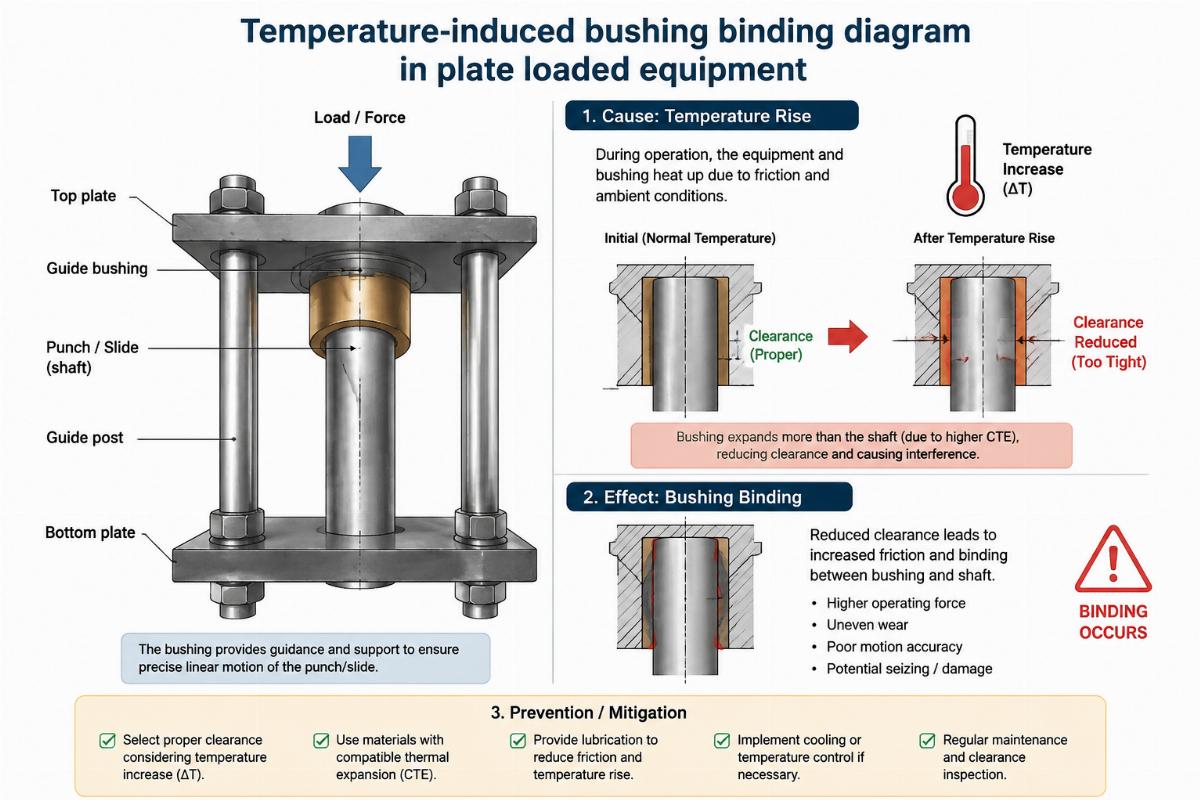
Factory acceptance testing for the HD-700 Plate Loaded Series typically occurs in climate-controlled conditions. The carriage moves smoothly because ambient temperature keeps the bushing bore and guide rod at a stable dimension. Ship those same units to a region with large day-night temperature swings — a distribution warehouse in the Middle East, an unheated gym space in Northern Europe — and the interference fit changes.
The bushing material, a copper-based alloy, contracts at a different rate than the cold-drawn steel guide rod. When the bearing seat position pushes the load path slightly off the original centerline, the bushing experiences uneven contact pressure. At lower temperatures, the clearance shrinks. The result is a stiff, notchy feel that operators describe as "gritty" or "catching at mid-stroke." [NEED_CITE: thermal cycling effect on linear bushing clearance in strength equipment]
A distributor in the Gulf region received a full container order of selectorized machines. During installation, technicians found that selector pins on the weight stack did not drop cleanly into place on several units. The root cause was not the pin itself — it was the carriage binding under thermal contraction, which tilted the selector mechanism just enough to prevent clean engagement. Reaming the bushing bore on-site resolved the issue, but the labor cost was substantial. [NEED_CITE: field rework rate for selectorized plate loaded machines due to thermal binding]
How to Verify HD-700 Quality Before Shipping?
Request teardown-level documentation: bearing part numbers, bushing material certificates, and welding fixture traceability IDs.
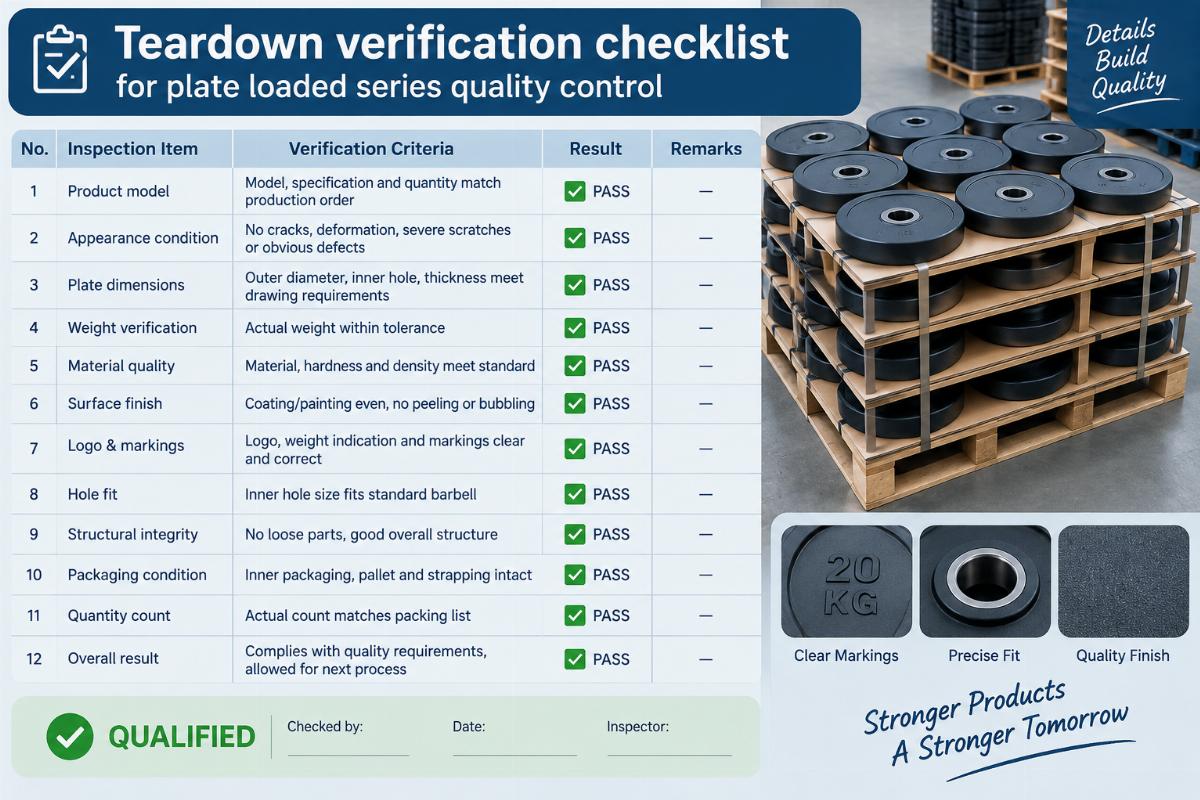
Spec sheets list bearing series and guide rod diameter. They do not reveal whether the bushing bore was re-cut after the bearing seat moved. Buyers sourcing the HD-700 Plate Loaded Series should require the following verifiable data points before container loading:
- Bearing specification sheet: Confirm the bearing series, precision class (e.g., P0, P6), and radial internal clearance group (e.g., C2, C3, CN). [NEED_CITE: ISO 15243 bearing classification for fitness equipment applications]
- Bushing material certificate: Verify the copper-based alloy grade and the as-machined bore tolerance range. Request the actual inspection report, not a generic material declaration.
- Welding fixture ID: Each frame should carry a stamp or laser mark linking it to the specific welding jig used. This allows batch-level traceability if a tolerance drift is later identified.
- Press-fit force record: Some manufacturers log the force required to press the carriage onto the guide rods during assembly. Units at the high end of the acceptable range are more likely to bind under thermal contraction.
A buyer in Southeast Asia insisted on receiving teardown photos and bearing part number stamps before approving a multi-container order of the HD-700 Plate Loaded Series. The supplier provided the documentation, and the buyer’s QC team confirmed that the bushing bore had been re-machined to match the new bearing seat geometry. That single verification step prevented a repeat of the binding issue seen in earlier shipments.
What Should Buyers Check in the Spec Sheet?
Look beyond load capacity and dimensions — focus on process chain control points that spec sheets typically omit.
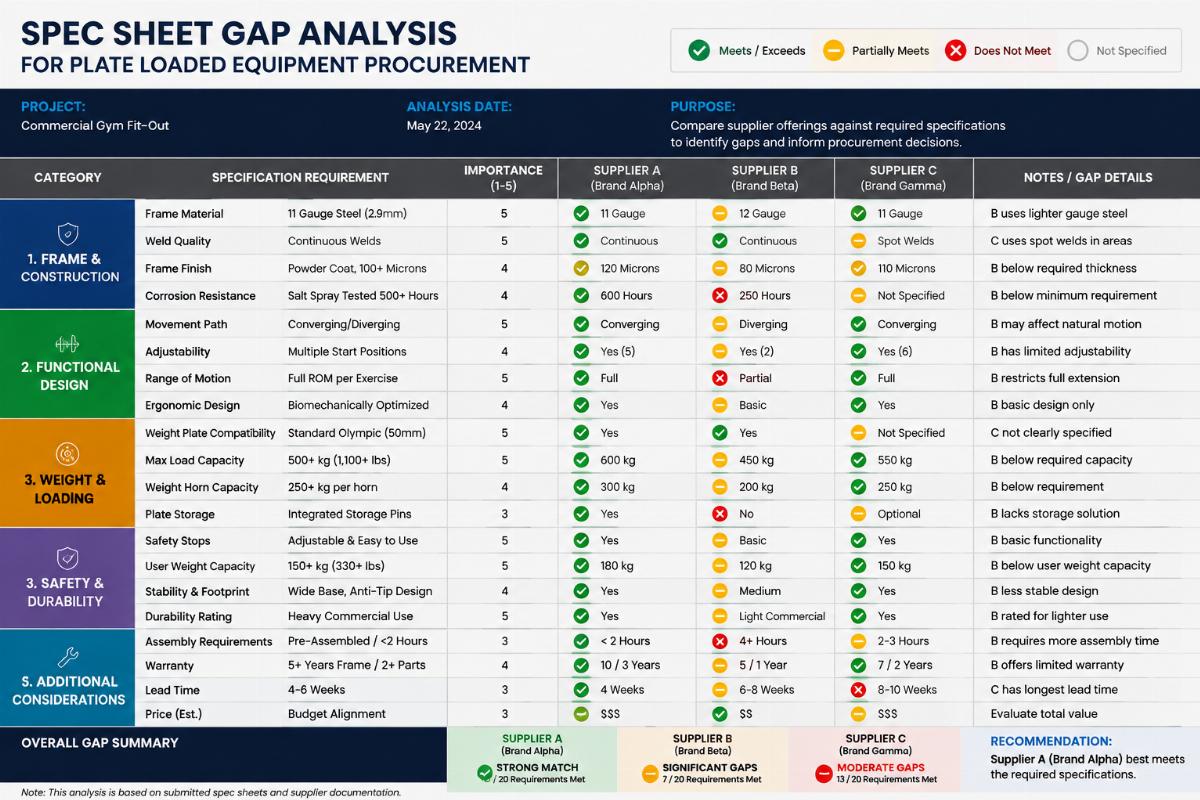
The standard spec sheet for the HD-700 Plate Loaded Series lists frame weight, stack weight, footprint, and exercise biomechanics. It does not list bushing bore tolerance, bearing preload method, or welding fixture calibration interval. These are the parameters that determine whether a unit runs smoothly for years or develops binding complaints within months.
| Control Point | Typical Spec Sheet Coverage | What Buyers Should Request |
|---|---|---|
| Bearing precision class | Not listed | P0/P6 class confirmation per ISO standard |
| Bushing bore tolerance | Not listed | As-machined inspection report |
| Welding fixture calibration | Not listed | Calibration certificate with date |
| Assembly press force | Not listed | Force range log per unit or batch |
| Thermal cycling test | Not listed | Test protocol and pass-fail criteria |
[NEED_CITE: fitness equipment manufacturing quality control standards for plate loaded machines]
Buyers who only compare load capacity and frame gauge thickness will miss the real differentiators. Two units can have identical spec sheet numbers but vastly different field performance if the bushing bore was not re-cut after a bearing seat relocation.
An importer in Latin America learned this after receiving a sample that felt smooth in the showroom but developed binding complaints once installed in a gym with poor climate control. The spec sheet had been flawless. The teardown revealed that the bushing bore tolerance was at the loose end of the acceptable range — acceptable in a climate-controlled factory, insufficient in a hot, humid gym where thermal expansion pushed the fit into interference territory.
Conclusion
The HD-700 Plate Loaded Series carries real mechanical changes that spec sheets do not fully capture. Bearing seat relocation without synchronized bushing tolerance adjustment creates field binding risk under temperature variation. Buyers who verify teardown-level data — bearing specs, bushing material, fixture IDs — before shipment avoid costly rework and reputation damage. Process chain traceability matters more than parameter tables.