Modular Rig Case Study: Boutique Strength Studios in Ghana | Wholesale Supplier
Most buyers assume cheap rigs work fine until tropical humidity destroys the coating within months.
For boutique studios in Ghana, selecting a modular rig demands balancing tropical climate endurance, space efficiency, and long-term maintenance costs—not just the initial quote.
I remember walking into a compact studio in Accra last year, the kind of place where every square meter has to earn its keep. The owner had imported a budget modular rig from a supplier who quoted a third of the market price. Within a few months, the weld points showed surface rust, the J-cups pitted, and members were complaining about the feel of the pull-ups. The rig looked fine on day one, but Ghana’s humidity does not forgive cheap powder coating. This is the reality I see across West Africa when studio owners focus only on the price tag. [NEED_CITE: corrosion failure mechanisms in tropical coastal gym environments]

Let me walk you through what actually happens on the ground, why certain rigs fail in this climate, and how smart operators spec equipment that survives.
Why Ghana’s Boutique Studios Need Purpose-Built Modular Rigs?
Boutique studios in Ghana operate under three simultaneous pressures: high humidity, limited floor space, and heavy daily usage from diverse member groups.
The West African coast sits in a tropical savanna and monsoon climate band. Accra averages relative humidity above eighty percent for most of the year, with coastal salt air accelerating oxidation on any exposed metal surface. [NEED_CITE: West African coastal climate data and material degradation rates] When you combine that environment with a studio that runs functional classes back-to-back from early morning to late evening, the equipment takes a beating that temperate-climate rigs were never designed for.
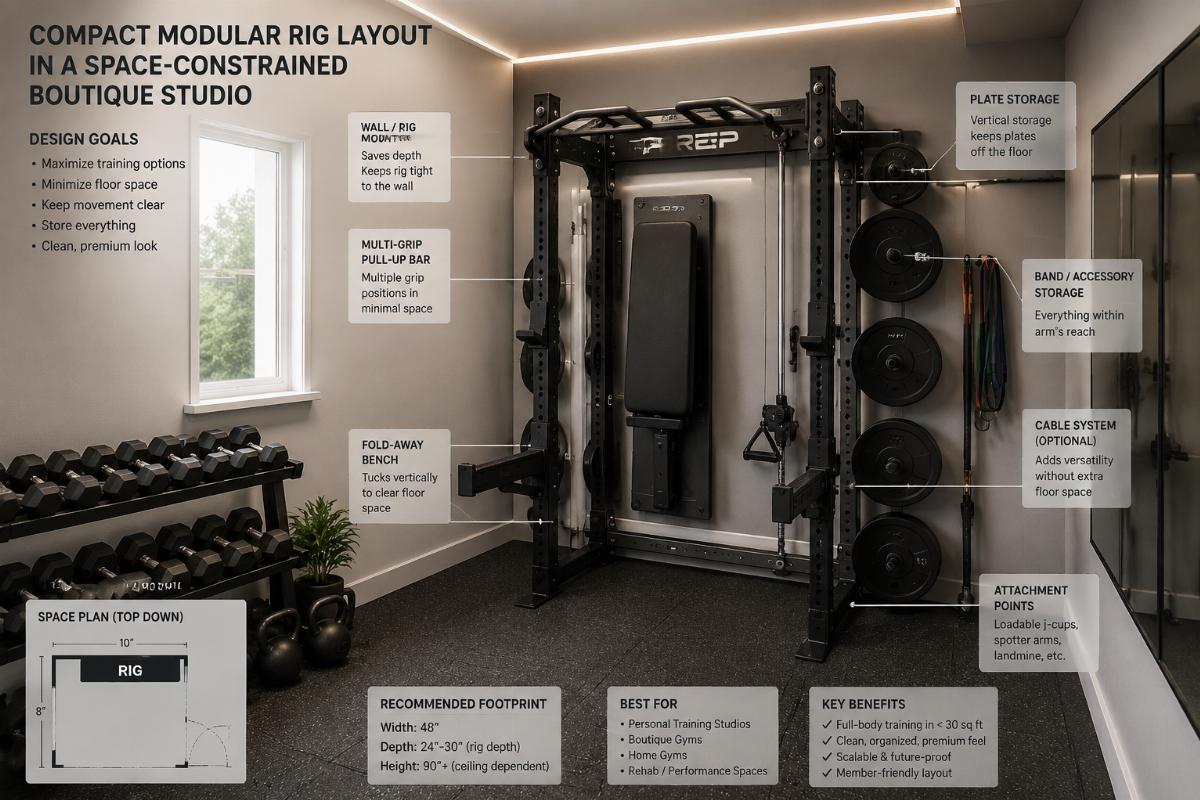
I worked on a hotel-adjacent fitness space in Accra where the owner needed a compact modular rig that could serve both hotel guests and local personal training clients. The footprint had to stay tight because the room also housed a small stretching area and a reception desk. Every attachment on the rig needed to justify its existence. We ended up specifying a single-bay modular rig with integrated landmine posts and a monkey crawl extension, keeping the total footprint under a tight threshold while still offering enough variety for group sessions.
The key insight here is that a modular rig in this market is not just a piece of metal. It is the backbone of the studio’s programming. If it rusts, if the holes elongate, if the pulleys seize, the entire member experience collapses. Boutique studios in Ghana cannot afford the downtime that cheap rigs guarantee.
What Failed in Cheap Rigs Installed in West Africa?
Low-cost modular rigs in Ghana typically fail in three predictable patterns: coating breakdown leading to rust, pulley and cable seizure from corrosion, and accessory incompatibility causing extended downtime.
I have seen this pattern repeat across multiple sites. A studio in Lagos ordered a modular rig from a small workshop that offered rock-bottom pricing. The rig arrived looking decent, with a glossy black finish. But the coating was a thin electroplated layer rather than a proper commercial-grade powder coat. Within a few months, the weld zones started showing orange rust spots. Members noticed. The owner tried touch-up paint, but the corrosion had already started underneath.
The second failure mode is mechanical. Pulley systems on cheap rigs often use sealed bearings that are not rated for high-humidity environments. Moisture penetrates the seals, the bearings corrode, and the cables start dragging or snapping. I replaced an entire cable stack on one site because the pulleys had frozen solid. The owner had no spare parts on hand, and the original supplier was unresponsive. The studio was down for weeks.
The third failure mode is the one that hurts the most financially. Cheap rigs often use non-standard hole spacing, proprietary J-cup designs, or unusual attachment interfaces. When a J-cup bends or a safety strap wears out, the owner cannot find a replacement locally. They have to order from the original supplier overseas, wait for shipping, and lose revenue every day the rig sits partially unusable. [NEED_CITE: equipment downtime cost impact on boutique fitness studio revenue]
| Failure Mode | Cheap Rig Behavior | Commercial-Grade Behavior |
|---|---|---|
| Coating Durability | Vulnerable to early rust in humid conditions | Resistant with proper powder coating |
| Pulley Longevity | Seizes within months due to moisture ingress | Substantially extended service life with sealed commercial bearings |
| Accessory Compatibility | Proprietary parts, long lead times | Standardized interfaces, verifiable spare availability |
| Structural Integrity | Thin-wall steel, connection looseness over time | Robust steel wall thickness with precision connectors |
How to Spec a Modular Rig for Humid, High-Traffic Environments?
The correct approach to specifying a modular rig for tropical boutique studios focuses on steel wall thickness, coating process, connector precision, and spare parts universality—not on comparing unit prices.
When I help studio owners evaluate options, I start with the steel. The wall thickness of the uprights and cross-members determines how the rig handles dynamic loads over time. Thinner steel flexes more under heavy use, which gradually loosens connections and elongates bolt holes. A commercial-grade modular rig uses heavy-duty steel with sufficient wall thickness to maintain structural rigidity through thousands of loading cycles. [NEED_CITE: commercial fitness equipment structural standards for dynamic load resistance]
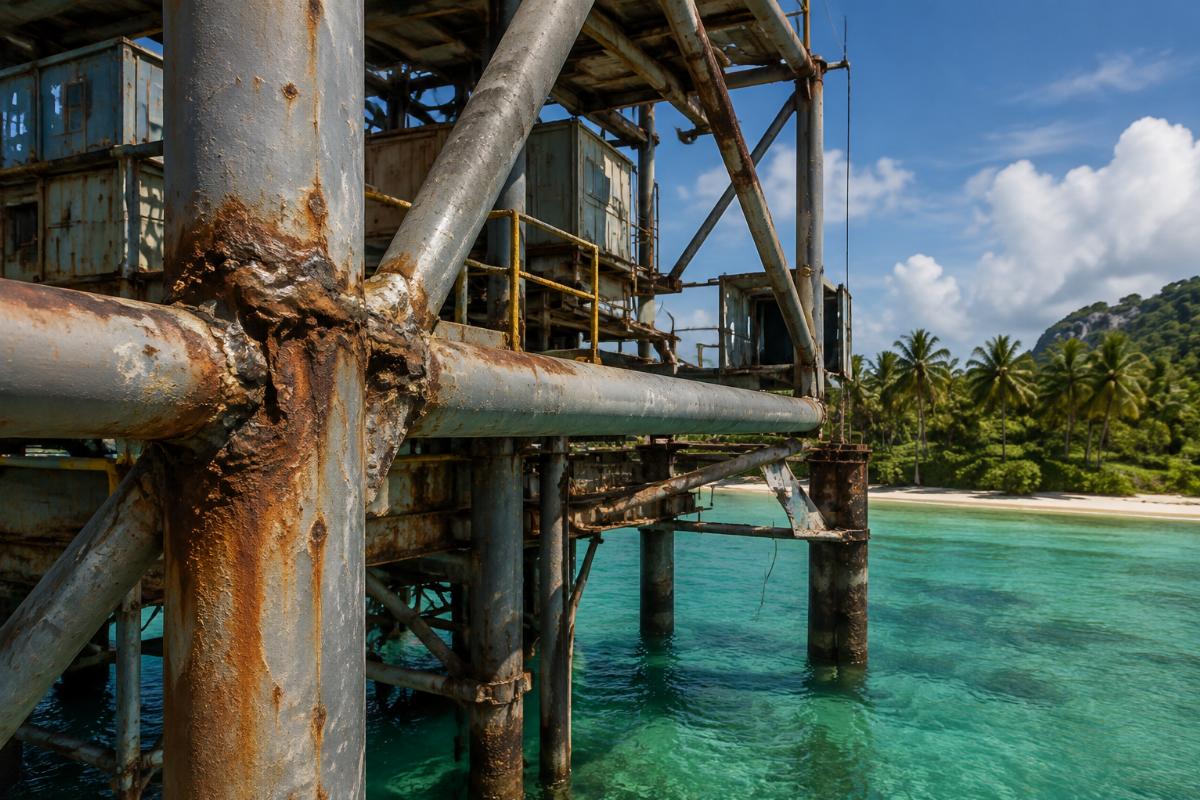
Next comes the coating. The difference between a cheap electroplated finish and a proper thermoset powder coat is dramatic in tropical conditions. Quality powder coating involves a multi-stage pretreatment process including phosphating or zirconium-based conversion coating, followed by electrostatic application and high-temperature curing. This creates a chemically bonded layer that resists chipping, scratching, and moisture penetration far better than any plating process. [NEED_CITE: powder coating vs electroplating corrosion resistance in tropical marine environments]
Then there is the connector system. Many buyers assume a heavier rig is automatically more stable. That is a misconception. Stability comes from the precision of the connection points—the fit between uprights and cross-members, the tolerance of the bolt holes, and the quality of the locking mechanisms. A well-engineered modular rig with tight tolerances will feel more solid than a heavier rig with sloppy connections.
Finally, and this is where most buyers get trapped, spare parts availability. A modular rig is a system, not a single product. J-cups, safety straps, pulley cables, weight stack pins, and attachment hooks all wear out. The critical question is not whether these parts exist, but whether they are standardized enough to source quickly. A modular rig built with industry-standard hole spacing and common attachment interfaces allows the owner to keep critical spares on-site and minimize downtime.

What Does a Turnkey Studio Setup Look Like in Ghana?
A successful turnkey studio setup in Ghana integrates modular rig selection, free weight zone planning, functional training accessories, and on-site installation support into a single coordinated delivery.
I have managed full studio buildouts where the owner had to coordinate with five different suppliers—one for the rig, one for the plates and bars, one for the flooring, one for the cable machines, and one for the functional accessories. The result is always the same: mismatched lead times, incompatible equipment heights, and a floor plan that wastes space because nobody planned the zones together.
A better approach is to treat the modular rig as the anchor point and build the entire studio around it. The rig defines the functional training zone. Around it, you plan the free weight area with dumbbell racks, barbells, and bumper plates. You allocate space for sled push and pull lanes. You position the flooring to match the equipment footprint and traffic patterns.
On a recent project for a boutique studio in Accra, we delivered a complete package: a modular rig with dual pull-up stations and integrated landmine posts, a full set of commercial-grade free weights including hex dumbbells and Olympic plates, a set of battle ropes and plyometric boxes, and rubber flooring tiles sized to the exact room dimensions. The owner received everything in consolidated shipping, which dramatically reduced logistics complexity and import clearance headaches. [NEED_CITE: consolidated container shipping efficiency for multi-category gym equipment orders]
The installation itself took a small team just a few days. Because all the equipment came from a single source, the heights matched, the spacing aligned, and the aesthetic was consistent. The owner did not have to chase multiple vendors for warranty claims or spare parts. Everything was covered under one relationship.
This turnkey model works particularly well for boutique studios in Ghana because it removes the coordination burden from owners who are already managing construction, staffing, and marketing. They need a partner who understands the local conditions and can deliver a complete, functional studio without surprises.

Conclusion
Selecting a modular rig for a boutique studio in Ghana is a decision that determines operational viability for years, not just a one-time purchase.
The tropical climate, heavy usage patterns, and space constraints demand equipment built to commercial standards with proper coating, sufficient steel thickness, and standardized spare parts. Studio owners who prioritize initial cost over long-term durability consistently pay far more in maintenance, downtime, and member churn. A coordinated turnkey approach eliminates the fragmentation that plagues multi-supplier projects and delivers a studio that works as a unified system from day one.