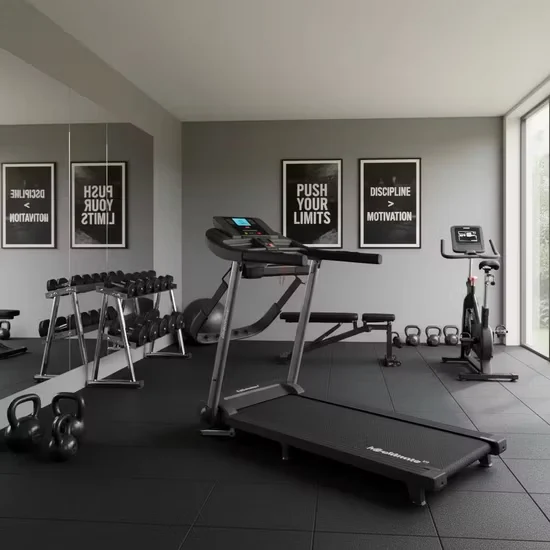
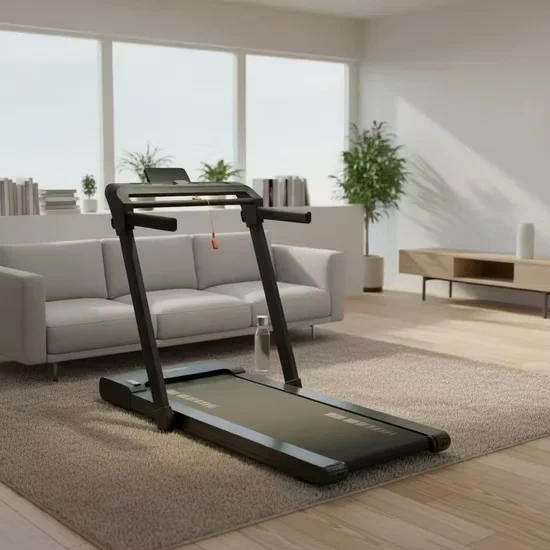
01 / Scenario
STUDIO
P
High-End Pilates Studios
Premium aesthetics meet quiet operation for boutique studio environments.

ISO
9001
CE
Certified
OEM
Available
10YR
Warranty
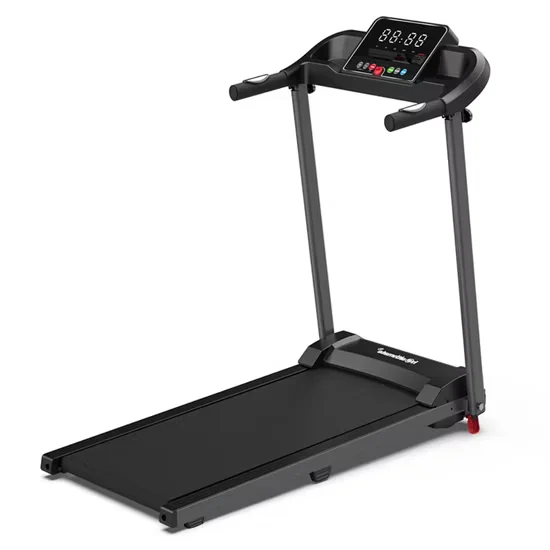
Motorized Treadmill, Auto-Incline, 1000×400mm Runway, 1-6 km/h Speed — engineered with a reinforced frame and sealed motor housing for continuous walking operation in high-traffic environments. The 6-program LED console and smooth gradient transitions support controlled training protocols for hospitality and rehabilitation settings. CE & RoHS certified with full OEM-ODM customization capability for branding and spec adaptation.
// Spec Highlights
• Direct from Manufacturer · No Middlemen · Worldwide Shipping
01
// Material
Imported Solid Wood
Premium hardwood frames sourced for density and visual warmth.
02
// Hardware
Medical-Grade Silent
Whisper-quiet pulleys and springs for clinical environments.
03
// Customization
Appearance OEM
Color, upholstery, and branding tailored to your studio.
04
// Service
Layout Design
Free venue planning for studios and rehab institutions.
Every component is selected for longevity, performance, and aesthetic harmony - from imported hardwood frames to silent medical-grade accessories.
// Features
Continuous robotic welding — every joint on this auto-incline motorized walking treadmill uses full-penetration MIG seams, eliminating the spot-weld fractures that plague high-traffic cardio floors.
| Parameter | Value |
|---|---|
| Product Type | Motorized Treadmill |
| Maximum Speed | <15 km/h |
| Speed Range | 1–6 km/h |
| Runway Size | 1000 × 400 mm |
| Product Dimensions | 1250 × 520 × 1250 mm |
| Weight | 100–160 kg |
| Folded | Unfolded |
| LED Screen | Speed / Distance / Time / Calories |
| Programs | 6 preset |
| Auto-Incline Function | Yes |
| Customization | Available |
| Color Options | Multicolor / Customized |
| Certification | CE, RoHS |
| Condition | New |
| Production Capacity | 3000 units / month |
| Facility Type | Typical Use |
|---|---|
| Hotel fitness center | Low-maintenance walking cardio for transient guests |
| Light commercial gym | Supplemental walking zone adjacent to strength floor |
| Wellness studio | Controlled incline walking for recovery sessions |
| Rehabilitation facility | Gradual gradient progression for post-injury gait training |
| Senior living fitness room | Stable, slow-speed walking with auto-incline support |
Many budget treadmills advertise "commercial-grade" frames without disclosing steel gauge or welding method — leading to flex under sustained load, incline motor burnout, and belt misalignment within months of daily use. This auto-incline motorized walking treadmill is engineered around a reinforced chassis that resists vibration-induced loosening during continuous gradient operation.
Operators report incline mechanisms failing within the first year when motor mounts are welded with intermittent spot seams rather than continuous beads. The resulting micro-movement misaligns the lift screw, overloads the drive motor, and triggers thermal shutdowns during peak-hour use [NEED_CITE: weld classification and fatigue performance in structural steel].
This motorized unit occupies the walking-intensity band between recumbent bikes and full-running treadmills, covering users who need controlled gradient work without high-impact loading. The 1000 × 400 mm running surface accommodates natural walking stride length while keeping the overall footprint compact enough for high-density floor plans. It pairs effectively with selectorized strength stations by providing active recovery between resistance sets, and its 1–6 km/h speed range matches the pace of rehabilitation and senior populations.
Walking treadmills experience a unique stress profile: the incline motor cycles thousands of times per week, the frame absorbs repetitive foot-strike vibration, and the belt deck interface endures constant shear. Unlike running treadmills where impact loads dominate, walking units at gradient suffer sustained static loading on the lift mechanism and elevated bearing temperatures from prolonged operation. Sealed bearings and rigid motor mounts become critical when daily runtime exceeds four hours, as unsealed components draw in dust and sweat residue that accelerates wear [NEED_CITE: bearing seal ratings for industrial continuous-duty applications].
The chassis of this auto-incline motorized walking treadmill uses heavier-gauge steel than residential models because walking at incline generates sustained torsional stress on the frame-to-motor-mount junction. Thicker wall tubing resists the slow creep deformation that causes belt tracking drift over time. The motor mount plate is welded with continuous robotic MIG seams rather than spot welds, distributing vibration loads across the full joint length instead of concentrating stress at discrete points. Sealed bearings in the roller system prevent dust ingress from gym floor environments, while the 200μm powder coating resists chipping at contact points where users grip the frame during incline adjustments.
Budget walking treadmills often use 14-gauge or thinner tubing to reduce shipping weight, but this wall thickness permits visible flex under sustained incline loading. The flex transfers to the motor mount, causing misalignment that burns out drive motors within months. Spot-welded joints crack under vibration cycling, creating safety hazards and voiding warranties. Non-sealed bearings require replacement every six to nine months in commercial environments, adding maintenance labor and downtime. Thin powder coating chips at handgrip contact points, exposing bare steel to sweat corrosion that spreads beneath the coating film [NEED_CITE: powder coating adhesion standards for fitness equipment].
Every unit undergoes individual load testing before shipment, verifying structural integrity under simulated daily-use conditions. The 11-gauge frame steel is mill-certified and traceable to the original coil, ensuring consistent material properties across production batches. Robotic continuous welding eliminates the human variability that causes weak joints in manual fabrication. A 10-year frame warranty covers the structural chassis against defects in materials and workmanship. The 1000 × 400 mm running surface and 1250 × 520 mm footprint are validated through 2D-3D CAD floor planning to ensure safe clearance distances between stations in high-density layouts. OEM customization options include frame color, console branding, and upholstery selection to match facility design standards.
Provide your cardio zone dimensions and equipment list to receive a 2D-3D floor plan optimized for traffic flow and safety clearances. Specify average daily user hours to match the structural duty cycle to your operational intensity. Indicate target user demographic and any accessibility requirements to confirm speed range and incline gradient suitability. Custom color, branding, and upholstery options are available to align with your facility’s interior design standards.
Q: What defines a commercial-grade treadmill frame versus residential-grade?
A: Commercial frames use heavier-gauge steel with continuous robotic welding to withstand thousands of hours of daily use without flex or joint failure. Residential models prioritize lightweight construction for home delivery, using thinner tubing and spot welds that degrade under sustained commercial loading cycles.
Q: How does auto-incline mechanism design affect long-term reliability?
A: The incline motor mount must be rigidly welded to resist vibration-induced loosening. Sealed bearings prevent dust ingress that causes premature wear. Continuous duty-rated motors with thermal overload protection prevent burnout during extended gradient sessions.
Q: What running surface dimensions are appropriate for walking-only versus running use?
A: Walking requires a minimum 1000 × 400 mm surface to accommodate natural stride length without edge contact. Running demands longer and wider surfaces to handle extended stride and lateral foot placement variation during higher speeds.
Q: How to evaluate motor duty cycle for high-traffic commercial environments?
A: Commercial motors must be rated for continuous operation at elevated temperatures without thermal shutdown. Look for sealed motor housings, adequate ventilation, and thermal overload protection that allows cooldown rather than immediate restart under load.
Q: What maintenance intervals should be expected for belt, deck, and incline mechanism?
A: Belt tension and tracking require monthly inspection in high-use settings. Deck lubrication follows manufacturer schedule based on daily runtime hours. Incline mechanism bearings need annual inspection for play or noise indicating seal failure.
Premium aesthetics meet quiet operation for boutique studio environments.
Medical-grade silence and precision for sports & postpartum recovery.
Furniture-grade craftsmanship for premium residential installations.
Compact premium setups for one-on-one and small-group training.
Aesthetic Pilates integration for hybrid wellness studio programming.
Multi-unit deployment with instructor-grade reliability for certification programs.
Tell us about your project. Our team will respond within 24 hours with pricing, customization options, and shipping details.
// Sales Director
William
+86 132 2531 1800
// Export Manager
Bella
+86 198 5412 8032
william@bickfit.com