01 / Scenario
STUDIO
P
High-End Pilates Studios
Premium aesthetics meet quiet operation for boutique studio environments.

ISO
9001
CE
Certified
OEM
Available
10YR
Warranty
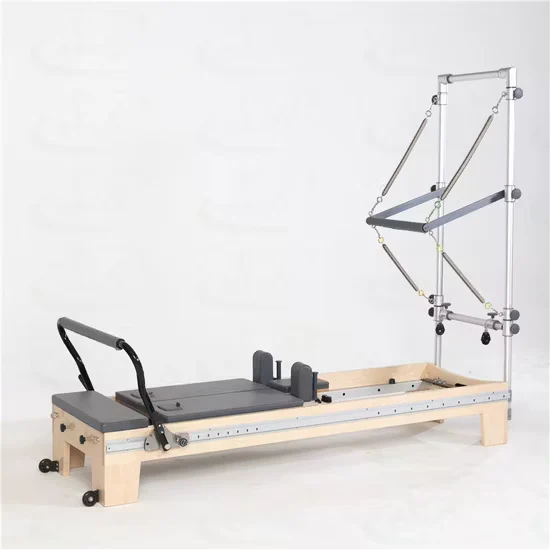
Pilates Reformer, Solid Beech Wood Frame, 2460×730×680mm Dimensions — 100kg net weight with rigid hardwood construction eliminates rail flex and carriage drift under spring tension. Includes long box, jump board, and platform with reinforced mounting points for dynamic loading stability. Each unit undergoes 32-point inspection and full load testing before shipment, backed by a 3-year warranty for commercial and home studio use.
// Spec Highlights
• Direct from Manufacturer · No Middlemen · Worldwide Shipping
01
// Material
Imported Solid Wood
Premium hardwood frames sourced for density and visual warmth.
02
// Hardware
Medical-Grade Silent
Whisper-quiet pulleys and springs for clinical environments.
03
// Customization
Appearance OEM
Color, upholstery, and branding tailored to your studio.
04
// Service
Layout Design
Free venue planning for studios and rehab institutions.
Every component is selected for longevity, performance, and aesthetic harmony - from imported hardwood frames to silent medical-grade accessories.
// Features
Traceable Solid Beech Frame — every timber batch sourced with moisture content and density certification before machining.
| Parameter | Value |
|---|---|
| Product Type | Pilates Reformer |
| Product Dimensions | 2460×730×680mm |
| Frame Material | Solid Beech Wood |
| Net Weight | 100kgs |
| Color | Solid Color (custom options available) |
| Included Accessories | Long Box, Jump Board, Platform |
| Assembly State | Standard Wood Case |
| Logo | Customized Is Allowed |
| Target User | Adult / Unisex |
| Warranty | 3 Years |
| Facility Type | Typical Use |
|---|---|
| Commercial Pilates Studio | High-frequency group class rotation with daily spring-loaded carriage cycling |
| Boutique Fitness Studio | Multi-class scheduling where reformer footprint and accessory swap speed matter |
| Home Studio | Space-constrained environments requiring a stable, non-shifting platform under loaded use |
Rigid hardwood eliminates the rail flex that causes carriage drift on laminated alternatives.
Many reformers on the market use laminated plywood frames or hollow aluminum rails that flex slightly under full spring tension. Over hundreds of repetitions, this micro-flex compounds into carriage drift, uneven resistance delivery, and accelerated wheel wear on one side of the rail. I have seen laminated frames where the carriage began pulling laterally within months because the rail geometry shifted under cyclic loading. A commercial beech wood pilates reformer built from solid timber maintains rail straightness across thousands of cycles because the material density and grain structure resist deformation uniformly [NEED_CITE: wood species density and structural rigidity in fitness equipment frames].
This reformer supports the full sagittal plane movement spectrum — footwork through long stretch, short box series, and jump board plyometric sequences. In a studio layout, it pairs with cadillacs and chair units to create a complete apparatus circuit. The 2460mm footprint fits standard studio bays with adequate clearance for instructor circulation between units. The solid beech frame and 100kg net weight keep the unit anchored during aggressive spring-loaded movements without floor anchoring, which matters for studios running back-to-back group classes. A commercial beech wood pilates reformer in this configuration suits adult users across a broad height and weight range thanks to the accessory set covering both supine and seated exercise positions.
Reformer frames endure a specific stress profile: repeated eccentric loading from spring return, impact forces from jump board use, and constant lateral pressure from carriage wheel contact. In a commercial studio running six to eight classes daily, the carriage traverses the rail thousands of times per week. The rail-wheel mating surface experiences continuous friction, and any tolerance gap leads to accelerated wear and audible grinding. Spring anchor points endure cyclic tensile stress with every loaded extension. Solid beech distributes these forces through its grain structure rather than concentrating stress at lamination seams, which is where plywood frames typically begin delaminating under commercial volume [NEED_CITE: cyclic loading effects on wood joint integrity in exercise equipment].
Beech hardwood is selected for reformer frames not for aesthetics but for its closed-grain density, which provides consistent machining tolerances along the rail length. The 2460mm rail must remain straight within tight tolerances to prevent carriage binding or lateral drift. Solid timber allows the rail to be machined from a single continuous piece rather than laminated segments, eliminating glue-line failure points. The 100kg net weight is a direct result of this material choice — lighter reformers typically achieve weight reduction through thinner stock or hollow construction, both of which compromise rail rigidity. The included long box, jump board, and platform all mount to reinforced anchor points cut into the solid frame, ensuring accessory stability under dynamic loading without fastener loosening over time.
Reformers built from laminated plywood or MDF with veneer finishes may look identical in showroom conditions, but the structural behavior diverges quickly under real studio loads. Laminated rails develop uneven wear patterns as individual plies compress at different rates, causing the carriage to track off-center. Veneered MDF frames absorb moisture from cleaning solutions and ambient humidity, swelling at joint lines and compromising fastener retention. I once dealt with a batch where the carriage rail sagged within months because the core material lacked the bending stiffness to support loaded spring tension. Non-solid frames also limit repair options — once a lamination delaminates, the entire rail section must be replaced rather than resurfaced.
The solid beech frame is sourced with moisture content specifications to prevent warping after delivery, which is critical for maintaining rail alignment in varying studio climates. Every rail is machined to straightness tolerances that keep the carriage tracking true through full extension and return. The spring anchor points are reinforced within the solid timber rather than relying on surface-mounted hardware that can pull out under repeated tensile cycling. The 100kg mass provides inherent stability, removing the need for floor anchoring in most studio installations. Custom logo and color options are applied to the solid wood surface using finishes that withstand daily contact with cleaning agents and user perspiration. The three-year warranty reflects confidence in the frame’s structural longevity under commercial use conditions [NEED_CITE: commercial equipment warranty standards for wood-frame apparatus].
Provide your studio floor area and target reformer count to receive a 2D-3D layout showing unit placement with safe circulation gaps. Specify your daily class volume and average user profile so we can confirm the spring configuration and accessory set match your programming. Indicate any custom color or logo requirements early in the process to align with production lead times. Our team can also advise on complementary apparatus placement to optimize class flow across your studio floor.
Q: What is the structural difference between solid beech and laminated plywood frames?
A: Solid beech provides uniform grain density along the entire rail length, maintaining straightness under cyclic spring loading. Laminated plywood consists of bonded layers that can delaminate at glue lines when exposed to repeated stress and moisture. For commercial studios running daily classes, solid timber frames retain rail alignment significantly longer, reducing carriage drift and the need for premature rail replacement or realignment service calls.
Q: How does rail tolerance affect carriage performance over time?
A: Rail straightness determines whether the carriage tracks smoothly or develops lateral play. Tight machining tolerances on solid beech keep wheel-to-rail contact consistent, preventing uneven wear patterns that cause grinding noise and resistance inconsistency. As tolerances widen from wear, the carriage begins to drift, requiring more user effort to maintain controlled movement and reducing the precision that reformer training depends on.
Q: What spring replacement intervals should a commercial studio plan for?
A: Spring resistance degrades as metal fatigues from repeated extension cycles. Commercial studios should inspect spring tension consistency quarterly and plan replacement based on visible deformation or measurable resistance loss rather than a fixed calendar schedule. The anchor reinforcement on this reformer allows spring swaps without compromising the surrounding timber, keeping maintenance straightforward during regular studio operating hours.
Q: How do I plan studio layout for multiple reformers?
A: Each reformer requires its 2460×730mm footprint plus lateral clearance for user entry and instructor circulation. A layout drawing helps identify total unit count, optimal spacing between stations, and placement relative to other apparatus. Providing your room dimensions allows us to generate a CAD plan that maximizes class capacity while maintaining safe operating clearances around every unit in the studio.
Premium aesthetics meet quiet operation for boutique studio environments.
Medical-grade silence and precision for sports & postpartum recovery.
Furniture-grade craftsmanship for premium residential installations.
Compact premium setups for one-on-one and small-group training.
Aesthetic Pilates integration for hybrid wellness studio programming.
Multi-unit deployment with instructor-grade reliability for certification programs.
Tell us about your project. Our team will respond within 24 hours with pricing, customization options, and shipping details.
// Sales Director
William
+86 132 2531 1800
// Export Manager
Bella
+86 198 5412 8032
william@bickfit.com