01 / Scenario
STUDIO
P
High-End Pilates Studios
Premium aesthetics meet quiet operation for boutique studio environments.
ISO
9001
CE
Certified
OEM
Available
10YR
Warranty
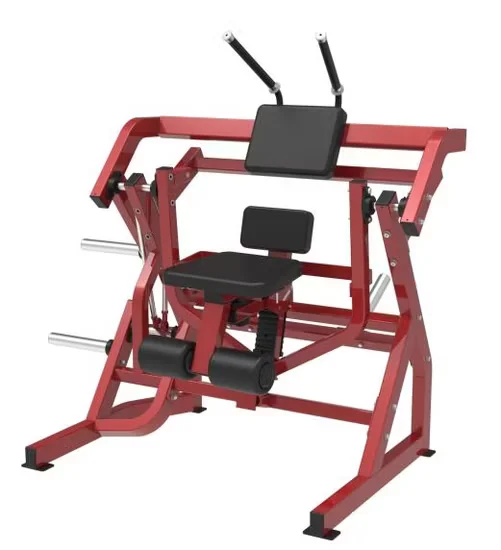
Commercial Abdominal Oblique Crunch Machine, 1670×1100×1600mm, 121kg — selectorized core trainer built with industrial steel frame and sealed bearing pivot for torsional stability during rotational loading. Continuous MIG welding at stress junctions ensures fatigue resistance under high-frequency use. Every unit undergoes individual load testing before shipment to verify structural integrity.
// Spec Highlights
• Direct from Manufacturer · No Middlemen · Worldwide Shipping
01
// Material
Imported Solid Wood
Premium hardwood frames sourced for density and visual warmth.
02
// Hardware
Medical-Grade Silent
Whisper-quiet pulleys and springs for clinical environments.
03
// Customization
Appearance OEM
Color, upholstery, and branding tailored to your studio.
04
// Service
Layout Design
Free venue planning for studios and rehab institutions.
Every component is selected for longevity, performance, and aesthetic harmony - from imported hardwood frames to silent medical-grade accessories.
// Features
Traceable 11-gauge steel — every frame tube for this commercial selectorized abdominal oblique crunch machine is sourced from mill-certified Q235 coils with gauge documentation linked to the original batch.
| Parameter | Value |
|---|---|
| Product Type | Selectorized Abdominal Trainer |
| Model NO. | 5025 |
| Exercise Part | Abdominal |
| Frame Steel | 11-gauge, 3×3 inch tube |
| Steel Grade | Q235, mill-certified |
| Welding Type | Robotic MIG, continuous weld |
| Bearing Type | Sealed industrial bearings |
| Powder Coating | 200μm scratch-resistant |
| Product Dimensions | 1670×1100×1600mm |
| Net Weight | 121kg |
| Certification | ISO 9001:2015, CE |
| OEM/ODM | Available |
| Facility Type | Typical Use |
|---|---|
| Commercial gym strength floor | Dedicated core and abdominal station in high-traffic zones |
| Fitness club | Selectorized abdominal circuit area |
| Hotel fitness center | Compact core training station for guest use |
| University athletic department | Supplementary abdominal training for strength and conditioning programs |
Many abdominal machines marketed as commercial-grade rely on vague steel specifications and spot-welded joints that cannot withstand repetitive rotational loading.
The pivot mounting point on an oblique crunch machine concentrates torsional stress with every rep — spot welds at this junction develop micro-fractures within months of heavy use.
When gym members perform oblique crunch movements, the frame experiences lateral twisting forces that pull at weld junctions differently than linear push-pull stations. Spot welds pass visual inspection on day one but fatigue under thousands of rotational cycles. The result is visible frame flex, pivot play that alters the movement arc, and eventually structural failure that creates unsafe training conditions. [NEED_CITE: weld classification and fatigue performance under cyclic torsional loading in structural steel]
This commercial selectorized abdominal oblique crunch machine targets the oblique and rectus abdominis through a controlled converging crunch pattern with rotational emphasis. It complements linear abdominal stations and lower-back extensions in a well-rounded core training area. The selectorized resistance mechanism suits facilities where multiple users share equipment across varying strength levels throughout the day. The fixed movement path accommodates a broad range of user torso lengths without manual adjustment.
Abdominal crunch machines experience eccentric loading patterns that differ significantly from linear stack equipment. The oblique crunch motion introduces asymmetric force vectors as users rotate through the movement arc, placing uneven stress on pivot bearings and frame joints. In high-traffic commercial environments, these cyclic torsional loads accumulate across hundreds of daily repetitions. Sealed bearings at pivot points must resist contamination from gym floor dust and ambient humidity while maintaining smooth rotation. Upholstery contact surfaces endure repeated compression and cleaning chemical exposure that degrades lower-density foams. [NEED_CITE: bearing seal performance in high-humidity commercial fitness environments]
The 11-gauge, 3×3 inch frame tube provides a specific cross-sectional geometry that resists torsional deflection under oblique loading. Thinner wall gauges or smaller tube profiles allow visible frame twist during heavy rotational movements, compromising movement consistency and user confidence. Robotic MIG welding produces continuous weld seams along the full joint length, distributing stress across the entire connection rather than concentrating it at discrete spot locations. Sealed industrial bearings at the pivot axis maintain rotational smoothness by preventing contamination ingress — a critical distinction from open bushing designs that develop play as debris accumulates. The 200μm powder coating thickness provides meaningful protection at contact points where users grip, adjust, or rest against the frame during use.
Facilities that specify abdominal equipment with thin-wall tubing accept frame flex that alters resistance feel and movement consistency over time. Spot-welded pivot mounts that fail under rotational stress create liability exposure and unplanned equipment downtime. Non-sealed bearings require frequent maintenance intervention and develop audible play that signals deterioration to users. Low-density upholstery compresses permanently under daily commercial use, requiring replacement within months rather than years. Inadequate powder coating at contact points exposes bare steel to sweat and cleaning chemicals, initiating corrosion that spreads beneath surrounding finish.
Every commercial selectorized abdominal oblique crunch machine produced in this facility uses 11-gauge Q235 steel with mill certification traceable to the source coil. Robotic MIG welding ensures continuous weld seams at all structural junctions, with particular attention to the pivot mounting points that endure torsional stress. Each unit undergoes individual load testing before shipment — not sample-based inspection — verifying structural integrity under simulated commercial use conditions. The 200μm industrial powder coating resists chipping at high-contact areas throughout the frame. A 10-year frame warranty reflects confidence in the structural engineering. For facility planners, 2D-3D CAD layout support ensures this abdominal station integrates with proper clearance spacing relative to adjacent equipment. OEM customization options allow color, logo, and upholstery specification to match facility branding.
Provide your core training zone dimensions and adjacent equipment list to receive 2D-3D layout planning that accounts for this commercial selectorized abdominal oblique crunch machine footprint and required safety clearances. Indicate expected daily user volume to confirm structural grade alignment with your traffic demands. Specify target user population anthropometric range to verify accommodation without manual adjustment requirements. Customization requests for frame color, facility branding, or upholstery material can be addressed during specification review.
Q: How can I verify that an abdominal machine truly meets commercial-grade structural requirements?
A: Request mill-certified steel documentation showing specific gauge and tube dimensions rather than vague commercial-grade claims. Examine welding methodology — continuous robotic welds at pivot junctions indicate engineering for rotational stress, while spot welds suggest cost-driven compromises. Confirm bearing type specifications and ask about individual unit load testing protocols before shipment.
Q: What structural specifications matter most for equipment subjected to rotational loading?
A: Frame tube gauge and cross-sectional dimensions directly determine resistance to torsional flex during oblique movements. Welding methodology affects fatigue life at high-stress junction points where rotational forces concentrate. Sealed bearing specifications at pivot axes determine long-term smoothness and maintenance intervals under continuous commercial operation with ambient dust and humidity exposure.
Q: What is the practical difference between sealed bearings and bushings in abdominal training equipment?
A: Sealed industrial bearings prevent contamination ingress from gym floor dust and cleaning moisture, maintaining rotational smoothness over extended service intervals. Open bushing designs allow debris accumulation that accelerates wear and develops audible play — a deterioration signal visible to users. In high-traffic commercial environments, sealed bearings meaningfully reduce maintenance frequency and preserve consistent movement quality.
Q: How should I plan floor spacing for abdominal crunch stations in a commercial layout?
A: Account for the full equipment footprint plus minimum safety clearance on all accessible sides for user approach and exit. Consider adjacent equipment swing paths and traffic flow patterns that might intersect with the abdominal station user zone. Request 2D-3D CAD layout support to verify clearances meet safety standards and accommodate user movement around the equipment during operation.
Premium aesthetics meet quiet operation for boutique studio environments.
Medical-grade silence and precision for sports & postpartum recovery.
Furniture-grade craftsmanship for premium residential installations.
Compact premium setups for one-on-one and small-group training.
Aesthetic Pilates integration for hybrid wellness studio programming.
Multi-unit deployment with instructor-grade reliability for certification programs.
Tell us about your project. Our team will respond within 24 hours with pricing, customization options, and shipping details.
// Sales Director
William
+86 132 2531 1800
// Export Manager
Bella
+86 198 5412 8032
william@bickfit.com