01 / Scenario
STUDIO
P
High-End Pilates Studios
Premium aesthetics meet quiet operation for boutique studio environments.
ISO
9001
CE
Certified
OEM
Available
10YR
Warranty
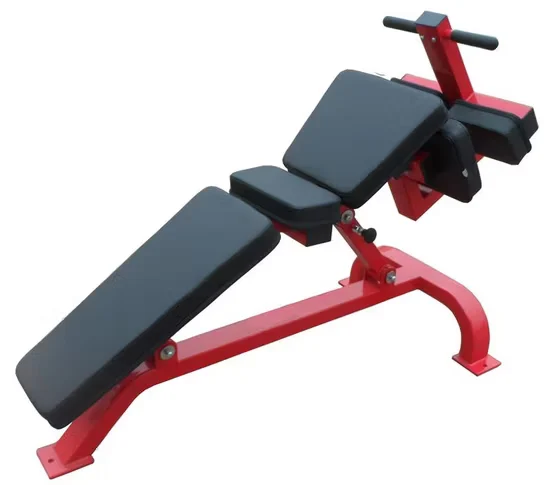
Adjustable Abdominal Board, Steel Frame, 1400×680×600mm, 48kg — engineered with industrial-grade steel tubing and continuous MIG welding at all frame junctions to resist deflection under repetitive commercial loading cycles. Multi-position adjustment mechanism ensures stable pin-lock performance across high-volume daily use. ISO9001 and CE certified for international procurement compliance. Every unit undergoes three-stage load testing before shipment, backed by a 10-year frame warranty and free floor planning support for complete core training zone integration.
// Spec Highlights
• Direct from Manufacturer · No Middlemen · Worldwide Shipping
01
// Material
Imported Solid Wood
Premium hardwood frames sourced for density and visual warmth.
02
// Hardware
Medical-Grade Silent
Whisper-quiet pulleys and springs for clinical environments.
03
// Customization
Appearance OEM
Color, upholstery, and branding tailored to your studio.
04
// Service
Layout Design
Free venue planning for studios and rehab institutions.
Every component is selected for longevity, performance, and aesthetic harmony - from imported hardwood frames to silent medical-grade accessories.
// Features
Traceable Steel, Not Promises — Every tube on this commercial adjustable abdominal board traces back to the mill coil certificate, so you know exactly what holds your athletes.
| Parameter | Value |
|---|---|
| Product Type | Abdominal Trainer |
| Frame Material | Steel, 11-gauge |
| Product Dimensions | 1400 × 680 × 600 mm |
| Net Weight | 48 kg |
| Adjustment Type | Adjustable, multi-position |
| Exercise Target | Abdominal |
| Powder Coating | 200 μm scratch-resistant |
| Welding | Robotic MIG, continuous |
| Upholstery | Available in standard or high-density options |
| Certification | ISO 9001, CE |
| Facility Type | Typical Use |
|---|---|
| Commercial Gym Strength Floor | Core conditioning station in high-traffic free weight zones |
| Hotel and Resort Fitness Center | Space-efficient abdominal work for transient guest use |
| University Strength and Conditioning Room | Athlete core stabilization during off-season programming |
| CrossFit Box Functional Zone | Supplemental trunk work between WOD sessions |
| Rehabilitation and Performance Center | Progressive loading for return-to-play core rebuilding |
A steel frame that does not flex matters more than any feature sticker.
Walk through enough equipment rows and you will spot abdominal boards where the main rail shows a visible bow after months of loaded decline work. That deflection is not a cosmetic issue — it shifts the movement path and concentrates stress at the adjustment pin junction. We have pulled units back to the shop because a buyer wanted to save cost on tube thickness, and the cross-member deformed under repetitive sit-up loading [NEED_CITE: structural deflection thresholds in thin-gauge fitness frames]. When you source a commercial adjustable abdominal board, the question is not whether it looks heavy-duty on day one. It is whether the tube gauge and weld pattern survive ten thousand cycles without play developing at the rail joint.
This commercial adjustable abdominal board occupies a focused lane: trunk flexion and decline core loading for users across a wide height range. On the floor plan, it pairs naturally with back extension benches and rotary torso machines, giving members a complete anterior-posterior core circuit without redundant footprints. Facilities running high member density benefit from placing it near free weight zones rather than isolating it in a stretching corner, since athletes already loaded with barbells and dumbbells tend to grab it for weighted decline work. The multi-position adjustment accommodates users from shorter to taller builds without requiring a second dedicated unit.
Abdominal trainers endure a specific abuse pattern: users drop onto the pad with eccentric force, then drive repetitive hip-flexion cycles that load the adjustment pin in shear. Over hundreds of sessions, that shear stress concentrates at the weld where the adjustment rail meets the main frame tube. Sweat and cleaning chemicals attack the coating at every contact point — pad edges, grip handles, and the pin housing itself [NEED_CITE: coating degradation under sweat and chemical exposure in commercial fitness]. If the powder coat is thin, corrosion starts at those junctions and spreads under the film before anyone notices. The pad foam compresses unevenly because the head-end takes more impact than the foot-end, so density and thickness must be chosen for that asymmetric wear pattern.
The frame tube gauge and wall thickness set the deflection threshold — a thicker wall resists the bending moment created when a loaded user leans back on a steep decline. Robotic MIG welding with continuous passes means the weld bead runs the full length of each junction rather than tacking at intervals, which eliminates the cold-start weak points where spot welds crack under cyclic loading. The adjustment mechanism design determines whether the pin bears load across its full diameter or only at the tip, and that difference shows up as wobble after a year of commercial use. A 200 μm powder coat applied over sandblasted steel provides enough film thickness to absorb impact scratches from dropped dumbbells without exposing bare metal. Upholstery density options let facility operators choose between a firmer pad that holds its profile longer or a softer surface for general membership comfort.
Thinner tube walls save weight and material cost on the purchase order, but they introduce flex that accelerates fatigue at every welded junction. Spot-welded rails may pass a static load test in the showroom yet develop hairline cracks within months when real users slam into decline positions repeatedly. Non-sealed bearings in any pivot point accumulate chalk dust and sweat residue, turning smooth adjustment into a gritty two-hand operation that members complain about. Low-density foam pads bottom out and split at the vinyl seams, forcing replacement orders that cost more in labor and downtime than specifying higher-density upholstery from the start [NEED_CITE: upholstery replacement frequency in commercial gym environments]. When hardware is non-standard, sourcing replacement pins or pad brackets becomes a scavenger hunt instead of a line-item reorder.
Every commercial adjustable abdominal board we ship starts with 11-gauge steel that carries a mill certificate — not a generic "commercial grade" label. Robotic MIG welding runs continuous beads along the rail-to-frame junctions where cyclic stress concentrates, eliminating the cold joints that plague hand-tacked alternatives. Each unit undergoes a load test before crating, verifying that the adjustment mechanism and frame hold under force well beyond what a single user can generate. The 200 μm industrial powder coat withstands the daily cleaning chemicals and sweat exposure that strip thinner finishes. A 10-year frame warranty backs the structural decisions. For facility planners, we provide 2D and 3D CAD layouts that account for this unit’s 1400 × 680 mm footprint plus the safe clearance zones needed on each side for users entering and exiting under load.
Share your strength floor dimensions and current equipment list so we can generate a 2D or 3D layout that positions the commercial adjustable abdominal board with correct safety clearances. Tell us your average daily member throughput so we can confirm the structural grade matches your traffic volume. Specify the height range of your primary user population to verify the adjustment positions cover the full spectrum. Note any custom color, logo, or upholstery preferences early so lead times stay predictable.
Q: How do I tell a commercial-grade abdominal board from a light-commercial one?
A: Check the frame steel gauge and request the mill certificate — light-commercial units often use thinner tubing that flexes under loaded decline work. Inspect the weld pattern at the adjustment rail junction for continuous beads rather than spot welds. Verify the adjustment pin diameter and engagement depth, since undersized pins develop play quickly under gym-frequency use.
Q: What steel specification should I require for a high-traffic abdominal trainer?
A: An 11-gauge steel frame with documented tube dimensions provides the deflection resistance needed for repetitive loaded sit-ups. Ask for the steel grade designation and mill traceability rather than accepting a generic commercial-grade label. The weld methodology matters equally — continuous robotic MIG welds outperform spot welds at the cyclic stress points where the adjustment rail meets the main frame.
Q: How does the adjustment mechanism affect long-term equipment life?
A: A pin-lock mechanism that engages across its full diameter distributes shear load evenly and resists the wobble that develops when only the pin tip bears weight. Ladder-style adjustments can loosen at the notches under high-frequency use. Specifying sealed or easily serviceable pin housings prevents chalk and sweat buildup from degrading the adjustment feel over thousands of cycles.
Q: What maintenance does an adjustable abdominal board require in a commercial gym?
A: Inspect the adjustment pin and locking mechanism monthly for wear or deformation. Re-torque structural bolts after the initial break-in period and quarterly thereafter. Clean the powder-coated frame with pH-neutral products to prevent sweat-driven corrosion at contact points. Monitor upholstery seams, particularly at the head-end where impact loading concentrates, and plan pad replacement before vinyl splits expose the foam core.
Premium aesthetics meet quiet operation for boutique studio environments.
Medical-grade silence and precision for sports & postpartum recovery.
Furniture-grade craftsmanship for premium residential installations.
Compact premium setups for one-on-one and small-group training.
Aesthetic Pilates integration for hybrid wellness studio programming.
Multi-unit deployment with instructor-grade reliability for certification programs.
Tell us about your project. Our team will respond within 24 hours with pricing, customization options, and shipping details.
// Sales Director
William
+86 132 2531 1800
// Export Manager
Bella
+86 198 5412 8032
william@bickfit.com