01 / Scenario
STUDIO
P
High-End Pilates Studios
Premium aesthetics meet quiet operation for boutique studio environments.
ISO
9001
CE
Certified
OEM
Available
10YR
Warranty
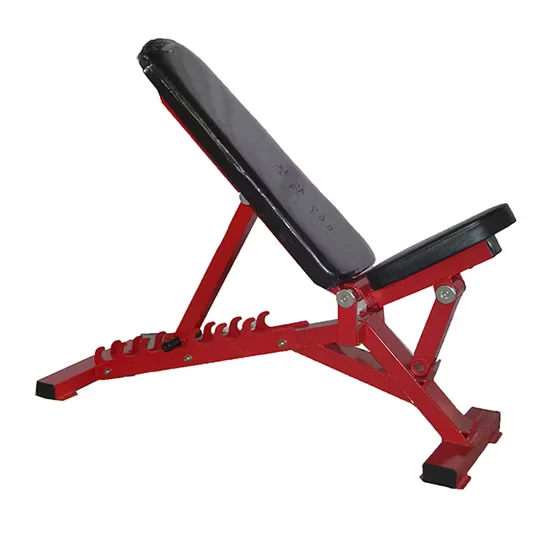
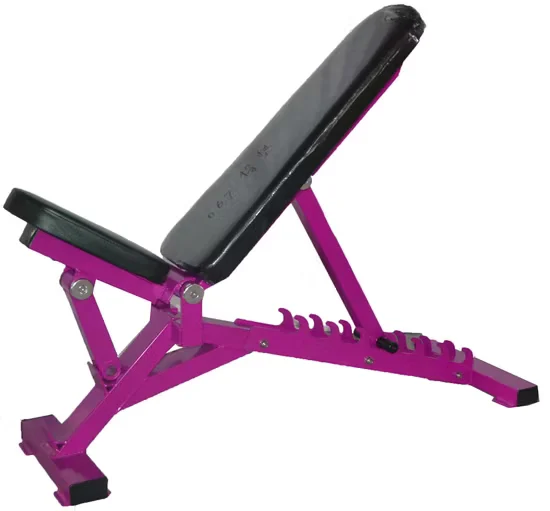
Adjustable Bench, Incline/Flat/Decline Positions, 38kg Net Weight — engineered with steel frame construction and 1673×706×1390mm dimensions for commercial gym environments. Continuous MIG welding ensures structural integrity under repeated angle adjustments, while high-density upholstery resists compression fatigue during daily use. Every unit undergoes load testing before shipment, backed by a 10-year frame warranty and factory-direct floor planning support.
// Spec Highlights
• Direct from Manufacturer · No Middlemen · Worldwide Shipping
01
// Material
Imported Solid Wood
Premium hardwood frames sourced for density and visual warmth.
02
// Hardware
Medical-Grade Silent
Whisper-quiet pulleys and springs for clinical environments.
03
// Customization
Appearance OEM
Color, upholstery, and branding tailored to your studio.
04
// Service
Layout Design
Free venue planning for studios and rehab institutions.
Every component is selected for longevity, performance, and aesthetic harmony - from imported hardwood frames to silent medical-grade accessories.
// Features
Steel Traceability to the Coil — every 11-gauge tube used in this adjustable bench traces back to a certified Q235 or Q345 mill certificate.
| Parameter | Value |
|---|---|
| Product Type | Adjustable Bench |
| Frame Steel Gauge | 11-gauge |
| Frame Tube Size | 3×3 inch |
| Steel Grade | Q235 / Q345 mill-certified |
| Welding Type | Robotic MIG continuous weld |
| Adjustment Positions | Incline / Flat / Decline |
| Powder Coating | 200μm scratch-resistant |
| Upholstery | Available in standard or high-density options |
| Product Dimensions | 1673 × 706 × 1390 mm |
| Net Weight | 38 kg |
| Certification | ISO 9001, CE |
| OEM/ODM | Available |
| Production Capacity | 500 PCS/Month |
| Warranty | 10-year frame |
| Facility Type | Typical Use |
|---|---|
| Commercial gym strength floor | Dumbbell pressing, incline fly work, decline core drills |
| University strength and conditioning room | Athletic program bench cycles and accessory lifts |
| Hotel fitness center | Multi-angle pressing for guest self-directed training |
| CrossFit box functional zone | Weighted step-ups, bench dips, dumbbell row variations |
| Rehabilitation and performance center | Controlled range-of-motion pressing and shoulder recovery |
A bench that weighs 38 kg and locks into decline is resisting torsional twist at two pivot points simultaneously.
When a lifter loads a heavy dumbbell set on a steep decline, the frame absorbs rotational force that thinner tubes were never dimensioned to handle. I have seen 14-gauge frames pass a static load test and then develop visible wobble after a few weeks of real-world decline use. The failure starts at the hinge pin bore — a stress concentration that amplifies every off-center load. That early recall we went through with a chain operator taught me that the spec sheet number means nothing unless the hinge geometry and the tube wall are matched to the worst-case loading scenario [NEED_CITE: EN 957 structural requirements for stationary training equipment].
A commercial adjustable incline decline flat bench sits at the center of any serious dumbbell zone. It pairs with flat utility benches for supersets and anchors one end of a rack-and-bench cluster. The incline-to-decline range covers pressing, rowing, and core work, meaning one station replaces three fixed-angle units. High-traffic floors benefit from that consolidation because fewer stations means wider walkways and fewer collision points during peak hours.
Every angle change introduces a fatigue cycle at the hinge pin and the ladder-lock engagement point. Over hundreds of daily adjustments across incline, flat, and decline positions, spot-welded gussets begin to crack along the heat-affected zone. The seat rail also endures impact loading each time a loaded barbell is set down, and the powder coating at contact edges must survive repeated scraping from barbell knurling and dumbbell plates [NEED_CITE: weld classification and fatigue performance in structural steel].
The 3×3 inch frame tube provides a cross-sectional moment of inertia that keeps the backrest rail from flexing when a user pushes heavy dumbbells overhead at full incline. Continuous robotic MIG welding eliminates the cold-joint risk inherent in manual spot welding, which is the primary cause of hinge-area failures in adjustable benches. The 200μm powder coating thickness is chosen specifically because bench contact points — where barbell shafts and dumbbell plates scrape the frame — wear through thinner coatings within months in commercial use. The incline, flat, and decline adjustment range covers the torso length variation across the general adult population, and the ladder-lock mechanism is sized so the engagement tooth depth prevents slippage even under eccentric loading.
A thinner tube wall may save material cost at purchase, but once the hinge bore ovalizes from repeated decline-angle loading, the entire adjustment mechanism develops play that no field repair can fix. Spot-welded gussets crack silently — the first visible sign is often a user reporting that the backrest "feels loose." Non-commercial upholstery compresses and splits within months under daily sweat exposure, and replacement pads are rarely stocked by manufacturers who treat the bench as a disposable item [NEED_CITE: commercial upholstery density standards for fitness equipment].
The 11-gauge steel frame with mill-certified Q235 or Q345 sourcing means every tube is traceable to the coil it was cut from. Robotic MIG continuous welding on the hinge gussets and seat rail eliminates the spot-weld failure mode we saw firsthand in that early recall. Every unit is load-tested before crating, not sample-inspected. The 200μm industrial powder coating holds up against barbell knurl contact and cleaning chemicals. A 10-year frame warranty backs the structural commitment. For facility layout, the 1673 × 706 mm footprint is designed to align with standard dumbbell rack spacing, leaving safe passage width when placed in a row.
Share your dumbbell zone dimensions and current equipment list to receive a 2D or 3D CAD layout showing bench placement, rack spacing, and safe passage widths. Specify expected daily user volume so the structural grade matches your traffic level. Provide the body-size range of your member base so the incline and decline adjustment range is confirmed as appropriate. Color, logo, and upholstery customization options are available for branding alignment.
Q: How do I confirm the bench meets commercial-grade structural standards?
A: Request the frame steel specification showing gauge, tube dimensions, and steel grade along with the mill certificate. Verify the net weight aligns with the stated frame size — a 38 kg bench with 11-gauge 3×3 inch tubing is consistent with commercial construction. Ask for the individual load test record and confirm the welding method is continuous MIG, not spot-welded at the hinge points.
Q: How many backrest adjustment positions does the bench offer?
A: The bench provides incline, flat, and decline positions covering the standard pressing angle range. This range accommodates the majority of adult torso lengths and supports flat bench press, incline dumbbell press, and decline sit-up or weighted core work. The ladder-lock engagement mechanism is designed to hold position under eccentric loading without slippage.
Q: What happens when the upholstery compresses or splits after extended use?
A: High-density foam options resist compression significantly longer than standard-density pads in commercial environments. When replacement is needed, factory-supplied pads are available with documented lead times. The upholstery mounting system uses bolt-on attachment so pad swaps do not require welding or frame modification on the shop floor.
Q: How should bench spacing be planned alongside racks and Smith machines?
A: With a footprint of 1673 × 706 mm, the bench needs lateral clearance for dumbbell arc and a rear passage for user entry when set to full decline. In a 2D or 3D CAD layout, these clearance zones are calculated based on adjacent equipment depth and the tallest user profile to prevent handle collisions during incline pressing movements.
Q: What customization options are available for color and branding?
A: The 200μm powder coating can be matched to facility color schemes, and logo placement on the frame or upholstery is available through OEM production. Minimum order quantities and lead times are confirmed during the inquiry stage based on the customization scope and production schedule at the time of order.
Premium aesthetics meet quiet operation for boutique studio environments.
Medical-grade silence and precision for sports & postpartum recovery.
Furniture-grade craftsmanship for premium residential installations.
Compact premium setups for one-on-one and small-group training.
Aesthetic Pilates integration for hybrid wellness studio programming.
Multi-unit deployment with instructor-grade reliability for certification programs.
Tell us about your project. Our team will respond within 24 hours with pricing, customization options, and shipping details.
// Sales Director
William
+86 132 2531 1800
// Export Manager
Bella
+86 198 5412 8032
william@bickfit.com