01 / Scenario
STUDIO
P
High-End Pilates Studios
Premium aesthetics meet quiet operation for boutique studio environments.

ISO
9001
CE
Certified
OEM
Available
10YR
Warranty
Aluminum Pilates Reformer Machine, Aluminium Alloy Frame, 2570×730×270mm Dimensions — engineered with corrosion-resistant alloy construction and 90kg net weight for stable carriage tracking during high-rep studio sessions. Includes long box, jump board, and platform for progressive programming from rehabilitation to athletic conditioning. Backed by 3-year frame warranty and full customization for logo and color placement.
Every unit undergoes carriage load testing and rail alignment QC before shipment, ensuring consistent performance across commercial facilities.
// Spec Highlights
• Direct from Manufacturer · No Middlemen · Worldwide Shipping
01
// Material
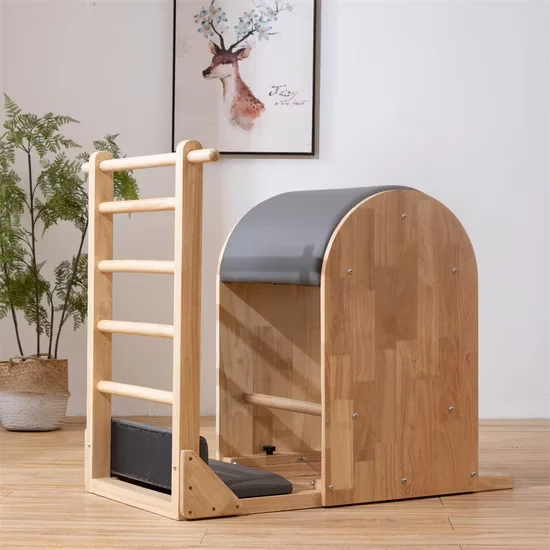
Imported Solid Wood
Premium hardwood frames sourced for density and visual warmth.
02
// Hardware
Medical-Grade Silent
Whisper-quiet pulleys and springs for clinical environments.
03
// Customization
Appearance OEM
Color, upholstery, and branding tailored to your studio.
04
// Service
Layout Design
Free venue planning for studios and rehab institutions.
Every component is selected for longevity, performance, and aesthetic harmony - from imported hardwood frames to silent medical-grade accessories.
// Features
Every Unit Load-Tested — each carriage undergoes static and dynamic loading before leaving the factory, not sample-based QC.
| Parameter | Value |
|---|---|
| Product Type | Pilates Reformer |
| Frame Material | Aluminium Alloy |
| Product Dimensions | 2570 × 730 × 270 mm |
| Net Weight | 90 kg |
| Accessories Included | Long Box, Jump Board, Platform |
| Finish | Solid Color |
| Customization | Available (color, logo placement) |
| Warranty | 3 Years |
| Target User | Adult, Unisex |
| Facility Type | Typical Use |
|---|---|
| Boutique Pilates studio | Group reformer classes with daily scheduling |
| Rehabilitation and physical therapy center | Controlled movement therapy and post-injury conditioning |
| Commercial gym functional training zone | Supplemental core and stability work alongside strength equipment |
| Boutique fitness facility | Hybrid Pilates-barre programming |
Most studio operators discover frame flex only after months of repetitive carriage travel.
When a reformer is specified simply as "commercial aluminum" without disclosing the alloy series or wall thickness, the frame may look rigid on day one but gradually develop carriage wobble as cyclic loading works the rails out of alignment. I once watched a batch of reformer frames value-engineered to thin-wall tubing pass every visual inspection, then warp under lateral spring tension within six months of studio classes. The recall and rebuild cost far more than sourcing traceable alloy from the start. For a commercial aluminum Pilates reformer machine, verifying mill-batch certificates is the only way to confirm the frame will hold geometry through thousands of daily strokes [NEED_CITE: material certification traceability for fitness equipment structural components].
This reformer addresses the sagittal and frontal planes through sliding carriage work, targeting deep stabilizers and posterior-chain musculature that barbell and selectorized machines leave under-stimulated. In a functional training zone it complements free-weight racks and cable columns by providing low-impact, high-control loading. The 2570 mm length accommodates users across a broad height range while keeping the footprint narrow enough for side-by-side placement in group class layouts. A commercial aluminum Pilates reformer machine in this size class fits a standard studio bay with clearance for instructor walk-through on both sides.
Each reformer stroke sends a lateral load pulse through the carriage wheels and into the rail mounting surface. Over thousands of reps per day, these pulses accumulate into fatigue cycles that test the bond between rail fasteners and the aluminum extrusion. The jump board and platform interfaces face a different stress profile — short, high-amplitude impact when participants perform plyometric rebound sequences. Sealed bearings in the carriage wheels resist sweat and chalk ingress that would degrade unsealed bushings within months. The attachment points must maintain zero-play under dynamic loading to prevent audible knock and premature wear at the connection interface [NEED_CITE: fatigue performance of aluminum extrusion joints under cyclic loading].
The aluminum alloy frame provides corrosion resistance critical in humid studio environments where steel frames develop surface oxidation at weld joints. Rail straightness tolerance determines whether the carriage tracks smoothly or develops lateral drift that accelerates wheel wear. Sealed bearings outperform bushings in this application because studio dust, skin oils, and cleaning solvents penetrate bushing surfaces and increase friction over time. Upholstery density must resist compression set — low-density foam develops permanent indentations within months of multiple daily users, while higher-density options maintain surface geometry through far more compression cycles. The solid-color finish option keeps visual consistency across a fleet of reformers when operators replace individual units over time.
Reducing wall thickness to save weight also lowers the threshold at which lateral spring forces push the frame out of dimensional tolerance. Spot-welded rail brackets may hold during factory testing but crack under months of off-center carriage loading, creating a liability exposure for the studio. Non-sealed carriage wheels require scheduled replacement far sooner, and each service event pulls the reformer out of class rotation. Thin upholstery foam compresses permanently under daily use, forcing pad replacement or full reupholster well before the frame itself reaches end of life. Generic fastener hardware limits replacement part sourcing to the original vendor, leaving operators stranded when that supply chain lapses [NEED_CITE: total cost of ownership for commercial studio equipment].
The aluminum alloy frame is sourced with mill-batch traceability, so alloy composition can be verified against certificates rather than marketing claims. Robotic MIG welding on the structural joints eliminates the cold-joint and spot-weld failures that appear under cyclic studio use. Every unit receives individual load testing before crating, catching carriage alignment drift that sample-based QC misses. The 200μm industrial powder coating protects contact surfaces from sweat corrosion and cleaning-agent degradation. A three-year warranty backs the frame, and 2D-3D floor planning CAD support helps operators calculate safe clearance between reformer stations based on this unit’s 730 mm width and instructor circulation paths. OEM color and logo customization keeps branding consistent across multi-location studio rollouts.
Provide your studio floor dimensions and class capacity targets to receive a 2D-3D layout showing how many units fit within safe clearance. Specify expected daily class volume so structural grade and upholstery density match your usage pattern. Confirm the height range of your typical clientele to verify the carriage travel accommodates them. Communicate any custom color or logo requirements early in the order to align production scheduling.
Q: How do I verify the aluminum alloy is genuinely commercial grade rather than generic extrusion?
A: Request the mill-batch certificate that traces the alloy composition back to the smelter lot. This document lists the alloy series and temper designation. Cross-reference these values against the structural requirements for cyclic loading in studio environments. A supplier confident in their material will provide this without hesitation.
Q: What maintenance does the carriage rail system need over time?
A: Sealed bearings in the carriage wheels require minimal routine service compared to bushing systems. Wipe rails with a clean cloth weekly to remove dust and skin oil buildup. Inspect wheel alignment quarterly and replace individual wheels when surface wear creates lateral play. Rail fasteners should be checked for torque retention at the same interval.
Q: Are accessories compatible if I add more reformer models later?
A: The long box, jump board, and platform interfaces on this reformer follow the mounting geometry standard for this frame series. When expanding your fleet, confirm that new units share the same attachment-point spacing. Mixing frame profiles from different production runs may require adapter brackets or limit cross-compatibility of accessories.
Q: How much floor space should I allocate per reformer in a group class studio?
A: The unit footprint is 2570 × 730 mm, but operational clearance must include instructor walk-through space and user entry on both sides. Typical studio layouts allocate a wider bay per station to accommodate these circulation paths. Providing your room dimensions allows a CAD layout showing exact unit count and safe spacing.
Q: What customization options are available for multi-location rollouts?
A: Color and logo placement can be specified to match studio branding across locations. Solid-color finish options maintain visual consistency when individual units are replaced over time. Confirm custom requirements during the specification phase so production scheduling accounts for finish and branding application steps.
Premium aesthetics meet quiet operation for boutique studio environments.
Medical-grade silence and precision for sports & postpartum recovery.
Furniture-grade craftsmanship for premium residential installations.
Compact premium setups for one-on-one and small-group training.
Aesthetic Pilates integration for hybrid wellness studio programming.
Multi-unit deployment with instructor-grade reliability for certification programs.
Tell us about your project. Our team will respond within 24 hours with pricing, customization options, and shipping details.
// Sales Director
William
+86 132 2531 1800
// Export Manager
Bella
+86 198 5412 8032
william@bickfit.com