01 / Scenario
STUDIO
P
High-End Pilates Studios
Premium aesthetics meet quiet operation for boutique studio environments.
ISO
9001
CE
Certified
OEM
Available
10YR
Warranty
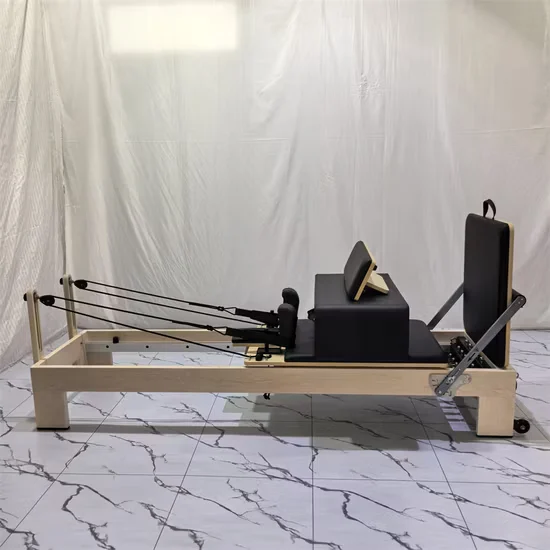
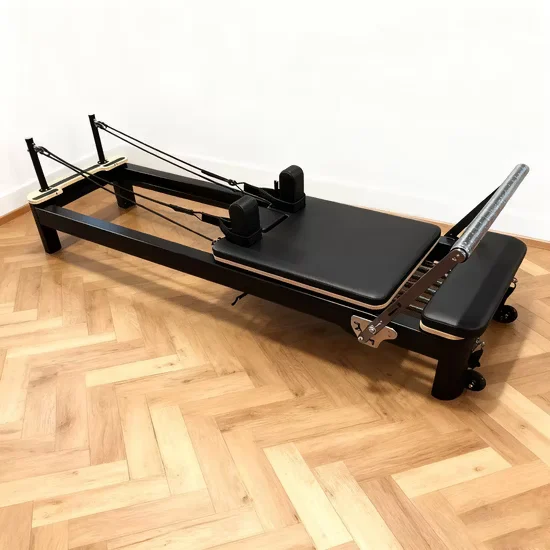
Aluminum Pilates Reformer Machine, 2570×730×270mm, 90kg Net Weight — engineered with corrosion-resistant aluminum frame for humid studio environments, featuring smooth carriage travel and modular compatibility with long box, jump board, and platform accessories. Each unit undergoes static and dynamic load testing with documented rail glide tolerance verification.
32-point inspection protocol with 100% carriage load testing before shipment ensures studio-grade reliability for high-traffic facilities.
// Spec Highlights
• Direct from Manufacturer · No Middlemen · Worldwide Shipping
01
// Material
Imported Solid Wood
Premium hardwood frames sourced for density and visual warmth.
02
// Hardware
Medical-Grade Silent
Whisper-quiet pulleys and springs for clinical environments.
03
// Customization
Appearance OEM
Color, upholstery, and branding tailored to your studio.
04
// Service
Layout Design
Free venue planning for studios and rehab institutions.
Every component is selected for longevity, performance, and aesthetic harmony - from imported hardwood frames to silent medical-grade accessories.
// Features
Studio-Grade Aluminum Structure — Every SRY-12 frame uses mill-certified aluminum alloy with wall thickness traceable to the coil, eliminating the material guesswork that plagues reformer procurement.
| Parameter | Value |
|---|---|
| Product Type | Pilates Reformer Machine |
| Model NO. | SRY-12 |
| Frame Material | Aluminum |
| Color | White (custom options available) |
| Product Dimensions | 2570×730×270mm |
| Net Weight | 90kgs |
| Accessories | Long Box / Jump Board / Platform |
| Logo | Customized Is Allowed |
| Production Capacity | 80 Pieces/Month |
| HS Code | 9506911900 |
| Transport Package | Standard Wood Case |
| Warranty | 3 Years |
| Facility Type | Typical Use |
|---|---|
| Pilates Studio | Daily group reformer classes with high-frequency carriage cycling |
| Boutique Fitness Studio | Hybrid movement classes blending Pilates with functional training |
| Yoga Studio | Flexibility and core-focused sessions on the reformer platform |
| Rehabilitation and Physical Therapy Center | Low-impact therapeutic exercise with controlled resistance |
| Home Studio | Dedicated personal practice space with studio-grade equipment |
Aluminum construction eliminates corrosion and reduces repositioning effort without sacrificing structural rigidity.
Studios often purchase reformers labeled "commercial grade" with no verifiable frame specification. The difference between aluminum, steel, and wood frames becomes apparent after months of daily class turnover: steel frames accumulate surface corrosion in humid studio environments, wood frames develop micro-fractures under repetitive lateral loading, and undersized aluminum tubes deflect beyond tolerance. The SRY-12 uses a verified aluminum alloy profile with documented wall thickness, ensuring the carriage rail system maintains alignment across thousands of articulation cycles [NEED_CITE: material fatigue behavior in aluminum alloy extrusions under cyclic loading].
The SRY-12 reformer addresses the full sagittal and transverse plane movement spectrum — supine footwork, seated spinal articulation, kneeling arm work, and standing balance sequences. In a dedicated Pilates studio layout, this reformer pairs with mat zones and chair apparatus to create progressive programming tiers. The 2570×730mm footprint supports spacing for group classes where instructors need clear sightlines between stations. The commercial aluminum Pilates reformer machine accommodates users across a broad anthropometric range through its standard accessory suite: the long box extends the carriage surface for seated and supine variations, the jump board introduces plyometric loading, and the platform adds standing stability work.
A studio running four to six reformer classes daily subjects each carriage rail system to hundreds of reciprocating cycles. The primary stress concentrations occur at the rail-to-frame junction, where the carriage decelerates at end-range and reverses direction under spring tension. Bearing surfaces experience the highest wear at mid-stroke, where carriage velocity peaks and lateral drift forces compound. Sweat exposure accelerates degradation of unsealed wheel bearings and degrades rope anchor points over time [NEED_CITE: bearing degradation patterns in fitness equipment under high-humidity environments]. The platform upholstery endures concentrated compression at the sacrum and thoracic contact zones, and the jump board attachment point absorbs repeated impact loading during plyometric sets.
The 2570mm overall length provides full-range carriage travel for tall users without compromising end-stop clearance. The aluminum frame resists oxidation entirely — no powder coating damage exposes the substrate to corrosive sweat residue. The 90kg net weight indicates sufficient mass for stability during aggressive jump board work while remaining repositionable by a single instructor for room reconfiguration. The accessory mounting points for the long box, jump board, and platform are machined interfaces rather than friction-fit sleeves, reducing wobble during client transitions. The 3-year warranty on this commercial aluminum Pilates reformer machine reflects confidence in the frame and rail assembly under sustained studio use.
A reformer built with undersized aluminum tubing develops rail deflection within the first year of commercial use, causing the carriage to drift laterally and produce audible grinding. Non-sealed carriage wheels accumulate dust and hair fiber, increasing rolling resistance until the glide feels uneven and noisy. Low-density upholstery foam compresses permanently under daily client turnover, requiring costly replacement that takes the reformer out of class rotation. Generic rope and cable hardware frays at the anchor crimps under repetitive tension cycling, creating both a maintenance burden and a client-facing safety concern [NEED_CITE: failure modes in commercial fitness equipment under sustained daily use].
The aluminum frame specification is traceable to the mill certificate — no ambiguous "commercial grade" claims. Robotic welding ensures continuous joint penetration on all frame-to-rail connections rather than cosmetic spot welds. Each unit undergoes carriage load testing before shipment to verify smooth travel under maximum rated tension. The 200μm powder coating on steel accessory components resists chipping at contact points and withstands daily cleaning chemicals. Floor planning support includes 2D layout drawings showing reformer spacing, instructor walkway clearance, and accessory storage zones specific to your studio dimensions. OEM customization covers frame color, upholstery selection, and logo placement to match studio branding.
Provide your Pilates studio floor area and target station count to receive a 2D layout with reformer placement, instructor circulation paths, and accessory wall storage. Specify your average daily class frequency and client volume so we can confirm the structural grade matches your usage intensity. Share any branding requirements — frame color, upholstery material, or custom logo — to align the commercial aluminum Pilates reformer machine with your studio identity.
Q: How does an aluminum reformer frame compare to steel or wood for daily studio classes?
A: Aluminum resists corrosion from humidity and sweat without relying on coating integrity, unlike steel frames that oxidize once the finish chips. Compared to wood, aluminum maintains dimensional stability under repetitive lateral carriage loading without developing micro-fractures. The lighter mass also lets instructors reposition units for room reconfiguration between class formats without mechanical assistance.
Q: What should I check to confirm the carriage will stay smooth after a year of heavy use?
A: Request the bearing type specification — sealed bearings resist dust and fiber intrusion far better than open bushings. Ask for the carriage load test documentation showing verified glide tolerance under rated tension. Inspect the rail surface finish for uniform machining marks, since irregularities cause uneven wheel wear that compounds over months of reciprocating cycles.
Q: How do I verify accessory compatibility before ordering jump board and platform add-ons?
A: Confirm the attachment interface is a machined mechanical connection rather than a friction-fit sleeve, which develops wobble under dynamic loading. Request dimensional drawings showing mounting point spacing and pin diameter. Test the swap-out procedure — accessories should attach and detach within seconds without requiring tools between client sessions.
Q: What clearance spacing do I need between reformer stations in a group class layout?
A: Plan for minimum 600mm between adjacent reformer frames on all sides to allow instructor circulation and client entry. Account for the full carriage extension range plus jump board protrusion when calculating end-to-end spacing. Include dedicated wall storage zones for long boxes and platforms so accessories do not obstruct walkways during class.
Premium aesthetics meet quiet operation for boutique studio environments.
Medical-grade silence and precision for sports & postpartum recovery.
Furniture-grade craftsmanship for premium residential installations.
Compact premium setups for one-on-one and small-group training.
Aesthetic Pilates integration for hybrid wellness studio programming.
Multi-unit deployment with instructor-grade reliability for certification programs.
Tell us about your project. Our team will respond within 24 hours with pricing, customization options, and shipping details.
// Sales Director
William
+86 132 2531 1800
// Export Manager
Bella
+86 198 5412 8032
william@bickfit.com