01 / Scenario
STUDIO
P
High-End Pilates Studios
Premium aesthetics meet quiet operation for boutique studio environments.
ISO
9001
CE
Certified
OEM
Available
10YR
Warranty
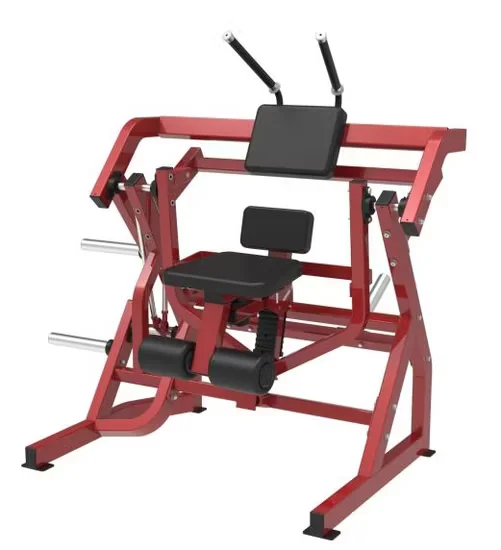
Commercial Selectorized Abdominal Twist Machine, 1510×1660×1365mm, 100kg Net Weight — engineered for rotational core training with pin-select resistance loading and sealed industrial bearings at the pivot point to maintain smooth movement under repetitive torsional stress. Built with continuous MIG welding on load-bearing joints to resist structural fatigue in high-traffic commercial environments. Every unit undergoes three-stage QC inspection with load testing before shipment, backed by 10-year frame warranty and floor planning support for optimal spacing.
// Spec Highlights
• Direct from Manufacturer · No Middlemen · Worldwide Shipping
01
// Material
Imported Solid Wood
Premium hardwood frames sourced for density and visual warmth.
02
// Hardware
Medical-Grade Silent
Whisper-quiet pulleys and springs for clinical environments.
03
// Customization
Appearance OEM
Color, upholstery, and branding tailored to your studio.
04
// Service
Layout Design
Free venue planning for studios and rehab institutions.
Every component is selected for longevity, performance, and aesthetic harmony - from imported hardwood frames to silent medical-grade accessories.
// Features
Mill-Certified Steel — Every 11-gauge tube in this selectorized combo twist is traceable back to its origin coil, so the frame specification you see on paper is exactly what supports your members.
| Parameter | Value |
|---|---|
| Product Type | Selectorized Abdominal Trainer |
| Frame Steel Gauge | 11-gauge |
| Frame Tube Size | 3×3 inch |
| Steel Grade | Q235 / Q345 industrial steel, mill-certified |
| Welding Type | Robotic MIG continuous weld |
| Loading Type | Selectorized |
| Bearing Type | Sealed industrial bearings |
| Pulley System | Aircraft-cable pulley system |
| Upholstery | Available in standard or high-density options |
| Powder Coating | 200μm scratch-resistant, sandblast pre-treatment |
| Product Dimensions | 1510×1660×1365mm |
| Net Weight | 100 kg |
| Certification | ISO 9001:2015, CE |
| Warranty | 10-year frame warranty |
| OEM | Available |
| Facility Type | Typical Use |
|---|---|
| Commercial gym strength floor | Core and rotational resistance training zone |
| Hotel and resort fitness center | Compact abdominal conditioning station for guest use |
| University strength and conditioning room | Athlete core stability and oblique development |
| Rehabilitation and performance center | Controlled-range rotational loading for return-to-play protocols |
Rotational loading concentrates force at the pivot weld — that joint either holds for a decade or cracks in a year.
I learned this the expensive way. A batch of twist machines I sourced for a Southeast Asian chain used spot-welded pivot brackets. The tropical humidity accelerated corrosion at the incomplete weld seams, and within months the rotation axis developed visible play. Members reported a clicking noise mid-set. The entire order was returned at my cost. What the spec sheet called "commercial-grade" was a tube wall that flexed under off-center torsion and a weld pattern that never fused through the full joint depth [NEED_CITE: weld classification and fatigue performance in structural steel]. The commercial selectorized abdominal twist machine you are evaluating here eliminates that failure mode by specifying continuous robotic MIG welds at every load-bearing junction and mill-certified 11-gauge steel that resists torsional flex at the rotation axis.
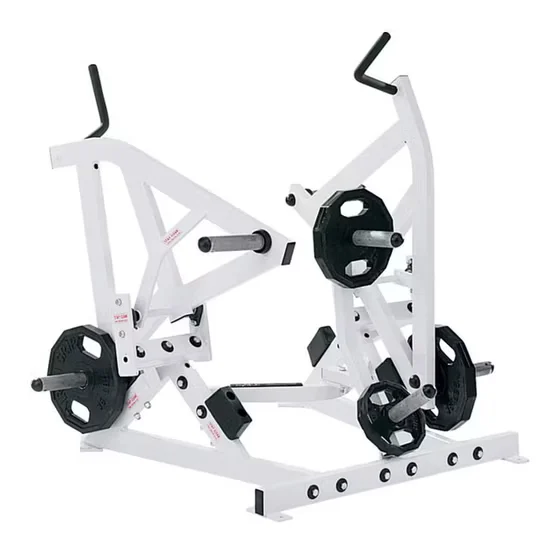
This selectorized abdominal trainer targets the internal and external obliques through a controlled rotational movement path, filling the core-conditioning gap between free-weight anti-rotation work and cable-based trunk exercises. On a high-traffic gym floor, it pairs naturally with a rotary torso unit and a back extension bench to form a complete posterior-chain and core station. The unit serves lifters of varying torso lengths and hip widths because the seat and thigh pad geometry accommodates a wide anthropometric range, which matters when one machine handles hundreds of different users per week. The commercial selectorized abdominal twist machine anchors the functional core zone without demanding the floor space of a full cable column.
Every rep on a combo twist sends an eccentric torque pulse through the pivot bearing and into the frame weld at the column base. In a busy commercial gym, that joint may see thousands of load cycles daily, each one reversing direction under resistance. Sealed industrial bearings at the rotation axis prevent sweat and chalk dust from infiltrating the race, which is where unsealed bushings develop play and begin grinding within the first year of heavy use. The continuous weld profile around the pivot bracket distributes torsional stress across a broader area rather than concentrating it at discrete tack points, reducing the likelihood of crack initiation under cyclic loading [NEED_CITE: EN 957 structural requirements for stationary training equipment]. The 200μm powder coating on the frame contact zones also resists chipping from repeated thigh-pad impact and grip abrasion.
The 11-gauge, 3×3 inch frame tube sets the deformation threshold: a thicker wall and wider cross-section resist bending moments generated when a loaded user twists off-center. Robotic MIG welding produces continuous bead profiles with full fusion through the joint, unlike spot welds that leave unfused gaps where fatigue cracks nucleate. Sealed industrial bearings maintain smooth rotation without scheduled lubrication, whereas open bushings require regular maintenance and still degrade faster in high-humidity environments. The sandblast pre-treatment before powder coating creates a mechanical key that prevents the finish from delaminating at impact points — a 200μm coat applied over bare steel without proper pre-treatment will chip and expose the substrate within months of commercial use.
Thin-wall tubing on rotational equipment flexes visibly under loaded sets, and that flex fatigues the metal at the bend point over hundreds of cycles until a hairline crack propagates. Spot-welded pivot brackets may pass a visual QC check at the factory, but incomplete penetration leaves a failure plane that opens under repeated torsional stress, creating a liability event on the gym floor. Non-sealed bearings absorb moisture and particulate, requiring monthly teardown and re-greasing — labor hours that compound across a fleet of machines. A powder coat applied below 200μm chips at the thigh-pad contact zone within the first quarter of heavy use, exposing bare steel to sweat-borne corrosion that spreads under the adjacent coating [NEED_CITE: powder coating adhesion and corrosion resistance in fitness equipment environments]. Low-density upholstery compresses permanently within months, forcing pad replacements that take the machine offline repeatedly.
The 11-gauge frame steel arrives with mill certification traceable to the coil, so you can verify the material spec independently rather than trusting a generic "commercial-grade" label. Robotic MIG continuous welding at every load-bearing joint eliminates the spot-weld failure points that cause field returns on rotational equipment. Every unit undergoes three-stage QC inspection including load testing before it leaves the factory — not sample-based testing, but every single machine. The 200μm industrial powder coating over sandblast pre-treatment protects the frame against sweat, humidity, and cleaning chemicals for years of daily use. A 10-year frame warranty backs the structural claim. For floor planning, the 1510×1660mm footprint allows safe clearance spacing on all sides for entry, exit, and adjacent equipment access, and 2D-3D CAD layout support is available to verify spacing against your specific room dimensions. OEM options cover color, logo, and upholstery selection to match your brand standard.
Provide your strength floor area and existing equipment list to receive a 2D or 3D layout showing this commercial selectorized abdominal twist machine integrated with adjacent core and rotational stations. Specify your estimated daily user volume so the structural grade matches your traffic profile. Share your target member demographic to confirm the seat and pad geometry fits the expected anthropometric range. Outline any OEM requirements — custom frame color, branded logo placement, or upholstery material — to receive a specification sheet with lead time.
Q: How do I distinguish true commercial-grade from light-commercial twist machines based on frame specs?
A: Request the exact steel gauge and tube dimensions rather than accepting a "commercial-grade" label. True commercial rotational equipment uses 11-gauge or thicker steel with 3×3 inch or larger tube profiles. Ask for mill-certified documentation traceable to the coil origin, and verify that load-bearing joints use continuous welding rather than spot welds. Light-commercial frames typically use thinner gauge tubing that flexes under repeated torsional loading.
Q: What steel gauge and tube size resist torsional fatigue in rotational core equipment?
A: An 11-gauge wall thickness combined with a 3×3 inch square tube cross-section provides the rigidity needed to resist bending moments generated during loaded rotational movements. Thinner walls allow the frame to flex at the pivot column, which accelerates fatigue cracking at the weld joint. Always pair the gauge specification with a continuous weld requirement, because even thick tubing will fail if the joints rely on spot welds.
Q: How do sealed bearings differ from bushings in maintenance frequency and service life?
A: Sealed industrial bearings enclose the rolling elements behind shields that block sweat, chalk dust, and moisture from entering the race, so they run for years without lubrication. Open bushings absorb contaminants directly, requiring scheduled teardown and re-greasing while still wearing faster under daily commercial use. On rotational equipment where the pivot cycles thousands of times daily, sealed bearings meaningfully reduce maintenance labor and replacement frequency.
Q: What powder coating thickness is needed for long-term durability in commercial gym environments?
A: A 200μm powder coat applied over sandblast pre-treatment provides sufficient thickness to resist chipping at contact points where thigh pads and grips repeatedly strike the frame. Thinner coatings chip through to bare steel, allowing sweat-borne corrosion to spread beneath the adjacent finish. The pre-treatment step is equally critical — without a mechanical key from sandblasting, even a thick coat will delaminate under impact over time.
Q: How should I plan equipment spacing for a complete commercial core training zone?
A: Each rotational machine requires clearance on all sides for safe user entry, exit, and movement during loaded sets. Provide your floor dimensions to receive a 2D or 3D CAD layout that positions the combo twist alongside complementary core stations with verified spacing. This prevents unusable gaps between equipment and ensures ADA-compliant aisle widths, which is especially important in high-density commercial layouts where every square meter counts.
Premium aesthetics meet quiet operation for boutique studio environments.
Medical-grade silence and precision for sports & postpartum recovery.
Furniture-grade craftsmanship for premium residential installations.
Compact premium setups for one-on-one and small-group training.
Aesthetic Pilates integration for hybrid wellness studio programming.
Multi-unit deployment with instructor-grade reliability for certification programs.
Tell us about your project. Our team will respond within 24 hours with pricing, customization options, and shipping details.
// Sales Director
William
+86 132 2531 1800
// Export Manager
Bella
+86 198 5412 8032
william@bickfit.com

![OS-H5031 ISO-Lateral Leg Press for Commercial Gyms [WARN] draft identifier mismatch](https://bickgym.com/wp-content/uploads/2026/08/os-h5031-iso-lateral-leg-press-for-commercial-gyms-warn-draft-identifier-mismatch-ad2304.webp)