01 / Scenario
STUDIO
P
High-End Pilates Studios
Premium aesthetics meet quiet operation for boutique studio environments.

ISO
9001
CE
Certified
OEM
Available
10YR
Warranty
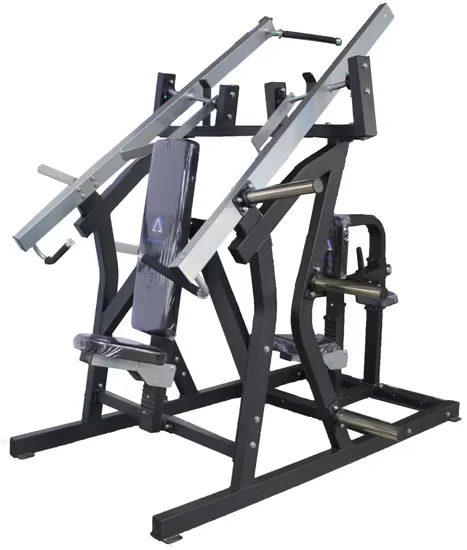
Commercial Incline Bench, 1411×1286×1559mm, 69kg Net Weight — built with a reinforced steel frame and multi-position adjustment mechanism for chest-focused training in high-traffic environments. Welded joints and durable upholstery are engineered to resist deformation and splitting under continuous commercial use. Every unit undergoes load testing before shipment, backed by a 10-year frame warranty and factory-direct floor planning support.
// Spec Highlights
• Direct from Manufacturer · No Middlemen · Worldwide Shipping
01
// Material
Imported Solid Wood
Premium hardwood frames sourced for density and visual warmth.
02
// Hardware
Medical-Grade Silent
Whisper-quiet pulleys and springs for clinical environments.
03
// Customization
Appearance OEM
Color, upholstery, and branding tailored to your studio.
04
// Service
Layout Design
Free venue planning for studios and rehab institutions.
Every component is selected for longevity, performance, and aesthetic harmony - from imported hardwood frames to silent medical-grade accessories.
// Features
Mill-Certified Steel — Every tube traced back to the coil with verifiable gauge documentation for this commercial incline bench.
| Parameter | Value |
|---|---|
| Product Type | Incline Bench |
| Frame Steel Gauge | 11-gauge |
| Frame Tube Size | 3×3 inch square tube |
| Steel Grade | Q235 / Q345 industrial steel |
| Welding Type | Robotic MIG, continuous weld lines |
| Product Dimensions | 1411×1286×1559mm |
| Net Weight | 69kg |
| Adjustment Positions | Multi-position incline |
| Exercise Part | Chest |
| Powder Coating | 200μm scratch-resistant |
| Upholstery | Standard or high-density options available |
| Color Options | Main frame and cushion colors customizable |
| OEM/ODM | Acceptable |
| Certification | ISO 9001, CE |
| Facility Type | Typical Use |
|---|---|
| Commercial gym free weight zone | Dumbbell incline pressing stations paired with adjustable racks |
| Hotel and resort fitness center | Low-maintenance chest training for transient guest populations |
| University strength and conditioning room | High-frequency use by athletic teams during off-season programming |
| CrossFit box functional zone | Accessory pressing work complementing Olympic lifting platforms |
| Rehabilitation and performance center | Controlled incline angles for return-to-training protocols |
Many manufacturers stamp "commercial grade" on benches without disclosing actual steel thickness or tube dimensions, leaving gym owners to discover frame flex only after months of heavy dumbbell loading. A commercial incline bench built on vague specifications will show deformation at the adjustment pivot points long before the main rails fail. [NEED_CITE: EN 957 structural requirements for stationary training equipment]
The difference between a bench that holds and one that sags comes down to verifiable wall thickness, not marketing language.
I once inspected a returned bench from a chain gym where the adjustment ladder had cracked clean through. The tube wall measured under 2mm at the pivot — barely half of what continuous heavy pressing demands. When you cannot trace the steel back to the mill certificate, you are buying a promise instead of a structure. That is why we run Q235 and Q345 steel with coil-level traceability through our Ningjin facility, cutting on 6kW fiber lasers at tight tolerances before any welding begins.
This incline bench anchors the dumbbell pressing section of a commercial strength floor, covering the inclined pressing plane for upper chest and anterior deltoid work. It pairs naturally with flat and decline benches to complete the pressing triad, and sits adjacent to dumbbell racks for efficient traffic flow. The multi-position adjustment accommodates users across a wide range of torso lengths and training preferences. In facilities running high member density, the 1411×1286mm footprint allows tight but safe spacing between stations. A commercial incline bench in this configuration reduces dead space while maintaining clearance for spotter movement.
The primary load path on this bench runs through the rear adjustment mechanism and down into the base frame, concentrating stress at the pivot pins and the weld joints connecting the backrest support to the main rail. Under daily commercial use, each incline press cycle introduces eccentric loading as dumbbells arc through the movement, generating lateral shear at contact points. [NEED_CITE: weld classification and fatigue performance in structural steel] Sweat and cleaning chemicals accelerate corrosion at any coating weakness, particularly around adjustment pins and frame junctions where metal-to-metal contact occurs. The upholstery absorbs repeated compression from loaded presses, and low-density foam will bottom out within months of high-traffic use. Continuous MIG welds distribute stress across the full joint length rather than concentrating it at discrete spot-weld points.
Frame gauge and tube cross-section together determine how much load a bench absorbs before visible deflection appears. An 11-gauge wall on a 3×3 inch square tube provides substantial resistance to bending under loaded dumbbell presses, because the moment of inertia scales with both wall thickness and section width. Robotic MIG welding produces continuous bead profiles without the cold joints and incomplete penetration that manual spot-welding introduces at critical frame junctions. The 200μm powder coating, applied after sandblasting, creates a barrier thick enough to resist chipping at contact points where dumbbells rest and adjustment pins slide. Multi-position adjustment mechanisms with positive pin-lock engagement prevent the backrest from shifting mid-set, a failure mode that emerges quickly when ladder systems rely on friction alone. Upholstery density options allow facility operators to select foam firmness matched to their expected usage volume and replacement cycle preferences.
A bench built on thinner-walled tube may pass initial load testing but develops progressive deformation at the pivot joints as fatigue cycles accumulate, eventually requiring frame replacement rather than simple part swaps. Spot-welded joints that look clean in showroom inspection become failure origins under the repeated eccentric loading of commercial incline pressing, creating liability exposure when structural failure occurs during use. [NEED_CITE: structural fatigue in welded steel fitness equipment frames] Non-standard hardware and proprietary fasteners mean that when adjustment pins wear or upholstery splits, no replacement parts exist in the supply chain — the entire unit gets pulled from the floor. Thin powder coating chips at dumbbell contact zones within weeks, exposing bare steel to sweat corrosion that spreads beneath adjacent coating and accelerates cosmetic and structural decline. Low-density foam pads compress permanently under daily commercial loading, creating uneven support surfaces that members notice and complain about.
Every frame starts with mill-certified Q235 or Q345 steel, cut on 6kW fiber lasers to maintain dimensional accuracy across production runs. Robotic MIG welding lays continuous beads at every structural joint, eliminating the incomplete fusion and porosity risks that manual welding introduces at high-stress pivot connections. Each unit undergoes individual load testing before leaving the facility — not sample-based batch testing, but verification on the actual bench shipping to your floor. The 200μm scratch-resistant powder coating is applied over sandblasted surfaces to ensure adhesion at contact zones where dumbbells and adjustment hardware create repeated abrasion. [NEED_CITE: powder coating adhesion standards for commercial fitness equipment surfaces] A 10-year frame warranty backs the structural steel, and our engineering team provides 2D and 3D CAD layout support to position this bench within your free weight zone with correct safety clearances and traffic spacing. OEM customization covers frame color, cushion color, and logo application to match facility branding.
Provide your strength floor dimensions and current equipment list to receive a 2D or 3D layout showing optimal commercial incline bench placement alongside flat benches, dumbbell racks, and adjacent stations. Specify your average daily user volume so we can confirm the structural grade matches your traffic pattern and expected fatigue cycles. Share your target member demographics and body-type range to verify the multi-position adjustment covers the necessary incline angles. Detail any custom requirements including frame color, cushion color, or logo placement so we can include those in the production specification.
Q: How do I verify a bench is genuinely commercial grade rather than light commercial?
A: Request the mill certificate showing actual steel gauge and tube dimensions, not just a "commercial grade" label. Check that welding is continuous MIG rather than spot-welded at pivot joints. Confirm load testing is performed on each individual unit, not just sampled from production batches. Verify the warranty covers the frame for a decade under commercial use conditions.
Q: What frame specifications are needed for safe heavy dumbbell incline pressing?
A: An 11-gauge steel wall on a 3×3 inch square tube section provides the rigidity needed for loaded dumbbell work without visible flex. The adjustment mechanism must use positive pin-lock engagement rather than friction-based positioning. Continuous weld lines at the pivot junctions distribute stress evenly across repeated press cycles, preventing the localized cracking that spot welds develop under eccentric loading patterns.
Q: How does the adjustment mechanism affect long-term durability in high-traffic gyms?
A: Pin-lock systems with machined engagement points maintain positive positioning through thousands of adjustment cycles, while friction-based ladders develop play as contact surfaces wear. The pivot pin diameter and its bearing surface determine whether the mechanism develops lateral wobble over time. Sealed pivot hardware prevents sweat and chalk infiltration that accelerates wear at the adjustment interface.
Q: What is the expected upholstery lifespan in commercial use and how are replacements handled?
A: High-density foam options resist compression set longer under daily loading, while standard density suits lower-traffic installations. Vinyl thickness and seam construction determine resistance to splitting at high-contact zones. Replacement pads are available as individual components, so you swap the cushion without replacing the entire bench. Specify your daily usage volume when ordering to match foam density to your replacement cycle expectations.
Q: How should I plan spacing between incline benches in a free weight area?
A: Account for the full dumbbell arc during pressing plus spotter standing room on each side of the bench. The 1411×1286mm footprint sets the minimum bay width, but add clearance for members moving between stations with loaded dumbbells. CAD layout support helps position benches to eliminate dead space while maintaining safe traffic corridors and clear sightlines for floor staff monitoring form and safety.
Premium aesthetics meet quiet operation for boutique studio environments.
Medical-grade silence and precision for sports & postpartum recovery.
Furniture-grade craftsmanship for premium residential installations.
Compact premium setups for one-on-one and small-group training.
Aesthetic Pilates integration for hybrid wellness studio programming.
Multi-unit deployment with instructor-grade reliability for certification programs.
Tell us about your project. Our team will respond within 24 hours with pricing, customization options, and shipping details.
// Sales Director
William
+86 132 2531 1800
// Export Manager
Bella
+86 198 5412 8032
william@bickfit.com