01 / Scenario
STUDIO
P
High-End Pilates Studios
Premium aesthetics meet quiet operation for boutique studio environments.
ISO
9001
CE
Certified
OEM
Available
10YR
Warranty
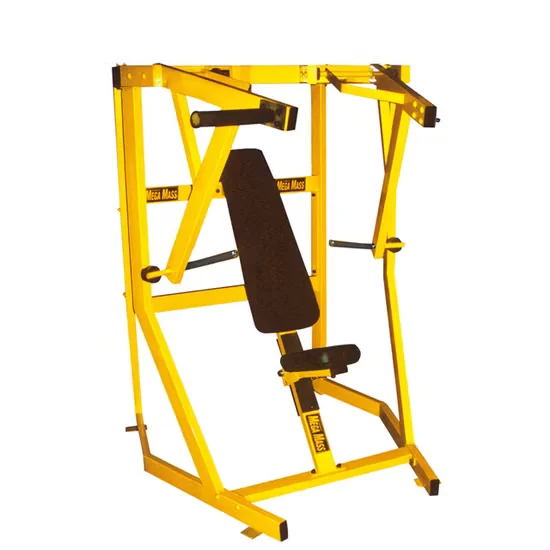
ISO-Lateral Decline Bench, Plate Loaded, 1300×1150×1750mm, 141kg — built on a 3×3 inch heavy-gauge steel frame with robotic MIG continuous welding to eliminate spot-weld fatigue under repeated pressing loads. Sealed bearing pivot points on independent converging arms reduce play and maintenance cycles in high-traffic commercial environments. Every unit undergoes full load testing before shipment, backed by a 10-year frame warranty.
// Spec Highlights
• Direct from Manufacturer · No Middlemen · Worldwide Shipping
01
// Material
Imported Solid Wood
Premium hardwood frames sourced for density and visual warmth.
02
// Hardware
Medical-Grade Silent
Whisper-quiet pulleys and springs for clinical environments.
03
// Customization
Appearance OEM
Color, upholstery, and branding tailored to your studio.
04
// Service
Layout Design
Free venue planning for studios and rehab institutions.
Every component is selected for longevity, performance, and aesthetic harmony - from imported hardwood frames to silent medical-grade accessories.
// Features
Continuous MIG Welded Frame — every load-bearing seam on this ISO-Lateral Decline Bench is robotically welded in a single continuous pass, eliminating the spot-weld fatigue cracks that plague high-traffic chest stations.
| Parameter | Value |
|---|---|
| Product Type | Plate Loaded Decline Chest Press |
| Product Dimensions | 1300 × 1150 × 1750 mm |
| Net Weight | 141 kg |
| Frame Steel | 11-gauge, 3 × 3 inch tube |
| Steel Grade | Q235 / Q345 mill-certified |
| Welding Type | Robotic MIG continuous weld |
| Loading Type | Plate loaded |
| Bearing Type | Sealed industrial bearing |
| Powder Coating | 200 μm scratch-resistant |
| Upholstery | Standard or high-density options |
| Color Options | Optional |
| Certification | ISO 9001, CE |
| OEM / Customization | Available |
| Assembly State | Unfolded |
| Power Source | Manual |
| Warranty | 10-year frame |
| Facility Type | Typical Use |
|---|---|
| Commercial gym strength floor | Primary decline press station in a plate-loaded chest circuit alongside flat and incline units |
| University strength and conditioning room | Heavy-duty chest pressing for athletic populations cycling through daily team sessions |
| Hotel and resort fitness center | Durable decline press that tolerates high guest turnover with minimal on-site maintenance |
| CrossFit box functional zone | Supplemental strength station for members following programmed pressing progressions |
| Rehabilitation and performance center | Controlled iso-lateral decline pressing for return-to-play protocols under supervised loading |
The joint fails long before the tube reaches its yield point.
Most commercial decline benches quote steel gauge without specifying weld classification. Under repeated heavy plate loading on a decline angle, the pivot area where the iso-lateral arms meet the main upright sees concentrated torsional stress every rep. Spot welds pass a visual line inspection but leave cold joints between discrete weld points — joints that propagate micro-cracks under cyclic loading until the arm develops lateral play or, in worst cases, separates at the seam [NEED_CITE: weld classification and fatigue performance in structural steel]. This unit uses robotic MIG continuous welding on every load-bearing joint, producing a uniform weld bead with no unwelded gaps between contact points.
The ISO-Lateral Decline Bench targets the lower sternal and costal fibers of the pectoralis major through a converging pressing path on a fixed decline angle. In a commercial strength floor, it sits alongside flat and incline plate-loaded presses to form a complete chest circuit that covers all three pressing planes without requiring users to adjust bench angles manually. The independent iso-lateral arms accommodate users with different arm lengths and shoulder mobility ranges, since each arm tracks separately and does not force the weaker side to compensate. For high-throughput commercial gyms running 300+ daily check-ins, having a dedicated decline station eliminates the bottleneck of members waiting for an adjustable bench to free up.
A decline chest press concentrates force differently than a flat or incline unit. The decline angle shifts the load vector toward the user’s torso, meaning the pivot bearings and the upright-to-base weld junction absorb significant shear force on every eccentric lowering phase. In a gym running eight or more hours daily, each station may see hundreds of pressing cycles, creating fatigue loading on the arm pivot bearings and the frame gussets where the main upright meets the base rail [NEED_CITE: EN 957 structural requirements for stationary training equipment]. The sealed bearings at each iso-lateral pivot resist contamination from chalk dust and perspiration that degrades unsealed bushings over time. The 200 μm powder coating, applied over a sandblasted substrate, resists chipping at the plate-loading horns where metal plates make repeated contact during loading and unloading.
The 11-gauge steel tube specification tells you the wall thickness of the frame members — a gauge that resists visible flex when a user presses heavy plates on the decline angle, where the mechanical advantage shifts load toward the pivot rather than distributing it along the full frame length. The 3 × 3 inch tube cross-section provides a broad moment of inertia, meaning the upright deflects less under asymmetric loading if one side is loaded heavier than the other. Robotic MIG continuous welding produces a consistent penetration depth along the full seam, unlike manual spot welding where the heat-affected zone varies between individual welds. Sealed industrial bearings at the pivot eliminate the maintenance cycle of greasing open bushings, which attract abrasive particulate in a gym environment and develop radial play within months of heavy use. The sandblast pre-treatment before powder coating removes mill scale and creates a mechanical anchor profile, which is what keeps the coating bonded at high-contact areas like the plate horns and footplate edges over years of daily use.
A decline bench built on thinner-gauge tubing will show visible frame deflection within months when members consistently load heavy plates, and the pivot area will develop lateral wobble as the bushings wear oval under cyclic shear. Spot-welded joints on the arm pivot may appear sound at delivery but crack progressively as the cyclic stress concentrates at the edges of each discrete weld spot, eventually requiring the entire arm assembly to be pulled for re-welding — downtime that takes a station off the floor for days. Non-sealed bearings absorb moisture and chalk residue, developing grinding noise and radial play that members notice and complain about, driving maintenance calls that compound across a fleet of identical units. Thin powder coating chips at the plate-loading horns within weeks, exposing bare steel that oxidizes visibly in a humidity-controlled gym environment and creates rust stains on plates and flooring.
The 11-gauge frame with mill-certified Q235 and Q345 steel means every tube on this ISO-Lateral Decline Bench traces back to a verifiable coil source, not a generic "commercial grade" claim with no paperwork behind it. Robotic MIG continuous welding ensures that the pivot junctions and base gussets carry uniform weld penetration along the full seam, which is where decline-angle pressing concentrates the highest cyclic stress. Every unit undergoes individual load testing before crating, so the bench that ships to your floor has been verified under load — not pulled from a batch sample. The 200 μm industrial powder coating over sandblast pre-treatment keeps the finish intact at the plate horns and footplate edges where contact wear concentrates. The 10-year frame warranty applies to the structural members that carry pressing loads, and 2D-3D CAD floor planning support ensures the unit’s footprint and safety clearances are mapped correctly within your strength zone before the order ships.
Provide your strength zone dimensions and existing equipment list so the 2D-3D layout can position this ISO-Lateral Decline Bench with correct safety clearances relative to adjacent pressing and rack stations. Specify your estimated daily user throughput to confirm the structural specification matches your traffic volume and maintenance interval expectations. Confirm the body-size range of your primary user population to verify the seat and pad geometry provides adequate support across your membership. Indicate any customization requirements including frame color, logo placement, or upholstery density preference to align the unit with your facility branding.
Q: How do I confirm a decline bench is truly commercial-grade rather than light commercial?
A: Request the frame steel gauge and tube dimensions with a mill certificate, not just a "commercial grade" label. Verify the welding is continuous MIG rather than spot-welded at load-bearing joints. Confirm each unit is individually load-tested before shipment with documentation, not just sample-tested from a production batch.
Q: What structural difference does the ISO-lateral arm design make compared to a fixed-bar decline press?
A: Independent iso-lateral arms allow each side to move on its own converging path, so a user’s stronger side does not compensate for the weaker side during the press. Structurally, each arm requires its own pivot bearing and weld junction, which doubles the critical joint count and makes continuous welding and sealed bearings more important for long-term rigidity.
Q: What maintenance does a plate-loaded decline press require in a high-traffic gym?
A: Sealed pivot bearings on the iso-lateral arms require no routine greasing but should be inspected annually for smooth rotation and lateral play. Frame bolts need re-torquing after the initial break-in period and quarterly thereafter. Powder coating at the plate horns and contact points should be checked for chips and touched up to prevent bare steel oxidation.
Q: How does powder coating thickness affect long-term durability on a plate-loaded unit?
A: A 200 μm industrial coating applied over sandblast pre-treatment provides a mechanical anchor profile that resists chipping at high-contact areas like plate horns and footplate edges. Thinner coatings chip through to bare steel within months of daily plate loading, exposing the frame to oxidation and requiring increasingly frequent touch-up maintenance across the facility.
Premium aesthetics meet quiet operation for boutique studio environments.
Medical-grade silence and precision for sports & postpartum recovery.
Furniture-grade craftsmanship for premium residential installations.
Compact premium setups for one-on-one and small-group training.
Aesthetic Pilates integration for hybrid wellness studio programming.
Multi-unit deployment with instructor-grade reliability for certification programs.
Tell us about your project. Our team will respond within 24 hours with pricing, customization options, and shipping details.
// Sales Director
William
+86 132 2531 1800
// Export Manager
Bella
+86 198 5412 8032
william@bickfit.com