01 / Scenario
STUDIO
P
High-End Pilates Studios
Premium aesthetics meet quiet operation for boutique studio environments.

ISO
9001
CE
Certified
OEM
Available
10YR
Warranty
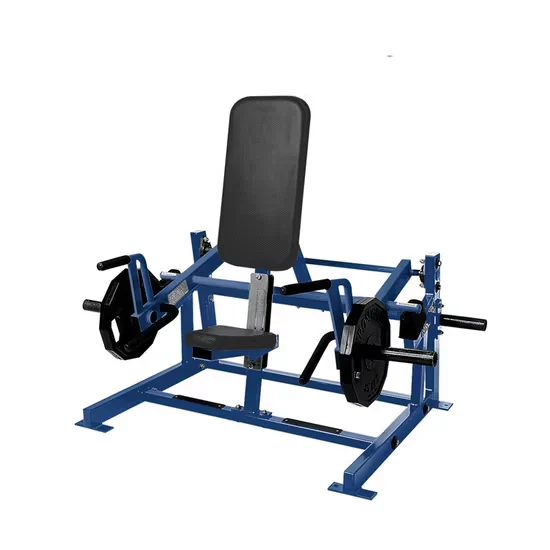
Commercial ISO Lateral Rear Deltoid Machine, Plate Loaded, 1982×1003×925mm — engineered with 3×3 inch frame steel and robotic MIG continuous welding to eliminate cold joints at high-stress pivot points. Sealed industrial bearings maintain smooth iso-lateral convergence under repeated heavy loading without play. Every unit undergoes per-shipment load testing with three-stage QC documentation before dispatch.
// Spec Highlights
• Direct from Manufacturer · No Middlemen · Worldwide Shipping
01
// Material
Imported Solid Wood
Premium hardwood frames sourced for density and visual warmth.
02
// Hardware
Medical-Grade Silent
Whisper-quiet pulleys and springs for clinical environments.
03
// Customization
Appearance OEM
Color, upholstery, and branding tailored to your studio.
04
// Service
Layout Design
Free venue planning for studios and rehab institutions.
Every component is selected for longevity, performance, and aesthetic harmony - from imported hardwood frames to silent medical-grade accessories.
// Features
Mill-Traceable Steel — Every tube in this ISO lateral rear deltoid machine traces back to the coil certificate, confirming 11-gauge thickness before it enters the laser cutter.
| Parameter | Value |
|---|---|
| Product Type | ISO Lateral Rear Deltoid Machine |
| Loading Type | Iso-lateral / plate loaded |
| Frame Steel | 11-gauge, Q235/Q345 industrial grade |
| Frame Tube Size | 3×3 inch |
| Welding Type | Robotic MIG continuous weld |
| Bearing Type | Sealed industrial bearing at iso-lateral pivot |
| Pulley System | Aircraft-cable pulley with sealed bearing |
| Powder Coating | 200μm scratch-resistant, sandblast pre-treatment |
| Upholstery | Available in standard or high-density options |
| Product Dimensions | 1982×1003×925 mm |
| Net Weight | 83 kg |
| Certification | ISO 9001, CE |
| Warranty | 10-year frame |
| Facility Type | Typical Use |
|---|---|
| Commercial gym strength floor | Rear delt isolation station in machine circuit |
| Hotel and resort fitness center | Durable plate loaded option for 24/7 guest access |
| University strength and conditioning room | Posterior shoulder work for overhead athletes |
| Rehabilitation and performance center | Controlled iso-lateral movement for return-to-training protocols |
| CrossFit box functional zone | Accessory station complementing free weight programming |
Continuous MIG welds carry the load where spot welds crack.
When a member loads plates on a commercial ISO lateral rear deltoid machine and drives through a heavy set, the iso-lateral arm junction endures repeated torsional stress. Spot welds pass a visual check on day one but develop micro-fractures within months of high-traffic loading. Once a crack propagates at the pivot, the arm develops lateral play and the movement path drifts off the intended plane. We switched to robotic MIG continuous welds on every structural junction after pulling an entire batch out of a Dubai facility — desert dust had worked into failed bearings and exposed weld cracks that spot welding had left vulnerable [NEED_CITE: weld classification and fatigue performance in structural steel].
This commercial ISO lateral rear deltoid machine targets the posterior deltoid and upper back through a converging plate loaded arc. It pairs naturally with chest press and lateral raise stations to balance push-pull volume on a machine circuit floor. The iso-lateral design accommodates users from lighter to heavier builds, as each arm moves independently and the chest pad anchors the torso. Facilities running eight or more hours daily benefit from plate loaded simplicity — fewer cables and guide rods mean fewer failure points under constant rotation.
Every set on this machine sends rotational force through the pivot arm and into the main frame junction. The load is eccentric: plates hang off-center, creating lateral torque that cycles with each repetition across hundreds of daily sets [NEED_CITE: EN 957 structural requirements for stationary training equipment]. Sealed bearings at the iso-lateral pivot resist dust and sweat infiltration, preventing the play that unsealed bushings develop within the first year. The powder coating at grip contact points must withstand abrasive handling, cleaning chemicals, and sweat exposure without chipping down to bare steel. Upholstery on the chest pad compresses repeatedly and must resist splitting along the stitch line.
The frame uses 11-gauge Q235/Q345 steel in a 3×3 inch tube profile. Wall thickness at this gauge resists flex at the pivot arm under heavy plate loads, where thinner tubes would visibly deflect mid-set. Robotic MIG welding produces a continuous bead along every junction — no cold joints, no gaps where a spot weld left un-fused metal. Sealed industrial bearings at the iso-lateral pivot maintain convergence smoothness through years of dust and sweat exposure, unlike bushings that require pressing out and replacing on a maintenance schedule. The 200μm powder coat sits on a sandblasted surface, giving it mechanical adhesion that thin spray finishes cannot match at high-wear contact zones.
Thin-wall tubing on a rear delt fly flexes under load, and that flex fatigues the weld zone faster than any amount of reinforcement can compensate for. Point-welded frames carry liability exposure once a crack reaches critical length in a busy gym. Non-sealed bearings at the pivot develop measurable play, and replacing them means pulling the arm, pressing out bushings, and taking the station offline during peak hours [NEED_CITE: bearing service life in commercial fitness equipment under high-frequency loading]. Low-density upholstery foam compresses permanently within months, forcing reupholstery or full pad replacement. Coatings under 150μm chip at grip points, exposing steel that rusts from the inside before surface damage is noticed.
The 11-gauge steel frame arrives with mill certification traceable to the coil, so there is no ambiguity about what is inside the tube. Robotic MIG continuous welds run the full length of every junction — no operator fatigue variation between the first unit and the five-hundredth. Every single commercial ISO lateral rear deltoid machine undergoes load testing before crating, not sample-based batch testing. The 200μm industrial powder coating survives the contact abrasion that strips thinner finishes within a season. A 10-year frame warranty backs the structural assembly. Floor planning CAD support ensures this station sits with proper clearance from adjacent machines, eliminating unsafe pinch points in the movement arc. OEM customization covers color, logo, and upholstery selection.
Provide your strength zone dimensions and current machine list to receive a 2D or 3D floor plan showing this station’s clearance envelope. Specify your expected daily user count so we confirm the structural grade matches your traffic pattern. Share your member demographic height and weight range to verify pad and grip positioning. Indicate any color, logo, or upholstery customization required for brand consistency across your facility.
Q: How do I verify the frame steel is truly commercial grade rather than light-commercial?
A: Request a mill certificate that traces the steel coil to your specific production batch. True commercial frames use 11-gauge or thicker tubing with documented Q235 or Q345 grade. Light-commercial equipment often quotes "commercial grade" without providing verifiable steel specifications, leaving you unable to confirm wall thickness or yield behavior under load.
Q: What difference do sealed bearings make compared to bushings on an iso-lateral pivot?
A: Sealed bearings keep dust, chalk, and sweat out of the rolling surface, maintaining smooth arm convergence for years. Bushings develop radial play as particulate infiltrates the contact zone, causing the arm to wobble during heavy sets. That play requires pressing out old bushings and installing replacements — downtime that sealed bearings largely eliminate.
Q: How much floor space and clearance does this rear delt machine require?
A: The unit footprint is 1982 by 1003 mm, but safe installation requires additional clearance on both sides for full iso-lateral arm travel and member loading access. A minimum passage gap between adjacent stations prevents pinch points. Providing your room dimensions allows us to generate a CAD layout confirming spacing before equipment ships.
Q: What is the typical replacement cycle for the chest pad upholstery in a busy gym?
A: High-density upholstery options resist compression and stitch-line splitting far longer than standard foam under daily commercial use. Replacement timing depends on daily set volume and cleaning practices. Specifying high-density foam at order reduces the frequency of pad swaps and keeps the station online during peak operating hours.
Q: Can this machine be customized for a specific gym color scheme or brand logo?
A: OEM customization covers powder coat color selection, laser-cut or decal logo placement on the frame, and upholstery material and color choices. Customization does not alter the structural specification — the 11-gauge frame, continuous welds, and sealed bearings remain constant across all branded configurations.
Premium aesthetics meet quiet operation for boutique studio environments.
Medical-grade silence and precision for sports & postpartum recovery.
Furniture-grade craftsmanship for premium residential installations.
Compact premium setups for one-on-one and small-group training.
Aesthetic Pilates integration for hybrid wellness studio programming.
Multi-unit deployment with instructor-grade reliability for certification programs.
Tell us about your project. Our team will respond within 24 hours with pricing, customization options, and shipping details.
// Sales Director
William
+86 132 2531 1800
// Export Manager
Bella
+86 198 5412 8032
william@bickfit.com