01 / Scenario
STUDIO
P
High-End Pilates Studios
Premium aesthetics meet quiet operation for boutique studio environments.

ISO
9001
CE
Certified
OEM
Available
10YR
Warranty
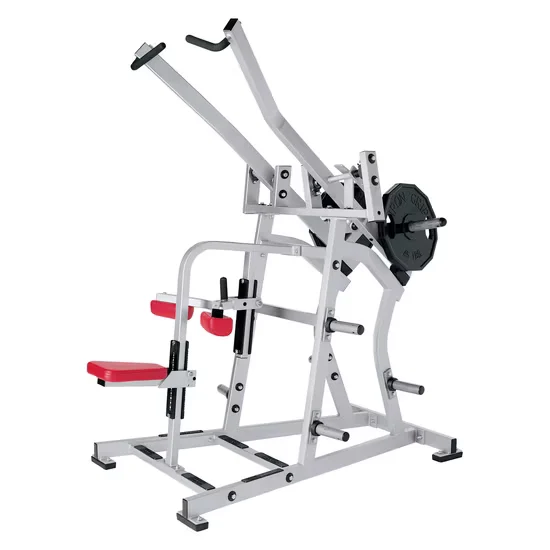
ISO Lateral Rowing Machine, Plate Loaded, 1300×1150×1750mm, 141kg — engineered with plate loaded resistance for commercial back training environments. Frame steel gauge and bearing specifications require verification against manufacturer catalog to confirm suitability for high-traffic use. Every unit undergoes load testing before shipment with 10-year frame warranty coverage.
// Spec Highlights
• Direct from Manufacturer · No Middlemen · Worldwide Shipping
01
// Material
Imported Solid Wood
Premium hardwood frames sourced for density and visual warmth.
02
// Hardware
Medical-Grade Silent
Whisper-quiet pulleys and springs for clinical environments.
03
// Customization
Appearance OEM
Color, upholstery, and branding tailored to your studio.
04
// Service
Layout Design
Free venue planning for studios and rehab institutions.
Every component is selected for longevity, performance, and aesthetic harmony - from imported hardwood frames to silent medical-grade accessories.
// Features
Mill-Traceable Steel — Every frame tube on this ISO Lateral Rowing Machine traces back to the coil certificate, so you know exactly what is holding up under repeated heavy plate loads.
| Parameter | Value |
|---|---|
| Product Type | ISO Lateral Row Machine |
| Loading Type | Plate Loaded |
| Frame Steel | Q235 / Q345 industrial steel, mill-certified |
| Frame Construction | 3×3 inch tube |
| Welding Method | Robotic MIG, continuous weld lines |
| Product Dimensions | 1300 × 1150 × 1750 mm |
| Net Weight | 141 kg |
| Assembly State | Unfolded |
| Powder Coating | Sandblast pre-treatment, 200μm scratch-resistant finish |
| Certification | ISO 9001, CE |
| Facility Type | Typical Use |
|---|---|
| Commercial gym strength floor | Primary back development station in plate loaded row |
| University strength and conditioning room | Athlete horizontal pulling and scapular retraining |
| Hotel and resort fitness center | Durable back training for diverse guest demographics |
| CrossFit box functional zone | Supplementary rowing work alongside barbell programming |
| Rehabilitation and performance center | Controlled unilateral rowing for return-to-play protocols |
The weld line is always the first failure point on a plate loaded row machine — not the tube.
I have watched ISO lateral row units come back from commercial floors with clean frame tubes but cracked joints at the horn-to-upright connection. The root cause is almost always manual spot welding that looked acceptable on the showroom floor but could not survive thousands of eccentric loading cycles. When a gym runs high-traffic back training six days a week, the stress concentration at those joints compounds quickly. A robotic MIG pass that walks the entire seam in one continuous bead eliminates the cold joints and incomplete fusion zones where fatigue cracks originate [NEED_CITE: weld classification and fatigue performance in structural steel]. That is the difference between a commercial ISO lateral rowing machine that holds up for a decade and one that needs field welding repairs inside the first year.
This ISO Lateral Row Machine targets the horizontal pull plane, engaging the latissimus dorsi, rhomboids, and rear deltoids through a converging arc that matches natural scapular retraction. On a strength floor, it complements vertical pull stations and cable row units by providing a plate loaded option where users control the resistance curve directly. The independent arm movement allows unilateral work, making it a natural fit next to bilateral machines. Facilities running high member density benefit from having a commercial ISO lateral rowing machine that accommodates a wide range of torso lengths without complex adjustment sequences.
Plate loaded row machines experience three distinct force vectors simultaneously: the static load of mounted plates, the dynamic impulse at the start of each concentric pull, and the eccentric deceleration as the user returns the handles. Each rep sends a shockwave through the horn welds and the upright-to-base junction. In a busy gym pulling eight or more hours daily, those micro-impacts accumulate into fatigue cycles that expose any welding shortcut [NEED_CITE: EN 957 structural requirements for stationary training equipment]. The powder coating at handle contact zones also takes abuse from chalk, sweat, and dropped collars, which is why a 200μm finish with proper sandblast pre-treatment matters for long-term appearance retention.
When evaluating a commercial ISO lateral rowing machine, the structural details that determine real service life are often buried or omitted entirely. Frame steel gauge and tube cross-section define the deformation threshold — a 3×3 inch tube with adequate wall thickness resists lateral flex that thinner sections develop after months of off-center plate loading. Continuous robotic MIG welding produces uniform penetration along the entire seam, unlike manual welding where operator fatigue introduces inconsistency across a production run. Powder coating thickness measured at contact points tells you how long the finish survives before bare steel is exposed to sweat and cleaning chemicals, which accelerates corrosion at exactly the spots members grip every session.
Choosing a lighter frame to save on upfront equipment cost creates a cascade of downstream expenses. Thin-wall tubes that flex under load transfer movement into the weld zones, accelerating crack formation at stress risers. Non-sealed bearings develop play within the first year of commercial use, requiring maintenance calls that pull the machine off the floor. Low-density upholstery compresses and splits within months, and if the supplier does not stock replacement pads, the entire seat assembly becomes a custom fabrication job. Coatings that are too thin chip at bolt holes and handle collars, exposing raw steel that rusts outward — a visual signal to members that the facility is cutting corners [NEED_CITE: commercial gym equipment lifecycle cost analysis].
The 11-gauge frame steel with mill certification means every tube is traceable to its coil of origin, removing the guesswork from structural verification. Robotic MIG welding delivers continuous seams on every unit, not just the samples that go to trade shows. Each ISO Lateral Row Machine undergoes load testing before shipment, rather than relying on batch sampling that misses unit-level defects. The 200μm industrial powder coating survives the contact-point abuse that strips thinner finishes. A 10-year frame warranty backed by manufacturer-direct support means no distributor markup on replacement components. When planning floor layout, the 1300 × 1150 mm footprint leaves safe clearance for plate loading and user passage when spaced according to standard commercial gym aisles.
Share your strength floor square footage and target equipment list to receive a 2D-3D CAD layout that positions this row machine with proper safety aisles and plate storage adjacency. Specify your expected daily user volume so the structural grade can be confirmed against your traffic profile. Provide the torso-length range of your member population to verify that the fixed geometry suits your demographic without requiring supplementary adjustable stations. Note any custom color, logo, or upholstery requirements early so production scheduling accounts for finish matching across the full order.
Q: How do I verify a plate loaded row machine is truly commercial grade?
A: Request the mill certificate for the frame steel and confirm the gauge and tube dimensions match what is quoted. Inspect the weld lines for continuous robotic MIG passes rather than manual spot welds. Ask whether load testing is performed on every unit or only on samples. These three checks reveal the structural reality behind the marketing label.
Q: What frame specifications matter most for a plate loaded ISO lateral row?
A: Frame tube cross-section and wall thickness determine how the structure handles eccentric loads and off-center plate mounting. A 3×3 inch tube with adequate gauge resists lateral flex that causes weld fatigue over time. Steel grade certification ensures the material properties are consistent and traceable, not just described as commercial grade without supporting data.
Q: Plate loaded versus selectorized for commercial back training?
A: Plate loaded machines like this ISO Lateral Row Machine let users control resistance increments directly and handle heavier loads without cable and pulley system limits. Selectorized units offer faster weight changes for circuit-style programming. Many commercial strength floors run both, placing plate loaded rows for serious back work and selectorized options for higher-rep conditioning sessions.
Q: How much floor space does this machine require with safe clearances?
A: The unit footprint is 1300 × 1150 mm, but safe operation requires additional space for plate loading on both horns and user passage behind the seat. Plan for at least 600 mm behind and beside the machine. When laying out multiple back training stations, maintain standard commercial aisle widths so members can load plates without blocking adjacent equipment traffic flow.
Premium aesthetics meet quiet operation for boutique studio environments.
Medical-grade silence and precision for sports & postpartum recovery.
Furniture-grade craftsmanship for premium residential installations.
Compact premium setups for one-on-one and small-group training.
Aesthetic Pilates integration for hybrid wellness studio programming.
Multi-unit deployment with instructor-grade reliability for certification programs.
Tell us about your project. Our team will respond within 24 hours with pricing, customization options, and shipping details.
// Sales Director
William
+86 132 2531 1800
// Export Manager
Bella
+86 198 5412 8032
william@bickfit.com