01 / Scenario
STUDIO
P
High-End Pilates Studios
Premium aesthetics meet quiet operation for boutique studio environments.
ISO
9001
CE
Certified
OEM
Available
10YR
Warranty
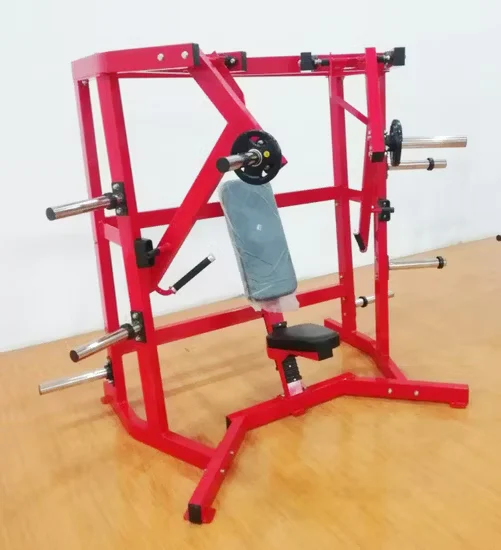
Plate Loaded Iso-Lateral Wide Chest Machine, 1343×1981×1761mm, 141kg — engineered with industrial steel framing and robotic MIG continuous welding to eliminate spot-weld fatigue under repetitive heavy loading. Sealed bearing pivot points maintain smooth iso-lateral convergence without play across high-traffic commercial use cycles. Every unit undergoes individual load testing before shipment, backed by a 10-year frame warranty and factory-direct floor planning support.
// Spec Highlights
• Direct from Manufacturer · No Middlemen · Worldwide Shipping
01
// Material
Imported Solid Wood
Premium hardwood frames sourced for density and visual warmth.
02
// Hardware
Medical-Grade Silent
Whisper-quiet pulleys and springs for clinical environments.
03
// Customization
Appearance OEM
Color, upholstery, and branding tailored to your studio.
04
// Service
Layout Design
Free venue planning for studios and rehab institutions.
Every component is selected for longevity, performance, and aesthetic harmony - from imported hardwood frames to silent medical-grade accessories.
// Features
Structural Rigidity Under Plate Loading — Every unit undergoes individual load testing with mill-certified 11-gauge steel framing traceable to coil origin, ensuring the ISO-Lateral Wide Chest Machine maintains zero deflection during maximal commercial use.
| Parameter | Value |
|---|---|
| Product Type | Plate Loaded Chest Press |
| Loading Type | Plate loaded |
| Product Dimensions | 1343×1981×1761mm |
| Net Weight | 141kg |
| Exercise Part | Chest |
| Material | Steel |
| Certification | ISO 9001, CE |
| Assembly State | Unfolded |
| Power Source | Manual |
| OEM/ODM | Available |
| HS Code | 9506911900 |
| Facility Type | Typical Use |
|---|---|
| Commercial gym strength floor | Primary plate-loaded chest station for diverse member populations |
| University athletic department | Daily-use strength equipment for student-athlete conditioning programs |
| Hotel fitness center | Low-maintenance chest press requiring minimal service intervention |
| Institutional weight room | High-reliability station supporting continuous multi-shift operation |
Continuous robotic MIG welding eliminates fatigue points that compromise structural integrity under repeated heavy loading.
Too many plate loaded chest machines quote vague frame specifications while relying on manual spot welding that develops micro-fractures within months of commercial use. The commercial plate loaded iso-lateral wide chest press addresses this through robotic continuous welds that distribute stress across the entire joint rather than concentrating it at discrete points. When operators load 200kg plates repeatedly, spot-welded frames develop visible separation at stress concentration zones — a failure mode that compromises user safety and creates liability exposure [NEED_CITE: weld classification and fatigue performance in structural steel].
The commercial plate loaded iso-lateral wide chest press targets the pectoralis major through converging movement patterns that mimic natural pressing mechanics. Iso-lateral design allows independent arm operation, accommodating strength asymmetries common among commercial gym populations. This station complements free weight bench pressing by providing controlled resistance paths suitable for high-density floor configurations where spotter availability varies. The movement arc accommodates users across a wide anthropometric range without requiring seat height adjustments.
Plate loaded equipment experiences three distinct stress categories: static load from stacked plates, impact forces during plate loading and unloading, and eccentric loading when users perform unilateral movements. The commercial plate loaded iso-lateral wide chest press endures hundreds of daily cycles in high-traffic facilities, with pivot points subjected to repetitive shear forces. Sealed industrial bearings at convergence joints prevent contamination ingress from gym environment dust and sweat — a failure mode that causes play development in unsealed bushing systems within six months of intensive use. Contact surfaces including grip handles and seat padding experience compression wear and chemical exposure from cleaning agents, requiring material specifications that resist degradation over extended service periods [NEED_CITE: bearing seal performance in contaminated environments].
Frame tube dimensions directly determine deflection thresholds under maximal loading — heavier gauge steel with larger cross-sections resist bending moments during heavy pressing movements. The 3×3 inch tube specification provides torsional rigidity that prevents frame twist during unilateral loading patterns. Robotic MIG welding with continuous penetration creates fatigue-resistant joints that outperform spot welds by eliminating stress concentration points. Sealed bearings at pivot joints maintain smooth iso-lateral convergence without developing the play that characterizes bushing-based systems in high-traffic environments. Industrial powder coating applied at 200μm thickness with proper pre-treatment resists chipping at contact points where plates and users interact with the frame.
Thin-wall tubing specifications may pass initial visual inspection but develop permanent deformation under repeated commercial loading, creating alignment issues that affect movement quality and user confidence. Spot-welded joints that fracture during use create sudden failure scenarios with significant liability implications for facility operators. Non-sealed bearing systems develop play that requires frequent adjustment or complete replacement, generating maintenance costs that exceed initial savings from value engineering. Low-density upholstery compresses permanently within months of commercial use, requiring complete replacement rather than simple maintenance. Inadequate powder coating thickness exposes bare steel at contact points, initiating corrosion pathways that compromise both appearance and structural integrity over time.
Mill-certified 11-gauge steel with full traceability to coil origin provides verifiable material specifications rather than marketing claims about commercial-grade construction. Robotic continuous welding eliminates the spot-weld failure modes that plague manually fabricated equipment in high-traffic environments. Individual load testing on every unit — not sample-based certification — confirms structural integrity before shipment. The 1343×1981×1761mm footprint requires specific clearance planning to ensure safe traffic flow around the commercial plate loaded iso-lateral wide chest press in dense strength zone configurations. Two-dimensional and three-dimensional CAD layout support optimizes equipment placement for both user safety and operational efficiency.
Provide strength zone dimensions and equipment list to receive comprehensive two-dimensional and three-dimensional facility layout planning. Specify daily user volume to confirm structural grade appropriateness for anticipated usage intensity. Indicate target user anthropometric range to verify accommodation capability without requiring adjustable components. Custom color schemes, facility branding integration, and upholstery material selection available through OEM configuration options.
Q: How does frame steel gauge affect performance under heavy plate loading?
A: Frame steel gauge directly determines deflection resistance during maximal loading. Heavier gauge tubing with appropriate cross-section dimensions prevents frame flex that compromises movement stability and user confidence. The 11-gauge specification provides structural rigidity that maintains alignment under repeated commercial use, eliminating the deformation issues common in lighter-gauge alternatives marketed as commercial equipment.
Q: What welding method ensures long-term structural integrity?
A: Robotic MIG welding with continuous penetration creates joints that distribute stress across the entire weld length rather than concentrating it at discrete spot locations. This eliminates fatigue failure points that develop in manually spot-welded frames under repetitive commercial loading cycles. Continuous welds maintain structural integrity throughout the equipment service life without developing cracks or separation at stress concentration zones.
Q: How do sealed bearings prevent maintenance issues?
A: Sealed industrial bearings prevent contamination ingress from gym environment dust, sweat, and cleaning chemicals that degrade unsealed bushing systems. This seal integrity maintains smooth pivot operation without developing the play that causes misalignment and user discomfort in bushing-based systems. Commercial facilities benefit from extended service intervals and reduced replacement frequency compared to non-sealed alternatives.
Q: What floor space planning considerations apply to this equipment?
A: The 1343×1981×1761mm footprint requires adequate clearance for safe plate loading access and user movement around the station. Proper spacing prevents traffic flow obstruction in high-density strength zones while ensuring users can load and unload plates without interference from adjacent equipment. Layout planning should account for the equipment’s operational envelope during use, not just static dimensions.
Premium aesthetics meet quiet operation for boutique studio environments.
Medical-grade silence and precision for sports & postpartum recovery.
Furniture-grade craftsmanship for premium residential installations.
Compact premium setups for one-on-one and small-group training.
Aesthetic Pilates integration for hybrid wellness studio programming.
Multi-unit deployment with instructor-grade reliability for certification programs.
Tell us about your project. Our team will respond within 24 hours with pricing, customization options, and shipping details.
// Sales Director
William
+86 132 2531 1800
// Export Manager
Bella
+86 198 5412 8032
william@bickfit.com