01 / Scenario
STUDIO
P
High-End Pilates Studios
Premium aesthetics meet quiet operation for boutique studio environments.
ISO
9001
CE
Certified
OEM
Available
10YR
Warranty
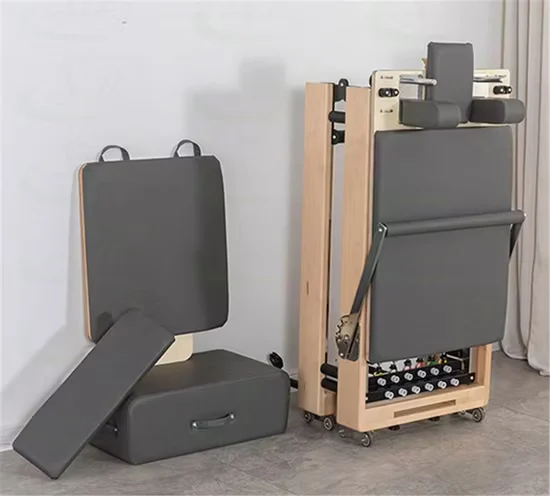
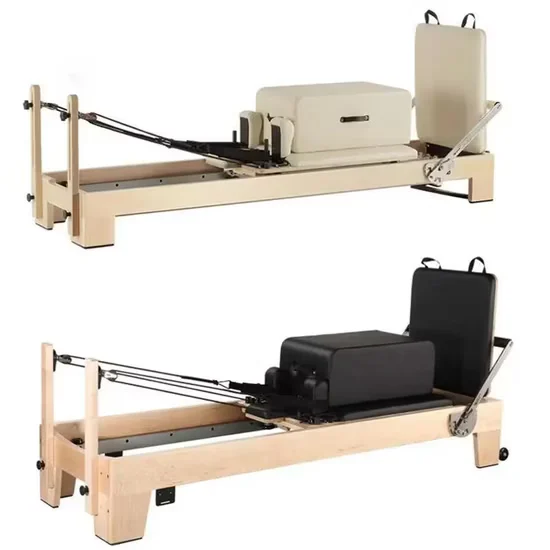
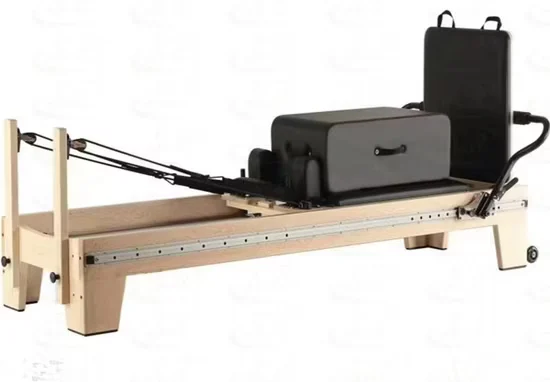
Maple Wood Pilates Reformer, 2460×730×1900mm, 150kg Net Weight — solid maple frame resists carriage rail deflection under repeated spring tension, with sealed bearing wheels ensuring long-term glide smoothness. Includes long box, jump board, and platform for multi-planar studio programming without additional purchases. Direct from our 15,000㎡ vertically integrated plant with 17 years manufacturing heritage and 500+ commercial gyms equipped worldwide.
// Spec Highlights
• Direct from Manufacturer · No Middlemen · Worldwide Shipping
01
// Material
Imported Solid Wood
Premium hardwood frames sourced for density and visual warmth.
02
// Hardware
Medical-Grade Silent
Whisper-quiet pulleys and springs for clinical environments.
03
// Customization
Appearance OEM
Color, upholstery, and branding tailored to your studio.
04
// Service
Layout Design
Free venue planning for studios and rehab institutions.
Every component is selected for longevity, performance, and aesthetic harmony - from imported hardwood frames to silent medical-grade accessories.
// Features
Mill-Certified Solid Maple Frame — Every Maple Wood Pilates Reformer starts with kiln-dried hardwood verified for moisture content before machining, eliminating the hidden deflection that plagues veneer-laminated alternatives.
| Parameter | Value |
|---|---|
| Product Type | Pilates Reformer |
| Frame Material | Solid Maple Wood |
| Accessory Set | Long Box / Jump Board / Platform |
| Product Dimensions | 2460×730×1900mm |
| Net Weight | 150kgs |
| Color Options | Solid Color (customizable) |
| Logo | Customized Is Allowed |
| Warranty | 3 Years |
| Production Capacity | 80 Pieces/Month |
| User Profile | Adult, Unisex |
| Facility Type | Typical Use |
|---|---|
| Pilates Studio | Daily group and private reformer sessions with high-frequency carriage cycling |
| Rehabilitation and Conditioning Center | Controlled spring-loaded resistance for post-injury mobility and strength recovery |
| Commercial Gym Functional Zone | Supplemental movement prep and active recovery station for general membership |
| Hotel Fitness Center | Low-footprint, high-visual-impact equipment for boutique wellness floors |
Solid maple resists carriage rail deflection under repeated spring tension where laminated alternatives separate at the glue line.
I have seen reformer frames built from laminated particleboard with a thin veneer skin develop visible rail play within six months of studio use. The carriage wheels wear into the softer substrate, and once the tolerance opens up, the glide becomes rough and uneven. Operators end up replacing the entire rail assembly or, worse, the whole unit. A commercial maple wood Pilates reformer built from kiln-dried solid stock maintains dimensional stability at the carriage joint because the grain runs continuously through the rail profile rather than being sliced and re-glued. The density difference matters when spring anchors pull laterally against the frame hundreds of times per day [NEED_CITE: dimensional stability of solid hardwood vs. laminated composite under cyclic lateral loading].
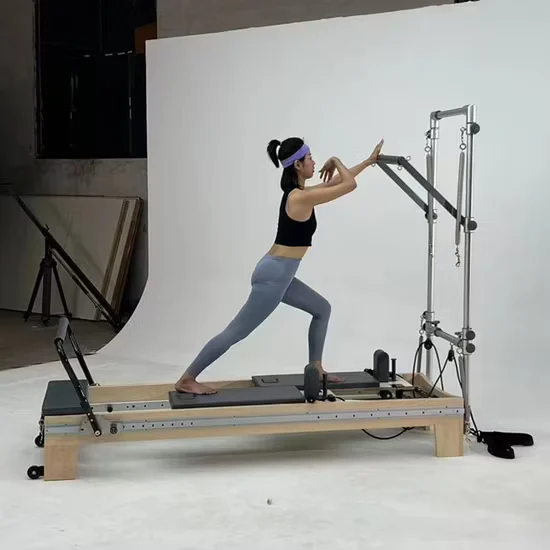
The reformer serves as the primary resistance platform in any Pilates studio layout, covering supine, prone, seated, and standing movement planes across the full kinetic chain. It pairs with the Cadillac for overhead traction work and the Wunda Chair for upright balance challenges, completing the three-apparatus core that most instructor certification programs reference. In a functional zone of a commercial gym, it fills the gap between free-weight loading and bodyweight stations, offering variable spring resistance without requiring users to manage external plates. The 2460mm length accommodates taller users while the 730mm width keeps the footprint narrow enough for side-by-side placement in group class configurations.
The carriage endures eccentric loading every time a user controls the return phase against spring tension, creating a cyclic fatigue pattern at the wheel-to-rail contact point. Sealed bearings maintain glide consistency over thousands of repetitions because they exclude chalk dust, sweat residue, and cleaning chemicals that degrade bushings from the inside. Spring anchor points experience concentrated stress at the mounting plate interface, where the wood frame must resist pull-through forces that increase with heavier spring ratings. Upholstery on the shoulder blocks and headrest compresses repeatedly under body weight, so high-density foam with reinforced stitching delays the splitting that exposes the internal padding to moisture and bacteria [NEED_CITE: cyclic fatigue patterns in carriage rail and bearing assemblies under eccentric loading].
Solid maple frame density determines how much the rail flexes when a heavy user performs footwork on the platform with maximum spring engagement. Moisture content at the time of machining affects long-term dimensional stability — wood that ships too wet will warp as it equilibrates to the studio environment, throwing the carriage track out of parallel alignment. The accessory mounting interface matters for operational speed: bolt-on long box and jump board connections hold rigid under dynamic loading but take longer to swap between classes, while slide-in systems are faster but can develop rattle as the slots wear. Spring resistance grading across multiple tension levels allows instructors to match load progression to client capability without changing apparatus. The 150kg net weight reflects the mass of solid hardwood construction, which contributes to vibration damping during jump board repetitions and keeps the unit from walking across the floor during aggressive reformer work.
Laminated reformer frames reduce material cost upfront but create downstream expenses that studio operators absorb over time. Veneer surfaces chip at the rail edges where carriage wheels make contact, exposing the composite core to moisture intrusion and accelerating delamination. Non-sealed bushings require regular lubrication and eventual replacement, generating maintenance labor costs and equipment downtime that disrupts class scheduling. Thin upholstery on the shoulder blocks and carriage pad compresses within the first year of commercial use, forcing reupholstery or full pad replacement. Springs that lack consistent resistance grading across the set force instructors to compensate with manual cueing rather than relying on predictable load curves [NEED_CITE: long-term cost comparison of solid hardwood vs. laminated reformer frame ownership].
Every solid maple frame is sourced with moisture content verified before CNC profiling, ensuring the rail tolerances machined at the factory hold after shipping. The carriage wheel assemblies use sealed bearings selected for high-cycle studio environments rather than bushings that require maintenance intervention. Spring anchor plates distribute pull-through force across a wider wood surface area, reducing the risk of fastener tear-out under maximum spring engagement. Each unit is load-tested before shipment to confirm carriage glide smoothness and spring return consistency. The three-year warranty reflects confidence in the solid wood construction and hardware specification rather than a prorated coverage schedule. Custom logo engraving and color finishing are applied in-house at the vertically integrated Ningjin facility, keeping lead time control within the production cycle rather than outsourcing to a third-party finisher.
Provide your studio floor dimensions and existing apparatus inventory to receive a 2D-3D layout recommendation that accounts for safe clearance between reformer stations. Specify your average daily class throughput so the spring and bearing specification can be matched to actual use intensity. Confirm whether custom color finishing or logo engraving is required so the production schedule can be coordinated with the finish application stage. Indicate the primary user demographic to verify that the accessory set configuration aligns with your programming requirements.
Q: How can I confirm the frame is solid maple rather than veneer-laminated composite?
A: Request a cross-section sample or end-grain photograph from the manufacturer showing continuous grain pattern through the full frame thickness. Solid maple displays consistent grain lines that run through the entire profile, while laminated construction shows a thin veneer layer bonded to a particleboard or plywood substrate. Moisture content documentation from the machining stage also indicates solid wood processing, as laminated panels do not require kiln drying to the same specification.
Q: What maintenance does the carriage rail system require under daily studio use?
A: Carriage wheel bearings should be inspected every quarter for smooth rotation and any lateral play that indicates seal wear or internal contamination. Wipe the rail surface weekly with a dry microfiber cloth to remove chalk dust and sweat residue that accelerates bearing degradation. If the carriage develops uneven glide or audible friction, the bearing assemblies can be replaced individually without requiring a full rail rebuild, minimizing equipment downtime.
Q: How do spring resistance levels affect programming across different client populations?
A: Multiple spring tension ratings allow instructors to scale resistance from rehabilitation clients performing low-load mobility work to athletic users executing high-tension leg presses on the platform. Consistent resistance grading across the spring set ensures that the load felt at the carriage matches the instructor’s verbal cueing, eliminating guesswork during group classes where multiple reformers operate simultaneously. Spring replacement is straightforward when individual units lose tension over extended use.
Q: What is the lead time for custom logo engraving and non-standard color finishing?
A: Custom logo engraving and solid color finishing are processed within the standard production cycle at the Ningjin manufacturing facility, meaning they do not add a separate outsourcing delay. Confirm the exact logo file format and Pantone color reference before the frame enters the finishing stage to avoid rework. Production capacity is allocated monthly, so early specification lock-in secures your preferred delivery window.
Premium aesthetics meet quiet operation for boutique studio environments.
Medical-grade silence and precision for sports & postpartum recovery.
Furniture-grade craftsmanship for premium residential installations.
Compact premium setups for one-on-one and small-group training.
Aesthetic Pilates integration for hybrid wellness studio programming.
Multi-unit deployment with instructor-grade reliability for certification programs.
Tell us about your project. Our team will respond within 24 hours with pricing, customization options, and shipping details.
// Sales Director
William
+86 132 2531 1800
// Export Manager
Bella
+86 198 5412 8032
william@bickfit.com