01 / Scenario
STUDIO
P
High-End Pilates Studios
Premium aesthetics meet quiet operation for boutique studio environments.

ISO
9001
CE
Certified
OEM
Available
10YR
Warranty
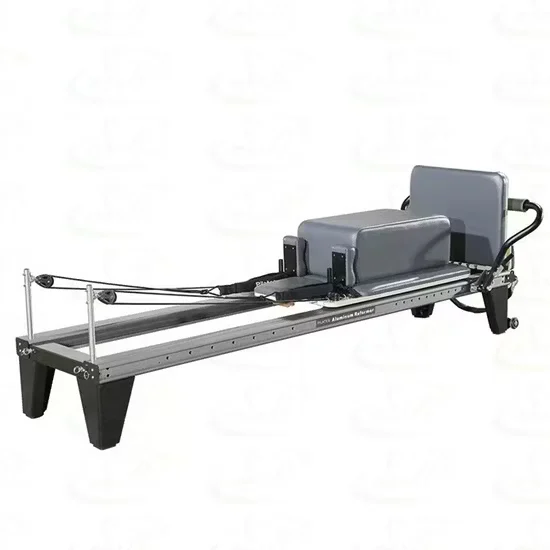
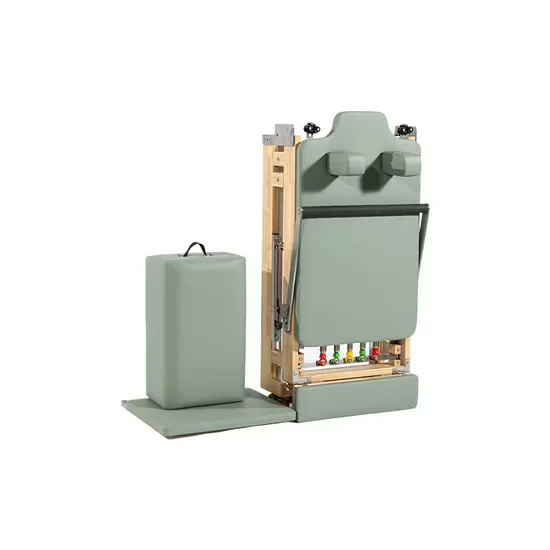
Maple Wood Pilates Reformer with Tower, 2400×770×2160mm, 150kg Net Weight — solid hardwood frame with reinforced tower bar mounting, includes long box, jump board, and platform for full-range studio training. Solid-color upholstery with custom logo options available. Backed by 3-year warranty and standard wood case packaging for secure international shipping.
Verified manufacturing with 17 years of commercial equipment heritage, ensuring structural integrity for high-traffic studio environments.
// Spec Highlights
• Direct from Manufacturer · No Middlemen · Worldwide Shipping
01
// Material
Imported Solid Wood
Premium hardwood frames sourced for density and visual warmth.
02
// Hardware
Medical-Grade Silent
Whisper-quiet pulleys and springs for clinical environments.
03
// Customization
Appearance OEM
Color, upholstery, and branding tailored to your studio.
04
// Service
Layout Design
Free venue planning for studios and rehab institutions.
Every component is selected for longevity, performance, and aesthetic harmony - from imported hardwood frames to silent medical-grade accessories.
// Features
Robot-Welded Hardwood Frame — every maple wood joint on this Pilates reformer is reinforced through continuous robotic welds at the steel mounting nodes, eliminating the spot-weld failures common in high-frequency studio use.
| Parameter | Value |
|---|---|
| Product Type | Pilates Reformer with Tower |
| Frame Material | Solid Maple Wood |
| Product Dimensions | 2400 × 770 × 2160 mm |
| Net Weight | 150 kg |
| Accessories Included | Long Box, Jump Board, Platform |
| Color Options | Solid Color |
| Logo | Customized Is Allowed |
| Warranty | 3 Years |
| Production Capacity | 80 Pieces per Month |
| Facility Type | Typical Use |
|---|---|
| Commercial Pilates Studio | Daily group reformer classes and private sessions with tower-based resistance work |
| Rehabilitation and Physical Therapy Center | Controlled movement therapy and post-injury conditioning under clinical supervision |
| Boutique Fitness and Wellness Facility | Integrated Pilates programming within multi-modal fitness memberships |
| Hotel and Resort Wellness Center | Guest-accessible Pilates sessions in premium hospitality fitness environments |
| Private Training Studio | One-on-one instruction with full accessory configuration for varied client programs |
The rail surface must resist groove wear across thousands of carriage cycles without developing lateral play.
Many studio-grade reformers list "solid wood" without disclosing species or joint method. Softwood frames compress under the carriage wheels within the first year of daily class rotation, creating uneven rail channels that produce noise and require frequent wheel replacement. Tower mounts on under-reinforced frames loosen from off-center spring tension, introducing bar wobble mid-exercise [NEED_CITE: EN 957 structural requirements for stationary training equipment]. The commercial maple wood pilates reformer with tower addresses both failure points by using a hardwood species dense enough to maintain rail flatness and by through-bolting the tower into the primary frame rail rather than surface-screwing it.
A reformer with tower sits at the center of the Pilates studio floor plan, covering the full range of supine, prone, and seated movement patterns against spring resistance. It complements standalone apparatus like the cadillac and wunda chair by providing the primary carriage-based exercise library, meaning clients complete the majority of session time on this unit. The commercial maple wood pilates reformer with tower serves facilities running six or more class hours daily where frame rigidity directly affects class flow and client confidence. The 2400 mm length accommodates users across a wide height range, and the long box plus jump board accessories expand programming variety without requiring additional floor space.
Every reformer session generates repetitive eccentric and concentric loads through the spring anchor points, carriage wheels, and tower bar mounts. In a commercial schedule with back-to-back classes, the carriage rail endures thousands of cycles per week, concentrating wear at the mid-rail contact zone where most exercises center. The tower bar absorbs lateral shear forces during standing and kneeling spring work, transferring stress into the frame joint each time the user changes direction [NEED_CITE: weld classification and fatigue performance in structural steel]. Spring anchors experience progressive micro-movement if the mounting hardware loosens, which over months shifts the resistance profile and requires unscheduled maintenance. Upholstery on the carriage and long box compresses under body weight hundreds of times daily, demanding material that resists permanent deformation.
Maple wood density and grain orientation control how long the carriage rail stays true under wheel pressure — tight, straight grain along the rail axis resists channel formation better than open-grain species or composite alternatives. Tower attachment method is the second critical variable: through-bolted connections into the hardwood frame distribute spring tension across a wider cross-section, while surface-screwed mounts rely on thread grip in end grain, which degrades under cyclic loading. Carriage wheel bearing type and clearance set the noise floor and smoothness across the full rail travel — sealed bearings resist dust and sweat ingress that cause grinding in open designs. The spring gauge set determines resistance progression and consistency between units, which matters when instructors cue specific spring colors across a class of multiple reformers.
Reformers built with unspecified hardwood or plywood laminate rails develop carriage wobble within months, forcing studio operators into premature wheel and rail replacement. Thin frame sections flex under jump board impact, creating a perceptible instability that erodes client trust. Tower bars mounted with short screws pull free from the frame under heavy spring tension, presenting a liability event in a supervised class environment. Non-sealed carriage bearings corrode from sweat and cleaning agents, increasing drag and noise until full bearing replacement is required. Low-density carriage upholstery compresses permanently within the first year of commercial rotation, producing visible body impressions that signal worn equipment to prospective members [NEED_CITE: commercial upholstery compression standards for fitness equipment].
Every maple wood frame section is sourced with species and grade traceable to the supplier, ensuring consistent density across production batches. Steel mounting nodes at tower and spring anchor points are robotically MIG-welded for continuous joint integrity rather than spot-welded for speed. Each commercial maple wood pilates reformer with tower undergoes load testing before shipment to verify carriage travel, tower bar stability, and spring anchor hold under tension. The 200μm industrial powder coating on all steel hardware resists chipping at contact points from spring clips and accessory attachment. A 10-year frame warranty covers structural integrity of the hardwood frame and welded steel nodes under commercial use conditions. Studio layout support includes 2D and 3D CAD planning to optimize reformer spacing, safe clearance zones around each unit, and traffic flow between stations. OEM customization covers color matching, logo placement, and upholstery selection to align with studio branding.
Provide your studio floor dimensions and class schedule volume to receive a 2D or 3D layout plan with optimized reformer spacing and traffic corridors. Specify daily user volume and class type — rehabilitation, group fitness, or private training — to confirm the appropriate spring gauge set and accessory bundle. Share target user demographics to verify that the carriage travel range and tower bar positions cover your client height distribution. Indicate any color, logo, or upholstery customization requirements early in the inquiry to align production scheduling with your opening timeline.
Q: How can I verify the frame is solid maple wood and not veneer over composite?
A: Request the wood species and grade certificate from the supplier, which documents the timber origin and classification. Visually inspect an unfinished edge or end-grain section — solid maple shows consistent grain through the full cross-section, while veneer reveals a thin surface layer over a different substrate. The weight of a solid maple frame is also noticeably higher than composite alternatives at comparable dimensions.
Q: What makes maple preferable to other hardwood species for reformer frames?
A: Maple offers a tight, straight grain structure that resists groove formation under repeated carriage wheel travel better than open-grain hardwoods like oak or ash. Its uniform density distributes compressive loads evenly across the rail surface, maintaining flatness over years of daily class rotation. Maple also machines cleanly for precise wheel channel tolerances.
Q: How does the tower attachment stay stable under heavy spring loading?
A: The tower is through-bolted into the primary maple frame rail rather than surface-screwed, distributing lateral spring forces across a wider structural cross-section. Steel mounting nodes at the connection points are robotically welded for continuous joint strength. This method prevents the progressive loosening that surface mounts develop under cyclic off-center tension.
Q: What is the expected replacement interval for carriage wheels and springs?
A: Replacement timing depends on daily usage volume and maintenance schedule rather than a fixed calendar interval. Sealed carriage bearings resist contamination and extend service life in high-frequency studio environments. Springs should be inspected monthly for consistent gauge tension across matching color sets, and replaced when progressive resistance no longer matches the labeled rating.
Premium aesthetics meet quiet operation for boutique studio environments.
Medical-grade silence and precision for sports & postpartum recovery.
Furniture-grade craftsmanship for premium residential installations.
Compact premium setups for one-on-one and small-group training.
Aesthetic Pilates integration for hybrid wellness studio programming.
Multi-unit deployment with instructor-grade reliability for certification programs.
Tell us about your project. Our team will respond within 24 hours with pricing, customization options, and shipping details.
// Sales Director
William
+86 132 2531 1800
// Export Manager
Bella
+86 198 5412 8032
william@bickfit.com