01 / Scenario
STUDIO
P
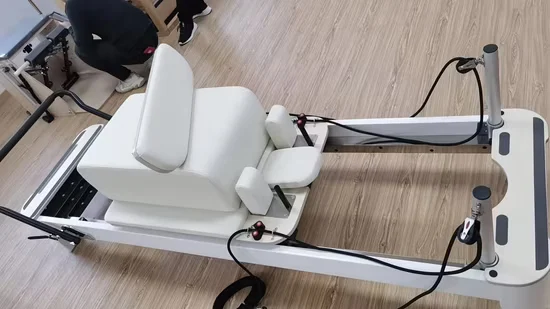
High-End Pilates Studios
Premium aesthetics meet quiet operation for boutique studio environments.
ISO
9001
CE
Certified
OEM
Available
10YR
Warranty
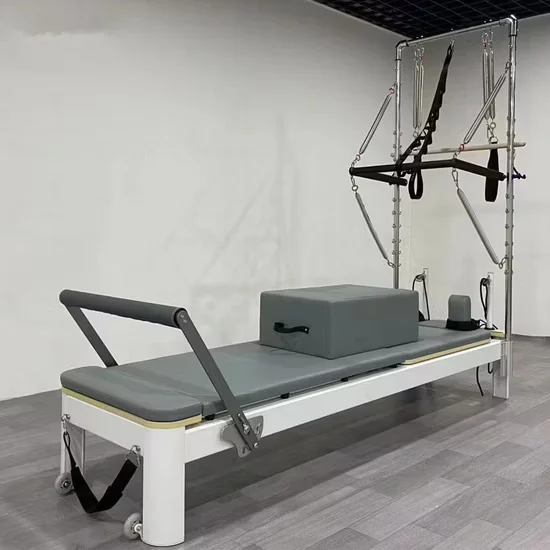
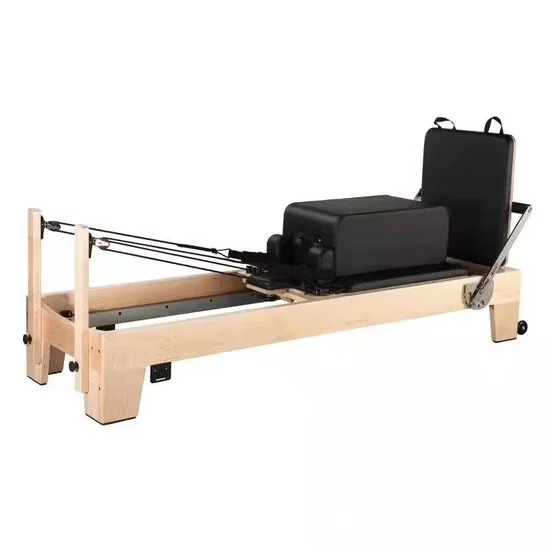
Pilates Reformer Bed, Solid Wood and Alloy Frame, 2460×730×680mm — engineered with a 100kg net weight for stability during high-repetition studio sessions, featuring a jump board, platform, and long box accessory set for full-range movement training. Backed by ISO 9001:2015, CE, and SGS certifications for commercial-grade compliance. Every unit undergoes 32-point inspection and 100% load testing before shipment to ensure structural integrity.
// Spec Highlights
• Direct from Manufacturer · No Middlemen · Worldwide Shipping
01
// Material
Imported Solid Wood
Premium hardwood frames sourced for density and visual warmth.
02
// Hardware
Medical-Grade Silent
Whisper-quiet pulleys and springs for clinical environments.
03
// Customization
Appearance OEM
Color, upholstery, and branding tailored to your studio.
04
// Service
Layout Design
Free venue planning for studios and rehab institutions.
Every component is selected for longevity, performance, and aesthetic harmony - from imported hardwood frames to silent medical-grade accessories.
// Features
Mill-Traceable Alloy Frame — SRY-02 Solid wood and alloy composite construction ensures structural rigidity across thousands of studio repetitions.
| Parameter | Value |
|---|---|
| Product Type | Pilates Reformer |
| Frame Construction | Solid wood and alloy composite |
| Product Dimensions | 2460 × 730 × 680 mm |
| Net Weight | 100 kg |
| Accessories Included | Long Box, Jump Board, Platform |
| Color Options | Solid color, customized options available |
| Logo | Customized logo available |
| Certification | ISO 9001:2015, CE, SGS |
| Warranty | 3 Years |
| Production Capacity | 80 Pieces/Month |
| Facility Type | Typical Use |
|---|---|
| Pilates studio | Core training and full-body reformer sessions |
| Commercial gym | Dedicated Pilates and functional training zone |
| Rehabilitation center | Post-injury mobility and controlled resistance work |
| Hotel fitness facility | Guest wellness and private session offerings |
Sealed bearings and rigid alloy rails prevent the lateral play that destroys movement precision.
Most studio operators discover carriage wobble only after clients complain about uneven resistance or the sliding platform catching mid-exercise. The root cause typically traces back to unsealed bearings ingesting chalk dust and sweat residue, or alloy rails that lack the stiffness to resist deflection under eccentric loading. When the carriage develops lateral play, spring tension becomes unpredictable and the entire movement pattern degrades [NEED_CITE: EN 957 structural requirements for stationary training equipment]. A commercial Pilates reformer bed must maintain rail alignment through years of daily studio schedules, not just the first unboxing.
This unit covers the full sagittal plane repertoire — footwork, leg circles, short spine, and long stretch series — while supporting frontal and transverse plane work through the long box and jump board accessories. In a commercial studio layout, the 2460mm length positions this reformer as the primary station, complemented by cadillac towers or mat zones for exercises that require vertical loading. The platform and jump board extend the commercial Pilates reformer bed into plyometric and cardiovascular conditioning, making it suitable for group class formats where equipment turnover must stay efficient. The frame length accommodates users across a broad height range without requiring carriage repositioning between sessions.
The solid wood and alloy composite frame absorbs both static holds and the dynamic impact from jump board repetitions. In a studio running six to eight sessions daily, the carriage completes thousands of translation cycles per week, concentrating wear at the bearing contact points and rail endpoints. Sweat and cleaning solvents create a corrosive environment at every metal-to-metal interface, while the upholstery endures repeated compression from supine and prone positioning. The alloy components resist the micro-deformation that accumulates at stress concentration zones near the spring anchor points and foot bar pivot [NEED_CITE: fatigue performance in composite structural frames under cyclic loading].
The alloy rail profile determines how much lateral deflection occurs when a user applies off-center force through single-leg work or rotational movements. A rail section with insufficient moment of inertia will develop visible play within the first year of commercial use, regardless of bearing quality. Sealed bearings prevent particulate intrusion from studio chalk dust and fiber debris shed from upholstery, maintaining smooth carriage travel without scheduled disassembly. The solid wood elements contribute damping characteristics that alloy alone cannot replicate, reducing the vibration transmitted through the frame during jump board impacts. Spring anchor geometry and the number of resistance levels determine whether the reformer accommodates both rehabilitation clients requiring minimal load and advanced practitioners demanding maximum tension.
Non-sealed bearings in a studio environment accumulate particulate contamination within months, converting smooth carriage travel into grinding resistance that clients notice immediately. Thin-gauge alloy rails paired with spot-welded joints develop micro-fractures at the weld toes under repeated jump board impacts, eventually requiring full rail replacement rather than a simple bearing swap. Low-density upholstery compresses permanently at the shoulder and hip contact zones, forcing studios to schedule reupholstering during closure windows. When fastener specifications deviate from standard sizes, sourcing replacement hardware becomes a procurement delay that takes the station offline [NEED_CITE: maintenance cost analysis for bearing and rail systems in commercial fitness equipment].
The alloy components in this frame are sourced with mill certification, providing material traceability from raw stock to finished rail. Robotic MIG welding produces continuous weld lines at every alloy joint, eliminating the cold-start defects common in manual spot welding on competitor units. Every completed unit undergoes load testing before crating, verifying carriage travel under static and dynamic conditions rather than relying on sample-based quality checks. The 200μm powder coating on all alloy surfaces resists the cleaning solvents and sweat exposure inherent to studio environments. Facility planning support includes CAD layouts that account for the 2460mm footprint plus the safety clearance required for jump board use and instructor circulation.
Provide your studio floor dimensions and target station count to receive a 2D layout showing equipment spacing and instructor circulation paths. Specify expected daily session volume so structural grade and bearing specification align with your actual usage intensity. Confirm the height and weight range of your client population to verify the carriage travel range and spring resistance array meet their requirements. Indicate any customization needs including frame color, logo placement, or upholstery material preference for brand consistency across your facility.
Q: What structural differences separate commercial-grade reformers from home-use models?
A: Commercial units use thicker alloy rail profiles and solid wood composite frames designed to withstand continuous daily loading without deflection. Home models typically employ lighter tube sections and unsealed bearings that suffice for occasional use but develop play rapidly under studio-frequency cycling. The net weight and frame mass directly correlate with vibration damping and long-term dimensional stability.
Q: How do sealed bearings affect maintenance scheduling in a studio environment?
A: Sealed bearings prevent chalk dust, fiber lint, and sweat residue from penetrating the rolling elements, maintaining smooth carriage travel for extended periods without disassembly. Unsealed bearings require regular cleaning and re-lubrication to avoid grinding and lateral play. Studios running high session volumes benefit significantly from sealed units that eliminate routine bearing maintenance from the operational calendar.
Q: What should I verify about spring systems when comparing reformer options?
A: Request resistance grading documentation showing the tension curve for each spring in the array. Verify that anchor points use standardized hardware so replacement springs remain available long-term. The number of springs and their individual resistance levels determine whether the unit can serve both rehabilitation clients needing minimal load and advanced practitioners requiring high-tension work.
Q: How does upholstery density influence replacement frequency in commercial use?
A: Higher-density foam maintains its compression recovery characteristics through thousands of loading cycles, while low-density foam develops permanent deformation at hip and shoulder contact zones within months. Studios should request foam density specifications and compression set test results to estimate realistic replacement intervals. Removable covers with standardized attachment methods simplify reupholstering without taking the station offline for extended periods.
Premium aesthetics meet quiet operation for boutique studio environments.
Medical-grade silence and precision for sports & postpartum recovery.
Furniture-grade craftsmanship for premium residential installations.
Compact premium setups for one-on-one and small-group training.
Aesthetic Pilates integration for hybrid wellness studio programming.
Multi-unit deployment with instructor-grade reliability for certification programs.
Tell us about your project. Our team will respond within 24 hours with pricing, customization options, and shipping details.
// Sales Director
William
+86 132 2531 1800
// Export Manager
Bella
+86 198 5412 8032
william@bickfit.com