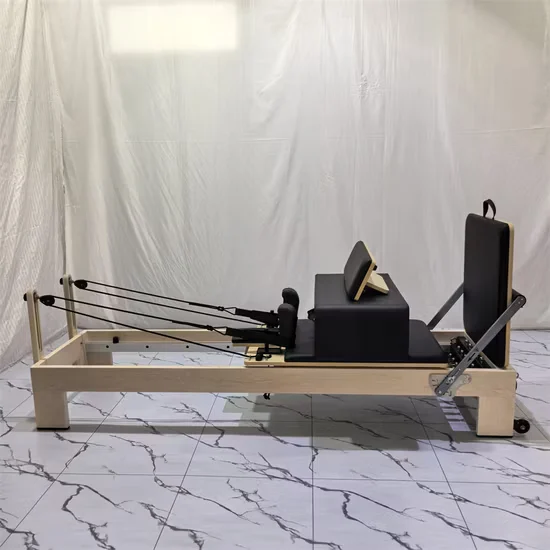
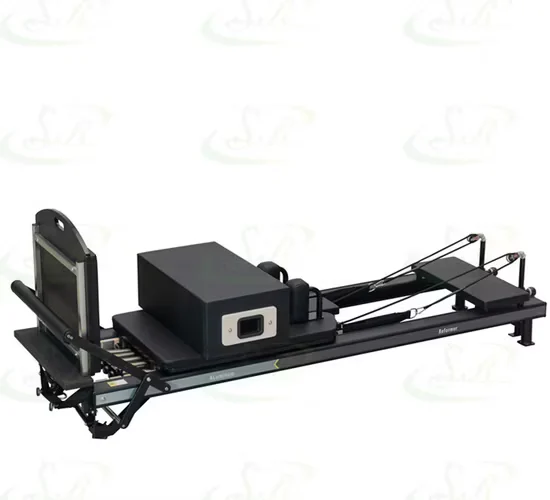
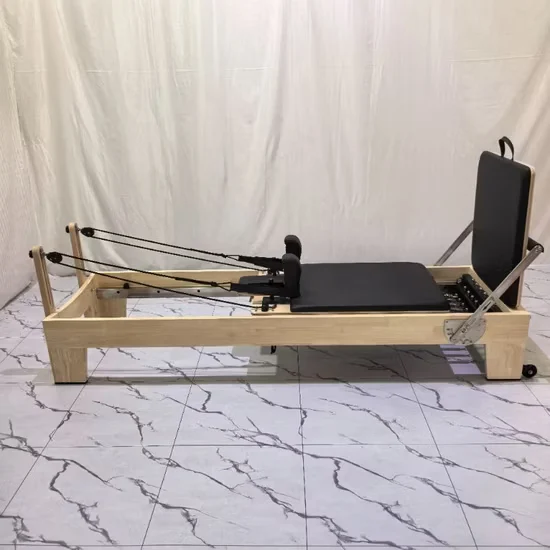
01 / Scenario
STUDIO
P
High-End Pilates Studios
Premium aesthetics meet quiet operation for boutique studio environments.
ISO
9001
CE
Certified
OEM
Available
10YR
Warranty
Every unit undergoes dynamic carriage load testing under spring tension and rail straightness verification before shipment.
// Spec Highlights
• Direct from Manufacturer · No Middlemen · Worldwide Shipping
01
// Material
Imported Solid Wood
Premium hardwood frames sourced for density and visual warmth.
02
// Hardware
Medical-Grade Silent
Whisper-quiet pulleys and springs for clinical environments.
03
// Customization
Appearance OEM
Color, upholstery, and branding tailored to your studio.
04
// Service
Layout Design
Free venue planning for studios and rehab institutions.
Every component is selected for longevity, performance, and aesthetic harmony - from imported hardwood frames to silent medical-grade accessories.
// Features
Aluminum Frame Traceability — Each batch of aluminum alloy used in this reformer is backed by a mill test report traceable to the source coil, ensuring verified material grade rather than an unmarked extrusion.
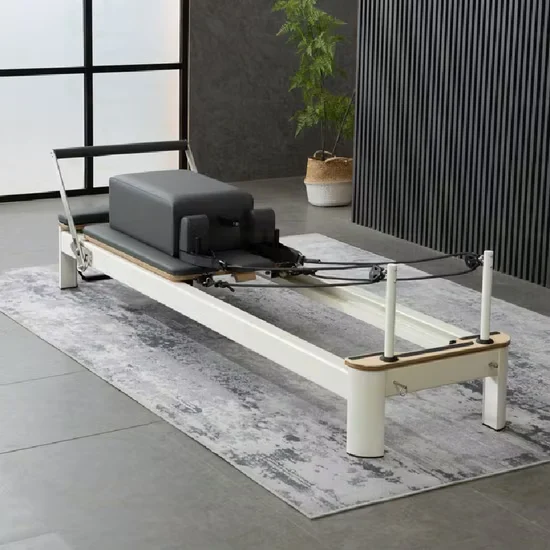
| Parameter | Value |
|---|---|
| Product Type | Pilates Reformer |
| Frame Material | Metal Aluminum |
| Product Dimensions | 2570×730×270mm |
| Net Weight | 90kg |
| Color | White (custom color available) |
| Accessory | Long Box / Jump Board / Platform |
| Warranty | 3 Years |
| Logo | Customized |
| Certification | ISO 9001:2015 / CE / SGS |
| Facility Type | Typical Use |
|---|---|
| Pilates studio | Group reformer classes with 8+ daily sessions, frequent accessory swaps |
| Commercial fitness center | Dedicated Pilates zone within a larger strength and conditioning floor |
| Rehabilitation center | Low-impact resistance training for post-injury clients under supervision |
| Hotel gym | Wellness-oriented programming for transient guests with varied fitness levels |
| Personal training studio | One-on-one sessions requiring rapid reconfiguration between clients |
A reformer lives and dies by what happens at the rail-to-frame junction under repeated spring tension.
Most Pilates reformers marketed as studio-grade arrive with extruded aluminum or thin-gauge steel frames that lack any verifiable alloy specification. Within months of daily spring-loaded carriage travel, the cyclic lateral forces begin to work the frame at stress concentration points — particularly where the rail mounts meet the cross members. I have seen reformer batches pulled from studios because the welds along the aluminum tube started cracking after the springs had been cycling thousands of times per week. The problem was not the welding technique alone; the underlying alloy was never specified for fatigue resistance in the first place [NEED_CITE: aluminum alloy fatigue performance under cyclic spring loading]. A commercial pilates reformer core bed that does not declare its alloy grade is asking the studio owner to assume that risk blindly.
This reformer covers the full spectrum of classical and contemporary Pilates programming — supine footwork, seated arm work, prone pulling sequences, and standing platform exercises. In a studio layout, it pairs with mat stations and Cadillac units to create a circuit that keeps class flow moving without bottlenecking at any single apparatus. The 2570mm length accommodates tall users while remaining practical for multi-unit rows in a commercial pilates reformer core bed configuration. Studios running high-density scheduling benefit from the accessory integration, since the Long Box and Jump Board mount and detach without requiring tools between class formats.
Every time a user pushes the carriage out against spring resistance and controls the return, the frame absorbs a combination of axial compression and lateral torsion. Over hundreds of daily repetitions across multiple users, these loads accumulate at the rail mounting points and the cross-member junctions. The carriage wheel-to-rail interface is where friction variance first shows up — if the rail straightness tolerance drifts, users feel it as a subtle catch mid-travel. Spring anchor points endure their own fatigue cycle; each attachment and detachment under load wears the mounting hardware [NEED_CITE: spring attachment fatigue in commercial Pilates equipment]. The aluminum frame must resist micro-deflection across the full 2570mm carriage travel path, because even small frame flex translates into uneven rail contact and accelerated wheel wear.
The aluminum alloy frame eliminates the rust vulnerability that plagues steel-framed reformers in humid studio environments, particularly where sweat and cleaning solutions are constant. The 2570×730mm footprint balances carriage travel length against floor space efficiency — critical when laying out six or eight units in a row with safe clearance between them. The integrated accessory mounting system for the Long Box, Jump Board, and Platform is designed so that repeated attachment cycles do not introduce play at the connection points. The 90kg net weight provides enough mass to stay anchored during dynamic Jump Board work without making studio reconfiguration a two-person job. Net weight of 90kg also signals a frame wall thickness adequate for commercial loading rather than a lightweight consumer build [NEED_CITE: aluminum frame weight-to-rigidity ratios in fitness apparatus].
Studios that purchase reformers based on price alone often discover the true expense eighteen months later. A thin-walled aluminum extrusion may look identical to a structural alloy tube on the showroom floor, but under daily spring cycling the difference surfaces as rail misalignment, carriage wobble, and eventually frame cracking near the footbar mount. Non-sealed wheel bearings accumulate dust and chalk residue, turning a smooth glide into a gritty drag that clients notice immediately. When accessory mounting points wear out from repeated Long Box changes, the reformer either needs a custom fabrication fix or gets pulled from rotation entirely. Coating failures on lower-grade frames show up as oxidation staining on the studio floor — a problem that does not exist with properly specified aluminum [NEED_CITE: corrosion and surface degradation in aluminum fitness equipment].
The aluminum frame is sourced with batch-traceable mill certification, so the alloy grade is documented rather than assumed. Carriage load testing is performed under dynamic spring tension, not just static weight — meaning the unit is validated for the actual forces it encounters during use. The 3-year warranty reflects confidence in the frame fatigue life under commercial scheduling. Custom logo and color options let studio operators maintain brand consistency across the apparatus fleet without resorting to third-party vinyl wraps that peel within months. For multi-unit studio layouts, the consistent dimensional tolerance across production units ensures that floor plans designed in CAD translate accurately to the installed row spacing.
Provide your studio floor dimensions and target unit count to receive a 2D or 3D layout showing reformer placement with safe clearance zones. Specify your expected daily class volume so the structural grade can be confirmed against your usage intensity. Share your typical client body-type range to verify the carriage travel and spring configuration match your demographic. Detail any branding requirements — custom color or logo placement — at the inquiry stage so production tooling is prepared before your build slot.
Q: How does an aluminum frame compare to steel for long-term commercial use?
A: Aluminum eliminates rust entirely, which matters in studios where humidity, sweat, and frequent mopping are constant. The trade-off is that aluminum requires a specific alloy grade and proper wall thickness to match steel’s torsional rigidity. A well-specified aluminum frame delivers comparable structural performance at lower weight, making studio reconfiguration simpler. The key is verifying the alloy certification rather than accepting an unmarked extrusion.
Q: What should I check to confirm carriage smoothness beyond the first week?
A: Run the carriage through its full travel under spring load and listen for friction variance — any catch or hesitation indicates rail alignment issues. Check the wheel-to-rail contact surface for uniform wear patterns after the first hundred hours of use. A carriage that feels smooth unloaded but stutters under tension typically points to frame flex or rail straightness problems that only appear under real working conditions.
Q: How often do springs need replacement under studio scheduling?
A: Spring lifespan depends on session volume and the tension settings used most frequently. In a studio running eight or more classes daily, springs typically show measurable tension loss before the two-year mark. Inspect springs quarterly for stretch deformation and replace any unit that no longer returns to its original resting length. Keeping a calibrated reference spring on-site allows quick comparison during routine checks.
Q: Are the accessories compatible with other reformer brands?
A: The Long Box, Jump Board, and Platform are engineered for this frame’s specific mounting interfaces. Cross-brand compatibility is not guaranteed because attachment point spacing, pin diameters, and load angles vary between manufacturers. Using mismatched accessories introduces play at the connection and can create unsafe movement during dynamic exercises like Jump Board sequences.
Q: What floor loading and spacing do I need for a multi-unit studio layout?
A: Each unit occupies a 2570×730mm footprint and weighs 90kg, so standard commercial concrete floors handle the load without reinforcement. Plan for lateral clearance equal to at least one arm span on each side for safe class movement. Longitudinal spacing should account for the full carriage travel plus instructor walkway access between rows.
Premium aesthetics meet quiet operation for boutique studio environments.
Medical-grade silence and precision for sports & postpartum recovery.
Furniture-grade craftsmanship for premium residential installations.
Compact premium setups for one-on-one and small-group training.
Aesthetic Pilates integration for hybrid wellness studio programming.
Multi-unit deployment with instructor-grade reliability for certification programs.
Tell us about your project. Our team will respond within 24 hours with pricing, customization options, and shipping details.
// Sales Director
William
+86 132 2531 1800
// Export Manager
Bella
+86 198 5412 8032
william@bickfit.com