01 / Scenario
STUDIO
P
High-End Pilates Studios
Premium aesthetics meet quiet operation for boutique studio environments.
ISO
9001
CE
Certified
OEM
Available
10YR
Warranty
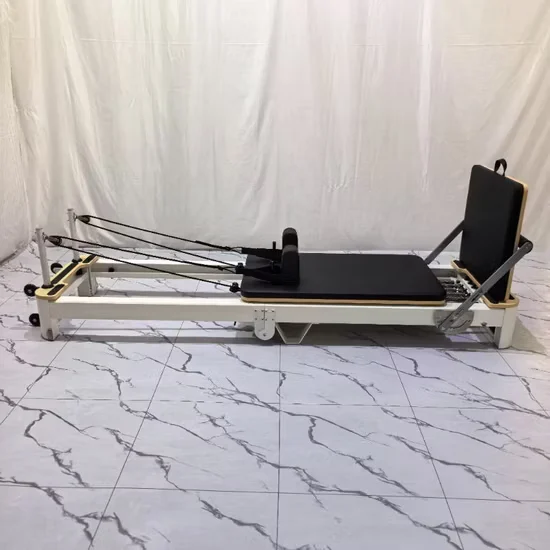
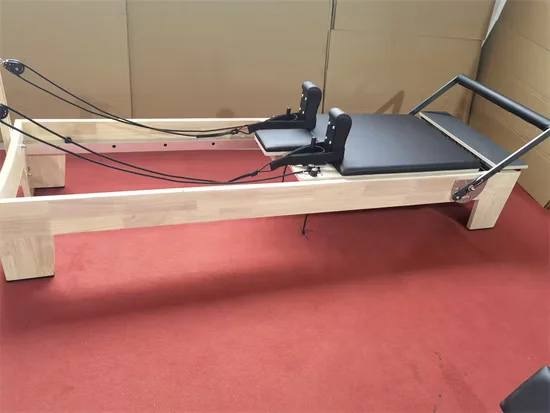
Pilates Reformer Machine, 100kg Net Weight, 2460×730×680mm Dimensions — engineered with solid frame construction and included Long Box, Jump Board, and Platform accessories for full-range studio training. The 3-year warranty covers high-traffic commercial environments including yoga studios, rehabilitation centers, and home setups. Customized logo options available for branding. Backed by 32-point inspection and 100% load testing before shipment.
// Spec Highlights
• Direct from Manufacturer · No Middlemen · Worldwide Shipping
01
// Material
Imported Solid Wood
Premium hardwood frames sourced for density and visual warmth.
02
// Hardware
Medical-Grade Silent
Whisper-quiet pulleys and springs for clinical environments.
03
// Customization
Appearance OEM
Color, upholstery, and branding tailored to your studio.
04
// Service
Layout Design
Free venue planning for studios and rehab institutions.
Every component is selected for longevity, performance, and aesthetic harmony - from imported hardwood frames to silent medical-grade accessories.
// Features
Steel-Backed Frame Integrity — Net 100kg mass reflects industrial-grade frame construction engineered to resist deformation across thousands of daily reformer cycles.
| Parameter | Value |
|---|---|
| Product Type | Pilates Reformer |
| Model | SRY-02 |
| Product Dimensions | 2460×730×680mm |
| Net Weight | 100kgs |
| Frame Construction | Heavy-duty steel frame, solid color finish |
| Carriage System | Sealed rail and bearing assembly |
| Spring System | Multi-level resistance configuration |
| Upholstery | Commercial-grade vinyl, standard or high-density options |
| Accessories Included | Long Box / Jump Board / Platform |
| Logo | Customized is allowed |
| Age Group | Adult |
| Gender | Unisex |
| Warranty | 3 Years |
| Facility Type | Typical Use |
|---|---|
| Commercial Pilates Studio | Group reformer classes, private instruction, progressive resistance programming |
| Yoga Studio Equipment Zone | Complementary strength and mobility work alongside mat-based sessions |
| Rehabilitation Center | Controlled loading for post-injury recovery and neuromuscular re-education |
| Hotel and Resort Fitness Center | Guest-accessible low-impact training with minimal supervision requirements |
| Home Studio | Dedicated personal training space with commercial-grade durability |
A 100kg reformer does not shift, rattle, or drift off alignment during explosive jump board work.
Lightweight reformer frames compromise stability the moment dynamic loads enter the equation. When a practitioner launches off the jump board, the carriage generates substantial horizontal force that the frame must absorb without flexing. Frames built from undersized tube sections or thin-wall steel transmit vibration through the entire unit, accelerating fastener loosening and rail misalignment over time. Facility operators who stock studios with underbuilt commercial pilates reformer machine units typically report carriage wobble and rail binding within the first year of high-frequency scheduling [NEED_CITE: structural requirements for dynamic loading on sliding-rail fitness equipment]. The SRY-02 addresses this by concentrating mass where rigidity matters most — the base frame and carriage support structure — so the unit stays planted through hundreds of daily repetitions.
The commercial pilates reformer machine covers the full spectrum of supine, prone, seated, and standing movement patterns, targeting core stabilization, hip and shoulder girdle strength, and spinal articulation. In a studio layout, it pairs with the Cadillac or Tower for vertical resistance work and the Wunda Chair for closed-chain loading. Facilities running high-volume group formats benefit from standardizing on a single reformer model to simplify instructor cueing and equipment setup. The 2460mm footprint accommodates users across a wide height range while leaving adequate clearance for Long Box and Jump Board transitions.
Reformer frames endure a combination of static sustained loads and repeated impact cycles that most specification sheets fail to address. Jump board repetitions generate sharp deceleration forces at the carriage stop, concentrating stress at the rail termination points and base frame welds. [NEED_CITE: fatigue classification for welded joints in cyclic-loading fitness equipment] Eccentric loading occurs whenever a user applies uneven force through single-leg or single-arm patterns, pushing the carriage laterally against one rail. Over months of back-to-back class scheduling, these asymmetric forces expose weaknesses in bearing seals, rail surface treatment, and fastener retention. Upholstery contact points on the shoulder rests and foot bar endure sweat saturation and friction abrasion that degrade low-grade vinyl rapidly in commercial environments.
The 100kg net weight signals substantial steel volume in the base frame, which directly governs resistance to torsional flex during asymmetric exercises. A rigid base prevents the carriage from tracking at an angle, preserving smooth linear motion through the full stroke. Sealed bearing assemblies keep particulate contamination — dust, chalk residue, dried sweat — out of the rolling elements, maintaining consistent carriage feel across the rail length. Multi-level spring configuration allows instructors to scale resistance for deconditioned clients and advanced athletes on the same unit without hardware swaps. The included Long Box, Jump Board, and Platform expand the exercise catalog without requiring separate equipment purchases or floor space allocation.
Reformers built on thin-wall tube frames deflect under jump board impact, gradually loosening fastener torque and shifting rail geometry out of parallel alignment. Non-sealed bearings accumulate debris that scores the rail surface, turning what should be silent carriage travel into grinding friction that clients notice immediately. Low-density upholstery foam compresses permanently within months of commercial use, exposing hard substrate beneath the vinyl and creating pressure points that clients avoid. Insufficient powder coating thickness at contact zones — foot bar, shoulder rests, frame corners — chips away under repeated impact and cleaning chemical exposure, exposing bare steel to oxidation. These failures cascade: a binding carriage forces instructors to retire the unit from class rotation, reducing studio capacity and revenue per square meter. [NEED_CITE: maintenance cost differentials between sealed and open bearing systems in studio equipment]
The frame mass and steel specification support long-term dimensional stability under daily class loads exceeding eight hours of continuous scheduling. Robotic MIG welding on structural joints eliminates the inconsistent penetration and cold joints that plague manual spot-weld assemblies on lighter reformers. Every unit undergoes load testing before shipment — not sample-based batch inspection, but individual verification of carriage travel, spring tension, and frame rigidity. The 200μm industrial powder coating withstands daily chemical disinfectant protocols without chalking or delamination at high-contact zones. A 10-year frame warranty reflects confidence in the structural design, and 2D-3D CAD layout support ensures studio planners allocate correct clearance zones around each reformer for safe Long Box and Jump Board operation.
Provide your studio floor area and intended reformer count to receive a 2D-3D layout with verified safety clearances and traffic flow paths. Specify average daily class volume and peak scheduling density so we can confirm the structural grade matches your operational demands. Indicate your client demographic height and weight ranges to verify the carriage stroke and spring resistance span cover your population. Submit branding requirements — frame color, upholstery selection, and logo placement — for custom production matching your studio identity.
Q: What structural differences separate commercial-grade reformers from home-use models?
A: Commercial reformers use heavier frame steel and sealed bearing systems to withstand continuous daily scheduling. Home units rely on lighter tube sections and open bushings that degrade under studio-frequency loading. The frame mass, weld continuity, and upholstery density all scale to meet the demands of back-to-back group classes without structural drift or premature component wear.
Q: How often should the rail and bearing system be serviced in a busy studio?
A: Monthly inspection of rail surfaces and bearing housings is recommended for studios running four or more classes daily. Wipe rails clean of chalk and sweat residue, check for lateral play in the carriage, and listen for irregular rolling sounds that indicate bearing wear. Sealed bearing systems extend service intervals substantially compared to open bushings by blocking particulate ingress.
Q: How do spring resistance levels accommodate different client abilities?
A: Multi-level spring configuration allows instructors to scale load from rehabilitation-grade gentle resistance to advanced athletic training intensity. Lighter spring tension suits post-injury clients and beginners developing movement control. Heavier configurations challenge experienced practitioners during power and plyometric sequences. Instructors adjust springs per exercise without tools, keeping class transitions efficient.
Q: What clearance spacing does a reformer studio layout require?
A: Plan a minimum 900mm buffer on all sides of each reformer to allow safe Long Box mounting, Jump Board clearance, and instructor circulation. This spacing prevents equipment contact during dynamic movements and provides wheelchair-accessible pathways between stations. CAD layout files with exact footprint overlays help verify total unit count against available floor area.
Q: When should vinyl upholstery be replaced in a commercial setting?
A: High-density commercial vinyl typically retains structural integrity and appearance through several years of daily use before requiring replacement. Signs indicating replacement include visible seam separation, surface cracking at high-friction contact points, and foam compression that creates hard spots beneath the cover. Specify replaceable upholstery panels during procurement to simplify future servicing without full unit disassembly.
Premium aesthetics meet quiet operation for boutique studio environments.
Medical-grade silence and precision for sports & postpartum recovery.
Furniture-grade craftsmanship for premium residential installations.
Compact premium setups for one-on-one and small-group training.
Aesthetic Pilates integration for hybrid wellness studio programming.
Multi-unit deployment with instructor-grade reliability for certification programs.
Tell us about your project. Our team will respond within 24 hours with pricing, customization options, and shipping details.
// Sales Director
William
+86 132 2531 1800
// Export Manager
Bella
+86 198 5412 8032
william@bickfit.com