01 / Scenario
STUDIO
P
High-End Pilates Studios
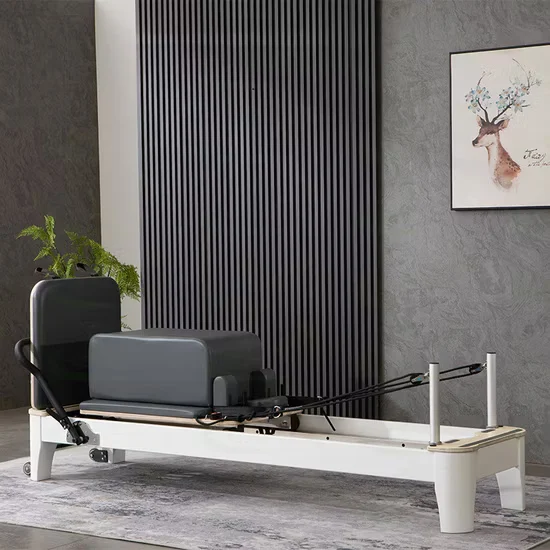
Premium aesthetics meet quiet operation for boutique studio environments.
ISO
9001
CE
Certified
OEM
Available
10YR
Warranty
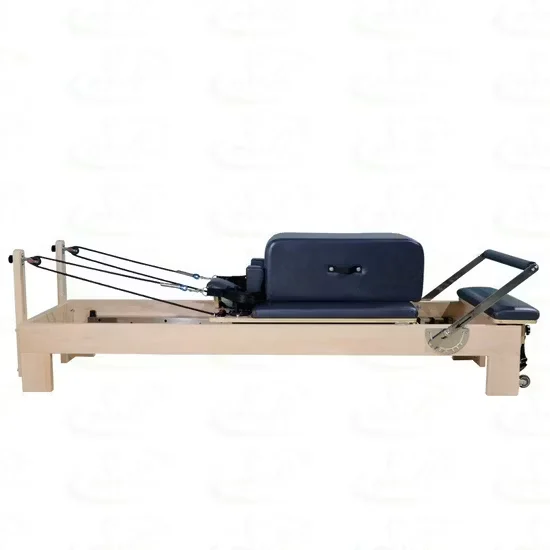
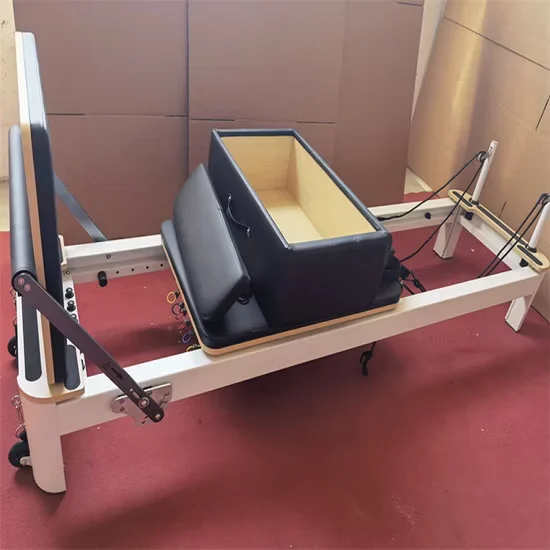
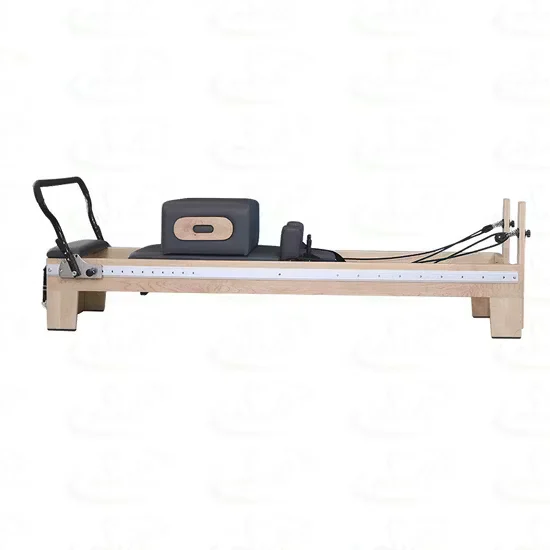
Pilates Reformer Machine, Solid Wood Frame, Full Track, 2460×730×680mm — solid wood construction with full-length rail ensures stable carriage glide and consistent spring resistance across the full range of motion; includes long box, jump board, and platform for expanded exercise programming. Custom logo and solid-color upholstery available with 3-year warranty. Each unit undergoes 32-point inspection and full load testing before dispatch.
// Spec Highlights
• Direct from Manufacturer · No Middlemen · Worldwide Shipping
01
// Material
Imported Solid Wood
Premium hardwood frames sourced for density and visual warmth.
02
// Hardware
Medical-Grade Silent
Whisper-quiet pulleys and springs for clinical environments.
03
// Customization
Appearance OEM
Color, upholstery, and branding tailored to your studio.
04
// Service
Layout Design
Free venue planning for studios and rehab institutions.
Every component is selected for longevity, performance, and aesthetic harmony - from imported hardwood frames to silent medical-grade accessories.
// Features
Full Track Carriage Alignment — Solid wood frame rails maintain straightness and consistent wheel tracking under repeated studio loading.
| Parameter | Value |
|---|---|
| Product Type | Pilates Reformer |
| Frame Material | Solid Wood |
| Product Dimensions | 2460×730×680mm |
| Net Weight | 100kgs |
| Loading Type | Spring Resistance |
| Accessories Included | Long Box / Jump Board / Platform |
| Carriage System | Full Track |
| Color Options | Solid Color |
| Customization | Available |
| Logo | Customized |
| Warranty | 3 Years |
| Production Capacity | 80 Pieces/Month |
| Facility Type | Typical Use |
|---|---|
| Pilates Studio | Daily group and private reformer sessions |
| Rehabilitation and Physical Therapy Center | Controlled spring-resistance rehab protocols |
| Boutique Fitness Studio | Pilates-based conditioning classes |
| Hotel and Resort Wellness Facility | Guest-access reformer programming |
| Private Home Gym | Personal reformer practice |
A solid wood frame preserves rail straightness where laminated or hollow-core alternatives deflect and separate under repeated carriage travel.
Many studio operators discover that reformers marketed for professional use develop carriage play, uneven resistance, and audible rattle within the first year of daily classes. The root cause often traces to the rail structure itself — laminated layers that delaminate under the lateral shear of off-center loading, or hollow-core extrusions that flex just enough to let carriage wheels drift from true alignment [NEED_CITE: EN 957 structural requirements for stationary training equipment]. When the rails lose straightness, the spring resistance becomes inconsistent across the range of motion, and the commercial pilates reformer machine requires frequent track adjustments or wheel replacements that pull instructors off the floor.
This reformer addresses the full sagittal plane — supine, prone, seated, and standing positions — targeting core stabilization, lower limb conditioning, and upper body pulling and pressing patterns. In a studio equipment layout, it pairs with Cadillac towers for vertical plane work and Wunda chairs for seated and standing balance challenges, filling the primary horizontal resistance role. The full-length carriage accommodates users from rehabilitation clients with limited range of motion through advanced practitioners performing jump board plyometrics. For facilities running back-to-back group sessions, the commercial pilates reformer machine supports the body-size variation typical of open-enrollment classes without requiring carriage or spring reconfiguration between users.
The dominant load on a reformer frame is cyclic bending along the rail span, applied each time a user pushes the carriage against spring tension. In a studio running six classes per day, that cycle repeats thousands of times weekly, concentrating fatigue at the rail-to-frame joinery and the spring anchor points [NEED_CITE: fatigue performance in cyclic-loaded timber structures]. The carriage wheels and their bearings absorb lateral shear on every transition between concentric and eccentric phases, meaning that unsealed bearings accumulate chalk dust, sweat residue, and hair fiber until they develop audible play. Upholstery contact zones — the headrest, shoulder blocks, and foot bar — compress and release with each repetition, and low-density foam loses its recovery capacity within months of commercial use. The spring attachment hardware endures constant tension-release cycling that exposes any weakness in mounting plate thickness or fastener grade.
The solid wood frame matters because material density governs how well the rail resists long-term deflection under the dynamic load of a moving carriage with a user aboard. A full-track carriage system with adequate wheel count distributes that load across more contact points, reducing point pressure on any single rail surface and keeping glide friction consistent across the entire travel length. Spring configuration — the gauge of wire, the number of springs engaged, and the anchor position on the carriage — shapes the resistance curve from light rehabilitation loading through heavy athletic conditioning, and proper calibration ensures that each spring delivers its rated force at every point in the travel [NEED_CITE: spring rate calibration and fatigue testing standards]. Accessory attachment points for the long box, jump board, and platform must handle dynamic impact loads, particularly when the jump board receives repeated plyometric landings or the long box supports a user’s full weight during prone pulling exercises.
A studio that accepts unsealed carriage wheels to reduce upfront cost will face increasing track noise, uneven spring resistance, and eventual wheel replacement within the first year of high-traffic operation. Thin rail surfaces wear grooves under constant wheel contact, creating a feedback loop where the grooves accelerate bearing wear and the worn bearings further damage the rail. Springs that lack proper heat treatment lose tension over hundreds of cycles, producing a resistance curve that no longer matches the programmed exercise progressions. When accessory mounting points are undersized, the jump board develops lateral play that compromises safety during plyometric landings, and replacement hardware may not be available from the original supplier, forcing the studio into a full unit replacement rather than a component-level repair.
The solid wood frame delivers dimensional stability that hollow-core alternatives cannot match under the cyclic bending loads of daily studio use. Each unit ships with a 3-year warranty covering structural and mechanical components, reflecting confidence in the joinery methods and material selection. Customization options — including solid color upholstery and custom logo placement — allow studio operators to maintain brand consistency across a multi-unit installation without compromising structural integrity. The full accessory ecosystem (long box, jump board, platform) integrates directly into the frame’s attachment points, so there are no aftermarket adapters that could introduce play or misalignment at critical load-bearing connections.
Provide your studio floor dimensions and planned class capacity so we can map reformer placement with correct instructor circulation space and safe user clearance between units. Specify your expected daily session volume to confirm the structural grade and carriage bearing specification match your operational intensity. Identify your target user population — rehabilitation clients, general fitness members, or athletic performance groups — so spring configuration and accessory selection align with the resistance ranges and movement patterns your programming requires. Communicate any branding requirements including upholstery color and logo placement early in the ordering process to integrate customization into the production schedule.
Q: How can I tell a commercial-grade Pilates reformer from a light-commercial one by looking at frame and carriage construction?
A: Commercial-grade reformers use solid wood or heavy-gauge steel frames with full-length rail surfaces designed to maintain straightness under thousands of daily cycles. Look for sealed carriage bearings, robust spring mounting plates, and accessory attachment points engineered for dynamic impact loads. Light-commercial units often cut cost with laminated rails, unsealed wheels, and thinner spring anchors that degrade noticeably within the first year of studio-frequency operation.
Q: What rail and wheel specifications determine how long the carriage glides smoothly before needing service?
A: Rail surface hardness and straightness tolerance govern how well the track resists groove formation under continuous wheel contact. Carriage wheel bearing type — sealed versus open — determines whether dust, chalk, and moisture penetrate the bearing race. Full-track systems with more wheels distribute load across a wider area, reducing point pressure. Request bearing specification sheets and rail surface treatment details from the manufacturer to validate long-term glide claims.
Q: How does spring configuration affect the resistance experience for rehabilitation versus advanced users?
A: Spring wire gauge and mounting position shape the load curve from initial engagement through full carriage travel. Lighter-gauge springs with progressive mounting positions produce gentle resistance suitable for early-stage rehabilitation, while heavier-gauge springs at direct anchor points deliver the force levels that athletic conditioning demands. A commercial-grade reformer should offer a spring set covering the full spectrum, with clear per-spring load ratings and documented fatigue cycle testing.
Q: What should I verify about accessory compatibility and attachment strength before committing to a reformer purchase?
A: Confirm that the long box, jump board, and platform attach directly to reinforced frame points rather than clamping onto rail edges. Request static and dynamic load test data for each accessory connection, especially the jump board which absorbs repeated plyometric impact. Verify that replacement springs, upholstery pads, and carriage wheels remain available from the manufacturer for the expected service life of the equipment.
Premium aesthetics meet quiet operation for boutique studio environments.
Medical-grade silence and precision for sports & postpartum recovery.
Furniture-grade craftsmanship for premium residential installations.
Compact premium setups for one-on-one and small-group training.
Aesthetic Pilates integration for hybrid wellness studio programming.
Multi-unit deployment with instructor-grade reliability for certification programs.
Tell us about your project. Our team will respond within 24 hours with pricing, customization options, and shipping details.
// Sales Director
William
+86 132 2531 1800
// Export Manager
Bella
+86 198 5412 8032
william@bickfit.com