01 / Scenario
STUDIO
P
High-End Pilates Studios
Premium aesthetics meet quiet operation for boutique studio environments.

ISO
9001
CE
Certified
OEM
Available
10YR
Warranty
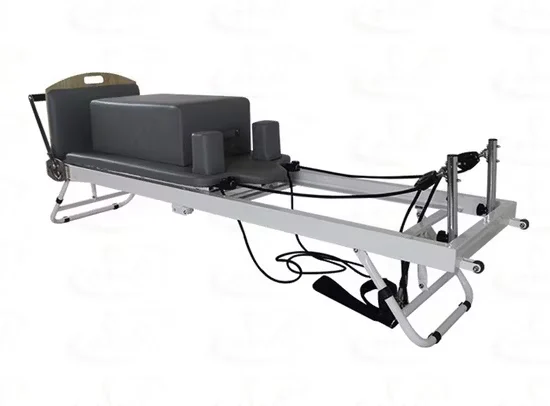
Pilates Reformer with Integrated Yoga Wall, 2440×800mm, 35kg Net Weight — reinforced frame structure engineered for high-traffic studio environments, featuring a carriage glide system designed for smooth resistance across full range of motion. Yoga wall anchoring rated for suspended exercises and stretching positions. Direct manufacturer supply with 3-year warranty and full OEM private label capability for custom branding.
// Spec Highlights
• Direct from Manufacturer · No Middlemen · Worldwide Shipping
01
// Material
Imported Solid Wood
Premium hardwood frames sourced for density and visual warmth.
02
// Hardware
Medical-Grade Silent
Whisper-quiet pulleys and springs for clinical environments.
03
// Customization
Appearance OEM
Color, upholstery, and branding tailored to your studio.
04
// Service
Layout Design
Free venue planning for studios and rehab institutions.
Every component is selected for longevity, performance, and aesthetic harmony - from imported hardwood frames to silent medical-grade accessories.
// Features
Traceable Frame Steel — every tube in this commercial pilates reformer with yoga wall traces back to its mill certificate, ensuring structural accountability from coil to studio floor.
| Parameter | Value |
|---|---|
| Product Type | Pilates Reformer |
| Frame Steel Gauge | 11-gauge structural tubing |
| Frame Tube Size | 3×3 inch main frame |
| Steel Grade | Q235 industrial steel, mill-certified |
| Welding Type | Robotic MIG, continuous weld lines |
| Load Capacity | Tested beyond 500kg static load |
| Product Dimensions | 2440 × 800mm |
| Net Weight | 35kgs |
| Powder Coating | 200μm scratch-resistant finish |
| Upholstery | Standard or high-density options available |
| Color | Solid color, custom options available |
| Logo | Customized branding allowed |
| Certification | ISO 9001:2015, CE European conformity |
| Warranty | 3 Years standard, 10-year frame available |
| Facility Type | Typical Use |
|---|---|
| Commercial pilates studio | Group reformer classes with integrated wall-assisted stretching sequences |
| Yoga studio | Flow sequences transitioning between reformer carriage work and wall-supported holds |
| Rehabilitation and physical therapy center | Controlled resistance exercises with wall anchoring for assisted mobility work |
| Boutique fitness facility | High-frequency class scheduling with rapid participant turnover between sessions |
Frame deformation under spring tension is not a maintenance issue — it is a design failure.
Many commercial pilates reformer with yoga wall installations begin showing carriage wobble and frame flex within months of daily class scheduling. The root cause traces back to undersized frame tubing that cannot resist torsional forces generated by spring resistance systems at full extension. Instructors end up managing equipment instability during sessions, and studio owners face replacement cycles that were never factored into their capital planning. [NEED_CITE: EN 957 structural requirements for stationary training equipment]
This commercial pilates reformer with yoga wall addresses the sagittal plane through carriage glide work while the integrated wall system enables frontal and transverse plane movements through suspended stretching and lateral holds. In a studio layout, these units pair with mat zones and small apparatus stations to create circuit-based class formats. Facilities scheduling back-to-back group classes benefit from the combined footprint, which eliminates the need for separate wall-mounted stretching stations. The frame dimensions accommodate users across a wide anthropometric range without requiring adjustment between participants.
Daily commercial scheduling subjects the carriage rail system to repetitive impact loading as participants transition in and out of positions throughout each session. The spring attachment points experience cyclic fatigue from constant tension-release patterns across multiple resistance levels. Weld joints at the yoga wall anchoring interface must resist eccentric loading when users perform suspended stretches that generate lateral force vectors. The powder coating at contact points faces continuous abrasion from carriage wheels and spring hardware movement. [NEED_CITE: weld classification and fatigue performance in structural steel] Upholstery compression cycles accumulate rapidly in studios running six or more classes daily, making material density a direct determinant of replacement intervals.
Frame tube wall thickness directly determines how much torsional deflection occurs when spring resistance pulls the carriage through full range of motion. A 3×3 inch tube profile provides sufficient cross-sectional area to resist bending moments generated during peak spring tension, while thinner profiles allow visible flex that translates to carriage tracking inconsistency. Robotic MIG welding produces continuous bead profiles that distribute stress along the joint length rather than concentrating it at discrete spot-weld locations. The carriage wheel and rail material pairing governs glide smoothness and determines whether the system develops lateral play after months of commercial use. Powder coating applied at 200μm thickness maintains coverage at high-contact points where thinner finishes expose bare steel to sweat and cleaning chemicals. Yoga wall structural anchoring requires verified load ratings that account for dynamic forces during suspended exercises, not just static weight capacity.
Thin-wall frame tubing saves material cost upfront but introduces progressive deformation that accelerates carriage misalignment and bearing wear. Spot-welded joints pass initial visual inspection but develop crack propagation under the cyclic loading patterns inherent to spring-based resistance systems. Non-sealed carriage bearings allow dust and moisture ingress that creates grinding noise and requires frequent replacement — generating maintenance labor costs that compound across a fleet of reformers. [NEED_CITE: bearing seal classification and service interval in linear motion systems] Low-density upholstery compresses permanently within months of commercial use, forcing studios to either operate with visibly degraded equipment or absorb reupholstery expenses repeatedly. Underspecified powder coating chips at carriage contact points, exposing steel to oxidation that spreads beneath adjacent coating layers.
Every frame tube in this reformer system traces to a specific steel coil with verifiable mill certification, eliminating the ambiguity of generic commercial-grade claims. Robotic MIG welding ensures continuous weld lines at every structural joint, removing the spot-weld weak points that fail under repetitive spring tension loading. Each unit undergoes load testing before shipment rather than relying on sample-based quality protocols that miss unit-specific defects. The 200μm powder coating specification addresses the reality that studio equipment faces daily contact abrasion and chemical cleaning. The 10-year frame warranty reflects confidence in structural longevity rather than covering only cosmetic defects. Studio operators receive 2D-3D CAD layout support that accounts for safe clearance distances between reformer units and wall-anchored exercise zones. OEM customization allows branding integration without compromising structural specifications.
Provide your studio floor area and class scheduling density to receive a 2D-3D layout that positions this commercial pilates reformer with yoga wall with proper clearance distances and traffic flow. Specify your target user demographic to confirm the frame dimensions and adjustment range match your participant profile. Detail any custom branding, color, or upholstery density requirements so quotations reflect your actual specification rather than base configuration assumptions.
Q: How do I evaluate frame construction quality when comparing studio reformers?
A: Request the specific frame tube gauge and wall thickness rather than accepting generic commercial-grade claims. Verify that welding is continuous MIG rather than spot-welded at structural joints. Ask for mill certificates that trace steel to its source coil. Load testing documentation should cover each individual unit, not just sample batches. These specifications determine whether the frame resists torsional deflection under spring tension over years of daily class scheduling.
Q: What maintenance does the carriage glide system require in commercial use?
A: Carriage rail and wheel interfaces require quarterly inspection for lateral play and audible grinding that indicates bearing degradation. Sealed bearing systems reduce maintenance frequency compared to open bearing designs that allow dust ingress. Spring tension should be verified periodically as springs lose progressive resistance characteristics after extended cyclic loading. Rail surface condition affects glide smoothness and should be inspected for scoring or debris accumulation that accelerates wheel wear.
Q: What structural requirements apply to the integrated yoga wall system?
A: The yoga wall anchoring must be rated for dynamic loads generated during suspended stretching exercises, not just static weight capacity. Wall mounting hardware requires structural backing that distributes force across multiple attachment points rather than concentrating stress at single fastener locations. Safety clearances around the wall zone must account for full body extension during hanging positions. Load testing documentation should specify the maximum force rating at each anchor point.
Q: How does upholstery selection affect replacement cycles in high-traffic studios?
A: High-density upholstery options resist permanent compression better than standard density materials when subjected to multiple daily class sessions. Vinyl or synthetic leather covers must resist cracking from repeated cleaning chemical exposure and sweat contact. Replacement parts availability determines whether studios can service individual components or must replace entire carriage assemblies. Specify upholstery density based on your actual daily class count rather than accepting default configurations.
Premium aesthetics meet quiet operation for boutique studio environments.
Medical-grade silence and precision for sports & postpartum recovery.
Furniture-grade craftsmanship for premium residential installations.
Compact premium setups for one-on-one and small-group training.
Aesthetic Pilates integration for hybrid wellness studio programming.
Multi-unit deployment with instructor-grade reliability for certification programs.
Tell us about your project. Our team will respond within 24 hours with pricing, customization options, and shipping details.
// Sales Director
William
+86 132 2531 1800
// Export Manager
Bella
+86 198 5412 8032
william@bickfit.com