01 / Scenario
STUDIO
P
High-End Pilates Studios
Premium aesthetics meet quiet operation for boutique studio environments.
ISO
9001
CE
Certified
OEM
Available
10YR
Warranty
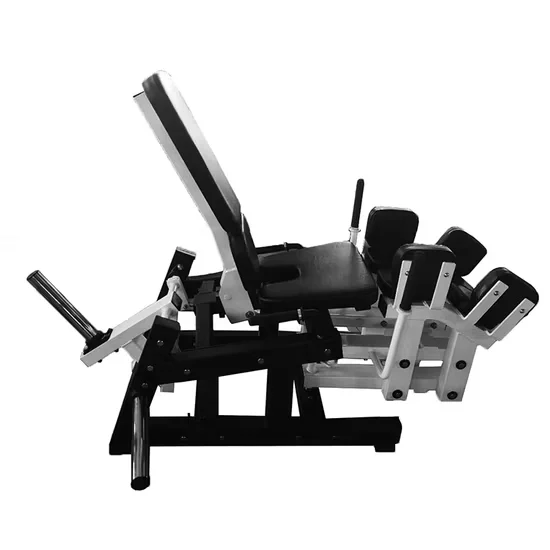
Commercial Plate Loaded Hip Abductor Machine, 1690×730×750mm, 139kg Net Weight — engineered with steel frame construction and plate loaded resistance for reliable hip abduction training in high-traffic environments. Robotic MIG continuous welding eliminates cold joints, while industrial powder coating prevents chipping at contact points. Every unit undergoes load testing before shipment, backed by a 10-year frame warranty and factory-direct floor planning support.
// Spec Highlights
• Direct from Manufacturer · No Middlemen · Worldwide Shipping
01
// Material
Imported Solid Wood
Premium hardwood frames sourced for density and visual warmth.
02
// Hardware
Medical-Grade Silent
Whisper-quiet pulleys and springs for clinical environments.
03
// Customization
Appearance OEM
Color, upholstery, and branding tailored to your studio.
04
// Service
Layout Design
Free venue planning for studios and rehab institutions.
Every component is selected for longevity, performance, and aesthetic harmony - from imported hardwood frames to silent medical-grade accessories.
// Features
Mill-Certified Steel — every Commercial Plate Loaded Abductor Machine frame traces back to the Q235 coil it was cut from.
| Parameter | Value |
|---|---|
| Product Type | Plate Loaded Hip Abductor Machine |
| Model NO. | 5026 |
| Frame Material | Steel, 11-gauge |
| Frame Tube | 3×3 inch |
| Welding Type | Robotic MIG, continuous weld |
| Loading Type | Plate loaded |
| Exercise Part | Leg — hip abduction |
| Product Dimensions | 1690×730×750mm |
| Net Weight | 139kg |
| Powder Coating | 200μm scratch-resistant, sandblast pre-treatment |
| Upholstery | Standard or high-density options available |
| Color Options | Optional |
| Certification | ISO 9001, CE |
| Warranty | 10-year frame |
| Facility Type | Typical Use |
|---|---|
| Commercial gym strength floor | Dedicated hip isolation station in the leg training zone |
| Hotel and resort fitness center | Compact lower-body option for limited-square-footage gyms |
| University strength and conditioning room | Accessory movement for athlete hip stability work |
| Rehabilitation and performance center | Controlled frontal-plane loading for return-to-play protocols |
Tube gauge and weld continuity determine whether a plate-loaded abductor survives its third year or gets retired early.
Most equipment quotes list "commercial grade" steel without naming the gauge, wall thickness, or tube profile. On a hip abduction machine, the pivot arms absorb lateral torque every rep — and if the tube wall is undersized, the frame begins to flex at the weld junction. Over hundreds of daily cycles, that flex concentrates stress at spot-welded joints, which lack the continuous bead needed to distribute force evenly. The result is a frame that looks intact on the outside but carries micro-fractures near the pivot mount. [NEED_CITE: weld classification and fatigue performance in structural steel]
When buyers cannot verify steel specifications against a mill certificate, they are effectively trusting a label rather than a traceable material record.
The frontal plane is often the least served movement direction on a strength floor. Most compound stations handle sagittal work — squats, presses, lunges — leaving hip abduction as an afterthought. A dedicated commercial plate loaded abductor machine fills that gap, targeting the gluteus medius and minimus without requiring users to rig cable attachments or balance on bands. It pairs naturally with adductor machines and compound leg presses, rounding out a lower-body zone that addresses all three planes of motion. The footprint suits medium-to-high traffic facilities where free-weight hip work would consume too much floor space. Seat and pad positioning accommodates a wide range of user heights.
Hip abduction generates a distinct load profile: moderate peak force, high repetition count, and lateral torque applied at the pivot axis rather than along the frame’s primary vertical members. Each rep sends an eccentric impulse through the pivot arm and into the weld where the arm meets the main upright. In high-traffic commercial gyms, a single station can log thousands of cycles per week, making fatigue life a practical concern rather than a theoretical one. Unsealed bearings at the pivot point allow dust and sweat to infiltrate, developing play that users feel as a loose or wandering movement path. Powder coating at the seat contact zone faces abrasion from daily use, and thin coatings chip quickly, exposing bare steel to moisture and cleaning chemicals. [NEED_CITE: EN 957 structural requirements for stationary training equipment]
The 11-gauge steel frame sets the deformation threshold: thicker walls resist the lateral bending moment that each abduction rep produces. The 3×3 inch tube profile provides a broad cross-section, spreading stress across a wider area rather than concentrating it at a single point. Robotic MIG welding with continuous beads eliminates the cold joints and incomplete fusion zones that plague manual spot welding — the weld line carries load along its full length rather than at discrete points. Before coating, sandblast pre-treatment removes mill scale and creates a mechanical key for the 200μm powder layer, which is thick enough to survive contact abrasion and chemical cleaners without wearing through to bare metal within the first few years.
A thinner-walled tube may pass a static load test at the factory but will deflect noticeably once users add plates and push through full range of motion. Spot-welded pivot joints crack silently, often discovered only when a user reports unusual play or noise. Non-sealed bearings require scheduled teardowns and replacements that pull the machine off the floor repeatedly. Low-density upholstery compresses within months, splitting at the seams and demanding reupholstery that costs nearly as much as a replacement pad. Undersized powder coating wears through at grip and seat contact points, inviting surface rust that spreads under the remaining finish. [NEED_CITE: powder coating thickness and corrosion protection standards for gym equipment]
The frame uses Q235 and Q345 industrial steel sourced with mill certification traceable to the originating coil — buyers can verify the exact material grade rather than relying on a supplier’s verbal claim. Robotic MIG welding produces continuous weld lines at every joint, removing the weak-link effect of spot-welded connections. Every unit undergoes load testing before shipment, not sample-based batch inspection, so the machine arriving at your facility has been individually verified. The 200μm industrial powder coating over sandblast pre-treatment is rated to withstand daily cleaning chemicals and sweat exposure. A 10-year frame warranty backs the structural package. Floor planning CAD support ensures the 1690×730mm footprint is placed with safe lateral clearance for users loading and unloading plates.
Share your strength zone square footage and existing equipment list to receive a 2D-3D layout showing exactly where this abductor fits with proper safety clearances. Specify expected daily user volume so the structural grade matches your traffic profile. Provide the typical body-size range of your member base to confirm seat adjustment coverage. Outline any customization requirements — frame color, logo placement, or upholstery density — to align the unit with your facility’s branding and durability expectations.
Q: How do I verify the steel is genuinely commercial grade?
A: Request a mill certificate that traces the frame steel back to its originating coil. A legitimate supplier will provide documentation showing steel grade, wall thickness, and tube profile. Vague labels like "commercial grade" without supporting paperwork leave you unable to confirm the material can withstand repeated lateral loading in a high-traffic environment.
Q: Plate loaded versus selectorized — which suits a busy gym?
A: Plate loaded machines eliminate weight stack guide rods and cable-pulley systems, removing two common maintenance points. For high-traffic commercial floors, this means fewer service calls related to binding guide rods or fraying cables. Users who train for strength also tend to prefer the incremental loading flexibility that plates provide over fixed pin-select increments.
Q: What floor space should I allocate around this machine?
A: Beyond the 1690×730mm footprint, you need lateral clearance on both sides for users to load and unload plates safely. Providing CAD dimensions to your floor planner ensures adjacent stations do not create pinch points or block traffic flow. Proper spacing also reduces the chance of plates striking nearby equipment during use.
Q: How often do the pivot bearings need attention?
A: In facilities with high airborne dust or humidity, sealed industrial bearings should be inspected for play at least quarterly. Unsealed alternatives typically develop noticeable looseness within the first year of commercial use. Specifying sealed bearings at the point of purchase removes most of this maintenance burden and keeps the movement path consistent over the machine’s service life.
Premium aesthetics meet quiet operation for boutique studio environments.
Medical-grade silence and precision for sports & postpartum recovery.
Furniture-grade craftsmanship for premium residential installations.
Compact premium setups for one-on-one and small-group training.
Aesthetic Pilates integration for hybrid wellness studio programming.
Multi-unit deployment with instructor-grade reliability for certification programs.
Tell us about your project. Our team will respond within 24 hours with pricing, customization options, and shipping details.
// Sales Director
William
+86 132 2531 1800
// Export Manager
Bella
+86 198 5412 8032
william@bickfit.com