01 / Scenario
STUDIO
P
High-End Pilates Studios
Premium aesthetics meet quiet operation for boutique studio environments.

ISO
9001
CE
Certified
OEM
Available
10YR
Warranty
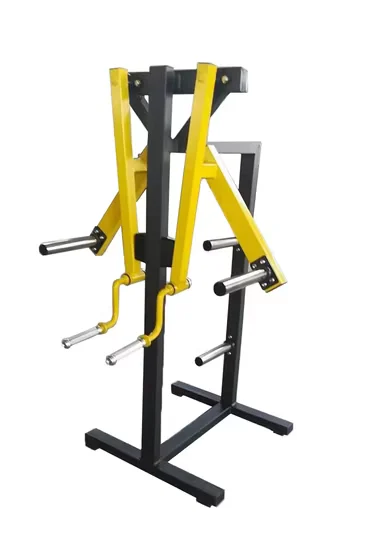
Commercial Plate Loaded Belt Squat Machine, 50×100×3mm Frame Tube, 170kg Net Weight — engineered with 3mm wall thickness for verified rigidity under heavy loading, continuous MIG welding eliminates spot-weld fatigue, and plate-loaded design removes weight stacks, guide rods, and cables from the maintenance cycle. Every unit undergoes three-stage load testing before shipment, backed by a 10-year frame warranty for high-traffic commercial environments.
// Spec Highlights
• Direct from Manufacturer · No Middlemen · Worldwide Shipping
01
// Material
Imported Solid Wood
Premium hardwood frames sourced for density and visual warmth.
02
// Hardware
Medical-Grade Silent
Whisper-quiet pulleys and springs for clinical environments.
03
// Customization
Appearance OEM
Color, upholstery, and branding tailored to your studio.
04
// Service
Layout Design
Free venue planning for studios and rehab institutions.
Every component is selected for longevity, performance, and aesthetic harmony - from imported hardwood frames to silent medical-grade accessories.
// Features
Continuous Weld Lines — Every joint on this belt squat frame uses robotic MIG welding with no spot-weld interruptions.
| Parameter | Value |
|---|---|
| Product Type | Plate Loaded Belt Squat Machine |
| Frame Tube Size | 50×100×3mm |
| Steel Grade | Q235 Industrial Steel |
| Welding Type | Continuous Robotic MIG |
| Loading Type | Plate Loaded |
| Product Dimensions | 1676×1700×1524mm |
| Net Weight | 170kg |
| Powder Coating | 200μm Scratch-Resistant |
| Exercise Part | Waist / Lower Body |
| Color Options | Customized |
| Certification | ISO 9001, CE, RoHS |
| Warranty | 10-Year Frame |
| Facility Type | Typical Use |
|---|---|
| Commercial gym strength floor | Dedicated lower-body isolation station for hip and lumbar loading |
| CrossFit box functional zone | Supplemental belt squat, hip belt lunge, and loaded carry variations |
| University strength and conditioning room | High-volume athlete lower-body training with minimal supervision |
| Hotel fitness center | Space-efficient plate loaded station for guest and conference use |
The joint fails long before the tube bends.
I have seen belt squat frames crack at spot-weld connections within the first year of heavy commercial use. The steel itself is often adequate, but the interrupted weld beads create stress concentration points that propagate under cyclic loading from repeated belt squat sessions [NEED_CITE: weld classification and fatigue performance in structural steel]. When a commercial plate loaded belt squat machine relies on spot welds, the fatigue life of the entire structure depends on the weakest joint rather than the steel section capacity. Continuous robotic MIG welds distribute stress along the full seam length, eliminating the cold joints and incomplete fusion zones that initiate cracks. This is not a marginal improvement — it changes the failure mode from sudden joint fracture to gradual, predictable wear.
This commercial plate loaded belt squat machine targets the glutes, quadriceps, and hip extensors through a vertical loading path that bypasses the spine entirely. In a strength zone layout, it pairs with leg presses and hack squats to provide an axial-load-free alternative for athletes managing back fatigue. The fixed movement path suits facilities with high member turnover where supervised instruction is limited. The open-entry design accommodates users across a wide range of hip widths and torso lengths without requiring pad adjustments between sets.
Every rep on a belt squat transfers load through the hip belt into the frame via the attachment hardware, generating eccentric shear at the connection points. In high-traffic commercial gyms, this equipment may see hundreds of loading cycles daily from users of varying body weights [NEED_CITE: EN 957 structural requirements for stationary training equipment]. The weld seams at the belt hook mounting plates experience repeated tensile-compressive reversal, which is precisely where spot welds develop micro-fractures. The powder coating at these contact zones must resist chipping from belt hardware impact, and the 200μm industrial finish provides a buffer against the corrosion that follows exposed bare steel.
The rectangular tube cross-section resists bending in two axes simultaneously — critical when belt-loaded movements generate both vertical and lateral force components. A 3mm wall thickness on a 50×100mm section provides a defined deformation threshold that can be verified against mill specifications, unlike vaguely labeled "commercial grade" tubing with no traceable gauge. The continuous MIG welding preserves the full section modulus at every joint, meaning the frame behaves as a single structural unit rather than a collection of tubes held together by discrete weld spots. The 170kg net weight and 1676×1700mm footprint create a base stable enough to resist lateral shift during heavy belt squats without requiring floor anchoring [NEED_CITE: static and dynamic load testing for plate loaded strength equipment].
Thin-wall tubing on belt squat machines may look identical in a catalog photo, but under repeated heavy loading it develops measurable deflection that users feel as frame wobble. Spot welds at the belt attachment point carry concentrated shear stress and crack without visible warning, creating liability exposure for facility operators. Non-industrial powder coatings chip at hardware contact zones within months, exposing bare steel to sweat-driven corrosion that accelerates structural degradation. When replacement belt hooks and mounting hardware are unavailable from the original manufacturer, a single worn component can take the entire station offline indefinitely [NEED_CITE: commercial equipment maintenance cost benchmarks].
Every commercial plate loaded belt squat machine we build uses 11-gauge frame steel with mill certification traceable to the coil origin. The robotic MIG welding produces continuous seams with no cold joints or incomplete fusion zones. Each unit undergoes three-stage inspection including load testing before it leaves the plant — not sample-based testing on one unit per batch. The 200μm powder coating resists chipping at belt hardware contact points. The 10-year frame warranty reflects confidence in the structural specification. Our 2D-3D floor planning CAD support ensures proper clearance around the 1676×1700mm footprint so adjacent stations maintain safe passage widths.
Provide your strength zone floor area and planned equipment list so we can generate a 2D-3D layout with proper clearance mapping for this belt squat station. Indicate your expected daily user volume so we can confirm the structural grade matches your traffic pattern. Specify any custom color requirements, logo placement, or belt attachment preferences for your facility branding.
Q: How do I verify that a belt squat frame is genuinely commercial grade rather than marketing claims?
A: Request the mill-certified steel specification showing exact tube dimensions and wall thickness, not vague "commercial grade" labels. Ask for weld inspection documentation confirming continuous MIG construction rather than spot welding. Verify whether load testing is performed on every unit or only on a sample basis per batch.
Q: What maintenance differences exist between plate loaded and selectorized belt squat machines?
A: Plate loaded designs eliminate weight stack guide rods, cables, and selector pin mechanisms — the components most prone to binding and wear in commercial environments. Maintenance focuses on bolt torque checks, belt hardware inspection, and powder coating care rather than pulley and cable system servicing.
Q: What frame tube size is necessary for safe heavy belt squat loading in a commercial setting?
A: A minimum 50×100mm rectangular section with 3mm wall thickness provides a verifiable deformation threshold under cyclic heavy loading. The cross-section geometry must resist bending in both vertical and lateral axes simultaneously, which thinner or square-section tubes cannot reliably achieve under off-center belt loads.
Q: How should I plan spacing around a belt squat station in a commercial strength zone?
A: Account for the machine footprint plus belt swing radius during loaded repetitions, plus user entry and exit clearance. Adjacent stations should maintain safe passage width per local building codes. Floor planning CAD support ensures these clearances are mapped before equipment arrives on site.
Premium aesthetics meet quiet operation for boutique studio environments.
Medical-grade silence and precision for sports & postpartum recovery.
Furniture-grade craftsmanship for premium residential installations.
Compact premium setups for one-on-one and small-group training.
Aesthetic Pilates integration for hybrid wellness studio programming.
Multi-unit deployment with instructor-grade reliability for certification programs.
Tell us about your project. Our team will respond within 24 hours with pricing, customization options, and shipping details.
// Sales Director
William
+86 132 2531 1800
// Export Manager
Bella
+86 198 5412 8032
william@bickfit.com