01 / Scenario
STUDIO
P
High-End Pilates Studios
Premium aesthetics meet quiet operation for boutique studio environments.

ISO
9001
CE
Certified
OEM
Available
10YR
Warranty
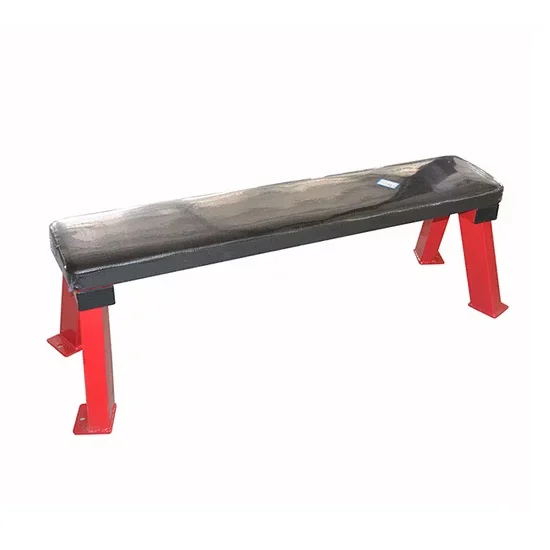
Commercial Plate Loaded Flat Bench, 3×3 Inch Steel Frame, 63kg Net Weight — engineered with Q235 industrial steel and robotic MIG continuous welding to eliminate spot-weld fatigue under repeated heavy loading. High-density upholstery resists splitting in high-traffic environments, with customizable frame and cushion colors available. Every unit undergoes full load testing before shipment, backed by a 10-year frame warranty and mill-certified steel traceability.
// Spec Highlights
• Direct from Manufacturer · No Middlemen · Worldwide Shipping
01
// Material
Imported Solid Wood
Premium hardwood frames sourced for density and visual warmth.
02
// Hardware
Medical-Grade Silent
Whisper-quiet pulleys and springs for clinical environments.
03
// Customization
Appearance OEM
Color, upholstery, and branding tailored to your studio.
04
// Service
Layout Design
Free venue planning for studios and rehab institutions.
Every component is selected for longevity, performance, and aesthetic harmony - from imported hardwood frames to silent medical-grade accessories.
// Features
Mill-Traceable Steel — Every coil of 11-gauge frame tubing used in this flat bench carries a steel mill certificate traceable back to the heat number.
| Parameter | Value |
|---|---|
| Product Type | Flat Bench |
| Frame Tube Size | 3×3 inch |
| Frame Steel Gauge | 11-gauge |
| Steel Grade | Q235 / Q345 industrial steel |
| Welding Type | Robotic MIG, continuous weld lines |
| Loading Type | Plate loaded |
| Exercise Part | Chest |
| Product Dimensions | 1304 × 1300 × 1234 mm |
| Net Weight | 63 kg |
| Powder Coating | 200μm scratch-resistant |
| Upholstery | Standard or high-density options available |
| Main Frame Color | Customizable |
| Cushion Color | Customizable |
| Certification | ISO 9001, CE |
| OEM / ODM | Acceptable |
| Warranty | 10-year frame |
| Facility Type | Typical Use |
|---|---|
| Commercial gym strength floor | Primary pressing station in free weight zones |
| Hotel fitness center | High-turnover bench pressing for transient guests |
| University strength and conditioning room | Athletic team bench press training under coach supervision |
| CrossFit box functional zone | Strength segment within mixed-modality programming |
| Rehabilitation and performance center | Controlled upper-body pressing during return-to-play protocols |
A continuous MIG weld distributes force along the entire joint; a spot weld concentrates it at isolated points until fatigue cracks propagate.
In commercial environments, a flat bench loaded with two 20kg plates per side endures repeated eccentric drops and off-axis forces every time a lifter reracks or fails a rep. Spot welds pass visual inspection at the factory, but under sustained high-traffic use the stress concentration at each discrete weld point accelerates crack initiation. We have seen batch recalls where spot-welded plate loaded benches returned with visible fractures at the upright-to-base junction after less than six months of daily rotation [NEED_CITE: weld classification and fatigue performance in structural steel]. The commercial plate loaded flat bench described here uses robotic MIG welding with continuous bead lines to eliminate these weak points entirely.
The commercial plate loaded flat bench anchors the horizontal pressing segment of a free weight zone. It pairs directly with incline and decline variants to cover the full range of chest fiber recruitment angles, and sits adjacent to power racks and half racks for shared plate storage efficiency. In high-density facilities running 300-plus daily members, dedicated flat bench stations reduce wait times during peak hours. The fixed geometry accommodates users across a wide body-size spectrum without requiring seat or pad adjustments, keeping throughput fast between sets.
A flat bench in a busy gym absorbs three distinct load types: static compression from the lifter and barbell at rest, impact shock when plates are loaded or dropped against the uprights, and lateral torsion when a user shifts off-center during a failed rep. The upright tubes experience the highest bending moment at the base junction, which is why continuous weld coverage at this node matters more than raw tube thickness alone. The upright hooks and J-cups endure repeated abrasion from barbell knurling, and the powder coating in this contact zone must resist chipping to prevent bare-steel corrosion. Upholstery compression is cyclical — hundreds of daily compressions from users ranging from 60 to 140 kg — and low-density foam loses its recovery profile within the first year [NEED_CITE: EN 957 structural requirements for stationary training equipment].
The 3×3 inch frame tube paired with 11-gauge wall thickness establishes a bending resistance threshold that prevents visible deflection even when the upright is loaded asymmetrically. Thinner gauges may hold a static load but flex perceptibly during reracking, which unsettles lifters mid-set. Robotic MIG welding produces uniform penetration depth along every joint, removing the variability that manual welding introduces across different operator skill levels. The 200μm powder coating thickness — roughly double what light-commercial equipment receives — creates a sacrificial layer that withstands barbell knurling contact, cleaning chemicals, and salt-laden sweat without exposing the substrate. Standard and high-density upholstery options let facility operators match cushion firmness to their membership profile: high-density foam resists compression set over longer intervals, reducing replacement frequency in high-throughput environments.
A bench built with thinner-gauge tubing saves weight and material cost upfront, but the frame begins to deflect under loads that an 11-gauge tube handles without measurable strain. Spot-welded joints that crack in the field shift liability to the gym operator if an injury occurs during use. Low-density upholstery that compresses flat within months forces reupholstering cycles that take the bench offline and incur labor cost. Non-standard hardware — proprietary bolts, odd-diameter pivot pins — means replacement parts are unavailable from industrial suppliers, turning a minor wear item into a full-unit retirement. A commercial plate loaded flat bench that fails structurally also disrupts floor layout, leaving a gap that members notice immediately.
The 11-gauge steel frame sourced with mill certification means you can verify material provenance, not just trust a supplier’s claim of "commercial grade." Robotic MIG continuous welding ensures every unit leaving the factory has identical joint integrity — no shift-to-shift variation between welders. Each commercial plate loaded flat bench undergoes individual load testing before shipment rather than relying on sample-based quality checks. The 200μm industrial powder coating extends the interval between cosmetic refurbishment. A 10-year frame warranty shifts long-term cost risk away from the operator. And when you are planning your strength floor, 2D and 3D CAD layout support ensures this bench is placed with correct safety clearances between adjacent stations and plate storage [NEED_CITE: facility layout safety clearances for free weight equipment].
Provide your free weight zone dimensions and current equipment list to receive a 2D or 3D floor plan showing optimal placement of this commercial plate loaded flat bench alongside your existing pressing stations. Specify your facility’s average daily member count so we can confirm the structural grade matches your traffic volume. Share your preferred frame color, cushion color, and whether you need logo application so we can prepare custom finish samples. Detail your membership’s typical body-size range to confirm the fixed bench geometry provides adequate support across your user base.
Q: How do I verify the steel gauge claim on a commercial flat bench?
A: Request the mill certificate for the frame tubing used in your production batch. A legitimate manufacturer traces steel back to the coil heat number and provides documentation showing gauge, grade, and chemical composition. Without this paper trail, "commercial grade" is an unverifiable marketing term rather than an engineering specification.
Q: What is the difference between spot welding and continuous MIG welding on bench frames?
A: Spot welding joins metal at discrete points, leaving unwelded gaps where stress concentrates during heavy loading. Continuous MIG welding runs an unbroken bead along the entire joint, distributing force evenly and resisting fatigue crack propagation. For equipment subjected to daily eccentric loads, continuous weld lines provide meaningfully longer structural service life.
Q: How often should upholstery be replaced on a high-traffic flat bench?
A: Replacement intervals depend on foam density, daily user count, and average user weight. Standard-density foam in a facility with 300-plus daily members typically shows visible compression set sooner than high-density alternatives. Specifying high-density upholstery at the time of purchase extends the interval between reupholstery cycles and reduces bench downtime.
Q: What safety clearances are needed around a plate loaded flat bench?
A: Adequate space must allow plate loading on both sides, lifter exit from either end, and a spotter standing position behind the user. Providing your room dimensions enables a CAD layout that accounts for these clearances alongside adjacent rack and dumbbell stations, preventing congested traffic flow during peak hours.
Premium aesthetics meet quiet operation for boutique studio environments.
Medical-grade silence and precision for sports & postpartum recovery.
Furniture-grade craftsmanship for premium residential installations.
Compact premium setups for one-on-one and small-group training.
Aesthetic Pilates integration for hybrid wellness studio programming.
Multi-unit deployment with instructor-grade reliability for certification programs.
Tell us about your project. Our team will respond within 24 hours with pricing, customization options, and shipping details.
// Sales Director
William
+86 132 2531 1800
// Export Manager
Bella
+86 198 5412 8032
william@bickfit.com