01 / Scenario
STUDIO
P
High-End Pilates Studios
Premium aesthetics meet quiet operation for boutique studio environments.
ISO
9001
CE
Certified
OEM
Available
10YR
Warranty
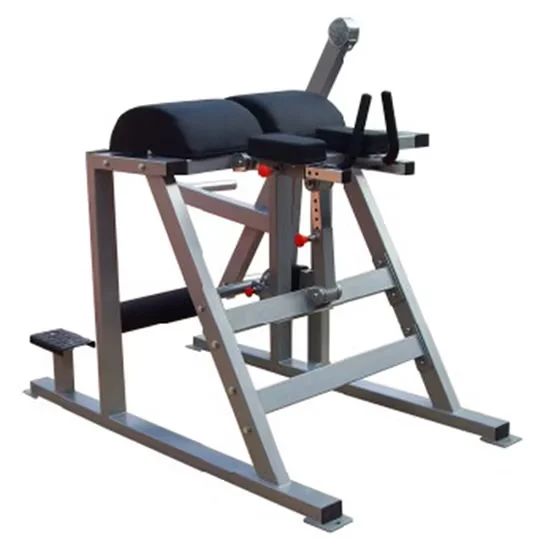
Commercial Reverse Hyper Extension Machine, 120kg Net Weight, Plate Loaded — engineered with heavy-gauge steel frame and continuous robotic MIG welding at all pivot joints to eliminate fatigue cracks under repetitive hip-extension loading. Sealed pivot bearings ensure long-term structural integrity in high-volume commercial environments. Every unit undergoes per-unit load testing before shipment for verified performance.
// Spec Highlights
• Direct from Manufacturer · No Middlemen · Worldwide Shipping
01
// Material
Imported Solid Wood
Premium hardwood frames sourced for density and visual warmth.
02
// Hardware
Medical-Grade Silent
Whisper-quiet pulleys and springs for clinical environments.
03
// Customization
Appearance OEM
Color, upholstery, and branding tailored to your studio.
04
// Service
Layout Design
Free venue planning for studios and rehab institutions.
Every component is selected for longevity, performance, and aesthetic harmony - from imported hardwood frames to silent medical-grade accessories.
// Features
11-Gauge Frame with Mill-Traceable Steel — The 3×3 inch frame tube resists permanent deflection under repetitive hip-extension loading, with material certification traceable to the original coil.
| Parameter | Value |
|---|---|
| Product Type | Reverse Hyper Extension Machine |
| Frame Material | 11-gauge steel, 3×3 inch tube |
| Steel Grade | Q235 / Q345 industrial steel, mill-certified |
| Welding Type | Robotic MIG continuous weld |
| Loading Type | Plate loaded |
| Bearing Type | Sealed industrial pivot bearing |
| Powder Coating | 200μm scratch-resistant industrial finish |
| Product Dimensions | 1727×1448×1651mm |
| Net Weight | 120kg |
| Exercise Part | Lower Back / Glutes / Hamstrings |
| OEM/ODM | Available |
| Certification | ISO 9001, CE |
| Production Capacity | 500 PCS/Month |
| Facility Type | Typical Use |
|---|---|
| Commercial gym strength floor | Posterior chain development zone |
| Professional fitness club | Lower back and glute isolation station |
| Athletic performance center | Hip extension and rehabilitation training |
| University strength and conditioning room | Posterior chain programming for student-athletes |
| Community fitness center | General strength and back health maintenance |
Many reverse hyper machines on the market carry vague "commercial-grade" steel claims with thin-gauge tubing that flexes under heavy athletes — and spot welds at the pivot bracket that crack within months of daily cyclic loading.
The pivot joint is where fatigue failure begins on any hip-extension machine, and continuous robotic MIG welding eliminates that initiation point entirely.
When an athlete loads plates and swings through full hip extension repeatedly, the pivot bracket absorbs alternating tension and compression every rep. Spot welds create a hardened heat-affected zone with micro-cracks that propagate under cyclic stress. Robotic MIG continuous welds distribute load across the full joint length, removing the stress concentration that causes fatigue fracture. [NEED_CITE: weld classification and fatigue performance in structural steel joints under cyclic loading]
The commercial reverse hyper extension machine occupies a distinct movement plane in the posterior chain zone — targeting hip extension through a loaded swing arc that complements deadlift patterns and glute-ham raises. It pairs naturally with plate-loaded leg curl stations and hyperextension benches in a dedicated lower-back circuit. The plate-loaded design accommodates progressive overload across a wide range of athlete body sizes, from rehabilitation users to competitive powerlifters. This equipment handles high-density scheduling in commercial gym environments where multiple users share the station throughout operating hours.
A reverse hyper extension machine endures a unique loading profile: the swinging pendulum motion creates alternating eccentric and impact loads at the pivot bearing, while the base frame absorbs reactive torque from lateral stabilization. Over hundreds of daily reps, unsealed bearings develop play that shifts the swing arc and accelerates wear on the pivot shaft. The pad mounting points experience concentrated compression from repeated hip contact, and upholstery density directly determines how quickly the surface deforms into an unusable contour. The powder coating at grip and contact zones must withstand constant friction, sweat exposure, and chemical cleaning without chipping to bare steel. [NEED_CITE: bearing seal performance and maintenance intervals in high-rep commercial fitness equipment]
The 11-gauge, 3×3 inch frame tube sets the deflection threshold — under a loaded hip swing exceeding 100kg of plate weight plus dynamic force, thinner tubing will flex permanently over time, altering the pivot geometry and creating uneven bearing wear. The robotic MIG continuous weld at every structural joint — pivot bracket, base gussets, pad mounts — eliminates the spot-weld weak points where fatigue cracks originate. Sealed industrial bearings at the pivot resist contamination from gym floor dust and sweat, maintaining smooth rotation far longer than open bushings that degrade within the first year of heavy use. The 200μm powder coating applied over sandblasted steel provides a chip-resistant barrier at high-contact areas where athletes grip and position themselves.
Thin-wall tubing flexes visibly under heavy plate loads, and that repeated deflection work-hardens the steel until it fractures at weld transitions. Spot-welded pivot brackets crack without warning, creating a sudden failure point during active use — a liability that no amount of visual inspection can predict. Non-sealed bearings develop play that forces the swing arm into misaligned tracking, accelerating wear on the pivot shaft and requiring full assembly replacement rather than a simple bearing swap. Low-density upholstery compresses permanently within weeks of commercial use, leaving athletes training on a deformed surface with no readily available replacement pads.
Every commercial reverse hyper extension machine ships with 11-gauge frame steel backed by mill certification traceable to the coil, ensuring the specified tube gauge is verifiable rather than assumed. Robotic MIG continuous welding at all structural joints means no spot-weld connections at the pivot bracket or base — the exact failure points that cause field returns. Each unit undergoes individual load testing before shipment, not sample-based inspection, confirming structural integrity under rated capacity. The 200μm industrial powder coating over sandblasted steel resists chipping at contact points through years of commercial use. A 10-year frame warranty covers the structural steel against manufacturing defects. For gym layout planning, the 1727×1448×1651mm footprint and required safety clearance dimensions are available in 2D-3D CAD floor plans to ensure proper station spacing. OEM private label and custom color options are available for chain operators.
Provide your posterior chain zone floor area and adjacent equipment list to receive a 2D-3D CAD layout showing this commercial reverse hyper extension machine positioned with proper safety clearance and traffic flow. Share your estimated daily user count so the structural configuration can be matched to your usage density. Indicate your target user body size range to confirm pad height and swing arc accommodate your athlete population. Specify any OEM requirements including frame color, logo placement, or upholstery density preference for your facility standard.
Q: How does 11-gauge frame steel differ from thin-gauge alternatives on reverse hyper machines?
A: The 11-gauge, 3×3 inch tube resists permanent deflection under loaded hip swings that would flex thinner tubing over time. Thinner gauge steel work-hardens from repeated bending and eventually fractures at weld transitions. The heavier gauge maintains pivot geometry and bearing alignment through years of commercial cyclic loading without structural degradation.
Q: Why does continuous robotic MIG welding matter at the pivot joint?
A: The pivot bracket experiences alternating tension and compression every rep as the swing arm moves through full hip extension. Spot welds create hardened micro-cracks that propagate under this cyclic stress, leading to sudden joint failure. Continuous robotic MIG welds distribute load across the full joint length, eliminating the stress concentration point where fatigue cracks originate and ensuring long-term structural integrity.
Q: What maintenance does the sealed pivot bearing require in commercial use?
A: The sealed industrial bearing resists contamination from gym floor dust, chalk, and sweat that would degrade open bushings. Quarterly inspection checks for smooth rotation and any developing play. If noise or resistance appears, the sealed bearing unit replaces as a complete assembly rather than requiring partial disassembly. This sealed design meaningfully extends service intervals compared to unsealed alternatives.
Q: How should I plan floor spacing around this reverse hyper station?
A: The 1727×1448×1651mm footprint requires minimum 600mm clearance on all sides for safe plate loading and unrestricted swing arc. Position the station away from high-traffic walkways to prevent interference during loaded hip extension movements. A 2D-3D CAD floor plan accounts for this equipment’s specific clearance needs alongside adjacent posterior chain stations for optimal facility layout.
Q: What determines the replacement cycle for pads and upholstery?
A: Upholstery density and foam compression resistance determine how long the pad maintains usable contour under daily commercial hip contact. High-density foam resists permanent compression deformation far longer than standard density alternatives. Pad mounting structure should allow straightforward replacement without specialized tools. Contact frequency, user weight range, and daily rep volume all influence the actual service life before replacement becomes necessary.
Premium aesthetics meet quiet operation for boutique studio environments.
Medical-grade silence and precision for sports & postpartum recovery.
Furniture-grade craftsmanship for premium residential installations.
Compact premium setups for one-on-one and small-group training.
Aesthetic Pilates integration for hybrid wellness studio programming.
Multi-unit deployment with instructor-grade reliability for certification programs.
Tell us about your project. Our team will respond within 24 hours with pricing, customization options, and shipping details.
// Sales Director
William
+86 132 2531 1800
// Export Manager
Bella
+86 198 5412 8032
william@bickfit.com