01 / Scenario
STUDIO
P
High-End Pilates Studios
Premium aesthetics meet quiet operation for boutique studio environments.
ISO
9001
CE
Certified
OEM
Available
10YR
Warranty
// Spec Highlights
• Direct from Manufacturer · No Middlemen · Worldwide Shipping
01
// Material
Imported Solid Wood
Premium hardwood frames sourced for density and visual warmth.
02
// Hardware
Medical-Grade Silent
Whisper-quiet pulleys and springs for clinical environments.
03
// Customization
Appearance OEM
Color, upholstery, and branding tailored to your studio.
04
// Service
Layout Design
Free venue planning for studios and rehab institutions.
Every component is selected for longevity, performance, and aesthetic harmony - from imported hardwood frames to silent medical-grade accessories.
// Features
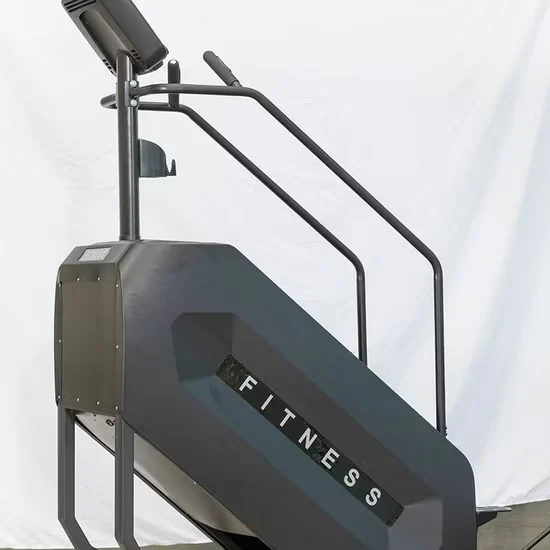
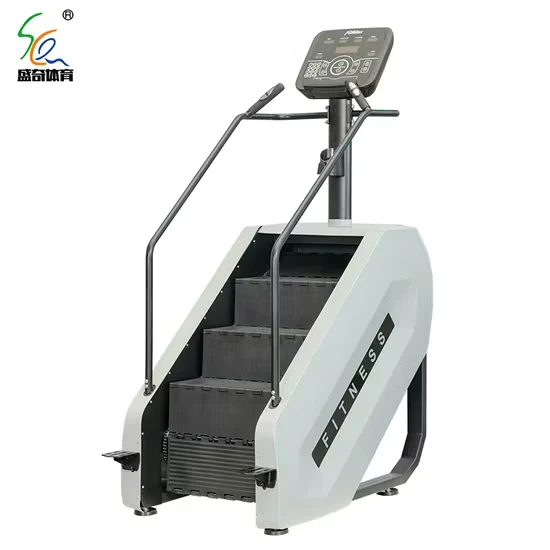
Motor-Driven Drive System — consistent step resistance across the full 15–164 steps/min range eliminates the mechanical stress spikes common in self-powered units during sustained commercial operation.
| Parameter | Value |
|---|---|
| Product Type | Commercial Stair Climbing Machine |
| Load Capacity | 180kg |
| Drive Method | Motor Driven |
| Speed Range | 15–164 Steps/Minute |
| Step Size | 560×235×220mm |
| Input Power Voltage | AC220V ±10% / AC110V ±10% |
| Screen Display | Time, Climb, Calories, Steps, Heart Rate |
| Product Dimensions | 1450×820×2080mm |
| Net Weight | 206kg |
| Frame Material | Aluminium Alloy Pipe + PP Plastic |
| Color | Black |
| Certification | CE, RoHS, ISO |
| Customization | Available |
| Facility Type | Typical Use |
|---|---|
| Commercial gymnasium | High-traffic cardio zone, 8+ hours daily continuous operation |
| Fitness club | Primary stair climbing station for member retention and calorie-burn programming |
| Hotel fitness center | Low-maintenance cardio option for transient guest populations |
| University athletic facility | Conditioning tool for student-athlete endurance and sport-specific preparation |
Sealed industrial bearings prevent particulate ingress that destroys open bearings within months of high-traffic use.
Years of field observation at FIBO and IHRSA show a recurring failure pattern: a commercial stair climbing machine looks pristine on the showroom floor, yet the pedal chain develops measurable play within a single quarter of heavy use. The root cause is almost always an unsealed bearing assembly that allows rubber debris, shoe grit, and cleaning residue to contaminate the raceway. Once contamination begins, the bearing develops radial play, the chain alignment shifts, and the entire drive train accelerates toward premature failure. This commercial stair climbing machine gym equipment specification addresses that failure mode with sealed bearing architecture designed to exclude the particulate environment of a busy cardio floor [NEED_CITE: bearing sealing standards for fitness equipment in contaminated environments].
This commercial stair climbing machine occupies the vertical stepping plane, targeting the gluteal complex, quadriceps, and calf musculature through a continuous climbing motion. It pairs naturally with horizontal cardio assets such as self-powered treadmills and air bikes to create a multi-planar conditioning circuit. The 180kg load capacity and motor-driven resistance curve make it suitable for facilities where diverse user populations — from recreational members to athletic conditioning programs — share the same equipment throughout the day. The 1450×820mm footprint fits standard commercial gym cardio layouts with adequate safety clearance between adjacent stations.
A stair climber in a high-traffic facility endures a fundamentally different stress profile than a treadmill or elliptical. Each step cycle imposes an eccentric impact load as the user’s full body weight transfers onto a single pedal at the top of the stroke, creating a moment arm that stresses the frame joints, pedal pivot bearings, and drive sprockets. Over thousands of cycles per day, these repeated eccentric loads fatigue any weld that relies on spot or intermittent techniques. The motor-driven system distributes torque more evenly across the drive train than self-powered alternatives, but the pedal bearings and step assembly still require sealed construction to survive the contamination environment [NEED_CITE: fatigue analysis of cyclic loading in commercial fitness equipment frames]. Handrail contact points and pedal edges experience concentrated abrasion from grip friction and shoe contact, demanding a coating system that resists chipping rather than merely providing initial gloss.
The 206kg net weight of this unit reflects the mass of the motor assembly, steel-reinforced frame, and step mechanism — a figure that directly correlates to vibration damping during operation. Lighter stair climbers in the market often sacrifice frame mass to hit a price point, but the resulting vibration accelerates fastener loosening and bearing wear. The aluminium alloy pipe frame provides corrosion resistance in humid facility environments while the PP plastic step housings resist impact cracking under repeated shoe contact. The motor-driven system operates at a fixed voltage input (AC220V or AC1110V), meaning the step resistance remains consistent regardless of user cadence — a critical distinction from self-powered models where resistance increases with pedal speed and can exceed the user’s intended training zone. The 560×235×220mm step dimensions accommodate a wide range of foot sizes and stride patterns without requiring mechanical adjustment.
Facilities that select stair climbers based on initial purchase price alone frequently absorb replacement costs that exceed the original savings within eighteen months. Non-sealed bearings require periodic disassembly and repacking — labour that most gym maintenance staff are not equipped to perform, leading to deferred maintenance and accelerated failure. Thin powder coatings chip at handrail grip points and pedal edges within weeks of commercial use, exposing bare aluminium to sweat corrosion that spreads beneath the coating film. Undersized motors in self-powered or hybrid systems overheat during continuous operation, triggering thermal shutdowns that interrupt member workouts and generate service calls. Non-standard fasteners and proprietary pedal assemblies make replacement parts unavailable from third-party suppliers, locking the facility into single-source dependency with extended lead times [NEED_CITE: total cost of ownership analysis for commercial cardio equipment component failure].
Every unit undergoes individual load testing before shipment — not sample-based inspection — verifying that the frame, step mechanism, and drive system perform within specification under the rated 180kg capacity. The motor-driven architecture eliminates the bearing contamination failures that plague self-powered stair climbers in dusty gym environments. The 200μm industrial powder coating resists chipping at high-contact handrail and pedal surfaces, maintaining appearance and corrosion protection through years of commercial use. For facility planners, the 1450×820×2080mm dimensions and 206kg operating weight inform floor loading calculations and cardio zone layout with predictable safety clearances. Customization options cover voltage configuration for international facility standards, color matching to existing equipment fleets, and branding integration for multi-location operators.
Provide your cardio zone floor area and target equipment count to receive a 2D-3D layout plan showing this commercial stair climbing machine positioned with appropriate safety clearances and traffic flow. Specify your expected daily usage hours and peak user volume so the structural duty cycle matches your operational intensity. Indicate any voltage configuration requirements, color matching needs, or branding customization for multi-site deployments.
Q: How does a motor-driven stair climbing machine differ from a self-powered model in commercial use?
A: Motor-driven systems maintain consistent step resistance regardless of user cadence, reducing mechanical stress on the drive train during continuous operation. Self-powered models increase resistance with pedal speed, which can overload the bearing and chain assembly during high-intensity use. Motor-driven units also eliminate the thermal management issues that cause self-powered systems to shut down during extended commercial sessions.
Q: What bearing maintenance is required for high-traffic gym environments?
A: The sealed industrial bearings on this unit exclude gym floor debris and require only periodic visual inspection for seal integrity. Unlike open bearings that need disassembly and repacking, sealed units maintain lubrication internally and resist contamination from rubber dust, shoe grit, and cleaning chemicals common in cardio zones.
Q: How do I plan the cardio zone layout around this stair climber?
A: The 1450×820×2080mm footprint requires minimum 600mm clearance on all sides for safe user access and emergency egress. Position the unit with the step entry facing open traffic flow, and maintain adequate spacing from adjacent cardio equipment to prevent user interference during peak hours.
Q: What customization options are available for multi-location gym operators?
A: Voltage configuration supports AC220V or AC110V input for international facility standards. Color customization matches existing equipment fleet aesthetics, and branding integration accommodates multi-site operator identity programs. Contact specifications are available for structural review of your deployment requirements.
Premium aesthetics meet quiet operation for boutique studio environments.
Medical-grade silence and precision for sports & postpartum recovery.
Furniture-grade craftsmanship for premium residential installations.
Compact premium setups for one-on-one and small-group training.
Aesthetic Pilates integration for hybrid wellness studio programming.
Multi-unit deployment with instructor-grade reliability for certification programs.
Tell us about your project. Our team will respond within 24 hours with pricing, customization options, and shipping details.
// Sales Director
William
+86 132 2531 1800
// Export Manager
Bella
+86 198 5412 8032
william@bickfit.com